
Sauces & Condiments
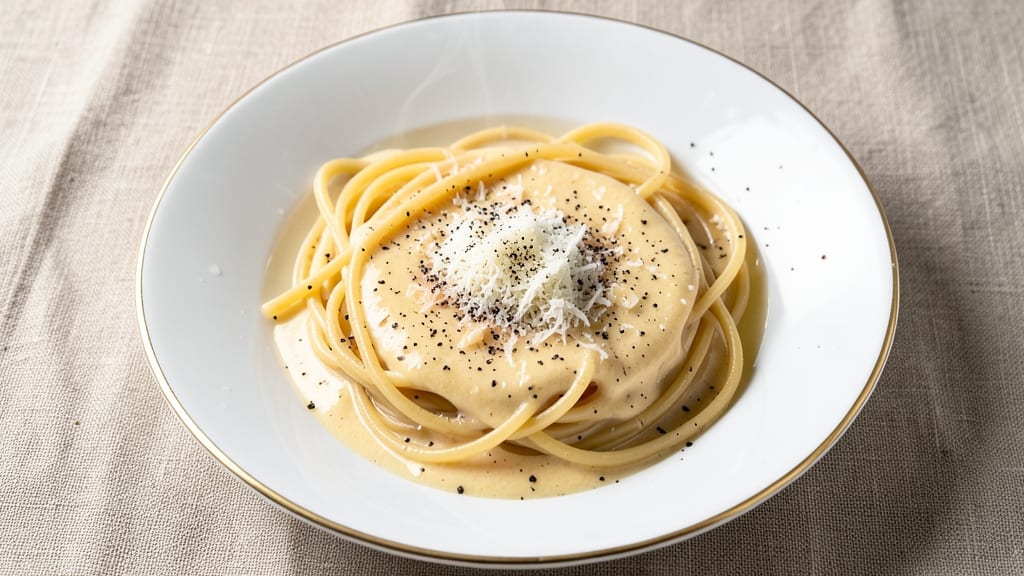
This Alfredo Carbonara sauce recipe delivers the velvety, egg-emulsified richness you crave—no clumps, no lumps, just restaurant-quality creaminess in minutes. The secret lies in tempering eggs with hot pasta water before combining with butter and cheese, creating a silky sauce that clings perfectly to every strand.
I perfected this technique after years of trial (and a few failed attempts that left me reaching for store-bought). What sets this sauce apart is the balance: Pecorino Romano for sharpness, Parmesan for depth, and a touch of black pepper to wake up the flavors.
The key move? Removing the pasta early and finishing it in the sauce—this prevents overcooking while letting the strands soak up every drop of that luxurious emulsion. No heavy cream needed; the eggs and butter create all the richness you want.
By the time you twirl that first forkful, you’ll taste the difference: smooth, clump-free sauce that’s tangy yet rich, with just the right amount of peppery bite. The sauce thickens beautifully when tossed with hot pasta, creating that signature "carbonara" texture without breaking.
It’s the kind of sauce that makes even simple spaghetti feel like a special occasion. Make a double batch—this sauce keeps for 3 days in the fridge or 1 month frozen, making it perfect for meal prep or impressing guests. Here’s how to achieve that perfect emulsification every time.
Ingredients for alfredo carbonara sauce
Eight ingredients transform into velvety carbonara—no cream, no clumps, just pure egg-emulsified richness.
| Ingredient | Amount | Notes |
|---|---|---|
| Large Egg Yolks 🥚 | 4 whole | Fresh, room temperature preferred |
| Unsalted Butter 🧈 | ½ cup | Cold, cut into small cubes |
| Pecorino Romano Cheese 🧀 | 1 cup | Freshly grated, fine texture |
| Parmesan Cheese 🧀 | ½ cup | Freshly grated, aged minimum 24 months |
| Freshly Ground Black Pepper 🌶️ | ½ tsp | Coarsely cracked, not powdered |
| Reserved Pasta Water 🍝 | 1 cup | From cooked spaghetti or linguine |
| Spaghetti or Linguine 🍝 | ½ lb | Fresh or high-quality dried |
| Diamond Crystal Kosher Salt 🧂 | 1 tsp | For pasta water, not sauce |
The cheeses are non-negotiable here. Pecorino Romano delivers that signature sharpness—skip the pre-grated stuff, it's full of anti-caking agents. Grab a wedge from the deli counter at Whole Foods or your local Italian market; it's worth the splurge. For Parmesan, 24-month aged makes all the difference—look for blocks labeled "stravecchio" if you're hunting for the good stuff. The butter should be cold when you add it, but don't melt it beforehand. Fresh egg yolks (not powdered) are key—they emulsify beautifully when tempered with hot pasta water. I always buy eggs from Trader Joe's for this recipe—they're consistently fresh.
No Pecorino? Asiago or Grana Padano work in a pinch, but you'll lose that signature tang. Short on Parmesan? Parmigiano-Reggiano is your only real substitute—none of that pre-shredded nonsense. Fresh pasta water is critical—it's what creates the emulsion. If you're worried about lumps, whisk the eggs with a splash of pasta water first, then slowly add the hot strands. The pepper should be freshly cracked; pre-ground loses its punch fast. For a vegan version, swap eggs for silken tofu blended with nutritional yeast, though the texture won't be identical.
This sauce is best used immediately, but it keeps for 3 days refrigerated if you seal it tightly with a layer of olive oil on top. For freezing, portion into ice cube trays—thaw quickly in a bowl of warm water when ready to use. The pasta water should be reserved while the noodles cook; don't drain it completely. If your sauce breaks, whisk in another tablespoon of hot pasta water. Double batches freeze beautifully for 1 month—perfect for meal prep or last-minute dinner guests. Always finish with fresh black pepper; it brightens the whole dish.
Why You'll Love This Recipe
- No-Fuss Magic: I swear by this sauce because it’s three ingredients (plus eggs) and zero stress. Melt butter, toss in cheese, whisk yolks—boom. The only hard part is resisting seconds while it cools.
- Umami Bomb: That combo of Pecorino and Parmesan? Chef’s kiss. The butter adds richness, but the pepper and sharp cheese cut through—creamy yet bright, like a hug in sauce form. Honestly, I’ll take this over any store-bought creamy nonsense.
- Weeknight Hero: Works as pasta, a dip, or even a pizza topping. (Yes, I’ve done it.) Make a double batch—it’s perfect for lazy nights when you’re too tired to think, but still want to feel fancy.
- Budget Luxury: A handful of eggs and cheese stretch far—way cheaper than takeout, but tastes like you spent hours. Leftovers? Toss them in eggs for a frittata or freeze for future cravings. My wallet thanks me.
Step-by-step instructions for perfect Alfredo carbonara sauce
This method delivers silky, clump-free sauce every time—no scrambling, no curdling, just rich perfection.
Prepare the Egg and Cheese Base
In a medium bowl, whisk together the 4 whole large egg yolks and 0.5 cup unsalted butter until fully combined and pale yellow. The butter should be at room temperature but still slightly firm—this prevents the eggs from cooking too quickly. Add the 1 cup freshly grated Pecorino Romano and 0.5 cup freshly grated Parmesan, mixing until the cheese is evenly distributed and the mixture is smooth.
I like to use a fork for this step—it helps break up any cheese lumps while keeping the yolks intact. Sprinkle in the 0.5 teaspoon freshly ground black pepper and whisk vigorously for 10 seconds to distribute it evenly. The key here is to work quickly but thoroughly—you want the cheese to melt into the egg mixture without clumping. Set this bowl aside while you cook the pasta.
Cook the Pasta Al Dente
Bring a large pot of water to a rolling boil and add 1 teaspoon Diamond Crystal kosher salt (the water should taste like the sea). Add the 0.5 pound spaghetti or linguine and cook until 1 minute before the package instructions for al dente. This slight undercooking ensures the pasta finishes cooking in the sauce, absorbing all that creamy goodness.
Before draining, reserve 1 cup of the pasta water—this starchy liquid is the secret to a silky sauce. I keep a measuring cup nearby so I don't forget this crucial step. Drain the pasta but don't rinse it—those surface starches help the sauce cling beautifully. Transfer the pasta to a large bowl and toss it with 1 tablespoon of the butter from the egg mixture to prevent sticking.
Emulsify the Sauce Off Heat
This is where the magic happens—keep the egg mixture off the heat at all times. With the pasta still in its bowl, add the egg-cheese mixture in a slow, steady stream while tossing the pasta vigorously with tongs. The residual heat from the pasta will gently cook the eggs into a creamy emulsion without scrambling them.
If the sauce starts to thicken too much, add 1 tablespoon of reserved pasta water at a time until it reaches your desired consistency. I aim for a sauce that coats the back of a spoon but isn't watery. The pasta water also helps dissolve any remaining cheese particles, creating that signature Alfredo smoothness. Taste and adjust seasoning with more black pepper if needed.
Finish with Residual Heat
Return the pasta to the pot it was cooked in and place it over low heat for 1-2 minutes. This step ensures the sauce fully coats every strand of pasta without curdling. Stir gently but constantly—you're not trying to cook the pasta further, just meld the flavors and ensure even distribution of the sauce.
For the ultimate presentation, transfer the carbonara to warmed serving plates immediately. The sauce should be glossy and cling to the pasta like a second skin. Garnish with an extra sprinkle of Pecorino Romano and a crack of freshly ground black pepper. Serve while hot, as the sauce thickens slightly as it cools. This dish is all about the contrast between the creamy sauce and the al dente pasta—every bite should be rich, peppery, and perfectly balanced.
Pro Tips For Making Alfredo Carbonara Sauce
- Temper the Eggs: Whisk the yolks with a splash of pasta water first—just enough to loosen them into a pale, creamy ribbon. This prevents scrambling when the hot pasta hits the pan (yes, even if you’re impatient like me).
- Grate It Fresh: Skip the pre-grated cheese—it’s full of anti-caking agents that turn your sauce into a clumpy mess. Use a microplane for Pecorino and Parmesan, and do it right before tossing with the pasta so it melts into silk.
- Off the Heat: Remove the pan from the stove the second you add the egg mixture—residual heat is enough to cook the sauce without scrambling. Stir like you’re angry at the eggs, but keep it low and slow.
- Pepper Last: Freshly crack black pepper over the finished dish, not into the sauce. The heat burns off when cooked, leaving only a dull aftertaste—save the bright, sharp kick for the final moment.
Common mistakes when making great alfredo carbonara sauce
Overcooking the Eggs
Your eggs will scramble faster than you can say "carbonara" if they hit direct heat. The sauce must be emulsified off heat—ever. I've ruined more batches than I care to admit by adding the egg mixture to hot pasta or trying to warm it on the stove.
Instead, rely on the residual heat from the pasta to gently cook the eggs while you toss. If your sauce looks curdled, you've already lost that silky texture. 🧂
Skipping Pasta Water
This starchy liquid isn't just for show—it's the emulsifier that turns scrambled eggs into velvety sauce. I once made carbonara without reserving any water, and the result was a dry, clumpy mess.
Always keep 1 cup of that golden pasta water handy. If your sauce thickens too much, whisk in 1 tablespoon at a time until it reaches that perfect coating consistency.
Using Pre-Grated Cheese
Store-bought grated cheese contains anti-caking agents that prevent proper melting and create grainy texture. Freshly grating Pecorino Romano and Parmesan is non-negotiable for authentic flavor and smoothness. I keep a microplane in my kitchen specifically for this purpose—it's the fastest way to get that fine, even texture.
If you're short on time, a box grater works too, but work in small batches to avoid clumping.
Adding Cold Eggs to Hot Pasta
The temperature shock between cold eggs and hot pasta will cause the eggs to cook instantly, creating a scrambled mess. Always let your egg-cheese mixture sit at room temperature for 5-10 minutes before combining with pasta. This simple step prevents curdling and ensures that perfect emulsion.
Pro tip: Warm your serving bowls in the oven while you prepare the sauce—the hot pasta will stay hot longer, keeping your carbonara at its best. 🍽️
Overmixing the Sauce
Once you've combined the egg mixture with pasta, resist the urge to stir vigorously. Overmixing can break the emulsion and create a greasy, separated sauce. Instead, gently fold the sauce into the pasta with tongs, letting the residual heat work its magic.
If you notice separation, immediately whisk in another tablespoon of hot pasta water to restore that silky texture. The goal is a sauce that coats the pasta beautifully without requiring constant stirring.
Not Finishing with Pepper
Freshly cracked black pepper is what transforms good carbonara into great carbonara. Many home cooks forget this final step, but that ½ teaspoon of freshly ground pepper adds brightness and depth to every bite.
I keep a pepper grinder on my counter specifically for this purpose—pre-ground pepper loses its punch quickly. Sprinkle it over each serving just before eating to ensure maximum flavor impact. This simple step elevates the entire dish from ordinary to extraordinary. 🌶️
Nutrition facts
Frequently asked questions
Why does my Alfredo sauce get grainy or clumpy?
This usually happens from either using pre-grated cheese (anti-caking agents cause texture issues) or not properly emulsifying the eggs. Always grate Pecorino Romano and Parmesan fresh and temper the eggs with hot pasta water before combining. Work quickly but gently—overmixing can break the emulsion and create lumps.
Can I make this sauce ahead of time?
Fresh is best, but you can prep components separately. Keep the egg-cheese mixture refrigerated for up to 2 hours before using. For leftovers, store the finished sauce in an airtight container with a thin layer of olive oil on top—it keeps for 3 days in the fridge. Freeze portions in ice cube trays for up to 1 month. Thaw quickly in warm water before reheating gently.
What's the difference between carbonara and Alfredo sauce?
Carbonara traditionally uses eggs and cheese (no cream) for a rich, peppery sauce, while classic Alfredo uses heavy cream or butter for a milder, smoother texture. This recipe is a hybrid that delivers carbonara's depth without the clumping risks. The key difference is the emulsification technique—carbonara relies on egg tempering while Alfredo often uses cream-based reduction.
Can I substitute cream for the butter in this recipe?
While traditional carbonara avoids cream, you can replace ¼ cup of the butter with an equal amount of heavy cream for extra richness. However, this may make the sauce slightly heavier. For a lighter version, use whole milk instead. The emulsion will still work, but the texture will be less velvety. Always adjust with more pasta water if needed to maintain consistency.
How do I fix a broken sauce if it separates?
If your sauce curdles or separates, immediately whisk in 1-2 tablespoons of hot pasta water to restore the emulsion. For stubborn separation, place the sauce over a double boiler (or a heatproof bowl over simmering water) and whisk constantly until smooth. Never add cold water—this will set the curdling. The residual starch in pasta water is your best friend for fixing broken emulsions!