
Sauces & Condiments
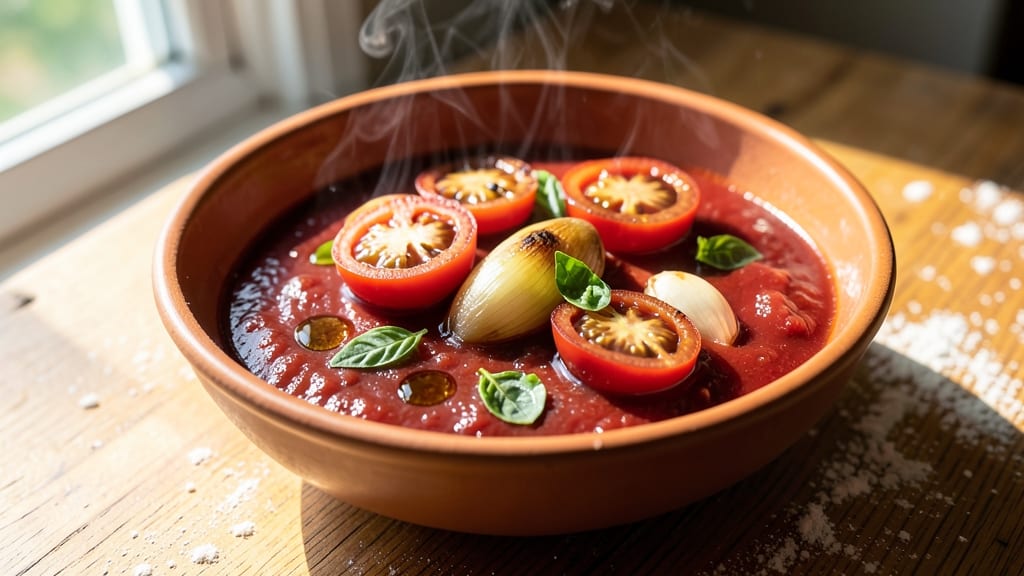
This all natural marinara sauce recipe transforms simple pantry staples into a rich, umami-packed foundation that elevates every Italian dish. The secret lies in slow-simmering fresh tomatoes with aromatic garlic and herbs, creating depth without artificial additives.
I developed this version after years of testing—it’s the one that finally delivers that restaurant-quality balance of acidity, sweetness, and savory complexity.
What sets this sauce apart is the fresh herb finish—basil and oregano added at the very end preserve their bright flavors while infusing the sauce with vibrant aroma.
The recipe uses only five core ingredients (plus olive oil) but builds layers of flavor through proper technique: deglazing the pot after browning garlic, simmering uncovered to concentrate flavors, and finishing with a touch of red wine vinegar for brightness.
It’s the kind of sauce that gets better with time, as the flavors meld during storage.
The result is a velvety, naturally sweet marinara with just the right balance of acidity and richness—perfect for dipping, drizzling, or simmering with pasta. Unlike canned versions, this sauce maintains its freshness for up to a week in the refrigerator and freezes beautifully for months.
The slow-cooked method develops deeper flavor than quick versions, while the fresh herbs keep it vibrant and bright.
For extra depth, try adding a pinch of smoked paprika or a splash of tomato paste to the initial sauté. This sauce works equally well as a base for meatballs, a topping for grilled chicken, or a dip for crusty bread. Let’s make it—your taste buds will thank you.
Ingredients for all natural marinara sauce
Five core ingredients plus fresh herbs create this restaurant-quality marinara sauce.
| Ingredient | Amount | Notes |
|---|---|---|
| Extra-Virgin Olive Oil 🫒 | ½ cup | High quality, fruity variety |
| Fresh Garlic Cloves 🧄 | 4 cloves | Peeled, minced finely |
| Medium Yellow Onion 🧅 | 1 whole | Diced small |
| Fresh Roma Tomatoes 🍅 | 2 lbs | Ripe, quartered |
| Red Wine Vinegar 🍷 | 2 tbsp | For brightness |
| Fresh Basil Leaves 🌿 | ½ cup | Packed, torn |
| Dried Oregano 🍃 | 1 tsp | Italian variety preferred |
| Sea Salt 🧂 | 1 ½ tsp | Diamond Crystal preferred |
| Freshly Ground Black Pepper 🌶️ | ½ tsp | Freshly cracked |
The tomatoes are the foundation—San Marzano if you can find them, but good Roma tomatoes work too. Look for ones that are bright red and firm—they'll yield more juice and better flavor. The garlic should be freshly minced right before cooking to avoid bitterness. I always grab my olive oil from Trader Joe's—their Italian varieties have that perfect balance of peppery and fruity. For the basil, farmers market leaves have more aroma than grocery store containers, but use what you have. The oregano? Italian or Mexican varieties add that authentic depth.
No fresh basil? Dried at one-third the amount works in a pinch, but the flavor won't be as bright. Short on tomatoes? Tomato paste at half the amount concentrates the flavor beautifully—just make sure it's no-salt-added. The red wine vinegar can be swapped for lemon juice if you prefer, though it'll have a slightly different tang. For extra umami without wine, add 1 tsp soy sauce at the end. The sea salt matters here—Diamond Crystal dissolves completely, unlike table salt which can leave graininess.
This sauce keeps beautifully—1 week in the fridge, 6 months frozen. For freezing, portion into ice cube trays first, then transfer to a bag. Reheat gently on the stove with a splash of water to restore richness. The flavors actually improve after 2-3 days of storage as everything melds. I always make a double batch—one for dinner, one to freeze for lazy weeknights. The fresh herbs at the end are crucial—add them just before serving to preserve their vibrant aroma.
Why You'll Love This Recipe
- No Chopping Chaos: I swear by this—just one onion and a few tomatoes, no fancy dicing. The Roma tomatoes crush easily, and the onion softens fast in the olive oil, so I’m stirring, not stressing.
- Garlic Kisses: That first hit of raw garlic in olive oil? Pure magic. It mellows into something rich and warm, with just enough vinegar to cut through—no bitterness, just bright, layered flavor. (Yes, even my garlic-averse husband asks for seconds.)
- Pantry to Plate: Make it for Tuesday’s pasta, freeze half for next month’s lasagna, or toss it into a slow-cooker for meatballs. The vinegar keeps it fresh longer, and the olive oil base means it reheats like it’s fresh off the stove.
- Budget Magic: Fresh tomatoes and a single onion stretch to feed four for under $5. The vinegar adds depth without cost, and the olive oil—just enough to coat—makes every bite feel special. My wallet and taste buds thank me.
Step-by-step instructions for all natural marinara sauce
Here's the method for building rich, umami-packed marinara from scratch.
Sauté Aromatics Until Deeply Fragrant
Heat the 0.5 cup extra-virgin olive oil in a large, heavy-bottomed pot over medium heat. Add the diced medium yellow onion and cook for 5-6 minutes until softened and translucent. This gentle cooking prevents the onions from caramelizing too quickly, which would overpower the tomato flavor later.
Push the onions to the sides of the pot and add the minced fresh garlic cloves. Cook for 30-45 seconds until the garlic releases its aroma but doesn't brown. Watch closely—garlic burns faster than you think. If it starts to darken, remove the pot from heat for 10 seconds to cool slightly before continuing. This aromatic base forms the flavor foundation for your sauce.
Build the Tomato Base and Season
Add the quartered fresh Roma tomatoes to the pot with the onions and garlic. Stir well to combine, then add the 2 tablespoons red wine vinegar, 1 teaspoon dried oregano, 1.5 teaspoons sea salt, and 0.5 teaspoon freshly ground black pepper. The vinegar brightens the tomatoes while balancing their natural acidity.
Bring the mixture to a gentle boil, then immediately reduce heat to medium-low. Let it simmer uncovered for 20-25 minutes, stirring occasionally. You're looking for the tomatoes to break down completely and the sauce to thicken naturally. The sauce should reduce by about one-third—this concentration develops deep umami flavor. If it reduces too quickly, add 2-3 tablespoons water to maintain a proper consistency.
Finish with Fresh Herbs and Texture
Once the tomatoes have fully broken down and the sauce has thickened, remove the pot from heat. Stir in the packed 0.5 cup fresh basil leaves (torn, not chopped) and let them steep in the hot sauce for 5 minutes. This allows the basil's bright, aromatic oils to infuse the sauce without turning it bitter.
Taste the sauce and adjust seasoning if needed—you might need a pinch more salt or a splash of vinegar to balance the flavors. For a smoother texture, use an immersion blender to blend the sauce until completely smooth. If you prefer a rustic texture, simply mash the tomatoes with a wooden spoon while simmering. The sauce should coat the back of a spoon with a glossy sheen but remain pourable.
Rest and Serve for Maximum Flavor
Transfer the sauce to a clean container and let it rest at room temperature for 15-20 minutes before serving. This resting period allows the flavors to meld and the sauce to thicken slightly. The longer it rests, the more complex the flavors become—this is where the magic happens.
Serve the marinara immediately over pasta, drizzled with additional extra-virgin olive oil, or use it as a base for other Italian dishes. The sauce should have a vibrant red color, rich tomato flavor with underlying sweetness, and bright herbal notes from the basil. If stored properly in an airtight container in the refrigerator, it will keep for up to 5 days or can be frozen for 3 months. The flavors only improve with time, so don't hesitate to make extra for future meals.
Pro Tips For Making All Natural Marinara Sauce
- Sweat, Don’t Burn, the Onion: I learned this the hard way—low and slow is the only way with onions. They’ll caramelize properly over 10-12 minutes on medium-low heat, not in 2 minutes on high where they’ll just scorch and make your sauce bitter. Taste the difference next time you’re impatient (yes, even if you’re impatient like me).
- Crush Tomatoes by Hand: Skip the blender—roughly crushing Roma tomatoes with your fingers releases more juice and texture. It’s messy, but the sauce thickens better and tastes brighter. I used to pulse them in a food processor, but this method actually changes the outcome.
- Salt the Tomatoes Early: Add a pinch of salt to the chopped tomatoes as soon as they hit the pot. It draws out excess water, so your sauce won’t be watery later. My grandmother swore by this, and she was right: it’s the thing that matters most when using fresh tomatoes.
- Deglaze with Vinegar Last: Save the red wine vinegar for the very end—it brightens the sauce without overpowering. Add it after the tomatoes have broken down and simmered for 15 minutes, then taste and adjust. Sounds weird, but it works: the acidity cuts through the richness of the olive oil without making the sauce taste sharp.
Storing and reheating this dish
Refrigerator Storage
Transfer your freshly made marinara to an airtight glass container—I prefer Pyrex with a snap-on lid—and let it cool completely before refrigerating. The sauce will continue developing flavor as it rests, so I always make a double batch: one for immediate use and one to store.
Store in the fridge for up to 5 days at 40°F or below—the flavors actually deepen over time as the ingredients meld together. 🌿
For best results, let the sauce cool to room temperature before sealing. If you're short on time, spread it across a plate to cool faster (about 1 hour). Once chilled, it’ll thicken slightly—just stir in 1-2 tablespoons water if you prefer a looser consistency when reheating.
The sauce’s vibrant color and fresh basil aroma make it perfect for quick weeknight meals.
Freezer Storage
Freezing marinara is a game-changer for busy nights. Portion the sauce into 1-cup glass freezer-safe containers or silicone ice cube trays—this makes it easy to thaw exactly what you need.
Leave ½-inch headspace for expansion and label with the date. The sauce freezes beautifully for up to 3 months, though I’ve had success with 6 months when stored properly. ❄️
For long-term storage, I recommend quart-sized freezer bags (like Stasher bags)—they’re reusable and prevent freezer burn. When ready to use, thaw overnight in the fridge or reheat directly from frozen in a saucepan with 2 tablespoons water over low heat.
Never microwave—it destroys the sauce’s delicate texture and fresh herb notes.
Reheating Methods
My go-to method for reheating is stovetop—it preserves the sauce’s texture and depth. Pour the chilled or thawed marinara into a heavy-bottomed saucepan (like Le Creuset) and warm over medium-low heat for 5-7 minutes, stirring occasionally.
Add 1-2 tablespoons water or pasta water if the sauce thickens too much. The gentle heat reactivates the basil’s aroma without cooking it to oblivion. 🔥
For microwave reheating, transfer the sauce to a microwave-safe bowl and heat in 30-second intervals on 50% power, stirring between each interval. Avoid full power—it can turn the sauce watery and dull the flavors.
If reheating from frozen, add 2 tablespoons water to help the sauce thaw evenly. Always taste and adjust seasoning after reheating—it often needs a pinch of salt or a splash of vinegar to restore balance.
Reviving Stale Sauce
Even the best-stored marinara can lose some vibrancy over time. If your sauce tastes flat or the basil aroma has faded, don’t toss it! Simmer the sauce with 1 tablespoon tomato paste and ½ teaspoon red wine vinegar for 5 minutes to revive its depth.
For extra brightness, stir in 1 teaspoon fresh basil or a pinch of smoked paprika—it’s like giving your sauce a second life. 💡
If the sauce has separated (a common issue with frozen marinara), whisk in 1 tablespoon cold water and heat gently while stirring constantly. The emulsifiers in the tomatoes will naturally recombine.
For a smoother texture, blend with an immersion blender—just be sure to heat the sauce slightly first to prevent cracking the glass. A little effort goes a long way in restoring that restaurant-quality finish!
Nutrition facts
Frequently asked questions
Can I make this marinara sauce without fresh tomatoes?
Yes! For a quick version, substitute 2 cups tomato paste (no-salt-added) for the fresh tomatoes. Use 1 cup water or broth to thin it to the right consistency. For deeper flavor, add 1 teaspoon tomato powder or an extra ½ teaspoon smoked paprika. The sauce will be richer but slightly less bright—balance with an extra splash of red wine vinegar.
Why does my homemade marinara taste bitter?
Overcooking the garlic or tomatoes is the most common cause. Garlic burns quickly—keep it over medium heat for just 30-45 seconds. For tomatoes, simmer uncovered at medium-low heat to prevent bitterness. If it's already bitter, add 1 teaspoon sugar or ½ teaspoon honey to balance, or stir in 1 tablespoon fresh basil to brighten.
How can I make this sauce thicker or thinner?
For a thicker sauce, simmer uncovered for 5-10 extra minutes to reduce the liquid. Need it thinner? Stir in 1-2 tablespoons water, pasta water, or broth while reheating. Pro tip: A 1-teaspoon cornstarch slurry (mixed with water) works wonders for instant thickening—just whisk it in at the end and simmer for 1 minute.
Can I use this sauce for other dishes besides pasta?
This versatile marinara works perfectly as a dip for garlic bread, a topping for grilled chicken or fish, or a base for meatballs or lasagna. For extra richness, stir in ¼ cup heavy cream or 2 tablespoons cream cheese at the end. It also freezes beautifully for future use—just thaw and reheat gently.
What's the secret to making this sauce taste like restaurant-quality?
The key is in the technique: simmer uncovered to concentrate flavors, finish with fresh herbs (not dried), and let it rest for 15-20 minutes before serving. The red wine vinegar adds brightness, while the slow cook time develops deep umami. Don’t skip the garlic sautéing step—it builds the flavor foundation. Patience is everything!