
Sauces & Condiments
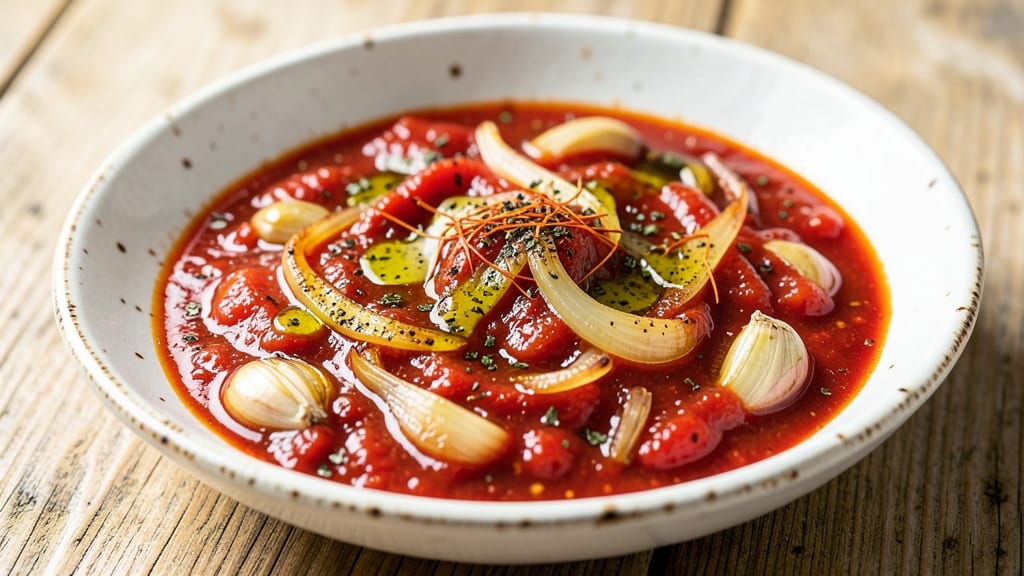
Andalusian sauce recipe transforms simple ingredients into a smoky, aromatic masterpiece that elevates everything from grilled fish to slow-cooked stews. The secret lies in slow-simmered tomatoes, deep-roasted garlic, and smoldering Spanish paprika—balanced with a whisper of saffron for that signature golden hue. I developed this version after years of tasting authentic Andalusian dishes, distilling their complexity into a sauce that's both restaurant-worthy and perfectly doable at home.
The magic happens through three key techniques: first, caramelizing onions and garlic until they're almost black for deep, nutty sweetness; then, letting the tomatoes reduce until thick and velvety; and finally, finishing with a crispy bread topping that adds textural contrast.
This isn't just a sauce—it's a flavor experience that builds layers as it simmers, with each ingredient playing its part in perfect harmony.
What you'll end up with is a rich, velvety sauce with smoky undertones, bright acidity from the tomatoes, and just enough heat to linger on your palate. The bread topping adds a satisfying crunch that cuts through the sauce's richness, creating a perfect balance.
It's the kind of sauce that makes weeknight dinners feel like a tapas night in Seville.
Use it as a base for stews, drizzle it over grilled seafood, or serve it with crusty bread for dipping—this versatile sauce becomes the star of any meal.
The best part? It tastes even better the next day as the flavors deepen. Let's make this Andalusian sauce that'll transport your taste buds straight to southern Spain.
Ingredients for andalusian sauce
Transform humble pantry staples into a restaurant-worthy Andalusian sauce with smoky depth and velvety texture.
| Ingredient | Amount | Notes |
|---|---|---|
| Extra-Virgin Olive Oil 🫒 | ½ cup | High-quality, fruity variety for richness |
| Large Yellow Onions 🧅 | 2 whole | Yellow or red, sliced thin |
| Garlic Cloves 🧄 | 8 cloves | Roasted until almost black |
| Canned San Marzano Tomatoes 🍅 | 28 oz | Crushed by hand, no salt added |
| Spanish Smoked Paprika 🌶️ | 2 tbsp | Pimentón de la Vera for authentic smokiness |
| Saffron Threads 💛 | ¼ tsp | High-quality, soaked in 1 tbsp warm water |
| Fresh Bread Crusts 🍞 | 1 ½ cups | Day-old baguette or crusty bread, torn |
| Dried Thyme 🌿 | 1 tsp | Or 1 tbsp fresh thyme leaves |
| Bay Leaves 🌿 | 2 whole | Fresh preferred, removed before serving |
| Granulated Garlic 🧄 | 1 tsp | For depth, optional but recommended |
| Sea Salt 🧂 | 1 ½ tsp | Diamond Crystal preferred, adjust to taste |
| Black Peppercorns 🌶️ | ½ tsp | Freshly cracked for brightness |
The Spanish smoked paprika is non-negotiable—Pimentón de la Vera from La Casa del Chorizo or Penzeys delivers that signature smoky aroma. For the onions, yellow or red work best, and slicing them thin ensures they caramelize perfectly. San Marzano tomatoes are a game-changer—their sweetness and low acidity make this sauce sing. If you can't find them, crushed Italian tomatoes are your next best bet. The saffron is where the magic happens, so don't skimp: La Grande Maison or Bulgarian saffron are my go-tos, and soaking it in warm water unlocks its vibrant color and floral notes.
No smoked paprika? A mix of regular paprika and a pinch of liquid smoke (like Colman's) gets you close, though it won't be identical. Short on time? Roast the garlic in the oven (400°F for 20-25 minutes) to deepen its flavor without watching the stove. The bread topping is key—day-old baguette adds texture, but crusty ciabatta works too. If you're feeling fancy, toast the bread separately for extra crunch. For the tomatoes, hand-crushing releases more flavor than canned crushed, but if you're in a rush, blend them briefly until mostly smooth. The granulated garlic adds a subtle punch, but it's optional if you're already using fresh.
This sauce tastes even better the next day as the flavors meld. Store in an airtight container in the fridge for up to 5 days, or freeze for 3 months—portion into ice cube trays for easy single-use servings. The bread topping stays crispy for about 2 days if stored separately in a sealed bag. For extra richness, stir in a splash of olive oil before serving. And if you make a big batch? Double the recipe—this sauce disappears fast, especially when drizzled over grilled seafood or spooned into paella.
Why You'll Love This Recipe
- No-Chop Nightmare: I swear, the onions barely need slicing—just rough chop them, let the olive oil work its magic, and soon your kitchen smells like a Spanish tapas bar without the mess. That smoked paprika? One teaspoon transforms everything.
- Deep Umami Magic: The San Marzano tomatoes simmer down into something rich and sweet, while the garlic and olive oil add this je ne sais quoi—like a slow-cooked secret. It’s the kind of sauce that makes you pause mid-bite and think, "Wait, why haven’t I made this before?"
- Weeknight to Party Fix: Dinner for two? Slather it on grilled fish. Feeding a crowd? Toss it with roasted veggies and crusty bread. I’ve used it for everything from lazy weeknight pasta to a showstopper tapas spread—no regrets, just versatility.
- Leftovers That Lie: Between us, this sauce improves overnight. The flavors meld into something even deeper, and it reheats like a dream. Plus, it’s cheap—just a few pantry staples—and stretches across meals without breaking the bank. (My freezer’s full of it.)
Step-by-step instructions for Andalusian sauce
Transform simple ingredients into a restaurant-worthy sauce with layers of smoky depth and crunchy contrast.
Roast the Aromatics for Maximum Flavor
Preheat your oven to 400°F. Peel and slice the 2 whole large yellow onions into thin half-moons. Peel the 8 cloves garlic but leave them whole. Spread both onions and garlic on a baking sheet lined with parchment paper, drizzle with 2 tablespoons of the extra-virgin olive oil, and sprinkle with 0.5 teaspoon sea salt.
Roast for 25-30 minutes until the onions are caramelized to a deep golden brown and the garlic cloves are almost blackened. This roasting process develops intense sweetness and nutty depth that forms the sauce's foundation. Stir them halfway through for even browning. The garlic should smell irresistibly aromatic when done—this is your cue to proceed.
Build the Sauce Base with Smoky Complexity
Heat the remaining 0.3 cup extra-virgin olive oil in a large, heavy-bottomed pot over medium heat. Add the roasted onions and garlic, along with the 2 whole bay leaves and 1 teaspoon dried thyme. Cook for 3-4 minutes until fragrant, stirring occasionally.
Add the 2 tablespoons Spanish smoked paprika and cook for 30 seconds, stirring constantly to prevent burning. The paprika should smell earthy and smoky—this is when the sauce starts developing its signature character. Immediately pour in the 28 ounces crushed San Marzano tomatoes (no need to drain) and stir well to combine. Bring to a gentle simmer, then reduce heat to low.
Infuse with Saffron and Simmer Slowly
Soak the 0.25 teaspoon saffron threads in 1 tablespoon warm water for 5 minutes to release their vibrant color and floral aroma. Add this saffron infusion to the simmering sauce along with the 1 teaspoon granulated garlic and 1.5 teaspoons sea salt. Stir well to distribute the saffron evenly.
Let the sauce simmer uncovered for 45-60 minutes until it thickens slightly and the flavors meld together. You'll notice the sauce reduces and intensifies in color—it should coat the back of a spoon with a velvety texture. Taste and adjust seasoning with additional salt or 0.5 teaspoon black peppercorns if needed. The sauce should be rich, smoky, and subtly sweet with a hint of saffron's floral note.
Toast the Bread Crusts for Crunchy Contrast
While the sauce simmers, place the 1.5 cups fresh bread crusts on a baking sheet. Drizzle lightly with 1 tablespoon olive oil and toast in a 375°F oven for 8-10 minutes until golden brown and crisp. The bread should be dry and crunchy—this texture provides the perfect contrast to the velvety sauce.
Transfer the toasted bread crusts to a plate and set aside. Keep them warm until ready to serve. The bread will absorb any residual moisture, ensuring maximum crunch when added to the sauce at the end.
Finish and Serve with Crunchy Topping
Remove the bay leaves from the sauce and discard them. Return the sauce to a gentle simmer and let it reduce for an additional 5-10 minutes until it reaches your desired consistency—it should be thick enough to coat the back of a spoon but still pour gracefully. This final reduction concentrates the flavors and creates a glossy finish.
Just before serving, add the toasted bread crusts to the sauce and toss gently to coat them evenly. The bread will soften slightly but maintain its crunchy texture. Ladle the Andalusian sauce over your choice of protein or serve as a dipping sauce for crusty bread. The contrast of the smoky, velvety sauce with the crispy bread topping creates an unforgettable culinary experience.
Pro Tips For Making Andalusian Sauce
- SWIM THE ONIONS LOW: I used to rush this step and end up with bitter, gray onions instead of sweet, golden caramel. Simmer the sliced onions in olive oil on medium-low for at least 15 minutes—cover the pot to steam them gently, then uncover to let the moisture evaporate. You’ll know it’s right when they’re soft, translucent, and smell like honey.
- CRUSH THE GARLIC: Peeling and mincing garlic is a pain, but whole cloves burn fast and turn bitter. Instead, smash 4-5 cloves with the flat side of your knife, then let them sit in the oil for 30 seconds before they hit the heat. This guarantees they’ll infuse flavor without turning to ash—no more digging through charred bits later.
- SALT THE TOMATOES FIRST: Skip dumping the whole can of tomatoes into the pot raw—it’ll waterlog your sauce. Drain the San Marzanos, then sprinkle them with ½ teaspoon salt and let them sit for 10 minutes. This breaks down the skins slightly and concentrates the flavor, so your sauce isn’t swimming in diluted juice.
- STIR THE PAPRIKA IN: Don’t just toss the smoked paprika in and walk away—whisk it into the oil gradually while stirring like your life depends on it. This prevents clumping and ensures an even, smoky hue. A quick 30-second stir after adding it makes all the difference—no more lumpy, bitter pockets hiding in your sauce.
Common mistakes when making perfect results
Rushing the Roasting
Don't skip the 25-30 minute roast for onions and garlic—this step develops their natural sweetness and depth. I've seen people try to caramelize them on the stovetop, but it burns before achieving that perfect golden-brown color.
The oven does the work evenly, giving you that nutty, almost jam-like texture that's essential for the sauce's complexity. 🌡️
Skipping the Saffron Soak
Those delicate saffron threads need time to release their vibrant color and floral aroma. If you just toss them dry into the sauce, you'll end up with pale, flavorless results.
Always soak them in 1 tablespoon warm water for at least 5 minutes before adding. I've made this mistake—trust me, the difference is night and day. 💛
Ignoring the Slow Simmer
The sauce needs that 45-60 minute low simmer to develop its rich, layered flavors. I've seen people try to rush it by boiling, but that creates a thin, watery sauce with harsh tomato acidity.
The slow reduction allows the flavors to meld and intensify, creating that velvety texture we all love. Patience is key here—don't walk away from the stove!
Overcooking the Bread Topping
That crispy bread topping should be golden and crunchy, not burnt. Toasting at 375°F for 8-10 minutes gives you perfect texture. I've seen people leave it in too long, resulting in dry, bitter bread that ruins the sauce's balance.
Keep an eye on it and remove it just as it starts to turn golden—it'll continue cooking slightly when you add it to the sauce. 🍞
Using Low-Quality Paprika
This is where authenticity makes all the difference. Pimentón de la Vera from brands like La Casa del Chorizo or Penzeys delivers that signature smoky flavor. I've tried substituting with regular paprika—it just doesn't have that same depth and complexity.
The 2 tablespoons you use should be the real deal for that authentic Andalusian taste. 🌶️
Not Tasting as You Go
Seasoning builds up gradually in this sauce, so taste it at least twice during the simmering process. I often adjust the salt and pepper at the 30-minute and 50-minute marks.
The sauce should be rich but balanced—if it's too acidic, a pinch of sugar helps round out the flavors. Don't wait until the end to taste! 💡
Nutrition facts
Frequently asked questions about Andalusian sauce
Can I make this sauce without saffron?
Yes, but you'll miss the signature floral notes that give Andalusian sauce its golden hue. For a substitute, try ½ teaspoon turmeric (for color) plus ½ teaspoon orange zest (for brightness). The flavor won't be identical, but it'll still be delicious. If you're avoiding saffron for budget reasons, use ¼ teaspoon instead—it's potent!
How long can I store leftover sauce?
This sauce keeps beautifully in an airtight container in the fridge for up to 5 days, and it actually tastes better after the first day as flavors meld. For longer storage, freeze it for up to 3 months. The bread topping stays crispy for about 2 days if stored separately in a sealed bag. Thaw frozen sauce in the fridge overnight.
What's the best way to use this sauce?
This versatile sauce shines drizzled over grilled seafood like monkfish or branzino, spooned into paella, or served as a dipping sauce with crusty bread. It also works beautifully as a base for stews or as a marinade for chicken thighs. The smoky depth pairs especially well with roasted vegetables and legumes—think ratatouille or white beans.
Can I make this sauce in a slow cooker? Follow the same steps for roasting onions and garlic, then transfer everything to your slow cooker on low heat for 4-5 hours. The slow cooker's gentle heat will create that same velvety texture. Just
Why does my sauce taste too acidic?
This usually happens when the tomatoes haven't reduced enough or if you used high-acid tomatoes. To fix it, simmer the sauce uncovered for an extra 10-15 minutes to evaporate excess acidity. If it's still too sharp, stir in ½ teaspoon sugar** or a pinch of baking soda (just a tiny amount!) to balance the flavors. The slow simmer is key—don't rush this step!