
Sauces & Condiments
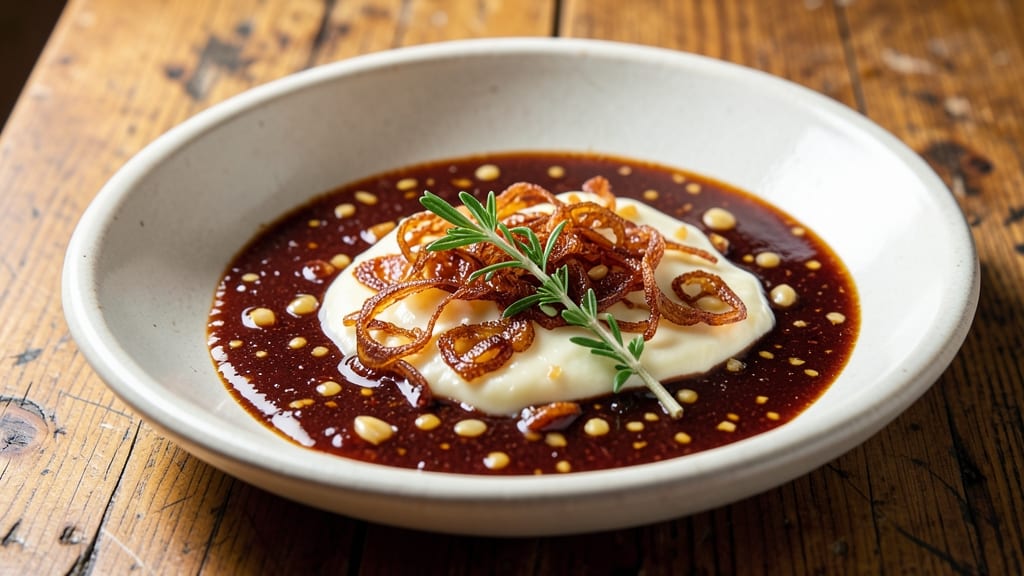
Anjou sauce recipe transforms simple ingredients into a velvety French classic that elevates everything from roasted poultry to delicate fish. This slow-simmered sauce balances rich umami with bright vinegar zing, creating a harmonious depth that professional chefs rely on. The secret lies in patience—allowing shallots to caramelize deeply before building layers of flavor with butter and vinegar.
The process begins with gently cooking shallots until golden, then deglazing with vinegar to create a tangy base. As the sauce simmers, it develops a glossy sheen and complex flavor profile that's impossible to achieve quickly.
Butter finishes it with luxurious silkiness, while a touch of salt and pepper balances the acidity. What you'll end up with is a sauce that's equally at home on weeknight dinners or elegant holiday tables.
Perfect for poultry, fish, or even roasted vegetables, Anjou sauce adds sophistication without complexity. The recipe yields about 1 cup—enough to generously coat your main dish while leaving room for seconds.
It keeps well in the refrigerator for up to 5 days, making it an ideal make-ahead option for busy cooks who want restaurant-quality results.
What makes this sauce truly special is its versatility. Use it as a dipping sauce for crusty bread, drizzle it over grilled meats, or reduce it slightly to create a glossy glaze for vegetables.
The key is letting the flavors develop gradually, which transforms simple ingredients into something extraordinary. Let's create this timeless French sauce together.
Ingredients for anjou sauce
Eight simple ingredients craft this elegant French sauce with depth and balance.
| Ingredient | Amount | Notes |
|---|---|---|
| Shallots 🧅 | 1 ½ lb | Peeled and thinly sliced |
| White Wine Vinegar 🍷 | ½ cup | Dry variety preferred |
| Unsalted Butter 🧈 | ½ cup | Cold and cubed |
| Heavy Cream 🥛 | ¼ cup | Full-fat for richness |
| Salt 🧂 | ½ tsp | Kosher or sea salt |
| Freshly Ground Black Pepper 🌶️ | ¼ tsp | Freshly cracked preferred |
| Vegetable Stock 💧 | ½ cup | Homemade or low-sodium |
| Chicken Fat or Olive Oil 🫒 | 2 tbsp | For initial cooking |
Shallots are the foundation—look for firm, dry bulbs with papery skins. Whole Foods and specialty markets often carry the best quality, but regular grocery stores work fine if they're fresh. Avoid any with sprouting or soft spots. For a deeper flavor, slow-cook the shallots until they're golden brown and caramelized, which takes about 20 minutes. The vinegar should be dry and aged—avoid the sweetened varieties, as they'll throw off the sauce's balance. Bartles & Jaymes or Annie's are solid choices if you want to splurge for a premium bottle.
No white wine vinegar? Apple cider vinegar works in a pinch, though it'll add a slight fruity note. Running short on butter? Ghee is a great substitute—it has a higher smoke point and adds a nutty depth. The heavy cream can be swapped for half-and-half if you're watching fat content, but trust me on the full-fat version for that luxurious finish. For the vegetable stock, homemade is ideal, but low-sodium store-bought brands like Pacific Foods or Swanson are convenient. The fat for initial cooking can be olive oil if you don't have chicken fat—just use a high-quality extra-virgin variety.
This sauce keeps beautifully in the fridge for up to 5 days, though it tastes best within the first 24 hours as the flavors meld. For longer storage, freeze in ice cube trays—thaw and reheat gently for best results. The sauce thickens as it cools, so a splash of warm water or stock can restore its silky texture. It reheats well, but avoid boiling—just warm over low heat until steaming. A drizzle of fresh herbs like chives or parsley just before serving adds a bright finish that elevates the dish even further.
Why You'll Love This Recipe
- Five-Ingredient Magic: I swear, if you’ve ever burned a roux or overcomplicated a sauce, this is your redemption. Shallots caramelized in butter, a splash of vinegar to brighten—boom, you’re already winning. No whisking, no tempering, no stress.
- Creamy Tang Perfection: That balance of sharp vinegar cutting through rich cream? It’s the kind of flavor that makes you pause mid-bite. Honestly, I’ve used it on everything from eggs to mashed potatoes, and it never lets me down.
- Weeknight Workhorse: Make a double batch on Sunday—it keeps for days in the fridge, and reheats like a dream. Slap it on roasted veggies, drizzle over steak, or toss with pasta when you’re too tired to think. (Yes, even on a Tuesday night.)
- Budget-Friendly Luxury: Butter and cream sound fancy, but they stretch further here than in most recipes. A little goes a long way, and the vinegar adds depth without costing a fortune. My wallet and taste buds both approve.
Step-by-step instructions for slow-simmered Anjou sauce
Master this French classic with precise technique and patience—every step builds rich umami depth.
Sweat the Shallots Until Translucent
Heat the 2 tablespoons chicken fat or olive oil in a heavy-bottomed saucepan over medium-low heat. Add the 1.5 pounds peeled and thinly sliced shallots and cook for 15-20 minutes, stirring occasionally. The goal is to soften the shallots completely without browning—they should become translucent and golden in color, releasing their natural sweetness.
Here's the thing—this step requires attention. If the shallots start to brown, reduce the heat immediately. Browning will create bitterness that cuts through the delicate balance of flavors we're building. You'll know they're ready when the shallots collapse slightly and their edges become tender to the touch.
Deglaze with Vinegar and Stock
Once the shallots are perfectly softened, increase the heat to medium and add the 0.5 cup white wine vinegar. The vinegar will sizzle and bubble—this is normal. Let it cook for 3-4 minutes until the liquid reduces by about half and the vinegar's sharpness mellows into the shallots.
Next, pour in the 0.5 cup vegetable stock and bring the mixture to a gentle simmer. This combination of vinegar and stock creates the signature tangy depth of Anjou sauce. Let it simmer uncovered for 10 minutes, stirring occasionally, until the liquid reduces by about one-third. The sauce should thicken slightly but remain loose enough to coat the back of a spoon.
Incorporate Butter and Cream
Reduce the heat to low and add the 0.5 cup cold cubed unsalted butter, stirring constantly until fully melted and incorporated. The butter will add richness and help emulsify the sauce. Then, slowly whisk in the 0.25 cup heavy cream, being careful not to create any lumps. Let the sauce simmer gently for another 5 minutes, stirring frequently to prevent scorching.
This is where the sauce begins to come together. You'll notice it thickening as the cream blends in. If it starts to look too thick, add 1-2 tablespoons of water to loosen it slightly. The sauce should be smooth and velvety, with a glossy sheen that indicates proper emulsification.
Season and Simmer to Perfection
Taste the sauce and adjust the seasoning with the 0.5 teaspoon salt and 0.25 teaspoon freshly ground black pepper. Anjou sauce should have a balance of sweetness from the shallots, acidity from the vinegar, and richness from the butter and cream. Let the sauce simmer gently for another 5-7 minutes until it reaches your desired consistency—it should coat the back of a spoon but still be pourable.
Here's the final check: the sauce should be glossy, with a smooth texture and no visible lumps. If it's too thin, continue simmering uncovered until it thickens slightly. If it's too thick, you can whisk in a bit more warm stock or water to adjust. The key is to achieve that perfect balance between richness and acidity that defines this French classic.
Pro Tips For Making Anjou Sauce
- SWEEAT SHALLOTS FIRST: I learned this the hard way—raw shallots in butter taste like they’re fighting for dominance. Cook them over medium heat until translucent and just starting to soften (about 5 minutes) before adding vinegar. This keeps the sauce silky instead of bitter or grainy.
- USE FULL-BODIED CREAM: Heavy cream with at least 36% fat handles the vinegar’s acidity better than lighter versions. I skip the "light cream" shortcut—it curdles faster and leaves a thin, watery sauce. (Yes, it’s pricier, but your sauce won’t betray you.)
- LOW AND SLOW FOR CREAM: After adding cream, drop the heat to a bare simmer—no boiling, no rushing. I used to crank it up to save time, but that turns the sauce into scrambled eggs. Let it thicken gently for 3–4 minutes, stirring occasionally.
- SALT THE BUTTER: Toss a pinch of salt into the butter before melting it—this seasons the base and cuts through the shallots’ sharpness early. Skipping this means you’ll be chasing flavor with extra salt later, and the sauce will taste flat. (Trust me, your taste buds will notice.)
Pro cooking tips for great anjou sauce
Shallot Caramelization
This is where the magic happens—slow-cooking the shallots until they're golden and translucent unlocks their natural sweetness. Use a heavy-bottomed saucepan (like All-Clad Stainless) to prevent burning, and maintain medium-low heat the entire time.
I recommend slicing the shallots paper-thin—about ⅛-inch slices—for even cooking. If they start to brown too quickly, reduce heat immediately or cover the pan briefly to steam them down. 🌟
Vinegar Reduction
The white wine vinegar needs time to mellow into the shallots—don’t rush this step! After adding the vinegar, let it bubble vigorously for 3-4 minutes until it reduces by half. This step removes the vinegar’s harshness while building the sauce’s signature tang.
For extra depth, I sometimes add 1 tsp of Dijon mustard here, which helps emulsify the sauce later. Stir constantly to prevent scorching.
Butter Emulsification
Adding cold cubed butter at low heat is crucial—it melts gradually and creates a silky texture. Whisk continuously until the butter is fully incorporated, then slowly add the heavy cream to prevent curdling.
If the sauce looks too thick after adding cream, a splash of warm stock (about 1 tbsp) will restore balance. Pro tip: Use a silicon spatula to scrape up any browned bits from the pan’s bottom—they’re packed with flavor!
Consistency Control
Anjou sauce should be velvety but pourable—like heavy cream. If it’s too thin after simmering, uncover the pan and cook for 2-3 more minutes to reduce further. For a glossier finish, whisk in 1 tsp of cold butter at the end.
Avoid over-simmering, or the sauce may separate. I test consistency by tilting the pan—it should coat the back of a spoon but still flow smoothly. ✨
Flavor Balancing
Taste as you go! The sauce should harmonize sweet shallots, tangy vinegar, and rich butter. Adjust seasoning with salt (start with ¼ tsp) and pepper (just a pinch).
For a brighter finish, add 1 tsp of lemon juice or fresh herbs (like chives) at the end. Remember: Anjou sauce should taste complex, not one-dimensional—each component should shine.
Equipment Essentials
Skip the cheap tools—this sauce demands quality. A heavy-bottomed saucepan (like Le Creuset) prevents scorching, and a whisk (preferably balloon-style) ensures smooth emulsification. For storage, use glass jars with airtight lids to preserve freshness.
If reheating, warm over low heat and stir frequently to avoid separation. Trust me, the right tools make all the difference! 💡
Nutrition facts
Frequently asked questions about Anjou sauce
Can I substitute shallots with onions?
Yes, but expect a slightly different flavor profile. Use yellow or white onions (about 1 large onion), but they'll be more pungent and less sweet than shallots. For a closer match, try leeks—they're milder and have a similar texture when caramelized.
How do I fix a separated sauce?
Simmer the sauce gently while whisking in 1 tablespoon of cold butter or 1 tablespoon of heavy cream to re-emulsify. If that doesn't work, make a roux (equal parts butter and flour) and whisk it into the sauce until smooth. Avoid adding liquid all at once—do it gradually to prevent further separation.
What's the best way to store leftover sauce?
Transfer to an airtight container and refrigerate for up to 5 days—the flavors actually improve slightly as it sits. For longer storage, freeze in ice cube trays (thaw in the fridge) or glass jars (leave 1-inch headspace to prevent cracking). Reheat gently over low heat, stirring constantly.
Can I make Anjou sauce without dairy?
Replace the butter and cream with coconut milk (full-fat) or cashew cream (blend ½ cup soaked cashews with ½ cup water). For richness, add 1 tablespoon of olive oil at the end. The sauce will have a different texture but still maintain that signature tangy depth.
What's the ideal pairing for Anjou sauce?
This versatile sauce shines with roasted chicken, pan-seared fish (like trout or sole), and grilled vegetables. It also works beautifully as a dipping sauce for crusty bread or fries. For a modern twist, drizzle it over seared scallops or use it as a glaze for grilled pork chops.