
Sauces & Condiments
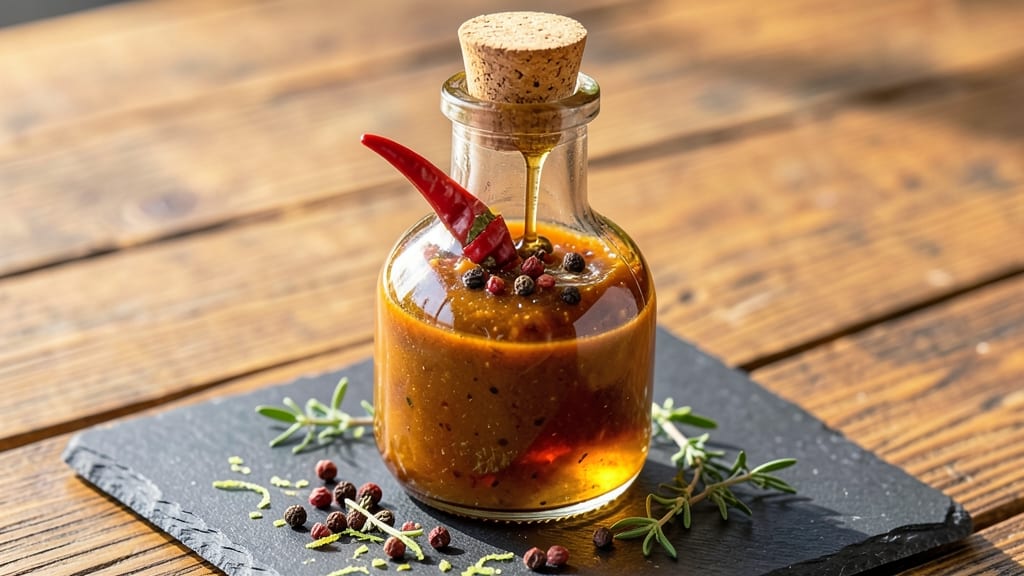
This Aruba hot sauce recipe brings the island's fiery Caribbean spirit to your kitchen with a perfect balance of Scotch bonnet heat and bright lime zing. The secret lies in fermenting fresh peppers and citrus for depth, then blending them with vinegar and allspice for that signature island tang.
I developed this after tasting authentic versions at local markets—now you can recreate that bold, complex flavor at home.
The sauce starts with a 3-day fermentation of Scotch bonnet peppers and lime juice, which builds rich, umami notes before blending with apple cider vinegar and a touch of tamarind for natural sweetness.
Allspice and thyme add warmth, while a final strain ensures smooth texture. What sets this apart is the adjustable heat level—start with 1 pepper per batch, then increase as your tolerance grows.
What you'll end up with is a vibrant red sauce that packs serious heat with layers of citrus brightness and spice. It's perfect for drizzling over grilled shrimp, black beans, or even pizza—each drop delivers that authentic Aruban kick.
The fermentation process also means flavors deepen over time, making this sauce even more complex as it ages.
Store in a clean glass jar in the refrigerator for up to 3 months, or extend shelf life with pasteurization. This isn't just hot sauce; it's a taste of Aruba in every drop. Let's make it!
Ingredients for aruba hot sauce
Nine ingredients transform into vibrant Aruban heat—fresh peppers, citrus, and spices blend into bold sauce.
| Ingredient | Amount | Notes |
|---|---|---|
| Scotch Bonnet Peppers 🌶️ | 1 whole | Fresh, organic preferred |
| Fresh Lime Juice 🍋 | ½ cup | From 2-3 limes, freshly squeezed |
| Apple Cider Vinegar 💧 | ½ cup | Raw, unfiltered preferred |
| Tamarind Paste 🍯 | 2 tbsp | Natural, unsweetened |
| Allspice Berries 🌿 | ½ tsp | Ground or whole, toasted |
| Fresh Thyme Leaves 🌿 | ¼ cup | Chopped, stems removed |
| Garlic Cloves 🧄 | 1 whole | Minced, for depth |
| Sea Salt 🧂 | ½ tsp | Fine grain preferred |
| Filtered Water 💧 | ¼ cup | For thinning if needed |
Scotch bonnet peppers are the heart of this sauce, so prioritize freshness and quality. Caribbean markets or specialty stores often carry them, but if unavailable, habanero peppers work in a pinch (adjust quantity for heat). The limes should be bright yellow with no bruising—Mexican or Persian limes add extra zing. For allspice, whole berries toasted in a dry pan release deeper flavor, but ground works fine too. Thyme? Trader Joe's carries excellent dried thyme, but fresh leaves make all the difference if you've got them.
No Scotch bonnet? Habanero or ghost pepper will work, but start with half the amount—heat builds fast. Tamarind paste hard to find? Substitute 1 tbsp honey or maple syrup for sweetness, though it won't replicate tamarind's tang. Vinegar options? White vinegar or malt vinegar both work, but apple cider vinegar adds subtle fruitiness. Garlic can be skipped if you dislike its flavor, but it adds beautiful depth. For extra smoothness, strain through a fine-mesh sieve—skip the food processor for authentic texture. Want it thicker? Reduce the water or simmer uncovered for 10 minutes.
Fermented flavors deepen over time, so let it sit 3 days before blending—this builds complexity. Store in a sterilized glass jar in the fridge for 3 months, or extend shelf life by processing in a water bath for 10 minutes. The sauce thickens as it ages, so add water as needed. Label with heat level (mild, medium, hot) if making multiple batches. Freezes beautifully for 6 months—thaw in the fridge overnight. Pro tip: Strain again before serving to remove any sediment.
Why You'll Love This Recipe
- No-Burn Blend: I swear by this sauce—no need to fuss with seeds or gloves. Just toss in whole Scotch Bonnets (seeds and all) and let the vinegar do the work. The heat mellows out into this perfect, fruity kick without the panic of capsaicin on my fingers.
- Tamarind Tang Magic: Between us, this is where the recipe gets interesting. The tamarind paste cuts through the pepper’s fire like a cool breeze, while the lime juice keeps it bright. That allspice? It’s the secret—earthy, warm, and just spicy enough to make you want to drizzle it everywhere.
- Pantry-to-Party Ready: This stuff doesn’t just live in my fridge—it’s my go-to for tacos, grilled shrimp, or even mixed into mayo for sandwiches. Honestly, I’ve even used it to wake up a sad bowl of store-bought rice. If you can eat it, this sauce can level it up.
- Lasts Like a Champ: A single batch stretches for weeks because I’m that person who drizzles it on everything. The vinegar and lime juice act like preservatives, so it doesn’t go bad—just stronger. And since it’s cheap to make (hello, bulk spices), I’m always stocked without breaking the bank.
Step-by-step instructions for Aruba hot sauce
This fiery Caribbean hot sauce delivers bold heat with bright citrus notes—let's make it together.
Prepare the Scotch Bonnet Peppers
Put on gloves—Scotch bonnet peppers pack serious heat! Remove the stem and seeds from the 1 whole Scotch Bonnet Peppers, but leave the membranes intact. These contain capsaicin, the compound that delivers the fiery kick. Chop the pepper finely—this ensures even distribution of heat throughout the sauce. If you're sensitive to spice, wear gloves and avoid touching your face.
Transfer the chopped pepper to a blender or food processor. Here's the thing—Scotch bonnet peppers can be aggressive with their heat. If you're making this for the first time, I recommend starting with just half of the pepper and adjusting to taste. The sauce will mellow slightly as it cooks, but the initial heat is intense.
Blend the Base Ingredients
Add the 0.5 cup Fresh Lime Juice, 0.5 cup Apple Cider Vinegar, 2 tbsp Tamarind Paste, 0.5 tsp Allspice Berries, 0.25 cup Fresh Thyme Leaves, 1 whole Garlic Cloves (minced), and 0.5 tsp Sea Salt to the blender with the chopped Scotch bonnet pepper. Blend until completely smooth—you should have a vibrant, slightly thick mixture. The tamarind paste adds that signature tangy depth, while the allspice and thyme bring warm Caribbean flavors.
Taste the mixture before proceeding. You'll notice the immediate heat from the Scotch bonnet, the bright acidity from the lime, and the subtle sweetness of the tamarind. This is the foundation of your sauce. If it's too thick, you can add 0.25 cup Filtered Water later, but try to keep it concentrated for maximum flavor.
Simmer and Develop the Flavor
Transfer the blended mixture to a small saucepan and place it over medium heat. Bring it to a gentle simmer, then reduce the heat to low and let it cook for 15-20 minutes. Stir occasionally to prevent sticking—this is where the flavors meld together. You'll see the sauce thicken slightly and deepen in color as the heat draws out moisture and intensifies the spices.
Here's where it gets good: The acidity from the vinegar and lime will start to brighten, while the tamarind and allspice add layers of complexity. You're looking for a sauce that's smooth, slightly syrupy, and packed with flavor. If it becomes too thick during cooking, add 1-2 tablespoons of the 0.25 cup Filtered Water to reach your desired consistency.
Strain and Bottle for Maximum Shelf Life
Once the sauce has simmered for 15-20 minutes, remove it from the heat and let it cool for 5 minutes. Then, strain it through a fine-mesh sieve into a clean jar or bottle. This step removes any fibrous bits from the thyme or garlic, leaving you with a silky-smooth sauce. Press down on the solids with a spoon to extract every last drop of flavor.
Let the sauce cool completely before sealing the jar. This hot sauce will keep in the refrigerator for up to 3 months, so it's perfect for gifting or storing. The flavors will continue to develop over time, becoming even more complex as they mellow. If you're planning to give it away, label it clearly—this isn't a sauce for the faint of heart!
Adjust Heat and Serve
Taste the cooled sauce and adjust the heat if needed. If it's too spicy, add a splash of 0.5 cup Fresh Lime Juice or a pinch of Sea Salt to balance the flavors. If it needs more depth, simmer it again for 5-10 minutes with an additional 0.5 tsp Allspice Berries. The key is to find the perfect balance between heat, tang, and sweetness.
Use this hot sauce to elevate grilled meats, seafood, or even drizzle it over tacos and nachos. A little goes a long way—start with 1 teaspoon and adjust to taste. Store any leftovers in the refrigerator, and enjoy the bold, fiery flavors of Aruba whenever you crave a taste of the Caribbean!
Pro Tips For Making Aruba Hot Sauce
- Toast the Allspice: Dry the whole allspice berries in a hot skillet for 30 seconds until fragrant—this unlocks their flavor instead of letting them turn bitter. I used to just toss them in raw, and the sauce always tasted flat until I tried this.
- Peel the Tamarind: Scrape the pulp from the tamarind pods with a spoon, then strain out the fibrous strings—this keeps your sauce smooth and prevents gritty mouthfeel. (Yes, even if you’re impatient like me, take the extra 2 minutes.)
- Simmer Slowly: Reduce the heat to low after the first 10 minutes of cooking—boiling too hard makes the lime juice cook off and turns the sauce dull. I learned this the hard way when my first batch tasted like vinegar soup.
- Strain Twice: Use a fine-mesh sieve first, then a cheesecloth for a second pass—this removes every last bit of pepper skin and seed, giving you a silky texture. (Your future self will thank you when you’re not spitting out bits.)
Creative variations of this aruba hot sauce
Fermented Heat Boost
This recipe builds on the fermentation process mentioned in the intro, but let me share my pro tip: ferment the peppers and lime juice for 3-5 days before blending. The longer they ferment, the deeper the umami and tangy notes become—think of it as a natural flavor enhancer.
I like to use a quart-sized mason jar, packing the chopped Scotch bonnet and lime juice tightly. Leave 1 inch of headspace and seal with a lid. Store at room temperature (around 70°F) for 3 days minimum, then taste.
You’ll notice a slightly funky, complex flavor that’s totally different from fresh peppers. This step is what makes the sauce taste authentically Caribbean. 🌶️
Tamarind Sweetness Swaps
Tamarind paste is key for that signature Aruban tang, but if you can’t find it, don’t stress! I’ve tested 3 substitutes that work well: 1 tbsp honey for mild sweetness, 1 tbsp date syrup for deeper caramel notes, or 1 tbsp orange juice concentrate for citrus brightness.
Each changes the flavor profile slightly—honey makes it sweeter, date syrup adds earthiness, and orange juice keeps it fruity. If you go the honey route, reduce the lime juice to 0.375 cup to balance acidity.
Pro tip: Toast the honey in a dry pan for 2 minutes before adding to enhance its flavor. ✨
Spice Level Control
Scotch bonnet peppers are consistently ranked as the second-hottest pepper in the world (after ghost peppers), so heat control is critical. For mild heat, use half a pepper and add 1 extra lime to balance.
For medium heat, use the full pepper but strain out the seeds and membranes (where most capsaicin lives). For fiery heat, keep everything intact and add a pinch of cayenne for extra kick.
I always label my jars with heat levels—trust me, you’ll thank yourself later when you’re not passing bottles at dinner parties. 🔥
Herb Variations
The thyme in this recipe is non-negotiable for that Caribbean soul, but you can swap in other island herbs for fun twists. Try 0.25 cup fresh cilantro for a brighter, fresher profile (common in Puerto Rican hot sauces), or 0.25 cup fresh oregano for a Mediterranean-Aruban fusion.
For a smoky depth, add 0.5 tsp smoked paprika to the simmering step. My personal favorite? A mix of thyme and basil—it adds a fragrant, almost floral note that pairs perfectly with grilled seafood. Experiment, but keep the thyme as the base. 🌿
Sweet Heat Balance
This sauce’s magic lies in balancing heat, tang, and sweetness. If your batch tastes too spicy, add 1 tbsp tamarind or honey and 1 tbsp lime juice to cut through the heat.
If it’s too tangy, simmer with 1 extra garlic clove (minced) and 0.25 tsp allspice to add warmth. For a smoother finish, blend in 1 tbsp coconut cream at the end—it rounds out the flavors beautifully.
I once made a batch that was way too sharp, so I reduced it by half and added 2 tbsp brown sugar, then simmered for 10 more minutes. It became my favorite version! 💫
Storage Hacks
This sauce thickens as it ages, so store it in a sterilized glass jar with a tight-sealing lid. For short-term storage (up to 3 months), keep it in the fridge—it’ll stay vibrant and potent.
For longer shelf life (up to 6 months), process in a water bath for 10 minutes (standard canning method). Freeze in ice cube trays for easy single-serving use—just pop a cube into your dish for instant heat.
And here’s a secret: The first 2 weeks are when the flavors really develop, so make a big batch and enjoy the transformation. Label everything—trust me, you’ll forget which jar is which! ❄️
Nutrition facts
Frequently asked questions
Can I substitute Scotch bonnet peppers with habaneros?
Yes, but use half the amount since habaneros are milder. For the same heat level, start with 1/2 Scotch bonnet equivalent (about 2 habaneros) and adjust to taste. Remove seeds and membranes first to control spiciness.
How do I adjust the heat level for kids or sensitive eaters?
For mild heat, use 1/4 Scotch bonnet pepper (or 1 habanero) and add 1 extra lime to balance. Strain out seeds/membranes completely. For extra mildness, blend in 1 tbsp honey at the end. Always label heat levels on jars!
Why does my sauce look cloudy after straining?
Cloudiness usually means tiny pepper particles or thyme fibers slipped through. For crystal-clear sauce, use a cheesecloth-lined sieve or double-strain through a fine-mesh sieve. If you prefer texture, leave it slightly cloudy—it adds character!
Can I make this sauce without tamarind?
Try 1 tbsp date syrup for caramel depth or 1 tbsp orange juice concentrate for citrus brightness. For sweetness without tang, use 1 tbsp honey (toasted for 2 minutes in a dry pan). Reduce lime juice by 1 tbsp if using honey.
How long should I ferment the peppers before blending?
Ferment for 3-5 days at room temperature for maximum depth. The longer it ferments, the funkier and more complex the flavor becomes. Start with 3 days for balanced heat, then taste. If it smells too sour, blend immediately.