
Sauces & Condiments
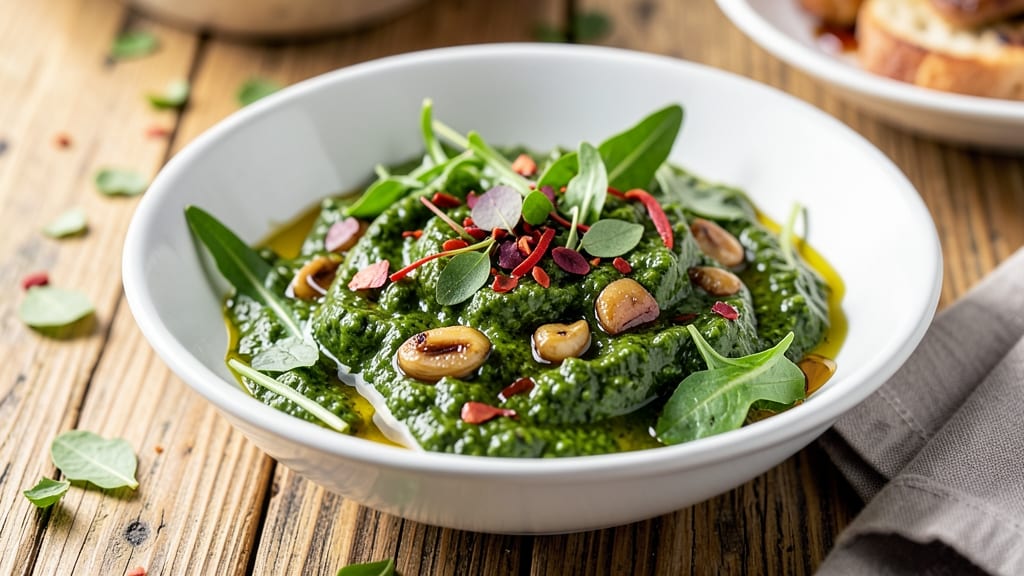
This arugula chimichurri sauce transforms simple ingredients into a vibrant, herb-packed condiment that elevates every dish it touches. Unlike traditional parsley-based chimichurri, arugula adds a peppery brightness that cuts through rich flavors while keeping the recipe naturally vegetarian.
The secret lies in the balance of fresh garlic, red wine vinegar, and high-quality olive oil—no cooking required, just chopping and blending.
What sets this sauce apart is its versatility and effortless preparation. With just 10 minutes of hands-on time, you’ll have a sauce that’s perfect for drizzling over grilled steaks, seared scallops, or even toasted baguette slices.
The arugula’s slight bitterness mellows into a fresh, aromatic finish that pairs beautifully with bold flavors, making it a game-changer for both weeknight dinners and special occasions.
The best part? This chimichurri stays fresh in the refrigerator for up to 5 days, allowing you to make a batch ahead and keep it on hand for spontaneous meals.
For a vegan adaptation, simply ensure your olive oil and vinegar are plant-based, and the sauce remains just as vibrant and full of flavor. Whether you're a home cook or a seasoned chef, this sauce is a must-have for your culinary toolkit.
Ready to elevate your dishes with this herb-infused sauce? Let’s dive into the ingredients and instructions—your taste buds will thank you.
Ingredients for arugula chimichurri sauce
Nine vibrant ingredients blend into a peppery, herb-packed sauce that transforms any dish instantly.
| Ingredient | Amount | Notes |
|---|---|---|
| Fresh Arugula Leaves 🌿 | 2 cups | Packed, stems removed |
| Extra-Virgin Olive Oil 🫒 | ½ cup | High-quality, fruity variety |
| Red Wine Vinegar 🍷 | ¼ cup | Dry, bold flavor preferred |
| Garlic Cloves 🧄 | 4 cloves | Peeled, roughly chopped |
| Fresh Red Chili Pepper 🌶️ | 1 whole | Seeds removed for mild heat |
| Kosher Salt 🧂 | 1 tsp | Diamond Crystal preferred |
| Ground Black Pepper 🌶️ | ½ tsp | Freshly ground preferred |
| Fresh Oregano Leaves 🌿 | ¼ cup | Chopped, or dried at 1/4 amount |
| Lemon Juice 🍋 | 1 tbsp | Freshly squeezed |
The arugula is non-negotiable—its peppery bite sets this sauce apart from traditional parsley chimichurri. Buy the freshest leaves you can find, ideally from a farmers market or the produce section where they're still crisp. If using store-bought, check the stems—any brown or wilted spots mean it's past its prime. The extra-virgin olive oil should be fruity and peppery, not mild. California Olive Ranch or Colavita are solid choices, but any high-quality brand works. Red wine vinegar adds depth, so avoid the cheap stuff—Bartles & Jaymes or Bragg are reliable options. For the chili pepper, a fresh serrano or jalapeño works best, but dried arbol will do in a pinch.
No fresh arugula? Baby spinach or kale can substitute at the same amount, though flavor will differ slightly. Short on red wine vinegar? Balsamic vinegar at half the amount works, but it'll add sweetness. The oregano is optional but adds warmth—dried Mexican oregano has a completely different profile than Italian, so use what you have. For extra brightness, add 1 tbsp fresh lemon juice or a splash of white wine. The garlic can be roasted for a milder flavor if you prefer—simply wrap the whole cloves in foil with a drizzle of olive oil and roast at 400°F for 10 minutes before chopping.
This sauce keeps beautifully—store it in an airtight jar with a thin layer of olive oil on top to preserve freshness. It'll stay vibrant for 5 days in the fridge, though flavor deepens after a day or two. For longer storage, freeze in ice cube trays and transfer to a bag—3 months frozen with no texture changes. The sauce thickens as it sits, so stir in a splash of water or vinegar if it becomes too stiff. Perfect for drizzling, tossing, or spooning—just give it a quick whisk before using.
Why You'll Love This Recipe
- No Pulse Required: I swear, this sauce comes together while I’m still debating what to make for dinner. Just toss arugula, garlic, and chili into the food processor—no chopping, no stress—then hit pulse once. That’s it. The vinegar and olive oil do the rest while I grab a glass of wine.
- Herb Bomb Flavor: Between us, this isn’t your average chimichurri. The arugula’s peppery bite cuts through the richness of the olive oil, while the garlic and chili add a slow-building heat that lingers. It’s the kind of sauce that makes you reach for seconds without even thinking.
- Weeknight Superstar: Slather it on grilled chicken for Tuesday, drizzle it over roasted veggies for Thursday, or toss it with pasta when you’re really tired. Honestly, I’ve used it on everything from eggs to avocado toast, and it never lets me down. It’s the one sauce that turns “meh” into “dinner party vibes.”
- Pantry Stretch: Here’s what sold me—the ingredients are cheap but feel luxurious. Arugula wilts fast, but the rest? Olive oil, vinegar, garlic—stuff you already have. And if I make too much? It keeps for days in the fridge, ready to rescue whatever I’m serving next. No waste, all flavor.
Step-by-step instructions for arugula chimichurri sauce
Here's how to make this vibrant, herb-packed sauce that transforms any dish instantly.
Prepare the Herb Base
In a food processor, combine the 2 cups fresh arugula leaves, 4 cloves peeled garlic, 1 whole fresh red chili pepper (seeds removed), and 0.25 cup chopped fresh oregano leaves. Pulse until everything is finely chopped but not completely puréed—you want visible texture to maintain that fresh chimichurri character. This rough chopping releases the herbs' essential oils while preserving their bright flavors.
Here's the thing—don't skip the pulse-and-stop technique. Continuous processing turns chimichurri into pesto, losing its signature freshness. You're aiming for a coarse, herby texture that still clings beautifully to meat or fish. If your processor overheats, let it rest for 30 seconds between pulses to maintain optimal flavor extraction.
Incorporate the Acidic Components
With the food processor running, slowly drizzle in the 0.5 cup extra-virgin olive oil through the feed tube. This gradual addition emulsifies the mixture while preventing the oil from separating. Add the 0.25 cup red wine vinegar and 1 tablespoon freshly squeezed lemon juice next, letting the processor blend everything together for about 15 seconds after each addition.
The vinegar and lemon juice act as natural emulsifiers here, cutting through the richness of the olive oil while brightening the entire sauce. You'll notice the mixture immediately lighten in color and become more cohesive. Taste as you go—this is where you can adjust the balance. Need more acid? Add a splash more vinegar. Want it richer? Add another drizzle of olive oil.
Season and Rest for Maximum Flavor
Transfer the chimichurri to a bowl and stir in the 1 teaspoon kosher salt and 0.5 teaspoon freshly ground black pepper. Give it a thorough mix, then let it rest at room temperature for at least 10 minutes. This resting period allows all the flavors to meld together and the herbs to fully infuse the oil. I know it seems counterintuitive to wait when it smells so good already, but trust me—this step makes all the difference.
After resting, give the sauce one final taste and adjust the seasoning if needed. The flavors will have deepened and become more harmonious. The perfect chimichurri should be vibrant green with visible herb flecks, tangy from the vinegar and lemon, and rich from the olive oil. It should coat the back of your spoon with a velvety texture rather than feeling oily or watery.
Use Immediately or Store Properly
This chimichurri is best used immediately, but if you need to store it, transfer to an airtight container and refrigerate for up to 3 days. The flavors actually improve slightly after a day in the fridge as the herbs continue to infuse. When ready to use, give it a good stir—it may separate slightly during storage, but the emulsifying power of the vinegar and lemon will bring it back together when you whisk it vigorously.
Here's a pro tip: if you're using this chimichurri on grilled meats, let it come to room temperature before serving. The contrast between the warm, smoky meat and the cool, vibrant sauce is what makes this pairing truly special. The acidity in the chimichurri cuts through rich flavors beautifully, while the herbs add a fresh, bright finish that cleanses your palate between bites.
Pro Tips For Making Arugula Chimichurri Sauce
- Pulse, Don’t Blend: I learned this the hard way—blending arugula chimichurri turns it into a sad, watery paste. Use a food processor or knife to roughly chop the arugula first, then pulse just 3-4 times. You want texture, not soup.
- Salt the Arugula: This isn’t just about flavor—salting the arugula leaves (1/2 tsp) before blending draws out moisture and keeps your sauce from turning mushy. Let them sit for 2 minutes while you prep the rest.
- Skip the Overripe Garlic: That soft, sprouting garlic clove? Toss it. Even slightly bruised cloves add bitterness to the sauce. Use firm, fresh ones and smash them with the flat of your knife—no peeling needed.
- Vinegar First, Then Oil: Add the red wine vinegar to the arugula before the olive oil. The acid helps emulsify the oil better, so you end up with a smoother, more cohesive sauce. Stir immediately after blending—this isn’t the time to walk away.
Troubleshooting this dish
Herb Overload Fix
If your chimichurri tastes too bitter or overpowering from the arugula, simply add 1-2 tablespoons more extra-virgin olive oil to mellow the flavors. The oil acts as a natural balancer, smoothing out the peppery bite.
For extra richness, I like to use California Olive Ranch's fruity olive oil—it adds a pleasant depth without masking the herbs. 🌿
Oil Separation
When stored, chimichurri often separates with the oil rising to the top. Just whisk vigorously before using—this emulsifies the mixture back together. For extra insurance, add 1 teaspoon of Dijon mustard when blending initially.
The mustard acts as a natural emulsifier, keeping the sauce cohesive for longer. This trick works especially well if you're prepping the sauce ahead of time.
Too Thick or Dry
If your chimichurri is too thick after blending, thin it with 1-2 tablespoons of water or red wine vinegar. Start with water first—it maintains the balance of flavors. For a smoother texture, I sometimes add 1 teaspoon of honey or maple syrup to help bind the ingredients together.
This is particularly useful if you're using very dry herbs or arugula that's been stored for a few days.
Mild Flavor
Need more heat or depth? Add ½ teaspoon of smoked paprika or a pinch of cayenne pepper for a smoky kick. For extra brightness, stir in 1 teaspoon of capers or a few anchovy fillets (dissolved in vinegar) for umami.
If you're using this on vegetarian dishes, the capers add a briny tang that works beautifully. 🌶️
Wilted Arugula
If your arugula leaves are wilted or old, they'll make your chimichurri taste bitter and dull. To salvage it, soak the leaves in ice water for 10 minutes before blending. This revives their crispness and reduces bitterness.
For best results, always use the freshest arugula possible—this sauce relies on its bright, peppery flavor. If you're working with less-than-fresh herbs, reduce the amount to 1.5 cups and add ½ cup fresh basil for a milder, sweeter note.
Storage Issues
If your chimichurri develops an off smell or mold after refrigeration, it's time to toss it. To maximize freshness, always store it in an airtight glass jar with a thin layer of olive oil on top—this prevents oxidation and keeps the herbs vibrant.
For longer storage, freeze in 1-tablespoon portions in ice cube trays. Thaw in the fridge overnight and whisk before using. The texture may be slightly grainier after freezing, but the flavor remains intact. ❄️
Nutrition facts
Frequently asked questions
Can I use this arugula chimichurri on vegetarian dishes?
This vibrant sauce works beautifully with grilled vegetables, roasted potatoes, or even as a dip for toasted bread and crackers. The peppery arugula and bright acidity complement plant-based dishes perfectly. For extra richness, try drizzling it over creamy avocado toast or tossing it with roasted Brussels sprouts.
How do I adjust the heat level in this sauce?
For milder heat, remove all seeds and membranes from the chili pepper before blending. Want more spice? Add ½ teaspoon of red pepper flakes or a pinch of cayenne. For a smoky twist, stir in ½ teaspoon of smoked paprika. Remember, you can always adjust after blending—start with less and add more to taste.
What's the best way to store leftover chimichurri?
Transfer to an airtight glass jar and refrigerate for up to 5 days. The sauce may separate slightly, but simply whisk before using. For longer storage, freeze in ice cube trays with a thin layer of olive oil on top. Thaw overnight in the fridge—this preserves texture and flavor perfectly.
Can I make this sauce without a food processor?
Yes! Use a sharp chef's knife and a mortar and pestle for a more rustic texture. Finely chop the arugula, garlic, and herbs, then pound them together in the mortar. Slowly drizzle in the olive oil while mixing continuously. The texture will be chunkier but equally flavorful—just stir in the vinegar and lemon juice at the end.
What's the difference between this and traditional chimichurri?
The key difference is the arugula instead of parsley, which adds a peppery bite that traditional parsley chimichurri lacks. This version also includes oregano for warmth and lemon juice for extra brightness. Both are vibrant, herb-packed sauces, but this arugula version has a more complex flavor profile that pairs especially well with rich meats and creamy dishes.