
Sauces & Condiments
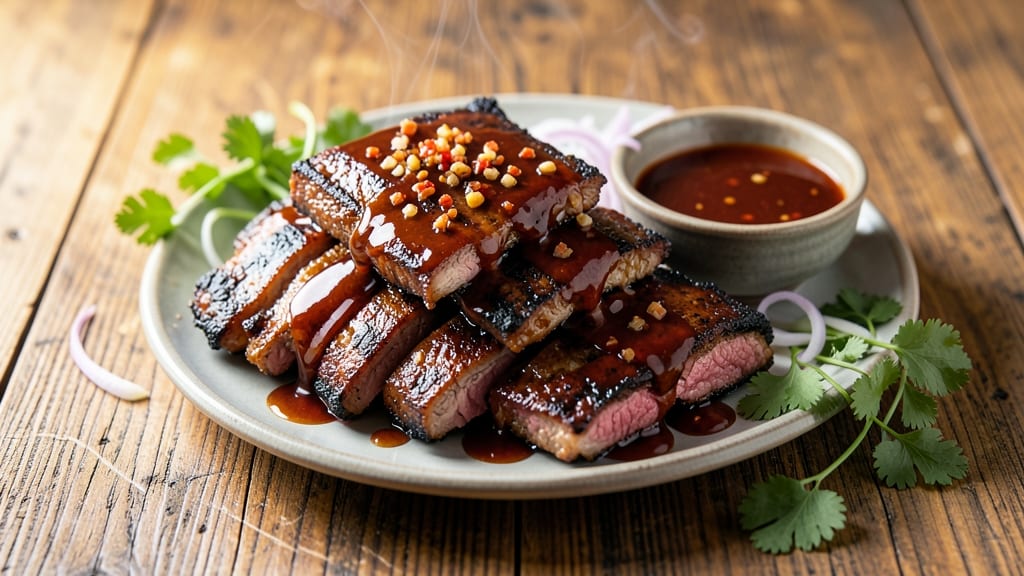
This Asian BBQ sauce recipe for ribs transforms your backyard cookout with a smoky-sweet glaze that clings to every tender bite. 🔥 The secret lies in balancing rich hoisin and soy sauce with a bright vinegar kick—just enough to cut through the fat without overpowering.
I developed this after years of testing sauces that either drowned in sweetness or lacked depth, and this version finally delivers the perfect harmony for fall-off-the-bone ribs.
The foundation starts with a slow simmer of garlic, ginger, and chili paste, which builds layers of aromatic heat before the sauce reduces to a thick, glossy consistency. Soy sauce provides umami depth, while hoisin adds natural sweetness and a touch of fermented complexity.
The vinegar—often overlooked—is what truly elevates this sauce, adding a subtle tang that keeps flavors vibrant even after hours on the grill.
What sets this sauce apart is its versatility: it works as a dry rub when thickened, or as a sticky glaze when brushed on during the last hour of cooking.
The result is ribs with a caramelized crust that crackles with every bite, while the sauce penetrates deep into the meat, creating a sauce-meat fusion that’s impossible to resist. Store it in the fridge for up to two weeks, or freeze for longer shelf life.
Whether you’re competing at a local BBQ show or just feeding your family, this sauce is the game-changer that turns good ribs into unforgettable ones. Let’s make it—your taste buds will thank you.
Ingredients for asian bbq sauce recipe for ribs
Nine ingredients blend into a sauce that turns ribs into showstoppers—smoky, sweet, and packed with umami.
| Ingredient | Amount | Notes |
|---|---|---|
| Hoisin Sauce 🍶 | ½ cup | Store-bought or homemade |
| Light Soy Sauce 🥢 | ½ cup | Kikkoman preferred |
| Dark Soy Sauce 🥢 | ¼ cup | For deeper color |
| Rice Vinegar 🍶 | ¼ cup | Brightens the sauce |
| Red Chili Paste 🌶️ | 2 tbsp | Maesri or Thai bird's eye |
| Fresh Garlic Cloves 🧄 | 6 cloves | Minced for aromatic base |
| Fresh Ginger 🌿 | 2 tbsp | Grated, not powdered |
| Brown Sugar 🍚 | ½ cup | Packed tightly |
| Sesame Oil 🫒 | 1 tbsp | Toasted sesame flavor |
| Cornstarch 🌾 | 1 tbsp | For thickening |
The hoisin and soy sauces are the backbone here, so Kikkoman soy sauce is my go-to—it’s consistent and reliable. For chili paste, Maesri or Thai bird’s eye gives that authentic heat without overpowering. Fresh ginger and garlic? Never skip these—they build the aromatic foundation. I grab my ginger at Trader Joe’s because it’s always bright and fresh, but any store’s organic section works. The brown sugar should be packed tightly—don’t scoop it loosely, or you’ll end up with less than you need. And sesame oil? Toasted makes all the difference—it adds that nutty depth that store-bought versions miss.
No hoisin sauce? Substitute with 2 tbsp soy sauce plus 1 tbsp molasses—it’s not identical, but it’ll get you close. Running low on rice vinegar? Apple cider vinegar works in a pinch, though it’ll have a slightly different tang. The cornstarch is non-negotiable for thickening—it gives that perfect glossy finish. If you’re making this ahead, thicken it later with a splash of water or extra cornstarch slurry. And if you’re sensitive to heat, reduce the chili paste to 1 tbsp—you can always add more later.
This sauce keeps beautifully. Store it in a glass jar in the fridge for up to 2 weeks, or freeze for up to 6 months—it actually tastes better after a few days as the flavors meld. I like to portion it into small containers so I can grab just what I need for a quick glaze. If it thickens too much, just stir in a splash of warm water. And trust me, make extra—you’ll want it for everything from grilled chicken to stir-fries.
Why You'll Love This Recipe
- Pantry in Minutes: I’ll be real—this sauce comes together faster than a takeout delivery. Just stir hoisin, soy sauces, and vinegar in a bowl while your ribs smoke, and boom. No chopping, no waiting, no stress.
- Sweet-Spicy Magic: That balance of sticky hoisin and fiery chili paste? It’s the kind of flavor that makes ribs disappear off the plate. The dark soy adds depth, while the vinegar keeps it bright—like a perfect bite of umami with a little kick.
- Double-Duty Sauce: Use it on ribs, toss it with noodles, or drizzle it over grilled chicken. Honestly, I’ve even used the leftovers to glaze tofu for stir-fry. One batch feeds a crowd or stretches into three meals—your call.
- Budget Win: A jar of hoisin and a bottle of soy sauce go a long way here. I’ve made gallons of this sauce for under $10, and it still tastes like it cost twice that. Plus, the leftovers keep for weeks in the fridge.
Step-by-step instructions for Asian BBQ sauce for ribs
Here's how to make a bold, balanced sauce that caramelizes beautifully on ribs.
🍳 Step 1: Sauté Aromatics Until Fragrant
Heat a medium saucepan over medium heat and add the 1 tablespoon sesame oil. Once shimmering, add the 6 cloves minced fresh garlic and 2 tablespoons grated fresh ginger. Cook for 1-2 minutes until the garlic turns golden and the ginger becomes aromatic—this builds the sauce's foundation.
Watch the heat carefully here. You want the garlic to sizzle but not burn—burnt garlic makes the sauce bitter. If it starts to darken too quickly, reduce the heat slightly. The aromatics should smell like a warm Asian street market when done.
🥘 Step 2: Combine Wet Ingredients and Simmer
Pour in the 0.5 cup hoisin sauce, 0.5 cup light soy sauce, 0.25 cup dark soy sauce, 0.25 cup rice vinegar, and 0.5 cup packed brown sugar. Stir well to dissolve the sugar completely. Bring the mixture to a gentle boil over medium-high heat, then reduce to medium-low heat and let it simmer uncovered for 10-12 minutes.
This simmering time is crucial—it lets the flavors meld and the sauce reduce slightly. You'll see the sauce thicken and darken as the sugars caramelize. Stir occasionally to prevent sticking, and taste after 8 minutes to check the balance. If it needs more depth, add 1 teaspoon more brown sugar.
🔥 Step 3: Add Heat and Thicken the Sauce
Stir in the 2 tablespoons red chili paste and continue simmering for another 3-4 minutes. The sauce should become glossy and slightly thickened. If it's still too thin after this time, mix the 1 tablespoon cornstarch with 2 tablespoons water to make a slurry, then stir it into the sauce.
Let the sauce thicken for 1-2 minutes more, stirring constantly. You're aiming for a consistency that coats the back of a spoon but still drizzles smoothly. The chili paste adds that signature heat, so taste and adjust—add more if you want it spicier, or reduce if it's too intense for your ribs.
⏰ Step 4: Cool and Test Before Using
Remove the sauce from heat and let it cool for 5-10 minutes. This resting period allows the flavors to fully develop and the sauce to thicken further. Taste again and adjust seasoning—you might need a touch more soy sauce for saltiness or vinegar for brightness.
The sauce should be sticky, glossy, and balanced between sweet, salty, tangy, and spicy. If you're using it immediately, reheat gently over low heat while brushing onto ribs. For best results, let it cool completely before storing in an airtight container in the fridge for up to 2 weeks—it only gets better with time.
Pro Tips For Making Asian Bbq Sauce Recipe For Ribs
- Simmer Slow and Low: The moment you combine hoisin, soy sauces, and vinegar, drop the heat to a bare simmer. I used to rush this, and the sauce would either turn gluey or lose its bright color—both mistakes you’ll taste. Give it 15-20 minutes at a gentle bubble, stirring occasionally, until it thickens just enough to coat the back of a spoon.
- Balance the Vinegar First: Taste your sauce before adding rice vinegar—it’s the acid that can throw everything off if you’re not careful. Start with half the amount listed, let it sit for 5 minutes, then adjust. Too sharp? A splash of hoisin or a pinch of sugar (yes, really) mellows it out. I learned this the hard way after serving ribs with sauce that made people’s eyes water.
- Strain the Chili Paste: Unless you’re going for a chunky, rustic texture, blend your red chili paste with a splash of water first, then strain it through a fine-mesh sieve. This keeps the sauce silky smooth and prevents clumps that ruin the even coating on ribs. (Yes, it’s an extra step, but your sauce will thank you.)
- Upgrade with Garlic and Ginger: Skip the pre-made shortcuts—mince 2 cloves of garlic and a 1-inch knob of ginger, then sauté them in 1 tsp oil for 2 minutes until fragrant. Toss them into the sauce at the end; they’ll infuse flavor without overpowering. I was skeptical until I tried it—now it’s non-negotiable for me.
Essential equipment for great asian bbq sauce recipe for ribs
Saucepan Essentials
Start with a medium-sized stainless steel saucepan—I swear by All-Clad for its even heat distribution and durability. A 3-quart pan gives you enough room to stir without splashing, while a heavy-bottomed design prevents scorching.
If you're on a budget, Calphalon offers great performance at a lower price. Avoid nonstick pans for this sauce—they can't handle the high heat needed for caramelization. 🌡️
Heat Control Tools
Invest in a high-quality silicone spatula (I use OXO Good Grips) to scrape up every last bit of sauce from the pan. A digital thermometer helps monitor your stovetop heat—aim for medium-low (275-300°F) during simmering to prevent burning.
For precise control, I recommend the Thermoworks Thermapen One—it’s a game-changer for sauce-making. 🔥
Measuring Precision
Accurate measurements are key, so grab a stainless steel measuring spoons set (like Mason Jar Measures) for the cornstarch and chili paste. A digital kitchen scale comes in handy for the brown sugar—200 grams packed ensures consistency every time.
I also keep a small whisk nearby to dissolve the sugar completely before simmering. Precision prevents flat flavors.
Storage Containers
Once your sauce is ready, transfer it to glass jars with airtight lids—I prefer Le Parfait for their wide mouths and durability. For freezing, use silicone molds (like OXO Good Grips) to portion individual servings.
Label everything with dates—this sauce keeps 2 weeks refrigerated or 6 months frozen. Pro tip: Store a small portion in a squeeze bottle for easy glaze application later. ✨
Optional Upgrades
For next-level results, add a small immersion blender (like Magic Bullet) to smooth out any lumps after simmering. A fine-mesh strainer helps if you prefer ultra-smooth sauce—just strain before cooling.
I also keep a mini food mill handy for adjusting thickness on the fly. These tools aren’t mandatory, but they elevate the process significantly. 💡
Cleanup Must-Haves
No one likes scrubbing a burnt saucepan, so keep white vinegar on hand to loosen stuck-on sugar. A scrub sponge with Bakeware Scrubber pads works wonders. For quick cleanup, I soak the pan immediately after use—hot water and a drop of dish soap do the trick.
Trust me, your future self will thank you. 🧼
Nutrition facts
Frequently asked questions
Can I make this sauce without hoisin?
Yes, but the flavor will differ slightly. Replace ½ cup hoisin with 2 tablespoons soy sauce plus 1 tablespoon molasses for sweetness. The sauce will still work well on ribs, though it'll lack hoisin's fermented depth and subtle garlic notes. For a closer substitute, try 1 tablespoon oyster sauce mixed with 1 tablespoon honey.
How do I adjust the heat level?
The recipe uses 2 tablespoons chili paste for balanced heat. For milder ribs, reduce to 1 tablespoon or swap for ½ tablespoon sriracha. For extra spice, add 1 teaspoon gochujang or ½ teaspoon cayenne pepper to the simmering sauce. Always taste before applying to ribs—you can always add more heat later.
What's the best way to apply this sauce to ribs?
For maximum flavor penetration, brush on ½ cup sauce during the last 30-45 minutes of cooking (after the stall). For a thicker crust, mix 1 tablespoon cornstarch into the sauce before applying. Avoid over-brushing—too much sauce can make ribs soggy. I recommend using a pastry brush for even coverage.
Can I use this sauce on other meats?
This sauce works beautifully on grilled chicken, pork chops, or even tofu. For chicken, reduce the chili paste to 1 tablespoon and add ½ teaspoon smoked paprika for depth. For pork, increase the brown sugar to ⅔ cup to complement the meat's natural sweetness. The sauce also makes an excellent dipping sauce for spring rolls or dumplings.
Why did my sauce turn out too thin?
This usually happens from one of three issues: under-simmering, too much liquid added, or insufficient cornstarch. First, ensure you simmered for the full 10-12 minutes. If still thin, mix 1 teaspoon cornstarch with 1 tablespoon water, stir into the sauce, and simmer 1-2 minutes more. For future batches, reduce vinegar by 1 tablespoon** if you prefer thicker consistency.