
Sauces & Condiments
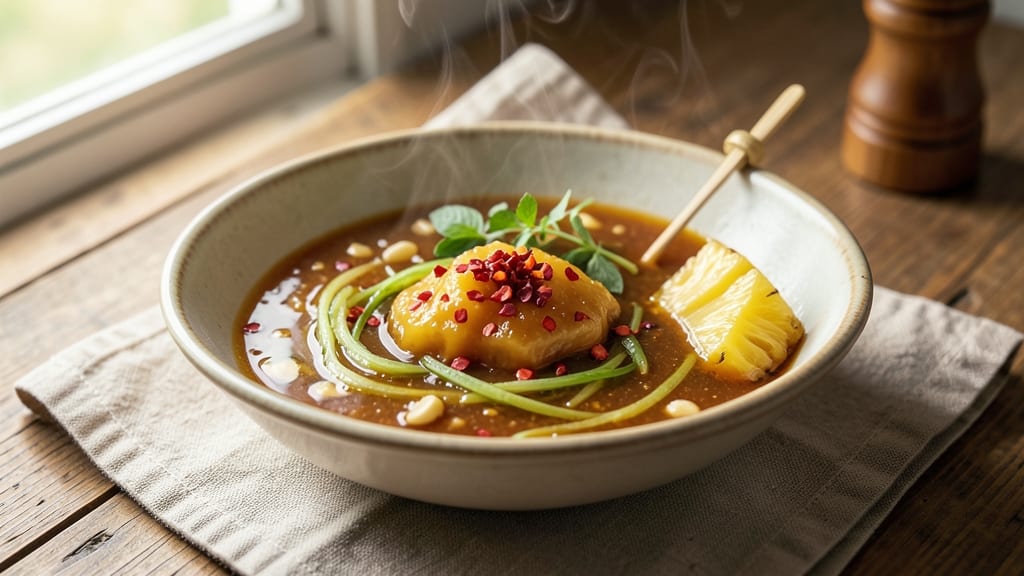
This Asian pineapple sauce recipe transforms simple pantry staples into a vibrant, tangy-sweet glaze that elevates everything from grilled meats to fresh spring rolls. The secret lies in balancing pineapple’s natural sweetness with a touch of vinegar and aromatic spices, creating a sauce that’s both bold and versatile.
I developed this recipe after craving that perfect harmony of tropical fruit and savory-spicy notes—now you can recreate it in just 15 minutes with ingredients you likely already have.
The magic happens when you simmer pineapple juice with garlic, ginger, and a splash of rice vinegar, letting the flavors meld into a glossy, slightly sticky consistency. A pinch of chili flakes adds just the right kick, while a drizzle of honey or brown sugar ensures perfect sweetness.
This isn’t just a condiment—it’s a flavor enhancer that turns ordinary dishes into something extraordinary, whether you’re drizzling it over noodles or using it as a marinade.
What makes this sauce truly special is its adaptability. Use it as a dipping sauce for spring rolls or dumplings, a glaze for grilled chicken or pork, or even a topping for fresh fruit salads.
The balance of acidity and sweetness makes it addictive, while the aromatic spices add depth that lingers on your palate. Once you taste it, you’ll wonder how you ever lived without it.
Ready in just 15 minutes, this sauce keeps well in the fridge for up to a week, so you can make a batch and use it all week.
The best part? It’s foolproof—no fancy techniques required, just a few ingredients and a little patience to let the flavors shine. Let’s get started!
Ingredients for asian pineapple sauce
Nine simple ingredients create this addictive tropical sauce that’ll transform your favorite dishes.
| Ingredient | Amount | Notes |
|---|---|---|
| Pineapple Juice 🍍 | 1 cup | Freshly squeezed preferred |
| Garlic Cloves 🧄 | 3 cloves | Minced for aromatic base |
| Fresh Ginger 🌿 | 1 tbsp | Grated, for zesty kick |
| Rice Vinegar 🍶 | 2 tbsp | White or seasoned variety |
| Honey 🍯 | 2 tbsp | Wildflower for floral notes |
| Red Chili Flakes 🌶️ | 1 tsp | Adjust for heat preference |
| Soy Sauce 🍜 | 1 tbsp | Light or dark preferred |
| Sesame Oil 🫒 | 1 tsp | Toasted for nutty aroma |
| Salt 🧂 | ¼ tsp | Kosher or sea salt |
Pineapple juice is the heart of this sauce—freshly squeezed has the best flavor, but canned works in a pinch (just drain well). Trader Joe's has great pineapple juice, or grab a fresh pineapple and blend it yourself. Ginger and garlic should be bright and fresh—no limp roots or yellowing cloves. The rice vinegar adds that signature tang, so don’t skip it. For extra depth, I like to toast the sesame seeds before adding the oil, but it’s totally optional. The honey balances everything, so if you prefer brown sugar, go for it—just taste as you go.
No pineapple juice? Coconut water or orange juice works in a bind, though the flavor won’t be identical. Short on ginger? Ginger powder at half the amount gets you close, but fresh is definitely better. Love it spicier? Add a dash of sriracha or extra chili flakes. The soy sauce adds umami, so if you’re soy-free, coconut aminos is a great swap. Sesame oil is non-negotiable here—it’s what gives that authentic Asian flavor. No sesame oil? Toasted peanut oil is a decent backup, but it’ll taste different.
This sauce keeps beautifully in the fridge for up to a week, so make a big batch. Store it in a jar with a tight lid, and shake before using—it’ll separate a bit. For longer storage, freeze in ice cube trays and transfer to a bag. Perfect for marinades, dipping sauces, or glaze. The flavors actually get better after a day as everything melds together. Double the batch if you’re using it for a crowd—trust me, you’ll want leftovers.
Why You'll Love This Recipe
- Five-Ingredient Magic: I swear, this sauce comes together faster than I can say "open a can." No fancy techniques—just simmer pineapple juice, minced garlic, and grated ginger until it smells like a tropical vacation. Honestly, the honey and rice vinegar balance is so easy to nail, even my first attempt didn’t taste like a disaster.
- Sweet-Savory Balance: That first sip? Chef’s kiss. The honey rounds out the tangy rice vinegar while the garlic and ginger add this bright, almost umami depth—like a cross between a marinade and a dessert. It’s the kind of flavor that makes you pour it on everything without overthinking it.
- Dresses Up Anything: Slather it on grilled chicken, drizzle it over rice bowls, or use it as a glaze for roasted veggies. I’ve even dumped it into smoothies when I’m lazy. Between us, it’s my go-to for lazy weeknights or when I need to impress guests who think I can’t cook.
- Pantry Staple Hack: A single batch lasts me weeks—I keep it in the fridge and toss it into stir-fries, meat marinades, or even as a quick salad dressing. And because it’s just pantry basics (plus a pineapple), it’s cheaper than takeout. Plus, the leftovers taste just as good reheated as they do fresh.
Step-by-step instructions for Asian pineapple sauce
This vibrant sauce comes together faster than you can say "tropical flavors"—just 10 minutes of active work!
Bloom the Aromatics in Sesame Oil
Heat a small saucepan over medium-low heat and add the 1 teaspoon sesame oil. Let it warm for 30 seconds until you can smell that nutty aroma—this is your flavor foundation. Add the 3 minced garlic cloves and 1 tablespoon grated fresh ginger, stirring constantly for 1 minute until fragrant but not browned.
Here's the thing—ginger and garlic burn faster than you think. Watch them closely—they should smell bright and citrusy, not bitter. If the pan starts to smoke, reduce the heat immediately. These aromatics will carry the entire sauce, so getting them just right matters.
Build the Sauce Base
Pour in the 1 cup pineapple juice and 2 tablespoons rice vinegar, stirring to combine. Bring the mixture to a gentle simmer over medium heat, then reduce to low heat and let it cook uncovered for 3-4 minutes until slightly reduced by about ¼ cup. You're looking for a syrupy consistency—not thick, but noticeably more concentrated.
This reduction step is where the sauce transforms from flat to complex. The acidity from the vinegar will start to brighten, and you'll see those beautiful bubbles forming on the surface. Don't walk away—constant stirring prevents scorching, which would make the sauce bitter.
Sweeten and Season
Add the 2 tablespoons honey and 1 tablespoon soy sauce, stirring well to incorporate. Let the sauce simmer gently for another 2 minutes until the honey dissolves completely. Taste and adjust seasoning with the 0.25 teaspoon salt—this balances the sweetness and acidity perfectly.
Here's where it gets fun—this is your chance to customize. If you want more heat, add a pinch more red chili flakes (start with ½ teaspoon). For extra depth, a splash of 1 teaspoon toasted sesame oil at the end adds another nutty layer. The sauce should coat the back of a spoon with a glossy sheen.
Finish and Strain (Optional)
Remove the pan from heat and stir in the 1 teaspoon red chili flakes. For a silky-smooth sauce, strain through a fine-mesh sieve to remove any ginger or garlic bits. If you prefer texture, skip this step—those little flecks add visual appeal and extra flavor.
Let the sauce cool slightly before using—this allows all the flavors to meld together. The final product should be bright, slightly spicy, and perfectly balanced between sweet, sour, and umami. This sauce pairs beautifully with grilled meats, noodles, or even as a dipping sauce for spring rolls.
Pro Tips For Making Asian Pineapple Sauce
- STRAIN THE GINGER: I used to just chop and toss fresh ginger into the sauce, thinking it’d blend fine. Wrong—it left tiny, tough bits that ruined the smooth texture. Now I grate it first, then strain it through a fine-mesh sieve. Takes 30 seconds but makes the sauce silky.
- SIMMER LOW AND Slow: High heat turns pineapple juice into syrup fast, and it burns before you realize it. Keep the heat at a gentle simmer—you should see tiny bubbles, not rolling boil. I learned this the hard way after one batch tasted bitter and overcooked.
- USE FRESH GARLIC: Pre-minced garlic in jars has a weird aftertaste that clings to this sauce. Mince your own cloves right before adding them, and don’t skip the quick sauté—just 30 seconds in the pan until fragrant. It’s the difference between subtle depth and something that tastes like it came from a jar.
- BALANCE THE VINEGAR: Rice vinegar is tangy, but too much makes the sauce taste harsh. Start with half the amount listed, taste, then add the rest gradually. I used to dump it all in and end up with something that needed honey to fix it—now I adjust as I go.
Essential equipment for asian pineapple sauce
Small Saucepan
I always use a small 8-inch stainless steel saucepan for this recipe—it gives me enough surface area to stir easily without overcrowding. The stainless steel conducts heat evenly, preventing hot spots that could burn the sauce.
A nonstick pan works too, but I’ve found stainless steel gives better flavor development. If you only have a large pan, reduce the heat to low to prevent scorching. 🌡️
Fine-Mesh Sieve
A fine-mesh sieve is optional but makes a huge difference for a silky-smooth sauce. I prefer a stainless steel mesh because it’s durable and won’t retain flavors from previous uses. If you’re skipping the straining step, a wooden spoon works perfectly for stirring and scraping up any stuck bits.
For extra convenience, I keep a mini sieve (like the OXO Good Grips) in my pantry—it’s perfect for small batches.
Measuring Spoons
Precision matters when balancing sweet, sour, and spicy flavors, so I recommend stainless steel measuring spoons with clear markings. A set with ¼ teaspoon increments is ideal for adjusting chili flakes or salt. I love the OXO Good Grips set—they’re magnetic and stay organized on my fridge.
For grated ginger and minced garlic, a microplane and garlic press make prep faster than knives. No tools? A small bowl and fork works in a pinch.
Immersion Blender (Optional)
If you prefer a chunkier texture with visible ginger and garlic flecks, skip the sieve. But for a smooth, restaurant-quality sauce, an immersion blender (like the Ninja Foodi) is a game-changer. Simply blend the sauce directly in the pan for 10-15 seconds after simmering.
This eliminates the need for straining while keeping all the flavor. Just be sure to let the sauce cool slightly before blending to avoid splattering. 💫
Glass Storage Jar
Once your sauce cools, transfer it to an airtight glass jar for storage. I use 8-ounce mason jars because they’re sturdy and stackable in the fridge. The glass preserves the sauce’s vibrant color and prevents absorption of fridge odors.
Label the jar with the date—this sauce keeps for up to 1 week in the fridge or 3 months in the freezer. For freezing, leave ½ inch headspace to prevent cracking when the sauce expands.
Digital Thermometer
While not required, a digital instant-read thermometer (like the Thermoworks ThermoPop) helps perfect the sauce’s consistency. Aim for a reduction to 160°F—this ensures the sauce is concentrated but still pourable.
If you don’t have one, watch for the sauce to reduce by about ¼ cup (from 1 cup to ¾ cup) and coat the back of a spoon with a glossy sheen. This is your cue that the flavors are melding beautifully. ⏱️
Nutrition facts
Frequently asked questions
Can I use fresh pineapple instead of pineapple juice?
Yes! For a chunkier texture, blend 1 cup fresh pineapple chunks with 2 tablespoons water until smooth, then strain to remove fiber. Use this puree instead of juice, but reduce the honey to 1 tablespoon since fresh pineapple is sweeter. The sauce will have a thicker consistency and visible fruit flecks.
How do I adjust the sweetness or spice level?
Start by tasting after the 2-minute honey simmer. For more sweetness, add ½ teaspoon honey at a time until balanced. For extra heat, stir in ¼ teaspoon chili flakes (up to 1 teaspoon total). If it’s too spicy, balance with ½ teaspoon extra honey—sweetness mellows heat naturally.
What are the best dishes to use this sauce with?
This versatile sauce works as a glaze for grilled chicken or pork, a dipping sauce for spring rolls or dumplings, or a topping for noodles and rice dishes. Try it on tacos or sandwiches for a tropical twist, or drizzle over coconut rice for extra flavor. The bright acidity cuts through rich meats beautifully.
Can I make this sauce without soy sauce?
Replace the 1 tablespoon soy sauce with 1 tablespoon coconut aminos (soy-free) or 1 teaspoon fish sauce for umami depth. For a vegetarian option, use 1 tablespoon tamari or ½ teaspoon msg powder. The sauce will still taste delicious—just slightly different in depth.
Why did my sauce turn cloudy or separate?
Cloudiness usually means the sauce cooled too quickly. Reheat gently over low heat while stirring until smooth. Separation happens if you don’t stir during simmering—constant stirring prevents this. For a quick fix, whisk in 1 teaspoon cornstarch mixed with 1 tablespoon water and simmer for 1 minute until thickened.