
Sauces & Condiments
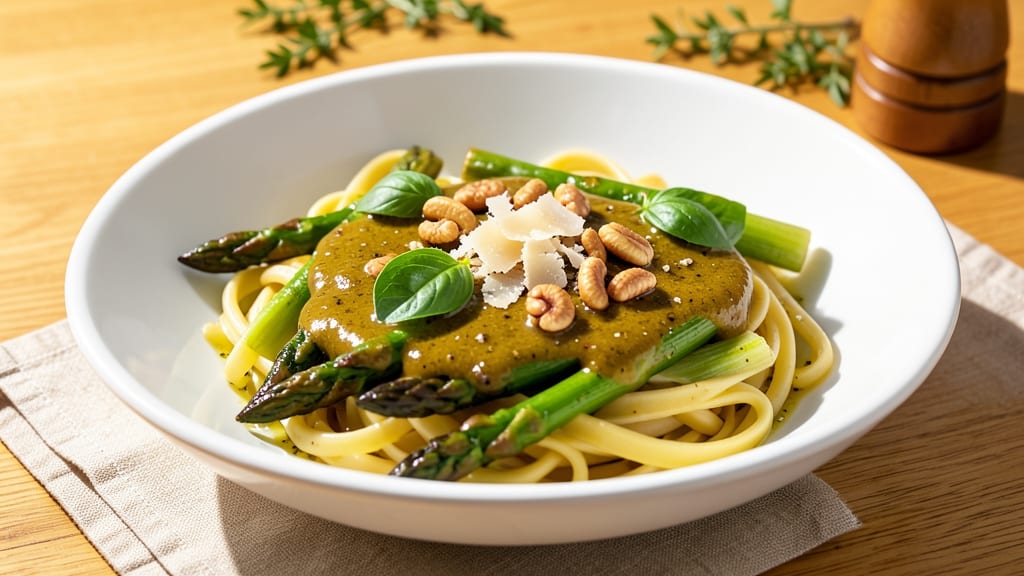
This asparagus pasta sauce transforms simple weeknight dinners into vibrant, restaurant-worthy meals. 💚 The secret lies in blending fresh asparagus with basil, garlic, and toasted pine nuts to create a sauce that's both bright and rich—packed with nutty depth and fresh spring flavors.
What makes this recipe special is how it elevates humble pasta into something elegant, all while keeping the preparation straightforward and foolproof.
The sauce begins with blanched asparagus, which releases its natural sweetness and vibrant green color into the pesto base. Toasted pine nuts add a satisfying crunch and nutty richness, while Parmesan cheese ties everything together with its savory depth.
The result is a sauce that clings beautifully to pasta, creating a dish that's as visually appealing as it is delicious.
By the time you twirl that first forkful, you'll taste the perfect balance of fresh asparagus, aromatic basil, and creamy Parmesan—all coming together in a sauce that's both light and satisfying.
This recipe is ideal for spring and summer when asparagus is at its peak, but it works year-round with frozen asparagus if needed.
Serve immediately with your favorite pasta for the best texture and flavor, or store the sauce separately for up to 3 days. Garnish with extra pine nuts, shaved Parmesan, or a sprinkle of red pepper flakes for added depth. Let's get cooking!
Ingredients for asparagus pasta sauce
Nine ingredients, vibrant flavors—this asparagus pasta sauce turns simple dinners into springtime feasts.
| Ingredient | Amount | Notes |
|---|---|---|
| Fresh Asparagus Spears 🌱 | 1 lb | Trimmed, tough ends removed |
| Fresh Basil Leaves 🌿 | 2 cups | Packed, stems removed |
| Pine Nuts 🥜 | ½ cup | Toasted for nutty flavor |
| Garlic Cloves 🧄 | 4 cloves | Peeled, roughly chopped |
| Parmesan Cheese 🧀 | ¾ cup | Freshly grated from block |
| Extra-Virgin Olive Oil 🫒 | ¾ cup | High-quality, fruity variety |
| Lemon Juice 🍋 | 1 tbsp | Freshly squeezed |
| Salt 🧂 | ½ tsp | Diamond Crystal preferred |
| Black Pepper 🌶️ | ¼ tsp | Freshly ground |
| Uncooked Pasta 🍝 | 12 oz | Any shape preferred |
| Red Pepper Flakes 🌶️ | ¼ tsp | Optional, for garnish |
The asparagus is the star here. Look for bright green, firm stalks—avoid anything woody or yellowing. Whole Foods or local farmers markets usually have the freshest, but regular grocery stores work too. Trim the ends by snapping them (they'll break naturally at the tough spot). For extra vibrancy, blanch them first—boil for 2 minutes, then plunge into ice water. That bright green color makes this sauce pop. Trader Joe's often has pre-trimmed asparagus if you're short on time, but fresh is always better. The pine nuts? Costco sells them in bulk for the best price—just toast them in a dry pan for 3-4 minutes until golden.
No pine nuts? Walnuts or cashews work in a pinch—just toast them first. Fresh basil wilted? Dried oregano at half the amount gets you close, though nothing beats the real thing. The Parmesan needs to be freshly grated—pre-shredded gets clumpy and melts weird. Grab a wedge from the deli counter if you can, or use a microplane for the best texture. Short on time? San Marzano canned tomatoes can replace some of the asparagus for a similar sweetness, though the color won't be as vibrant. And if you're using frozen asparagus, thaw and pat it very dry before blending—no one wants a watery sauce.
This sauce keeps best in the fridge for 3 days, stored in a sealed jar with a thin layer of olive oil on top to preserve color. Freezes beautifully for 3 months—portion into ice cube trays for single servings later. The pasta? Cook it al dente, then toss with sauce while still hot so it absorbs all that nutty goodness. Garnish with extra pine nuts, shaved Parm, or a sprinkle of red pepper flakes (if you're feeling spicy). Leftovers? Toss with grilled chicken or roasted veggies for an easy lunch the next day.
Why You'll Love This Recipe
- No Chopping Stress: I swear by this trick—just trim the asparagus ends and snap the tough bits off. No knife skills required, and the spears cook faster than you’d think. Honestly, it’s the kind of dish that lets you focus on the good stuff while the stove does the work.
- Crunchy-Creamy Magic: That toasted pine nuts and garlic? They take this sauce from good to ridiculously good. The basil’s bright punch cuts through the richness, and the Parmesan ties it all together like a perfect hug. Between us, it’s the kind of flavor that makes you pause mid-bite.
- Lunch or Dinner: Make it for a quick weeknight dinner, or double the batch and pack it for lunches. The sauce holds up beautifully—just reheat with a splash of pasta water. I’ll be real: my kids actually ask for this leftovers version, and that’s saying something.
- Budget Bright Spot: Fresh asparagus and basil feel fancy, but they stretch farther than you’d expect. A little goes a long way, and the pine nuts add luxury without breaking the bank. Plus, Parmesan is my secret weapon for making simple meals feel special—no splurge needed.
Step-by-step instructions for asparagus pasta sauce
Let's make this vibrant, nutty pesto that transforms simple pasta into a restaurant-worthy dish.
🍳 Step 1: Toast the Pine Nuts Until Golden
Heat a dry skillet over medium heat and add the 0.5 cup pine nuts. Toast them for 3-4 minutes, stirring constantly, until they're golden brown and smell deeply nutty. Watch them closely—they burn quickly and turn bitter.
Here's the thing—properly toasted nuts make all the difference. You'll know they're ready when they're fragrant and just starting to pop. Immediately transfer them to a small bowl to cool while you prep the rest of the ingredients.
👨🍳 Step 2: Blanch and Prep the Asparagus
Fill a medium pot with 2-3 inches of water and bring to a boil. While waiting, trim the 1 lb asparagus spears by snapping off the tough ends (they should break naturally about 1 inch from the bottom).
When the water boils, add the asparagus and blanch for 1-2 minutes until bright green and just tender. Drain immediately and plunge into ice water to stop the cooking. Drain again and let them cool completely before chopping. This step ensures vibrant color and prevents a bitter taste.
🍳 Step 3: Build the Pesto Base in Stages
In a food processor, combine the 2 cups basil leaves, 4 cloves garlic, 0.5 tsp salt, and 0.25 tsp black pepper. Pulse until finely chopped but not pureed. Add the cooled asparagus and pulse again until everything is evenly combined.
With the processor running, slowly drizzle in the 0.75 cup extra-virgin olive oil until fully incorporated. The mixture should look like a thick, vibrant green paste. Add the toasted pine nuts and pulse just until combined—you want to keep some texture for that nutty crunch.
🥘 Step 4: Finish with Parmesan and Lemon
Add the 0.75 cup freshly grated Parmesan cheese and pulse until fully combined. The cheese should melt into the pesto, creating a creamy texture. With the processor still running, add the 1 tbsp lemon juice and pulse once more.
Taste and adjust seasoning if needed. The sauce should be bright, tangy, and perfectly balanced between nutty, herby, and cheesy flavors. If it's too thick, add 1-2 tablespoons water to reach your desired consistency.
🍝 Step 5: Cook Pasta and Combine
Bring a large pot of salted water to a boil and cook the 12 oz uncooked pasta according to package instructions until al dente. Reserve ½ cup pasta water before draining.
Toss the drained pasta with the pesto, adding reserved pasta water as needed to create a silky sauce that coats every strand. If using, sprinkle with 0.25 tsp red pepper flakes for a subtle kick. Serve immediately while the pasta is still hot and the sauce is vibrant.
Pro Tips For Making Asparagus Pasta Sauce
- Blanch Asparagus First: I used to toss raw asparagus into the sauce and end up with a sad, limp pile. Instead, blanch the spears for 2-3 minutes in boiling salted water, then shock in ice water—this keeps them crisp and bright when they hit the pan later. (Yes, even if you're impatient like me, don’t skip this.)
- Toast Pine Nuts Low: After burning three batches of pine nuts, I finally learned to toast them in a dry pan over low heat, stirring constantly. They’re done when they smell nutty and just turn golden—not brown. High heat turns them bitter faster than you can say "wasted ingredient."
- Salt the Pasta Water Hard: Your sauce will taste flat if the pasta isn’t properly seasoned first. Use two tablespoons of salt per pound of pasta—yes, it sounds like a lot, but the sauce clings to the noodles better when they’re already salty. Trust me, your taste buds will notice.
- Add Basil Late: Tossing basil in early turns it into mush. Instead, stir in the leaves right at the end—just before serving—so they stay vibrant and perfumed. If you’re really short on time, use a handful of dried basil and fresh, but add the dried first and the fresh last.
Serving suggestions for asparagus pasta sauce
Protein Pairings
This vibrant asparagus pesto pairs beautifully with grilled chicken breast or seared scallops for a complete meal. The bright acidity of the sauce cuts through the richness of proteins like salmon or shrimp skewers, creating a perfect balance.
I like to serve it with lemon-herb grilled chicken—just marinate the chicken in olive oil, lemon zest, and rosemary for 30 minutes before grilling. 🍗
For vegetarians, crispy tofu or mushroom ragout adds hearty texture. Toss ½ lb extra-firm tofu in 1 tbsp cornstarch and pan-fry until golden before mixing with the sauce. The nutty crunch of the pesto complements the tofu's texture perfectly.
Vegetable Sides
Light, fresh sides keep the meal from feeling too heavy. A simple arugula salad with lemon vinaigrette adds peppery contrast—toss 4 cups arugula with 2 tbsp olive oil, 1 tbsp lemon juice, and 1 tbsp shaved Parmesan.
Roasted asparagus (tossed in olive oil, salt, and pepper, roasted at 400°F for 12 minutes) makes a great side too. 🥗
For something heartier, try garlic bread or crusty focaccia. Warm 1 loaf Italian bread in the oven for 5 minutes, then rub with 3 garlic cloves and 2 tbsp olive oil. The toasted bread soaks up any leftover sauce beautifully.
Beverage Matchups
A crisp Sauvignon Blanc from New Zealand—like Kim Crawford—complements the sauce's bright acidity and herbal notes. The wine's citrusy finish mirrors the lemon in the pesto, while its mineral undertones balance the richness. For a non-alcoholic option, sparkling water with lime keeps the meal refreshing. 🍷
If you prefer beer, a crisp Italian lager like Peroni or a Belgian witbier (such as Hoegaarden) works wonders. The effervescence cleanses the palate, while the slight sweetness of witbiers enhances the nutty depth of the pesto.
Garnish Ideas
Finish the dish with extra toasted pine nuts for crunch or shaved Parmesan for a salty kick. A sprinkle of red pepper flakes adds subtle heat, while fresh basil leaves keep the dish vibrant. For a pop of color, add edible flowers like nasturtiums—they’re mild and pretty. 🌸
Don’t forget the lemon zest! A few grated strips on top brighten the flavors and add a zesty aroma. Even a pinch of flaky sea salt (like Maldon) elevates the dish to restaurant-quality.
Nutrition facts
Frequently asked questions
Can I use frozen asparagus instead of fresh?
Yes, but with a few adjustments! Thaw frozen asparagus first, then pat it completely dry with paper towels to prevent a watery sauce. Use 1.5 cups frozen asparagus (about 1 lb equivalent) and blanch for 3-4 minutes instead of 1-2 minutes to ensure full cooking. The texture will be slightly softer, but the flavor remains bright.
What if I don't have pine nuts?
No problem! Swap them for walnuts or cashews—toast 0.5 cup until golden brown first. For extra richness, add 1 tbsp nutritional yeast to mimic the nutty depth. The crunch will be slightly different, but the sauce's flavor stays balanced.
How do I make this sauce ahead of time?
Prepare the pesto up to 3 days ahead and store it in an airtight container with a thin layer of olive oil on top. For longer storage, freeze in ice cube trays (thaw in the fridge overnight). Cook pasta fresh when serving—tossing with sauce right after boiling ensures perfect texture.
Can I add meat to this recipe?
Brown 8 oz ground turkey or Italian sausage with 1 tsp Italian seasoning before mixing with the sauce. For a lighter option, grill chicken breast slices and add them warm. The protein pairs beautifully with the bright, herby flavors—just adjust seasoning if using salty meats.
Why did my pesto turn bitter?
Over-blending or using wilted asparagus/greens causes bitterness. Stop blending as soon as ingredients combine, and always use fresh, crisp asparagus. For extra insurance, add 1 tsp sugar or ½ tsp lemon juice to balance flavors. The sauce should taste bright, not grassy or harsh.