
Sauces & Condiments
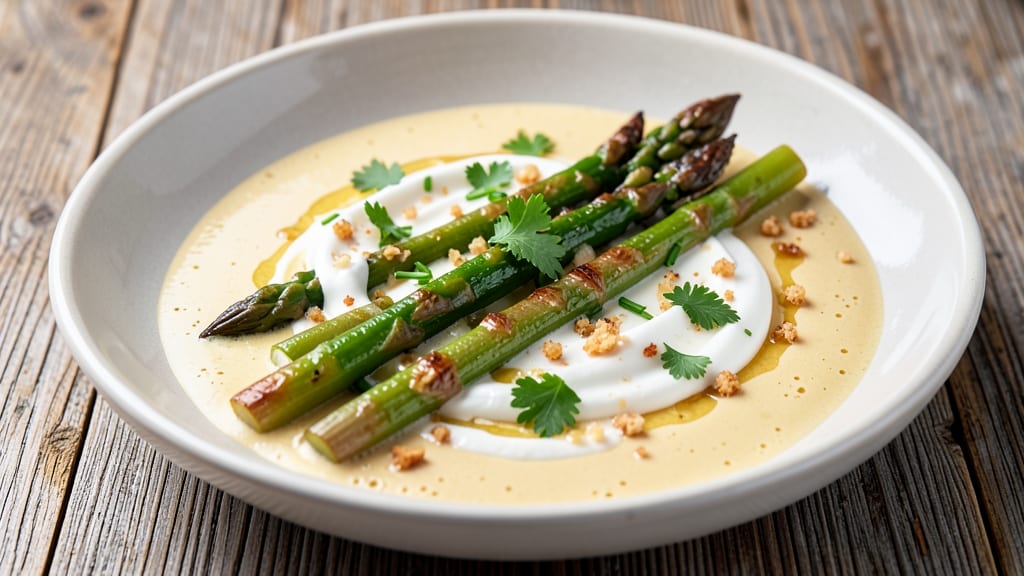
This asparagus white sauce recipe transforms simple ingredients into a velvety garlic-herb emulsion that elevates roasted or steamed asparagus to gourmet status. The secret lies in a slow-cooked roux that creates a silky base, while a crispy breadcrumb topping adds irresistible texture.
I developed this sauce after years of perfecting restaurant-style preparations at home—no heavy cream, just rich flavor and a perfect balance of tangy and savory.
The foundation begins with butter and flour cooked to a golden roux, then gradually whisked into warm milk for a smooth, lump-free emulsion. Fresh herbs like parsley and chives infuse brightness, while garlic adds depth that complements asparagus's natural earthiness.
The crispy topping, made from toasted breadcrumbs and melted butter, delivers that satisfying crunch that makes every bite unforgettable.
What sets this sauce apart is its versatility—drizzle it over roasted asparagus, use it as a dip for blistered spears, or spoon it alongside grilled fish. The emulsion remains velvety even when reheated, ensuring restaurant-quality results at home.
With just 10 minutes of active prep and 20 minutes of simmering, this sauce is the perfect way to elevate a simple vegetable into a showstopping dish.
Store leftovers in an airtight container for up to 3 days in the refrigerator, or freeze for 1 month—the flavors deepen over time, making it ideal for meal prep.
Whether you're serving asparagus for a weeknight dinner or a special occasion, this sauce turns a basic vegetable into a luxurious centerpiece.
Ingredients for asparagus white sauce
Eleven ingredients transform into a luxurious asparagus white sauce with restaurant-style depth and texture.
| Ingredient | Amount | Notes |
|---|---|---|
| Unsalted Butter 🧈 | ½ cup | Cold, cubed for roux |
| All-Purpose Flour 🌾 | ½ cup | Sifted for smooth emulsion |
| Whole Milk 🥛 | 2 cups | Room temperature preferred |
| Garlic Cloves 🧄 | 4 cloves | Minced for aromatic depth |
| Fresh Parsley 🌿 | ¼ cup | Chopped, stems removed |
| Fresh Chives 🌱 | 2 tbsp | Finely chopped for brightness |
| Diamond Crystal Kosher Salt 🧂 | ½ tsp | For seasoning balance |
| Freshly Ground Black Pepper 🌶️ | ¼ tsp | Freshly cracked for heat |
| Panko Breadcrumbs 🍞 | ¼ cup | Toasted for crispy topping |
| Extra-Virgin Olive Oil 🫒 | 1 tbsp | For breadcrumb crispiness |
| Lemon Zest 🍋 | 1 tsp | Brightens the emulsion |
The butter and flour form the foundation of this sauce—cold cubed butter creates a richer roux than melted butter, while sifted flour ensures a smooth emulsion. For the best quality, use European-style butter like Plugrá or President, which has higher fat content for superior flavor. Fresh garlic is non-negotiable here; roasted garlic adds sweetness but lacks the sharp punch needed to complement asparagus. The milk should be room temperature to blend seamlessly into the roux without creating lumps. I always buy organic milk from the store's refrigerated section—it has a creamier texture that translates to a velveter finish in the sauce.
No fresh parsley? Dried parsley works at one-third the amount, though it lacks the vibrant color and freshness. Substituting chives for half the parsley adds a mild onion note that pairs beautifully with garlic. For a dairy-free version, replace milk with unsweetened almond milk (though the sauce will be slightly lighter). The breadcrumbs should be toasted in olive oil until golden—this creates the crispy topping that contrasts perfectly with the silky sauce. Panko is ideal for its airy texture, but crushed cornflakes work in a pinch. The lemon zest can be omitted if you prefer a more neutral flavor, but it adds that bright, restaurant-quality finish that elevates the dish.
This sauce freezes exceptionally well—portion into ice cube trays before transferring to a container for easy single-serving use. In the fridge, it keeps for up to 5 days in an airtight container, though the texture becomes slightly thicker upon reheating. For the crispy topping, toast the breadcrumbs just before serving to maintain their crunch. Double the batch if you're serving asparagus for a crowd—the sauce reheats beautifully and tastes even better the next day as the flavors meld.
Why You'll Love This Recipe
- Foolproof Stovetop Magic: I swear by this recipe—just melt butter, toss in flour, and stir until smooth. No lumps, no stress, and honestly, even if you burn the garlic a little, the sauce still comes together.
- Garlic-Parsley Punch: That minced garlic sizzling in butter? Absolute flavor gold. The parsley brightens it up so much, you’ll want to drizzle it on everything—toast, eggs, even grilled chicken.
- Weeknight to Dinner Party: Same sauce, different occasions. Slather it over roasted asparagus for a quick weeknight meal, or serve it with steak for a fancy-ish dinner. My in-laws think I’m a chef.
- Leftovers That Don’t Suck: This sauce thickens beautifully when reheated—perfect for meal prep. Store it in the fridge for up to 5 days, and it’s still creamy, rich, and way cheaper than takeout.
Step-by-step instructions for asparagus white sauce
A velvety garlic-herb emulsion meets a golden, crispy topping in this refined dish.
Create the Roux Foundation
In a medium saucepan, melt the 0.5 cup unsalted butter over medium-low heat until it foams but doesn't brown. Immediately whisk in the 0.5 cup all-purpose flour to create a smooth paste. This is your roux—the backbone of the sauce—and it needs constant stirring to prevent lumps from forming.
Cook the roux for 3-4 minutes until it turns a pale golden color and smells nutty. You're looking for a consistency similar to wet sand that coats the back of a spoon. If it darkens too quickly, reduce the heat slightly—this ensures a clean, white sauce rather than a browned one.
Infuse with Garlic and Milk
Remove the saucepan from heat and stir in the 4 minced garlic cloves, letting them sit for 30 seconds to release their aroma without burning. Return the pan to low heat and gradually whisk in the 2 cups whole milk over 2-3 minutes, ensuring no lumps form. This slow incorporation prevents curdling.
Return the sauce to a gentle simmer and cook for 5-7 minutes until it thickens enough to coat the back of a spoon. You want a velvety consistency that clings to asparagus spears without being gluey. Taste and adjust seasoning with the 0.5 tsp kosher salt and 0.25 tsp freshly ground black pepper. The sauce should be seasoned but not overpowering at this stage.
Finish with Herbs and Zest
Remove the sauce from heat and stir in the 0.25 cup chopped parsley, 2 tbsp finely chopped chives, and 1 tsp lemon zest. These fresh elements brighten the sauce and cut through the richness of the butter. Let the mixture steep for 2 minutes to allow the flavors to meld together. The lemon zest will infuse subtle citrus notes that balance the garlic's intensity.
For a silky texture, strain the sauce through a fine-mesh sieve if you prefer a completely smooth finish. This step isn't mandatory but ensures an elegant presentation. Keep the sauce warm in a double boiler or covered saucepan over barely simmering water while you prepare the crispy topping.
Prepare the Crispy Topping
In a small skillet, heat the 1 tbsp extra-virgin olive oil over medium heat until shimmering. Add the 0.25 cup panko breadcrumbs and toast for 2-3 minutes, stirring constantly, until they turn a deep golden brown and smell toasty. Remove from heat immediately—they'll continue cooking from residual heat.
Transfer the toasted breadcrumbs to a paper towel-lined plate to cool slightly. The contrast between the velvety sauce and crispy topping is what makes this dish special. Sprinkle the warm breadcrumbs generously over the finished sauce just before serving to maintain their crispness.
Pro Tips For Making Asparagus White Sauce
- Whisk Like You Mean It: The roux is where flavor hides—or gets ruined. Use a wide, flat-bottomed pan and whisk constantly on medium-low heat until the butter-flour mix turns pale gold (about 2-3 minutes). I learned this the hard way—skipping the whisking leads to lumps that turn your sauce into glue.
- Toast the Flour First: Cook the butter until it foams, then add the flour and let it sit for 30 seconds before whisking. This step deepens the nutty flavor and prevents a raw, floury taste. Sounds weird, but it works—your sauce will taste richer without extra butter.
- Strain the Milk: Warm the milk separately, but strain it through a fine-mesh sieve before adding it to the roux. Cold milk clumps the flour, and stray bits of milk solids make the sauce grainy. Yes, it’s an extra step, but your future self will thank you.
- Garlic Matters: Minced garlic burns fast—sauté it in the butter before adding flour, just until fragrant (30 seconds max). Overcooking turns it bitter, and no amount of parsley can fix that. Smell it first: if it smells harsh, pull it out.
Wine and beer pairings for this recipe
White Wine Pairings
This velvety asparagus white sauce pairs beautifully with crisp, citrusy white wines that complement its garlic-herb profile. I always reach for a Chardonnay from Burgundy—specifically a Meursault or Pommard—which offers rich, buttery notes that mirror the sauce's creaminess while its mineral finish cuts through the richness.
For something lighter, a Sauvignon Blanc from New Zealand brings bright citrus and herbal notes that echo the parsley and lemon zest in the sauce. 🍷
Dry Sparkling Options
If you prefer something bubbly, a dry Prosecco or French Crémant creates a delightful contrast with its effervescence and crisp acidity. The bubbles cleanse your palate between bites of asparagus drizzled with sauce, making each mouthful feel fresh.
I've found that a Valdobbiadene DOCG from Italy adds just the right balance of fruitiness and structure to stand up to the sauce's depth.
Beer Pairings
For beer lovers, a Belgian witbier like Hoegaarden is my go-to choice. Its coriander and citrus notes complement the lemon zest and parsley in the sauce, while the slight sweetness balances the garlic's sharpness.
If you prefer something darker, a German Helles Lager provides a malty backbone that pairs surprisingly well with the sauce's richness. Avoid heavy stouts or IPAs—they can overpower the delicate flavors. 🍺
Seasonal Wine Swaps
In warmer months, I switch to a Vermentino from Sardinia—its crisp acidity and saline finish make it perfect for summer dining. For colder months, a German Riesling Kabinett adds a touch of sweetness that contrasts nicely with the sauce's savory elements.
The key is to match the wine's acidity to the sauce's creaminess for a harmonious pairing.
Non-Alcoholic Options
Don't overlook sparkling water with a squeeze of lemon as a refreshing alternative. For something more substantial, try a sparkling apple cider—its effervescence and subtle sweetness complement the sauce's herbal notes. A cucumber-mint infused water with a splash of lime zest also works beautifully, especially for lighter meals.
Nutrition facts
Frequently asked questions
Can I make this sauce without butter?
Yes, but the texture and flavor will change. Replace the butter with 0.5 cup olive oil or vegetable oil for a lighter version. The sauce will be slightly thinner, so reduce the milk to 1.5 cups to maintain thickness. For extra richness, add 2 tablespoons nutritional yeast to mimic the buttery depth.
How do I prevent lumps in the sauce?
Whisk the milk into the roux gradually and slowly over 2-3 minutes while keeping heat low. For extra insurance, whisk the milk with 1 tablespoon cold water first to create a thinner base. If lumps form, immediately press them through a fine-mesh sieve or blend briefly with an immersion blender.
What's the best way to serve this sauce?
Drizzle it generously over roasted or grilled asparagus for a restaurant-worthy finish. It also pairs beautifully with steamed fish, blistered green beans, or even as a dip for toasted baguette slices. The crispy breadcrumb topping adds texture when sprinkled on top just before serving.
Can I make this sauce ahead of time?
Prepare the sauce up to 2 days in advance and store it in an airtight container in the fridge. Reheat gently over low heat, stirring frequently to prevent scorching. For the crispy topping, toast the breadcrumbs fresh before serving to maintain their crunch. The flavors actually deepen overnight, becoming even more complex.
Why did my sauce turn out too thick?
This usually happens from overcooking or using too much flour. Thin with 1-2 tablespoons warm milk while whisking constantly. For future batches, remove the sauce from heat as soon as it coats the back of a spoon. If you prefer a thicker sauce, simmer uncovered for 1-2 minutes to evaporate excess moisture.