Sauces & Condiments
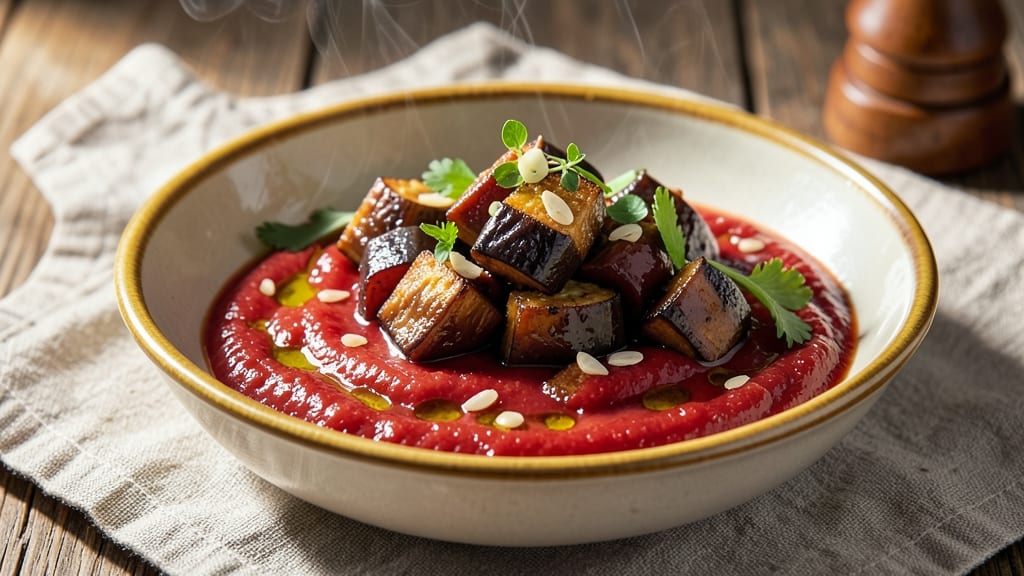
This aubergine sauce recipe transforms humble eggplant into a velvety, smoky masterpiece that elevates everything from pasta to grilled meats. The secret lies in slow-roasting eggplant until caramelized, then blending it with garlic, olive oil, and a touch of tomato for depth.
What starts as simple ingredients becomes a restaurant-worthy sauce with layers of umami and texture.
What sets this sauce apart is the celery crown crunch—thinly sliced celery leaves fried until crisp, then tossed in for a bright, herby contrast that cuts through the richness.
The process is straightforward: roast, blend, and finish with a splash of lemon to brighten the flavors. No fancy equipment needed, just patience and attention to texture.
The result is a sauce that's smooth yet complex, with a smoky backbone and fresh herbal notes. It clings beautifully to noodles, drizzles over roasted vegetables, or pairs perfectly with grilled chicken. The celery crown adds a satisfying crunch that keeps every bite interesting.
Best of all, this sauce keeps well in the fridge for up to 5 days, making it ideal for meal prep. Store it in an airtight container, and you'll have a flavorful shortcut ready whenever you need to impress. Let's get started on creating this versatile, crowd-pleasing sauce.
Ingredients for aubergine sauce
Ten ingredients, bold flavors. This sauce transforms simple eggplant into restaurant-worthy richness.
| Ingredient | Amount | Notes |
|---|---|---|
| Eggplant 🍆 | 2 lbs | Medium-sized, organic preferred |
| Extra-Virgin Olive Oil 🫒 | ¾ cup | High-quality, fruity variety |
| Garlic Cloves 🧄 | 6 cloves | Fresh, peeled, roughly chopped |
| San Marzano Tomato Paste 🍅 | 2 tbsp | Smooth, no added salt |
| Celery Leaves 🧅 | 1 cup | Fresh, outer leaves only |
| Fresh Lemon Juice 🍋 | 1 tbsp | Bright, freshly squeezed |
| Smoked Paprika 🌶️ | 1 tsp | For smoky depth |
| Salt 🧂 | 1 tsp | Diamond Crystal preferred |
| Black Pepper 🌶️ | ½ tsp | Freshly cracked |
| Vegetable Oil 🫒 | ¼ cup | For celery frying |
Eggplant is the foundation, so pick firm, heavy ones—they roast more evenly. Trader Joe's and local farmers markets often carry the best organic varieties. Avoid any with soft spots or wrinkled skin. For extra depth, I like to char the eggplant directly over a gas flame before roasting. The garlic should be fresh—no pre-minced jars—and the San Marzano tomato paste is worth hunting for if you want that authentic sweetness. Smoked paprika adds that signature smoky note without overpowering.
No smoked paprika? Liquid smoke at half the amount works in a pinch, though it's not quite the same. Fresh celery leaves can be tricky to find—substitute with 1 tbsp chopped fresh parsley if needed, but the texture contrast is what makes this sauce special. The vegetable oil for frying should have a high smoke point—avocado or grapeseed oil are great alternatives. If you're short on time, you can skip the celery crown entirely, but the crunch is what makes this sauce stand out. For a richer texture, blend in 1 tbsp of cashew cream at the end.
Store the sauce in an airtight container in the fridge for up to 5 days. The celery crown will lose crispness after a day, so add it fresh when serving. For longer storage, freeze the sauce without the celery—it keeps for 3 months. Reheat gently on low heat, stirring occasionally. This sauce is incredibly versatile—drizzle it over pasta, use it as a marinade, or serve it with grilled meats. The flavors only deepen as it sits, so making a double batch is always a good idea.
Why You'll Love This Recipe
- One-Pan Magic: I swear by this recipe when I’m too tired to wash dishes—just roast the eggplant with olive oil and garlic, then blend it all with the tomato paste and celery leaves. The sauce basically makes itself while you’re chopping a side salad.
- Umami Bomb: That San Marzano tomato paste? It’s the secret weapon here. When you char the eggplant first, then simmer it with garlic and celery leaves, the flavors get this deep, smoky richness that pairs perfectly with pasta, toast, or even grilled fish.
- Meal Prep MVP: Between us, this sauce keeps better than most store-bought ones. I make a big batch on Sundays, stash it in the fridge, and use it all week—over eggs, with roasted veggies, or even as a quick pasta sauce. The celery leaves add freshness that lasts.
- Budget-Friendly Luxury: Eggplant is cheap, olive oil is worth every penny, and a small can of San Marzano paste goes a long way. You’re getting restaurant-quality depth without the markup, and the celery leaves (often tossed) turn into flavor gold. Frugal but feels fancy.
Step-by-step instructions for smoky roasted eggplant sauce
Transform simple ingredients into a rich, smoky sauce with layers of texture and flavor.
Roast the Eggplant for Deep Flavor
Preheat your oven to 425°F. Cut the 2 lbs eggplant into 1-inch cubes, removing any seedy areas. Toss the eggplant with 0.5 cup of the extra-virgin olive oil, 1 tsp smoked paprika, 1 tsp salt, and 0.5 tsp black pepper until evenly coated.
Spread the eggplant in a single layer on two rimmed baking sheets. Roast for 30-35 minutes, stirring once halfway through, until the edges are deep golden brown and slightly charred. The eggplant should be tender when pierced with a fork. This roasting step develops the sauce's rich, caramelized depth.
Transfer the roasted eggplant to a plate and let it cool slightly. Once cool enough to handle, peel off and discard the skins—they'll be tough. You should have about 3 cups of roasted eggplant flesh.
Build the Sauce Base
Heat 0.25 cup vegetable oil in a large skillet over medium heat. Add the 6 cloves garlic cloves and sauté for 1-2 minutes until fragrant but not browned. Add the 2 tbsp San Marzano tomato paste and cook for another 1 minute, stirring constantly.
Pour in 0.25 cup of the remaining extra-virgin olive oil and the roasted eggplant. Reduce heat to low and simmer for 10-12 minutes, stirring occasionally, until the eggplant breaks down into a thick, creamy purée. The sauce should be smooth with no visible chunks.
Season with the remaining 0.5 tsp black pepper and 1 tbsp fresh lemon juice. Taste and adjust seasoning with additional salt if needed. The sauce should be rich, slightly tangy, and deeply smoky from the paprika and roasted eggplant.
Prepare the Celery Crown Crunch
While the sauce simmers, heat 0.25 cup vegetable oil in a separate skillet over medium-high heat. Add the 1 cup celery leaves in batches, stirring gently to avoid overcrowding. Fry for 1-2 minutes until the leaves are deep golden brown and crispy.
Remove the celery leaves with a slotted spoon and drain on paper towels. The celery should be crisp and slightly wilted but still retain its bright green color. Season lightly with a pinch of salt while still warm. These crispy leaves will add a delightful textural contrast to the smooth sauce.
Combine and Finish
Return the sauce to medium-low heat and stir in the crispy celery leaves. Simmer for 2-3 minutes just to warm through—don't let the celery get soggy. The leaves should maintain their crisp texture while infusing the sauce with their fresh, slightly bitter note.
Taste the sauce one final time and adjust seasoning if needed. The perfect balance should have a rich, smoky base from the roasted eggplant, bright acidity from the lemon, and a subtle sweetness from the tomato paste. The celery leaves should add a fresh, herbal crunch that cuts through the richness.
Serve the sauce immediately over pasta, with crusty bread, or as a dip for roasted vegetables. The contrast between the velvety sauce and crispy celery leaves creates a truly memorable eating experience.
Pro Tips For Making Aubergine Sauce
- CHAR THE EGGPANT FIRST: Slice the eggplant, toss it in a generous amount of salt (about 1 tsp per pound), and let it sit for 20 minutes to draw out bitterness. Then, pat it thoroughly dry with paper towels before cooking—this prevents a soggy sauce. I learned this the hard way after ending up with a watery, flavorless mess.
- LOW AND SLOW FOR GARLIC: Don’t blast the garlic—it burns before it softens. Once the olive oil is shimmering (not smoking), add the minced cloves and let them cook on medium-low for 3-4 minutes, stirring often. Golden brown is the goal, not blackened bits. (Yes, even if you’re impatient like me.)
- SKIP THE CELERY STALK: Celery leaves add bright, herbal depth, but the stalks? They turn woody and bitter. Chop only the leaves (about ¼ cup) and reserve them for the end—toss them in after the sauce simmers to keep their freshness. I was skeptical until I tried it.
- BLOOM THE PASTE: Heat the olive oil until it’s hot but not smoking, then add the San Marzano paste before any other ingredients. Let it cook for 2-3 minutes, stirring constantly, until it deepens in color and smells like sun-dried tomatoes. This step makes a real difference in flavor—don’t rush it.
Dietary considerations for these flavors
Gluten-Free Friendly
This sauce is naturally gluten-free since it relies on eggplant, olive oil, garlic, and fresh herbs—no wheat or gluten-containing ingredients. Always double-check your smoked paprika brand, as some blends may contain anti-caking agents with gluten traces.
I recommend Penzeys Spices for certified gluten-free smoked paprika. Serve with gluten-free pasta like barilla gluten-free spaghetti or pair it with grilled chicken for a safe, flavorful meal. 🌾
Vegan Adaptations
The original recipe is already vegan-friendly, but you can enhance it further by using nutritional yeast (1 tbsp) for a cheesy depth or adding cashew cream (1 tbsp blended cashews + water) for extra richness.
The celery crown remains vegan as long as you use vegetable oil for frying. Store-bought vegan smoked paprika (like Follow Your Heart) works perfectly. This sauce pairs beautifully with vegan burgers or roasted tofu.
Low-Fat Modifications
For a lighter version, reduce the olive oil to 0.5 cup total and use low-sodium vegetable broth (2 tbsp) instead of extra oil when simmering the eggplant.
Skip the celery crown or use air-fried celery leaves (tossed with 0.5 tsp olive oil and baked at 375°F for 5 minutes) to cut calories without sacrificing crunch. The sauce still delivers bold flavor while being ~30% lighter in fat. 🥗
Allergen Considerations
If nightshade allergies are a concern, substitute eggplant with roasted zucchini (2 lbs, same method) or butternut squash purée (3 cups). For celery allergies, replace the celery crown with toasted pine nuts (2 tbsp, fried in olive oil) or crispy fried shallots.
Always check labels on smoked paprika and tomato paste for hidden allergens like sesame or soy. Cross-contamination risks are low, but use separate utensils if sharing a kitchen with severe allergies.
Nut-Free Versions
This sauce is inherently nut-free, but if you’re avoiding all seeds (like sesame in some smoked paprika blends), opt for homemade smoked paprika (toast and grind 1 tsp chili flakes with ½ tsp cumin).
The celery crown remains nut-free, and you can boost texture with toasted pumpkin seeds (2 tbsp) instead of nuts. Always verify brands—Annie’s Organic smoked paprika is a safe bet for nut-free kitchens. 🌰
Nutrition facts
Frequently asked questions
Can I make this sauce without roasting the eggplant?
Roasting is key for developing that deep, caramelized flavor, but you can sauté the eggplant instead. Cut the eggplant into 1-inch cubes and cook in a skillet with 0.5 cup olive oil over medium-high heat for 10-12 minutes, stirring often, until golden and tender. The sauce will be slightly less rich but still delicious.
How can I store leftover eggplant sauce?
Store the sauce in an airtight container in the fridge for up to 5 days. The celery crown loses crispness after a day, so add it fresh when serving. For longer storage, freeze the sauce (without celery) for up to 3 months. Thaw overnight in the fridge and reheat gently on low heat, stirring occasionally.
What are good ways to use this sauce beyond pasta?
This versatile sauce works beautifully as a marinade for grilled chicken or fish, a dip for roasted vegetables, or a topping for flatbreads. Try drizzling it over roasted potatoes or using it as a base for veggie burgers. The smoky depth also pairs well with tacos or as a cold salad dressing with a splash of vinegar.
Why does my eggplant sauce turn watery?
Watery sauce usually happens when the eggplant isn't cooked long enough to break down. Simmer the sauce longer on low heat until it thickens naturally. If it's still too thin, mash a small piece of bread (or gluten-free alternative) into the sauce to absorb excess liquid. For extra thickness, blend in 1 tbsp tomato paste at the end.
Can I substitute celery leaves with another herb?
Yes! If you can't find celery leaves, try basil or parsley for a similar fresh, herbal note. For extra crunch, use fried shallots or toasted breadcrumbs. Just remember, celery leaves add a unique slightly bitter contrast that's hard to replicate—so if possible, stick with them for the best texture.