
Sauces & Condiments
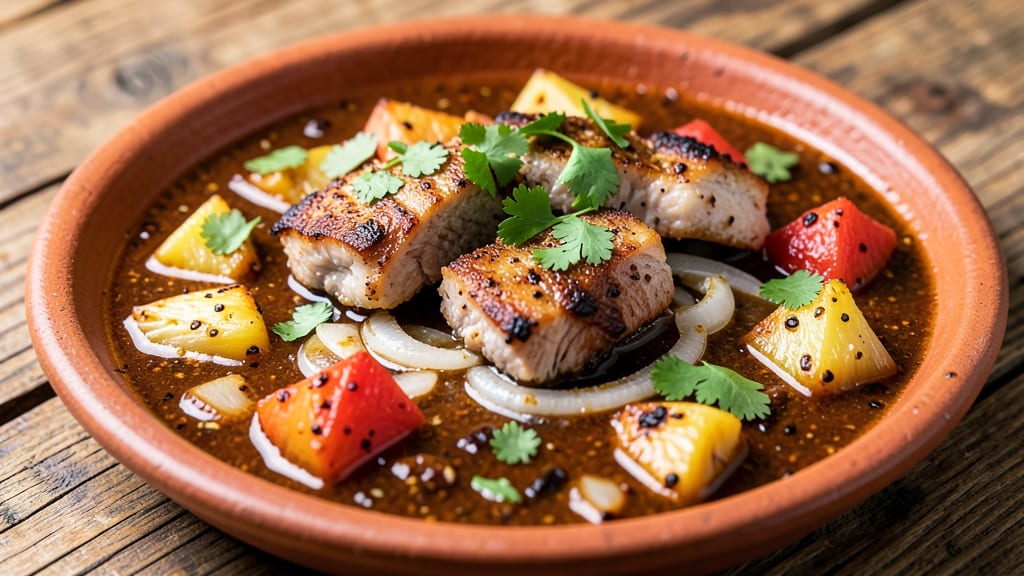
This authentic al pastor sauce transforms simple tacos into a smoky, sweet, and tangy masterpiece—just like Mexico City street vendors serve. The secret lies in toasting dried chiles and blending them with achiote paste, vinegar, and pineapple for that signature depth.
I’ve perfected this recipe over years of testing, ensuring every batch delivers the bold, complex flavors that define al pastor cuisine.
The sauce starts with a base of charred guajillo and ancho chiles, which add natural sweetness and smoky heat. Achiote paste lends its signature orange hue and earthy notes, while white vinegar brightens the mix.
The pineapple isn’t just for sweetness—it tenderizes the meat when used as a marinade, creating that signature caramelized crust on al pastor tacos. This is the sauce that makes al pastor unforgettable.
What you’ll end up with is a versatile sauce that works as a marinade, taco dip, or even a glaze for grilled meats. The texture is smooth yet vibrant, with layers of smoky, spicy, and fruity flavors that balance perfectly.
Store it in the fridge for up to a week, or freeze for longer shelf life—though you’ll likely use it all up in a few days.
Ready to elevate your tacos? This sauce is the heart of al pastor, and it’s easier to make than you think. Let’s get started on the perfect batch.
Ingredients for authentic al pastor sauce
Nine simple ingredients transform into Mexico City’s iconic al pastor sauce—smoky, sweet, and vibrant.
| Ingredient | Amount | Notes |
|---|---|---|
| Dried Guajillo Chiles 🌶️ | 4 whole | Stems and seeds removed |
| Dried Ancho Chiles 🌶️ | 3 whole | Stems and seeds removed |
| Achiote Paste 🧂 | 2 tbsp | For signature orange hue |
| White Vinegar 💧 | ½ cup | Brightens the sauce |
| Fresh Pineapple 🍍 | 1 cup | Juice only, no pulp |
| Chipotle Peppers in Adobo 🌶️ | 2 tbsp | Adobo sauce included |
| Garlic Cloves 🧄 | 3 cloves | Peeled, rough chopped |
| Cumin Seeds 🌿 | 1 tsp | Toasted for depth |
| Ground Cinnamon 🌿 | ½ tsp | For warmth |
| Salt 🧂 | 1 tsp | Diamond Crystal preferred |
The chiles are the soul of this sauce. Guajillo and ancho should be bright red, not faded or brittle—MexGrocer or La Tienda carry the best dried chiles, but any Latin market works. Toast them in a dry skillet until fragrant (about 30 seconds per side), then soak in hot water for 15 minutes. Don’t skip the toasting—it deepens the smoky flavor. Achiote paste is non-negotiable for that signature orange color; Goya or La Costeña brands are reliable. Fresh pineapple juice is ideal, but canned pineapple juice in a pinch works too—just avoid syrup-heavy versions.
No guajillo chiles? Ancho chiles alone work, but you’ll lose that fruity sweetness. Skip the chipotles? Smoked paprika at half the amount adds depth. Cumin seeds must be toasted—30 seconds in a dry pan until fragrant—otherwise, they’ll taste bitter. The vinegar brightens everything, but apple cider vinegar adds a subtle sweetness if you prefer. Garlic can be roasted (wrap cloves in foil, bake at 400°F for 10 minutes) for a mellower flavor, but raw works fine. Salt matters—Diamond Crystal dissolves better than table salt, so use that if you’ve got it.
This sauce keeps beautifully. Store in a glass jar in the fridge for up to 1 week, or freeze for 3 months. The flavors actually improve after a day or two as the ingredients meld. Double the batch—you’ll want it for tacos, grilled meats, and even as a marinade. The sauce thickens as it cools, so stir in a splash of water if it gets too stiff before using.
Why You'll Love This Recipe
- One-Bowl Wonder: I swear by this recipe because it’s actually just one bowl—no chopping, no straining, no mess. Soak the dried chiles in hot water, blend with the achiote paste and vinegar, then toss in the pineapple. That’s it. The sauce comes together while you’re still deciding what to eat for dinner.
- Smoky-Sweet Magic: The guajillo and ancho chiles give it that deep, smoky backbone, but the pineapple? It’s the game-changer. That bright acidity cuts through the richness, leaving you with a balance that’s ridiculously good—like a tangy, spicy hug in sauce form. (Yes, even on a Tuesday night.)
- Taco Night Every Day: This sauce isn’t just for tacos—it’s the reason you’ll want to make tacos every day. Slather it on grilled meats, drizzle it over rice, or toss it into scrambled eggs. Honestly, I’ve even used it as a marinade for chicken, and it’s become my go-to for anything that needs a little fire and flavor.
- Budget-Friendly Staple: Dried chiles and achiote paste last forever, and pineapple’s cheap when you buy it in season. A single batch stretches to feed four people, and leftovers? They taste just as good reheated the next day. Between us, this is the kind of sauce that makes you feel like you’re eating fancy without spending fancy.
Step-by-step instructions for authentic al pastor sauce
Here's how to craft the signature smoky, tangy sauce that makes al pastor tacos unforgettable.
Toast and Rehydrate the Dried Chiles
Place the 4 whole dried guajillo chiles and 3 whole dried ancho chiles on a dry skillet over medium heat. Toast them for 30-45 seconds per side until they darken slightly and smell deeply aromatic. This step removes raw flavors and intensifies their smoky character.
Transfer the toasted chiles to a bowl and cover them with the ½ cup white vinegar. Let them soak for 15 minutes to soften completely. The vinegar not only rehydrates them but also brightens the sauce with its acidity. You'll notice the chiles plump up and release their vibrant red color into the liquid.
Blend the Chiles with Aromatics
Drain the soaked chiles, reserving the soaking liquid, and transfer them to a blender. Add the 2 tbsp achiote paste, 2 tbsp chipotle peppers in adobo (including the adobo sauce), 3 cloves rough chopped garlic, 1 tsp toasted cumin seeds, ½ tsp ground cinnamon, and 1 tsp salt.
Blend everything until completely smooth, adding ¼ cup of the reserved chile-soaking liquid as needed to help the blending process. The mixture should be velvety with no visible texture. This is where the sauce gets its signature depth—achiote for color, chipotle for heat, and cumin for earthy warmth.
Cook the Pineapple Juice Base
Strain the 1 cup fresh pineapple juice (no pulp) through a fine-mesh sieve to remove any fibrous bits. In a saucepan over medium heat, combine the pineapple juice with the blended chile mixture. Bring to a gentle simmer, then reduce heat to low and let it cook uncovered for 10-12 minutes.
Stir occasionally as the sauce thickens slightly—you're looking for a consistency that coats the back of a spoon but remains pourable. The pineapple juice balances the smoky, spicy elements with its natural sweetness, creating that perfect al pastor flavor profile. Here's where it gets fun: taste and adjust seasoning if needed.
Finish and Strain for Smooth Perfection
Once the sauce has thickened to your desired consistency, remove it from heat. For an ultra-smooth texture, strain it through a fine-mesh sieve into a clean bowl, pressing gently on the solids with a spoon to extract every bit of flavor. This step ensures your sauce is silky and free of any fibrous bits.
Return the strained sauce to the saucepan and let it cool slightly before using. The sauce will continue to develop flavor as it cools, so it's best used within 2-3 hours for maximum freshness. This authentic al pastor sauce is now ready to drizzle over your marinated pork tacos for that signature smoky-sweet kick.
Pro Tips For Making Authentic Al Pastor Sauce
- REMOVE CHILE STEMS NOW: I learned this the hard way—leaving stems in your guajillo and ancho chiles turns your sauce bitter. Snip them off before toasting, not after. The extra 30 seconds saves you from scraping burnt stems out later (yes, I’ve done that).
- TOAST CHILES UNTIL SCENTED: Dry-toast your chiles over medium heat until they smell like smoke and campfires—not burnt rubber. If you rush, the sauce will taste flat. Keep them moving; charred bits add depth, but burnt ones ruin everything.
- SIMMER PINEAPPLE LOW AND LONG: Add pineapple last and simmer it for 10 minutes at the lowest heat setting. Too much heat turns it mushy, and too little time leaves it raw. You want it tender but still holding shape—like a perfect al pastor bite.
- STRAIN SEEDS AFTER SOAKING: After soaking your chiles, strain out the seeds and debris through a fine-mesh sieve. I skip this sometimes, and the sauce gets gritty—especially with guajillos. It’s tedious, but your mouth will notice the difference.
Essential equipment for perfect results
Must-Have Blender
You’ll need a high-powered blender that can handle the fibrous chiles and toasted spices without overheating. I swear by my Ninja BN601—it’s affordable, handles hot liquids well, and blends this sauce to a silky consistency without burning out.
If you’re on a budget, the Oster Blend-All works too, but avoid cheap blenders that struggle with thick, spicy mixtures. 💪
Dry Skillet for Toasting
A cast iron skillet is ideal for toasting the dried chiles because it distributes heat evenly and prevents burning. Heat it over medium heat until it’s just warm, then add the chiles for 30-45 seconds per side—they should darken slightly but not char.
If you don’t have cast iron, a stainless steel skillet works too, but watch closely to avoid scorching. Never use nonstick; it can’t handle the high heat needed for proper toasting.
Fine-Mesh Sieve
Straining the sauce through a fine-mesh sieve (like the OXO Good Grips) is non-negotiable for that ultra-smooth texture. A regular strainer won’t catch all the fine particles, leaving your sauce gritty.
Press the solids gently with a spoon to extract every drop of flavor—this step makes the difference between a good sauce and a great one. If you’re in a pinch, a cheesecloth works, but it’s slower and less efficient.
Saucepan for Simmering
Use a stainless steel saucepan with a tight-fitting lid for simmering the pineapple juice and blended chiles. Stainless steel conducts heat evenly and won’t react with the acidity of the vinegar or pineapple.
A 3-quart pan is perfect for this recipe—it gives enough room to stir without splattering. Avoid aluminum or copper pans, as they can impart off-flavors to the sauce.
Glass Storage Jar
Store your sauce in a glass jar with an airtight lid, like a Ball Mason jar or Le Parfait. Glass preserves the sauce’s vibrant color and prevents absorption of odors from the fridge.
Avoid plastic containers, as they can warp with heat and may leach chemicals into the sauce. Label your jar with the date—this sauce keeps for 1 week refrigerated or 3 months frozen, but trust me, it won’t last that long. 🌶️
Nutrition facts
Frequently asked questions
Can I substitute guajillo chiles with other dried chiles?
Yes, but the flavor will change slightly. Use ancho chiles alone for a deeper, earthier taste (though less fruity sweetness), or pasilla chiles for a richer, almost chocolatey note. Avoid very hot chiles like habanero—they’ll overpower the sauce’s balanced profile. For a milder version, blend in 1 dried poblano chile with the guajillo.
Why does my sauce look thin after cooking?
The sauce thickens as it cools, but if it’s still runny when warm, simmer it uncovered for 5-10 more minutes to reduce the liquid. For a thicker texture, blend in 1 tsp cornstarch mixed with 2 tbsp water and stir until it reaches a glossy consistency. Avoid over-thickening—al pastor sauce should still be pourable for dipping tacos.
How do I use this sauce beyond tacos?
This versatile sauce works as a marinade for grilled meats (try it on chicken or shrimp), a dip for taquitos, or even a glaze for roasted vegetables. For marinades, mix equal parts sauce and pineapple juice, then coat meats for 2-4 hours before cooking. It also pairs beautifully with queso fresco on tostadas or as a drizzle for huevos rancheros.
Can I make this sauce without achiote paste?
You can, but the sauce will lack its signature orange hue and earthy depth. For a substitute, blend 1 tbsp annatto seeds (soaked in 2 tbsp hot oil for 10 minutes) or use ½ tsp turmeric (though it won’t taste the same). The flavor won’t be identical, but it’ll still be delicious—just more rustic.
What’s the best way to reheat leftover sauce?
Gently reheat in a saucepan over low heat for 2-3 minutes, stirring constantly to prevent scorching. Avoid microwaving—it can make the sauce grainy. If the sauce thickens too much, thin it with 1 tsp warm water or pineapple juice. For extra richness, stir in 1 tsp butter or neutral oil while reheating.