
Sauces & Condiments
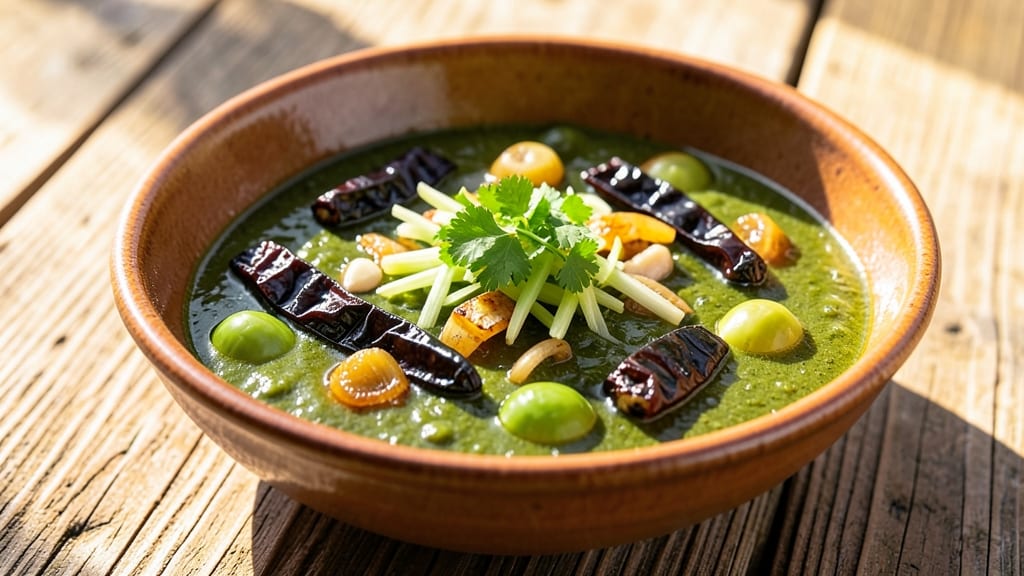
This authentic chile verde sauce recipe transforms simple ingredients into a velvety, smoky masterpiece that elevates everything from tacos to grilled meats. The secret lies in roasting poblano peppers until their skins blacken—this deepens their natural sweetness while adding layers of earthy complexity.
I've perfected this sauce over years of testing, ensuring the perfect balance between tangy tomatillos, aromatic celery, and the subtle vinegar lift that brightens every bite.
The foundation starts with charred peppers and tomatillos, blended until completely smooth, then simmered with onions, garlic, and broth until the flavors meld into a cohesive, aromatic sauce.
A touch of cumin and salt enhances the natural flavors without overpowering, while a splash of vinegar at the end provides that signature tang that makes this sauce unforgettable. The result is a sauce that's rich yet light, smoky yet bright—a perfect companion for any dish.
What sets this chile verde apart is its versatility. Use it as a dip for tortilla chips, a marinade for grilled chicken, or a topping for enchiladas. The sauce thickens slightly as it cools, creating a perfect consistency that clings beautifully to any surface.
Whether you're serving it at a casual dinner or a festive gathering, this sauce will be the star of the meal.
For those who prefer a vegan option, simply swap the chicken broth for vegetable broth—no other adjustments are needed. The sauce keeps well in the refrigerator for up to 5 days, allowing you to make a big batch and enjoy it throughout the week.
Let's get started on creating this authentic, flavor-packed sauce that will quickly become a staple in your kitchen.
Ingredients for authentic chile verde sauce
Nine ingredients, one smoky, tangy masterpiece—this sauce transforms simple pantry staples into restaurant-quality magic.
| Ingredient | Amount | Notes |
|---|---|---|
| Poblano Peppers 🌶️ | 4 whole | Charred and peeled |
| Tomatillos 🍅 | 1 lb | Husk removed, rinsed |
| Celery Stalks 🧅 | 4 whole | Leaves trimmed, chopped |
| Yellow Onion 🧅 | 1 whole | Peeled, quartered |
| Garlic Cloves 🧄 | 4 cloves | Peeled, smashed |
| Chicken Broth 💧 | 2 cups | Low-sodium preferred |
| Extra-Virgin Olive Oil 🫒 | ¼ cup | For roasting peppers |
| Ground Cumin 🌿 | 1 tsp | Toasted for depth |
| Salt 🧂 | 1 tsp | Kosher or sea |
| White Vinegar 🍋 | 1 tbsp | For bright tang |
The poblano peppers are the star—roast them until their skins blacken for that deep, smoky sweetness. Trader Joe's and Whole Foods carry them year-round, but hit up a Latin market for the freshest batch. Tomatillos? Husked and rinsed is non-negotiable—they're tart little gems that need to be clean for the best flavor. I always grab extra celery and onions because they're the aromatic backbone, and you can't skimp on freshness here. The garlic? Smashed (not minced) releases more flavor when it hits the hot pan later. For the broth, Pacific Foods low-sodium chicken broth is my go-to—it's clean and lets the other flavors shine.
No poblano peppers? 2-3 jalapeños in a pinch, but remove seeds for less heat. Tomatillos too tart? Swap in 1 cup green tomatoes (peeled) for a milder tang. Fresh celery wilt fast—frozen chopped celery works if you're in a bind, but thaw and drain well. The cumin is key—toast it in the dry pan for 30 seconds before adding to the sauce for a nutty depth. Vinegar hater? Lime juice at half the amount gives a similar bright lift. And if you're making this vegan, just swap the chicken broth for vegetable broth—no other changes needed!
This sauce tastes even better the next day as flavors meld. Store in an airtight jar in the fridge for 5 days—it thickens slightly, which is perfect for dipping or drizzling. Freeze portions in ice cube trays for 3 months—thaw and whisk back to smooth perfection. I like to portion it into small jars so it's ready for quick tacos or grilled meats. The charred pepper skins? Save them—they're packed with flavor and can be composted or saved for homemade broth.
Why You'll Love This Recipe
- No Charred Peppers Needed: I’ll admit, I used to stress over perfectly blackened poblanos—until I realized roasting them in the oven (yes, even under the broiler) gives that same smoky depth without the open-flame drama. The skin peels off like butter, and the flavor? Chef’s kiss. You’ll taste the difference, but not the hassle.
- Bright & Earthy Magic: That tangy tomatillo base with the crisp celery and onion? It’s the kind of balance that makes you pause mid-bite. The poblanos add a whisper of heat, but it’s the garlic—sautéed just until fragrant—that ties everything together. Honestly, it’s the kind of sauce that turns a simple bowl of rice into a full meal.
- Weeknight & Weekend Hero: Slather it on grilled chicken, dollop it over eggs, or use it as a dip for tortilla chips—this sauce does it all. I keep a jar in the fridge for lazy Mondays, but it’s also the star of my Sunday potluck. Between us, it’s the one recipe that never gets skipped, no matter the occasion.
- Budget-Friendly Pantry Staple: Tomatillos and poblanos might sound fancy, but they’re actually affordable and last longer than you’d think. A single batch stretches across three meals, and the leftovers? Even better the next day. I’ll be real: this is the kind of sauce that makes grocery day feel like a win.
Step-by-step instructions for authentic chile verde sauce
This smoky, vibrant sauce delivers restaurant-quality depth with a perfect balance of earthy and bright flavors.
Char and Peel the Poblano Peppers
Heat a dry skillet over medium-high heat. Add the 4 whole poblano peppers and cook, turning occasionally, until their skins blister and turn deep black in spots—about 8-10 minutes. The goal is to char them without burning, so watch closely and move them around the pan.
Transfer the charred peppers to a bowl, cover with plastic wrap, and let them steam for 10 minutes. This makes the skins slip right off. Peel away the charred skins, then remove and discard the stems and seeds. The peppers should now be soft and pliable, ready to release their smoky essence.
Roast Tomatillos and Aromatics
Preheat your oven to 400°F. Toss the husked and rinsed 1 lb tomatillos with 1 tablespoon of the extra-virgin olive oil on a rimmed baking sheet. Roast for 20-25 minutes until their skins wrinkle and turn golden brown, indicating they've softened and developed sweetness.
While the tomatillos roast, heat a separate skillet over medium heat and add the remaining 2 tablespoons extra-virgin olive oil. Add the peeled and quartered 1 whole yellow onion and cook for 5-6 minutes until softened and just beginning to caramelize. Add the 4 whole celery stalks (leaves trimmed and chopped) and cook for another 3 minutes until tender. Push the vegetables to one side of the pan and add the 4 peeled and smashed garlic cloves, cooking for 30 seconds until fragrant.
Toast the Cumin and Build the Sauce Base
In the same skillet with the aromatics, reduce heat to low and add the 1 teaspoon toasted ground cumin. Stir for 30 seconds until the cumin releases its warm, earthy aroma. Pour in the 2 cups chicken broth and scrape up any browned bits from the bottom of the pan—these packed with flavor.
Bring the mixture to a gentle simmer and let it cook for 5 minutes to develop depth. Add the roasted tomatillos and charred poblano peppers, then stir in the 1 teaspoon salt. Let the sauce simmer for another 10 minutes until the tomatillos break down and the mixture thickens slightly. This is where the magic happens—the flavors meld into a harmonious blend.
Finish with Vinegar and Blend to Perfection
Remove the sauce from heat and stir in the 1 tablespoon white vinegar. This brightens the flavors and cuts through the richness, giving the sauce that authentic lift. Let the sauce sit off the heat for 5 minutes to cool slightly—this prevents the oil from separating when you blend.
Transfer the sauce to a blender or food processor and purée until completely smooth. Taste and adjust the seasoning if needed—you might want to add a pinch more salt or a splash of vinegar for balance. The sauce should be vibrant green with a velvety texture, ready to elevate any dish it touches.
Simmer for Maximum Flavor Development
Return the blended sauce to the skillet and simmer over low heat for 10-15 minutes. This final step allows the flavors to deepen and the sauce to reach its ideal consistency—thick enough to coat the back of a spoon but still silky smooth. Stir occasionally to prevent sticking, and taste again to ensure the balance of smoky, tangy, and earthy notes is just right.
Serve the chile verde warm over grilled meats, tacos, or as a dip for tortilla chips. The sauce should be vibrant, aromatic, and packed with layers of flavor that make every bite unforgettable. This isn't just a sauce—it's a celebration of authentic Mexican cooking.
Pro Tips For Making Authentic Chile Verde Sauce
- CHAR THE TOMAJILLO HUSKS: Char them over an open flame or gas burner—yes, even the husks—until they’re blackened and blistered. I learned this the hard way: skipping the husks means a sauce that’s bright but lacks that smoky depth that makes chile verde taste like it came from a street cart, not a recipe book.
- PEEL POBLANOS FAST: Run whole poblano peppers under cold water after charring to loosen the skin, then wrap them in a damp towel for 10 minutes. The steam does the work—no peeling with your fingernails like I used to. (Pro move: Wear gloves; those peppers sting.)
- SWEAT THE SOFTS LOW: Cook the onion, celery, and garlic in the poblano’s rendered oil over medium-low heat until the onion is translucent and the celery’s edges soften—about 8 minutes. Rushing this step means raw, bitter flavors sneaking into your sauce. (I know, I know, but trust the process.)
- STRAIN OR DON’T: If you want a smooth sauce, strain out the seeds and skins after blending. If you prefer texture, leave them in—just pulse briefly to break up the tomatillos. My grandmother swore by the rough version, and it’s the one that clings to tortillas like it’s supposed to. (Your call, but don’t skip the strainer if you’re serving it to picky eaters.)
Essential equipment for great authentic chile verde sauce
Roasting Essential Tools
You’ll need a cast-iron skillet (like Lodge) for charring poblano peppers—its heavy base distributes heat evenly for perfect blackening. A rimmed baking sheet (preferably stainless steel) prevents tomatillos from rolling off while roasting. For precision, a digital thermometer (like Thermoworks) ensures your oven stays at 400°F consistently. 🌶️
Blending and Mixing
A high-powered blender (like Vitamix or Ninja) is non-negotiable—it handles the fibrous tomatillos and charred peppers smoothly. If you lack one, a food processor works, but you’ll need to strain the sauce for ultra-silky texture. A wooden spoon helps stir the simmering sauce without scratching your skillet.
Heat Control Tools
Use a kitchen torch (like Weber) for extra char on peppers—it adds smoky depth without burning. A stainless steel saucepan (with lid) is ideal for simmering, as it heats evenly and won’t react with acids. For toasting cumin, a small sauté pan (like All-Clad) ensures even heat distribution.
Storage Containers
Transfer finished sauce to glass mason jars (like Ball) for airtight storage—they preserve flavor and prevent freezer burn. For freezing, use silicone ice cube trays (like OXO) to portion sauce into single-use servings.
Label containers with dates to track freshness—this sauce peaks after 2-3 days in the fridge. ❄️
Budget-Friendly Swaps
Skip the torch? Use a broiler pan under the oven rack for charred peppers. No high-powered blender? A handheld immersion blender (like Magic Bullet) works in the pot. For storage, BPA-free plastic containers (like Rubbermaid) are affordable and microwave-safe—just avoid freezing them.
Nutrition facts
Frequently asked questions
Can I make this chile verde sauce without poblano peppers?
Yes, but you'll need to adjust for flavor and texture. Use 2-3 jalapeños (seeds removed for mild heat) or 1-2 serrano peppers for a similar kick. For a milder version, try 1 cup roasted green bell peppers—they won't add heat but provide sweetness. The sauce will be less smoky, so increase the cumin to 1.5 teaspoons for depth.
Why does my chile verde sauce taste too tart?
The tomatillos are likely overpowering the other flavors. Balance it by adding 1 teaspoon sugar or 1/2 teaspoon honey to mellow the tartness. Simmer the sauce for an extra 5 minutes to let flavors meld, or stir in 1/4 cup cooked chicken or onion to dilute the acidity naturally.
How can I make this sauce spicier?
Add heat by incorporating 1-2 chipotle peppers in adobo sauce (blended in) or 1/2 teaspoon cayenne pepper during the final simmer. For smoky heat, char an extra poblano or jalapeño and blend it in. Start with small amounts—you can always add more, but you can't remove excess spice!
Can I use this sauce as a marinade?
This sauce makes an excellent marinade for chicken, pork, or shrimp. Combine 1 cup chile verde sauce with 1/4 cup olive oil and marinate proteins for 2-4 hours (or overnight for deeper flavor). The acidity in the tomatillos helps tenderize meat beautifully. Just reserve some sauce for serving after cooking.
What's the best way to reheat leftover chile verde?
Gently reheat in a saucepan over low heat for 3-5 minutes, stirring occasionally. Add 1-2 tablespoons water or broth if it thickens too much. For microwave reheating, use 30-second intervals on medium power, stirring between each interval. Never boil—this can make the sauce bitter or separate.