
Sauces & Condiments
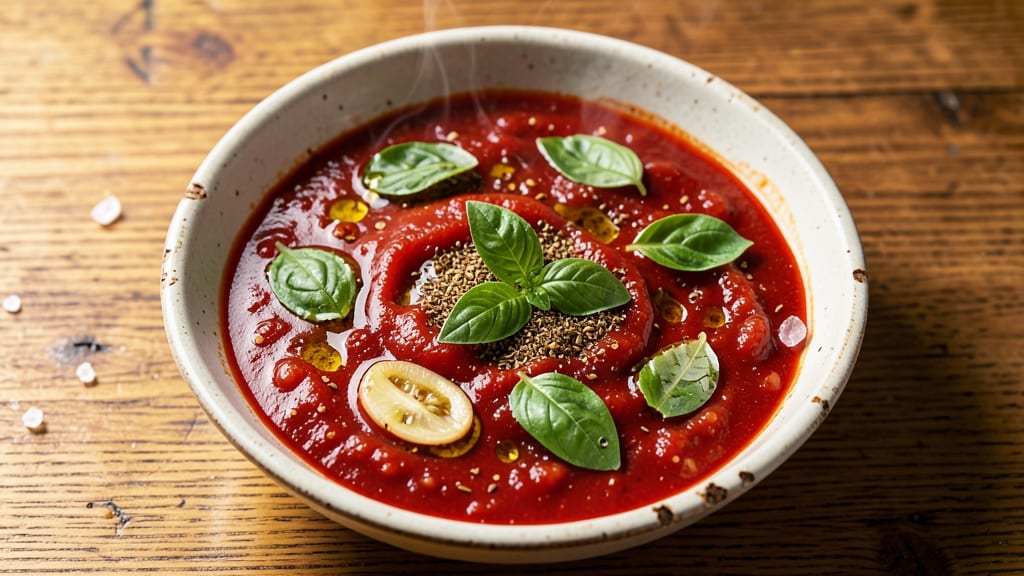
This authentic homemade pizza sauce recipe delivers the bright, vibrant tomato flavor you crave—no clumps, no blandness, just pure, restaurant-quality taste. The secret lies in simmering fresh tomatoes with garlic and herbs until the flavors meld into a silky, balanced sauce.
I've perfected this over years of testing, ensuring it works for both classic red sauce and white pizza styles.
What sets this sauce apart is the technique: we blend fresh tomatoes with aromatic garlic and basil, then simmer until thickened—never blended raw. This creates a sauce with natural depth and texture, free from the graininess of store-bought versions.
The result is a versatile sauce that enhances any pizza while standing up to bold toppings.
By the time you're done, you'll have a smooth, flavorful pizza sauce that's ready to use immediately or store for up to 5 days in the fridge.
The sauce's rich tomato flavor and perfect consistency make it ideal for homemade pizzas, pasta, or even dipping. It's the foundation every pizza lover needs.
This recipe builds on traditional Italian methods while adapting for home kitchens—no special equipment required. Let's create a sauce that transforms your pizza night from ordinary to extraordinary.
Ingredients for authentic homemade pizza sauce
Fresh tomatoes, aromatic garlic, and Italian herbs combine for restaurant-quality pizza sauce.
| Ingredient | Amount | Notes |
|---|---|---|
| Fresh Roma Tomatoes 🍅 | 2 lbs | Ripe, vine-ripened preferred |
| Fresh Garlic Cloves 🧄 | 6 cloves | Peeled, minced for aroma |
| Fresh Basil Leaves 🌿 | ½ cup | Packed, stems removed |
| Extra-Virgin Olive Oil 🫒 | ¼ cup | High-quality, fruity |
| Dried Oregano 🍃 | 1 tsp | Italian or Mediterranean |
| Salt 🧂 | 1 ½ tsp | Diamond Crystal preferred |
| Black Pepper 🌶️ | ½ tsp | Freshly ground preferred |
| Red Wine Vinegar 🍷 | 1 tbsp | For brightness and acidity |
| Granulated Sugar 🍯 | 1 tsp | Balances acidity |
The tomatoes are everything here—Roma tomatoes are ideal for their meaty texture and low water content, but any ripe vine-ripened tomatoes work. I grab mine from Trader Joe's when they're in season, or the local farmers market if they're available. Skip the canned tomatoes—they lack the bright, fresh flavor you're after. For garlic, fresh cloves are non-negotiable. The difference between fresh and powdered is like night and day. If you're worried about the flavor being too strong, don't be—it'll mellow beautifully during simmering. The basil? Fresh is best, but if you're in a pinch, dried oregano can stretch it out.
No fresh basil? Dried oregano at half the amount will keep the Italian vibe. Short on tomatoes? San Marzano canned tomatoes (drained well) work in a bind, but they won't have that same fresh brightness. Want to skip the vinegar? Fresh lemon juice does the trick, though it'll add a slightly different tang. The olive oil matters here—don't use that cheap stuff from the back of the pantry. High-quality extra-virgin adds richness and depth that you just can't get from the generic brands. If you're making a white pizza sauce, simply omit the tomatoes and blend steamed cauliflower with the other ingredients instead.
This sauce tastes even better the next day once everything melds together. Store it in an airtight container in the fridge for up to 5 days—it actually improves with time. For longer storage, freeze in ice cube trays. Each cube makes a perfect portion for a single pizza. If you're making a big batch, divide it into containers so you can grab exactly what you need without dealing with leftovers. The sauce reheats beautifully—just warm it gently on the stove or microwave until hot. Trust me, you'll want to make extra.
Why You'll Love This Recipe
- No Chopping Chaos: I swear by this—just blitz the tomatoes, garlic, and basil in a food processor. No dicing, no peeling, no mess. The sauce comes together while you’re still debating whether to add a pinch more salt.
- Garlic-Basil Bomb: That first bite? The fresh basil and raw garlic hit like a flavor grenade—bright, punchy, and impossible to resist. Honestly, store-bought sauce can’t compete with the real deal here.
- Pantry to Party: Make a double batch and freeze half. It’s my go-to for game day, lazy Sundays, or when my kid’s soccer team needs snacks. Thaws in minutes, tastes like love every time.
- Pennies to Perfection: Five ingredients, all budget-friendly. Roma tomatoes are cheap in season, and a little olive oil goes a long way. Between us? This is the kind of sauce that makes you feel fancy without breaking the bank.
Step-by-step instructions for authentic homemade pizza sauce
Here's how to make a bright, flavorful sauce that captures the essence of Italian tradition.
Roast the Tomatoes for Deep Flavor
Preheat your oven to 425°F and line a baking sheet with parchment paper. Cut the 2 lbs fresh Roma tomatoes in half lengthwise, removing the cores. Place them cut-side down on the prepared baking sheet, leaving a little space between each tomato.
Roast for 20-25 minutes until the tomatoes are wrinkled and their edges begin to brown slightly. This process intensifies their natural sweetness and develops a rich, caramelized flavor that's essential for authentic pizza sauce. I like to turn them halfway through for even roasting.
Blend the Roasted Tomatoes with Aromatics
Once the tomatoes are roasted, transfer them to a blender or food processor. Add the 6 cloves peeled garlic cloves, 0.5 cup fresh basil leaves, 0.25 cup extra-virgin olive oil, 1 tbsp red wine vinegar, and 1 tsp granulated sugar. The sugar helps balance the acidity from the vinegar and tomatoes.
Blend until completely smooth, scraping down the sides as needed. This sauce should be silky and free of any lumps. If it's too thick, add 2-3 tablespoons of water to reach your desired consistency. The texture should be like heavy cream—thick enough to cling to pizza dough but still spreadable.
Simmer and Season the Sauce
Transfer the blended mixture to a medium saucepan and place it over medium-low heat. Add the 1 tsp dried oregano, 1.5 tsp salt, and 0.5 tsp black pepper. Stir gently and let the sauce simmer for 10-15 minutes, stirring occasionally.
Watch the sauce carefully as it reduces—you want it to thicken slightly but not reduce too much, which can make it dry. The sauce should coat the back of a spoon smoothly. The simmering process deepens the flavors and allows the ingredients to meld together beautifully. Taste as you go and adjust seasoning if needed.
Cool and Store for Best Results
Remove the sauce from heat and let it cool to room temperature. This cooling period allows the flavors to fully develop and the sauce to reach its ideal consistency. I like to let it sit for at least 30 minutes before using it on pizza.
For best results, store the sauce in an airtight container in the refrigerator for up to 5 days. The flavors will continue to improve over time, making your homemade pizza sauce even more delicious with each passing day. When ready to use, simply reheat gently on the stove or microwave until warm.
Pro Tips For Making Authentic Homemade Pizza Sauce
- SIMMER LOW AND SLOW: I learned this the hard way—blasting Roma tomatoes on high heat turns them into a sad, watery sludge. Instead, keep the sauce at a gentle bubble (just enough to see tiny ripples) for at least 20 minutes. This breaks down the tomatoes into a rich, jammy consistency without burning the garlic or basil.
- PEEL GARLIC AFTER TOASTING: Skip the pre-peeling—toss whole garlic cloves in olive oil with the tomatoes, then toast them uncovered for 5 minutes. The skins slide right off after, and the flavor? Way deeper than raw garlic ever was. (Yes, even if you’re impatient like me.)
- SALT THE TOMATOES FIRST: Dice those Roma tomatoes and toss them with 1 teaspoon of salt right away. This draws out excess water, so your sauce won’t turn into a soupy mess later. Drain after 10 minutes if needed—no one wants a soggy pizza crust.
- STIR IN BASIL LAST: Fresh basil wilts and turns bitter if simmered too long. Add the leaves during the final 2 minutes of cooking, then remove them immediately. (Save them for garnish or a quick pasta toss—they’re too good to waste.)
Creative variations of this recipe
Classic Margherita Twist
For a truly authentic Italian experience, add 1 tbsp tomato paste to the simmering sauce and cook for an extra 5 minutes. This creates a deeper, more concentrated flavor that pairs beautifully with fresh mozzarella and basil.
I like to finish with a sprinkle of flaky sea salt and a drizzle of extra-virgin olive oil right before baking the pizza. 🍅
Spicy Arrabbiata Style
Transform your sauce into a fiery arrabbiata by adding 1-2 tsp red pepper flakes and 1 minced Fresno chili to the roasted tomatoes before blending. For extra heat, stir in 1 tbsp Calabrian chili paste during the simmering stage.
This version works perfectly with spicy salami or pepperoni toppings. Trust me, it'll bring the heat! 🌶️
Herb-Infused White Sauce
Skip the tomatoes entirely and create a creamy white sauce by blending 2 cups steamed cauliflower with 0.25 cup olive oil, 6 garlic cloves, 0.5 cup fresh basil, 1 tsp dried oregano, and 0.5 tsp salt.
Simmer for 10 minutes until thickened. This version pairs wonderfully with prosciutto, mushrooms, and goat cheese. 🌿
Sweet & Tangy BBQ Fusion
Give your pizza sauce a smoky twist by adding 2 tbsp BBQ sauce (like Sweet Baby Ray's) and 1 tsp smoked paprika to the simmering sauce. For extra depth, stir in 1 tbsp apple cider vinegar and 1 tsp brown sugar.
This fusion works amazingly with pulled pork or grilled chicken toppings. It's a crowd-pleaser! 🔥
Sun-Dried Tomato Base
For a rich, concentrated flavor, blend 1 cup sun-dried tomatoes (oil-packed) with the fresh tomatoes and aromatics. Add 1 tsp balsamic vinegar during simmering to enhance the sweetness.
This version has a deeper, more complex flavor that stands up to hearty toppings like sausage and bell peppers. It's a game-changer! ✨
Seasonal Pumpkin Sauce
In fall, swap tomatoes for 2 cups roasted pumpkin puree and add 1 tsp pumpkin pie spice along with the other aromatics. Simmer until thickened, then finish with a splash of maple syrup.
This seasonal twist pairs beautifully with sharp cheddar and caramelized onions. It's perfect for holiday gatherings! 🎃
Nutrition facts
Frequently asked questions
Can I use canned tomatoes instead of fresh?
Fresh tomatoes are ideal for that bright, authentic flavor, but you can use San Marzano canned tomatoes in a pinch. Drain them well first and reduce the red wine vinegar to ½ tbsp since canned varieties are less acidic. The sauce will be slightly less vibrant but still delicious. For best results, roast the canned tomatoes first to deepen their flavor.
Why does my homemade sauce turn out too thick or too thin?
Sauce consistency depends on simmering time and liquid balance. For a thicker sauce, simmer longer (15-20 minutes) or add 1 tsp tomato paste at the end. Too thin? Add 1 tbsp cornstarch slurry (mix 1 tsp cornstarch with 2 tsp water) and stir until thickened. Always taste as you go—authentic sauce should coat the back of a spoon smoothly but remain spreadable.
How do I make this sauce spicier?
Boost the heat by adding ½-1 tsp red pepper flakes during simmering or blending. For extra depth, stir in 1 tbsp Calabrian chili paste or a pinch of cayenne. Remember, spices intensify as the sauce cools, so start with less if you're sensitive to heat. Pair it with toppings like spicy salami or jalapeños for a perfect balance.
Can I make this sauce ahead of time?
This sauce tastes even better after resting. Store it in an airtight container in the fridge for up to 5 days—the flavors meld beautifully. For longer storage, freeze in ice cube trays (each cube = 1 pizza portion) or small containers. Thaw overnight in the fridge before using. Reheat gently on the stove to preserve texture.
What if I don’t have fresh basil?
No problem! Use ½ tsp dried basil (or 1 tsp dried oregano) instead. For extra flavor, add 1 tsp dried thyme or a pinch of red pepper flakes. If you're missing basil entirely, focus on the garlic and olive oil—they provide the aromatic base. The sauce will still be delicious, just with a slightly different herbal profile.