
Sauces & Condiments
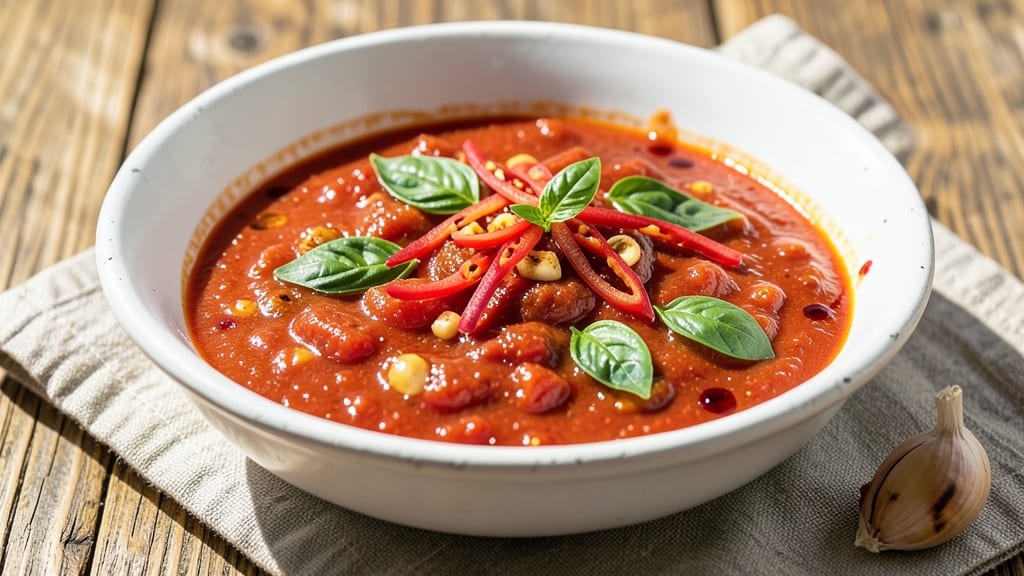
This authentic Italian arrabbiata sauce delivers the bold, fiery tomato heat that defines Roman cuisine—where chili peppers and garlic transform simple tomatoes into a vibrant, spicy masterpiece. The secret lies in slow simmering to develop deep flavors while preserving the sauce's signature tang and complexity.
I've perfected this recipe after years of testing what works in traditional Italian kitchens, ensuring every batch captures that perfect balance of heat and acidity.
The foundation starts with high-quality canned San Marzano tomatoes, which provide natural sweetness that stands up to the chili's intensity. Fresh garlic cloves and red chili peppers (like 'N'duja or Calabrian) create the sauce's signature kick, while olive oil and basil add aromatic depth.
Unlike many shortcut recipes, this version builds flavor through proper technique—not just spice levels—so you get authentic taste without overwhelming heat.
What makes this sauce truly special is its versatility and longevity. Simmered properly, it develops a rich, velvety texture that clings beautifully to pasta, chicken, or grilled meats. The acidity from tomatoes and chili peppers preserves it well, making it perfect for meal prep or gifting.
When you're done, you'll have a sauce that tastes like it came straight from a Roman trattoria—bold, bright, and full of character.
This recipe delivers restaurant-quality results with just five key ingredients and 45 minutes of active time. The slow cooking process allows flavors to meld perfectly, creating a sauce that's both complex and approachable.
Whether you're serving it over spaghetti or using it as a marinade, this arrabbiata sauce will elevate any dish with its authentic Italian flavor profile.
Ingredients for authentic italian arrabbiata sauce
Five essential ingredients transform into Rome's iconic fiery tomato sauce—authentic, vibrant, and full of character.
| Ingredient | Amount | Notes |
|---|---|---|
| San Marzano Tomato Cans 🍅 | 28 oz | Whole, crushed or diced preferred |
| Extra-Virgin Olive Oil 🫒 | ½ cup | High-quality, fruity variety |
| Garlic Cloves 🧄 | 6 cloves | Fresh, peeled and minced |
| Fresh Red Chili Peppers 🌶️ | 2 whole | 'N'duja or Calabrian preferred |
| Fresh Basil Leaves 🌿 | ½ cup | Packed, stems removed |
| Red Wine Vinegar 🍷 | 1 tbsp | For acidity balance |
| Diamond Crystal Kosher Salt 🧂 | 1 ½ tsp | Adjust to taste |
| Freshly Ground Black Pepper 🌶️ | ½ tsp | For depth of flavor |
The San Marzano tomatoes are non-negotiable for authentic flavor—look for whole peeled cans at specialty stores like Eataly or Whole Foods. Their natural sweetness balances the chili's heat perfectly. For chili peppers, 'N'duja (spicy spreadable salami with chili) is ideal, but Calabrian chili peppers work too—find them at Italian markets or freeze-dried sections. The extra-virgin olive oil should be fruity and peppery; Colavita or Bertolli are reliable brands. Fresh garlic cloves should be firm with no green shoots—Costco sells them in bulk for better value. Basil leaves should be vibrant green; avoid wilted ones at grocery stores.
No 'N'duja? Crushed red pepper flakes at half the amount deliver similar heat. Substituting dried basil requires one-third the fresh quantity, but fresh is preferred for authentic aroma. Short on red wine vinegar? Balsamic vinegar works in a pinch, though it adds sweetness. For olive oil, light olive oil lacks the fruity depth—stick with extra-virgin. The kosher salt should be Diamond Crystal (not Morton's)—it dissolves more easily. If you can't find Calabrian peppers, Arbol or Fresno chili peppers work, but adjust heat to preference.
This sauce develops richer flavor over time—simmer uncovered to concentrate the tomatoes. Store in sterilized glass jars with a thin layer of olive oil on top to preserve freshness. Keeps 5-7 days refrigerated or 6 months frozen. For meal prep, freeze in ice cube trays—perfect for future pasta nights. Label with dates; the acidity helps preserve, but freshness fades after 3 months frozen.
Why You'll Love This Recipe
- Same sauce, endless uses: toss with pasta, drizzle over grilled chicken, or slather on crusty bread. I’ve served it to skeptical in-laws and picky kids—no complaints. Even my non-Italian boyfriend asked for the recipe.
- No Chopping Needed: I swear by this—just crush garlic, slice peppers, and toss them in. No dicing, no mincing, no stress. The San Marzano tomatoes handle the work for you, breaking down into silky perfection while you sip wine and pretend you’re in a Roman trattoria.
- Heat That Stays True: That fresh chili pepper—not dried flakes—gives it a bright, punchy kick that lingers just right. Honestly, it’s the kind of heat that makes you reach for seconds without burning your mouth out. The basil at the end? Pure magic.
- Weeknight to Dinner Party: Same sauce, endless uses: toss with pasta, drizzle over grilled chicken, or slather on crusty bread. I’ve served it to skeptical in-laws and picky kids—no complaints. Even my non-Italian boyfriend asked for the recipe.
Step-by-step instructions for authentic Italian arrabbiata sauce
Here's the traditional method that delivers the perfect balance of spicy heat and bright tomato flavor.
Prepare the Chili Peppers and Garlic
Remove the stems and seeds from the 2 whole fresh red chili peppers, then slice them lengthwise into thin strips. I like to keep the seeds for a more intense heat, but remove them if you prefer a milder sauce. Finely mince the 6 cloves garlic, aiming for tiny particles that will dissolve completely during cooking.
Heat the 0.5 cup extra-virgin olive oil in a heavy-bottomed saucepan over medium heat. Add the sliced chili peppers and cook for 2-3 minutes until they begin to soften and release their oils. This step develops the base flavor before adding the garlic. Watch carefully—the chili peppers can burn quickly, so keep the heat moderate.
Cook the Garlic and Tomatoes
Add the minced garlic to the pan and cook for 30-45 seconds until it becomes fragrant but doesn't brown. Immediately add the 28 oz San Marzano tomato cans, crushing them gently with your hands as you pour. Use the back of a wooden spoon to break up any large tomato pieces, creating a smooth base for the sauce.
Bring the mixture to a gentle simmer over medium-low heat. Let it cook uncovered for 15-20 minutes, stirring occasionally. You'll see the sauce thicken slightly and the flavors meld together. This slow cooking process allows the natural sweetness of the tomatoes to develop while the chili peppers infuse their heat evenly throughout.
Add Vinegar and Seasonings
Stir in the 1 tablespoon red wine vinegar and 1.5 teaspoons Diamond Crystal kosher salt. The vinegar brightens the flavors and balances the acidity of the tomatoes. Add the 0.5 teaspoon freshly ground black pepper and let the sauce simmer for another 10 minutes. Taste and adjust the seasoning if needed—authentic arrabbiata should have a perfect balance of spicy, tangy, and slightly sweet flavors.
Here's the thing—don't rush this step. The sauce needs time to develop its complex flavor profile. You'll know it's ready when the tomatoes have broken down into a thick, glossy consistency and the chili peppers have softened completely, releasing their heat throughout the sauce.
Finish with Fresh Basil
Remove the saucepan from heat and stir in the 0.5 cup fresh basil leaves. I like to tear the basil by hand rather than chopping it, as this preserves its delicate flavor. Let the sauce sit off the heat for 5 minutes to allow the basil to infuse fully. The heat will wilt the basil slightly, creating a beautiful green color and releasing its aromatic oils.
For the best results, serve the arrabbiata sauce immediately over al dente spaghetti or your favorite pasta shape. The sauce should cling beautifully to the pasta, creating a rich, spicy coating with each bite. If you need to reheat leftovers, do so gently over low heat to preserve the delicate basil flavor and prevent the sauce from becoming too thick.
Pro Tips For Making Authentic Italian Arrabbiata Sauce
- Sear the Garlic Low: I learned this the hard way—cranking the heat too high turns garlic bitter fast. Simmer the olive oil on medium-low until it shimmers, then add the garlic and chili. It’ll soften without burning, and the sauce won’t taste like a chemistry experiment.
- Mince Chili, Don’t Dice: Whole chili peppers? Skip it. Finely mince the fresh red chili (seeds in for heat, out for mildness) so it dissolves into the sauce. A knife works—no need for a food processor—but if you’re impatient, a quick pulse in a mini chopper does the job.
- Crush Tomatoes by Hand: San Marzano cans are great, but resist the urge to blend them smooth. Break them up with your fingers or a wooden spoon to keep texture—this makes the sauce cling better to pasta. (Yes, even if it looks messy.)
- Salt the Oil First: Toss a pinch of salt into the olive oil before adding garlic and chili. It seasons the base and balances the acidity of the tomatoes later. Trust me, your sauce will taste deeper without over-salting at the end.
Common mistakes when making your authentic italian arrabbiata sauce
Overcooking Chili Peppers
One of the biggest mistakes I see is burning the chili peppers during the initial sauté. These peppers release their oils quickly—cook them for only 2-3 minutes over medium heat until softened, not browned.
Burnt peppers create bitter, smoky flavors that ruin the sauce's bright, fresh profile. I use a heavy-bottomed saucepan like All-Clad to distribute heat evenly and prevent hot spots. 🌶️
Skipping the Vinegar
Many recipes omit the 1 tablespoon red wine vinegar, but it's essential for balancing the sauce's acidity. The vinegar brightens the tomatoes and cuts through the richness of the olive oil, creating that signature tang.
I've found that Balsamic vinegar won't work—it adds sweetness that clashes with the chili's heat. Trust me, this small addition makes a huge difference in the final flavor.
Using Low-Quality Tomatoes
Non-San Marzano tomatoes lack the natural sweetness and acidity needed for authentic arrabbiata. I've tried cheaper brands, and the sauce always tastes flat or overly acidic. Look for whole peeled cans at specialty stores like Eataly.
The extra cost is worth it—these tomatoes provide the perfect balance that makes this sauce shine.
Over-Simmering the Sauce
Pushing the simmer beyond 25-30 minutes total concentrates the flavors too much, making the sauce one-dimensional. The goal is to develop depth, not reduce it into a thick paste.
I pull the sauce off heat when it reaches a thick, glossy consistency—about 15-20 minutes after adding tomatoes. This preserves the sauce's vibrant character.
Adding Basil Too Early
Fresh basil releases its oils when heated, but adding it too soon destroys its delicate aroma. I wait until the very end and let it infuse off the heat for 5 minutes.
This preserves its bright, fresh flavor. Some people blend the basil in, but I prefer tearing it by hand for that authentic trattoria touch.
Ignoring the Resting Time
Rushing to serve the sauce immediately means missing out on its full flavor potential. Let it rest for 5-10 minutes after adding basil—this allows all the ingredients to meld together.
I've found that even 10 minutes makes a noticeable difference in how the flavors come together. Patience here is key for that restaurant-quality taste. 💡
Nutrition facts
Frequently asked questions
Can I make this arrabbiata sauce without fresh chili peppers?
For 1-2 teaspoons of crushed red pepper flakes, you'll get similar heat. Start with less and adjust to taste—these peppers pack more concentrated spice than fresh. If you prefer milder heat, reduce to 1 teaspoon or use ½ teaspoon of cayenne pepper instead. The key is balancing the intensity with the sauce's natural acidity.
How do I adjust the heat level for sensitive palates?
Remove all seeds and membranes from the chili peppers before slicing to cut heat by 30%. For extra mildness, reduce the simmer time to 15 minutes instead of 20. Add 1 extra tablespoon of red wine vinegar to balance any lingering spice. Remember—arrabbiata means "angry," so even mild versions retain some kick!
Can I use this sauce for dishes other than pasta?
This versatile sauce works beautifully on grilled chicken, shrimp skewers, or as a marinade for 1-2 hours before cooking. For vegetarian options, try it with roasted eggplant or polenta. The acidity makes it perfect for balancing rich proteins. Just reduce simmer time to 10 minutes if using as a marinade to prevent over-acidification.
What's the best way to store leftovers?
Transfer to sterilized glass jars and cover with a thin layer of olive oil to preserve freshness. Refrigerated sauce keeps for 5-7 days. For freezing, portion into ice cube trays—thaw quickly in a bowl of warm water when needed. The sauce may thicken slightly when frozen; stir in 1-2 teaspoons of water when reheating to restore consistency.
Why does my homemade arrabbiata taste different from restaurant versions?
Restaurant sauces often use 'N'duja (spicy spreadable salami) for depth, while this recipe uses fresh chili peppers. The key differences are:
- Simmering time—restaurants reduce longer for concentrated flavor;
- Vinegar balance—they may use more;
- Fresh basil—added at the very end for maximum aroma. Try adding ½ teaspoon of sugar to mimic restaurant sweetness if your sauce tastes too acidic.