
Sauces & Condiments
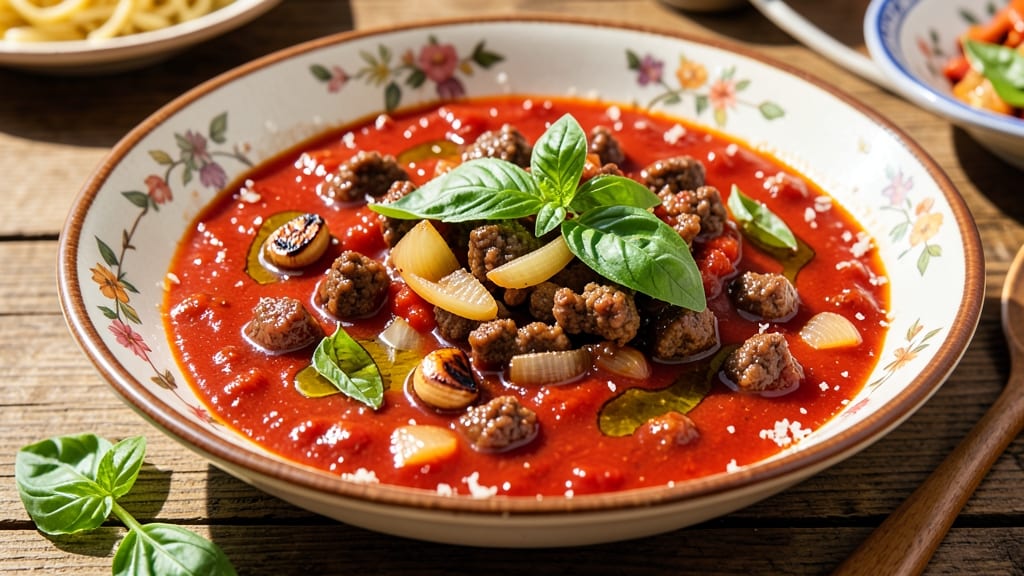
This authentic Italian homemade spaghetti sauce transforms simple ingredients into a rich, slow-simmered masterpiece that captures the soul of Italian cooking. 🌟 The secret lies in patience—letting tomatoes break down into a velvety, umami-packed sauce with deep layers of garlic, onions, and herbs.
Unlike quick versions, this sauce develops complexity through hours of gentle simmering, creating a balance of acidity, sweetness, and savory depth that clings to every strand of spaghetti.
What sets this sauce apart is its authentic technique: no shortcuts, no processed ingredients. We start with fresh tomatoes (or high-quality canned San Marzano) and build flavor gradually with aromatic vegetables and optional meat like ground beef or pancetta.
The key is controlling acidity—adding a touch of sugar or a splash of red wine to mellow the tomatoes without sacrificing brightness. By the end, you’ll have a sauce so rich and flavorful, it turns a simple pasta dish into a restaurant-worthy meal.
The finishing touch? A handful of fresh basil torn into the sauce just before serving, releasing its bright, aromatic oils. This isn’t just a sauce—it’s the heart of your Italian feast, designed to elevate spaghetti into something extraordinary.
Whether you’re serving it at a family dinner or a casual weeknight meal, this sauce delivers the depth and authenticity of a true Italian nonna’s recipe.
Ready to make it? The process is straightforward, but the results are anything but ordinary. Let’s get started—your taste buds will thank you.
Ingredients for authentic italian homemade spaghetti sauce
Eleven ingredients, hours of simmering, and the soul of Italian cooking in every spoonful.
| Ingredient | Amount | Notes |
|---|---|---|
| San Marzano Tomato Cans 🍅 | 28 oz | Whole, peeled, no salt added |
| Yellow Onion 🧅 | 1 whole | Finely chopped, about 1.5 cups |
| Garlic Cloves 🧄 | 6 cloves | Minced, for deep aromatic base |
| Extra-Virgin Olive Oil 🫒 | ½ cup | High quality, fruity variety |
| Ground Beef 🥩 | 1 lb | 80/20 fat ratio preferred |
| Fresh Basil Leaves 🌿 | ½ cup | Packed, for finishing garnish |
| Red Wine 🍷 | ½ cup | Bold, dry variety like Chianti |
| Granulated Sugar 🍚 | 1 tbsp | Balances tomato acidity |
| Dried Oregano 🍃 | 1 tsp | Italian variety preferred |
| Salt 🧂 | 1 ½ tsp | Diamond Crystal kosher preferred |
| Black Pepper 🌶️ | ½ tsp | Freshly cracked for heat |
The tomatoes are non-negotiable—San Marzano is the gold standard for its sweetness and low acidity. Grab the 28-ounce cans (the larger size) from Whole Foods or any Italian market—they're worth the splurge. The ground beef? 80/20 fat ratio makes all the difference—it renders beautifully and adds richness. If you're skipping meat, mushrooms or pancetta work brilliantly instead. For the red wine, any bold, dry variety will do—Chianti or Sangiovese are classic choices, but whatever's open in your cabinet works too. The key is letting it reduce slowly to deepen the sauce's complexity.
No San Marzano tomatoes? High-quality crushed tomatoes will work in a pinch, but you'll need to add an extra 1/4 cup water to compensate for the thicker texture. Fresh basil is ideal, but dried basil at 1/3 the amount gets you close—just add it earlier in the cooking process. Running low on red wine? Beef broth with a splash of balsamic vinegar mimics that deep umami punch. The sugar might seem odd, but it's essential—it mellows the acidity of the tomatoes without making the sauce sweet. If you prefer less sugar, start with 1/2 tablespoon and adjust to taste at the end. The oregano should be Italian—it has a distinct, earthy flavor that regular oregano can't match.
This sauce tastes even better the next day as flavors meld together—plan ahead! Store in an airtight container in the fridge for up to 5 days, or freeze for 3 months in portion-sized containers. For quick access, freeze in ice cube trays and transfer to a bag once solid. When reheating, add a splash of water or broth to prevent thickening. The fresh basil should go in just before serving—torn by hand, not chopped, to release those aromatic oils. If you're making a big batch, freeze half immediately—you'll thank yourself later.
Why You'll Love This Recipe
- San Marzano Magic: I swear by those sweet, juicy tomatoes—no watery cans here. The first taste of that rich, unbroken sauce after simmering? Pure Italian comfort in a pot.
- One-Pot Wonder: Between us, I’ve tried fancy pasta sauces with 10 ingredients. This? Just onions, garlic, beef, and tomatoes—sautéed, simmered, done. Minimal chopping, zero stress.
- Leftovers That Shine: I make double batches on Sundays because this sauce only gets better after a day in the fridge. Freeze half for lazy nights when you’d rather not cook at all.
- Weeknight Reliable: Honestly, I’ve fed my skeptical teen and my foodie mom with this. It’s the kind of sauce that disappears fast—no one questions the simplicity when it tastes this good.
Step-by-step instructions for slow-simmered Italian spaghetti sauce
Here's how to build rich, layered flavor from scratch—just like Nonna would make.
🍳 Step 1: Build the Flavor Base with Olive Oil and Aromatics
Heat the 0.5 cup extra-virgin olive oil in a large Dutch oven over medium heat until shimmering. Add the finely chopped yellow onion and cook for 5-6 minutes until translucent and just starting to soften. Here's the thing—don't rush this step. The onions need time to release their natural sweetness before they caramelize.
Add the 6 cloves minced garlic and cook for another 30 seconds until fragrant. You'll know it's ready when the kitchen fills with that unmistakable garlic aroma. Stir constantly to prevent burning—garlic turns bitter in seconds. This aromatic base forms the flavor foundation for everything that follows.
🔥 Step 2: Brown the Ground Beef for Deep Umami
Push the onions and garlic to one side of the pot and add the 1 lb ground beef, breaking it up with a wooden spoon. Cook over medium-high heat for 6-8 minutes until the meat is well browned and any pink disappears. This browning reaction (Maillard) creates complex flavors that elevate the entire sauce.
Here's a pro tip: Don't overcrowd the pan. Work in batches if needed to ensure proper browning. Once the beef is fully cooked, drain any excess fat, leaving about 1 tablespoon in the pot to keep the sauce rich. Stir the beef back into the onions and garlic, letting it soak up those aromatic flavors.
🍷 Step 3: Deglaze with Red Wine and Tomatoes
Pour in the 0.5 cup red wine and scrape up all those browned bits from the bottom of the pot with a wooden spoon. These bits are pure flavor—don't miss them. Let the wine simmer for 3-4 minutes until reduced by half, allowing the alcohol to cook off and intensify the flavor.
Add the 28 oz San Marzano tomato cans (crushed by hand for authentic texture), 1 tbsp granulated sugar, 1 tsp dried oregano, 1.5 tsp salt, and 0.5 tsp black pepper. Stir well to combine. The sugar helps balance the natural acidity of the tomatoes, while the oregano adds that classic Italian herbal note. Bring the mixture to a gentle simmer.
⏰ Step 4: Slow-Simmer for Deep Flavor Development
Reduce heat to low and let the sauce simmer uncovered for 45-60 minutes, stirring occasionally. This slow cooking allows the flavors to meld and develop complexity. You're looking for a sauce that coats the back of a spoon and has a thick, velvety consistency.
Real talk: Don't walk away. Check the sauce every 10 minutes to ensure it doesn't stick or burn. If it gets too thick, add 2-3 tablespoons of water to maintain the right texture. The sauce should reduce naturally, concentrating the flavors. After 45 minutes, taste and adjust seasoning if needed.
👨🍳 Step 5: Finish with Fresh Basil and Serve
Remove the sauce from heat and stir in the 0.5 cup fresh basil leaves. The basil adds a bright, fresh finish that cuts through the richness of the meat and tomatoes. Let the sauce sit for 5 minutes to allow the basil to infuse its flavor before serving.
Ladle the sauce over freshly cooked spaghetti and garnish with additional basil if desired. The sauce should cling beautifully to the pasta, creating that perfect al dente bite with rich, layered flavor. Serve immediately while the basil is still vibrant and the sauce is piping hot.
Pro Tips For Making Authentic Italian Homemade Spaghetti Sauce
- CRUSH THE ONIONS: Dice them small—think rice-sized, not half-moons. I used to leave them chunky, and the sauce would taste like you were chewing. Fine mincing also helps them dissolve faster, so they don’t turn to mush and make the sauce watery later.
- SWEAT THE GARLIC LOW: After cooking the onions until soft, turn the heat down before adding garlic. I learned this the hard way—burnt garlic tastes bitter and ruins the whole dish. Let it sizzle gently until just fragrant, then move fast to the beef.
- BROWN THE BEEF WELL: Don’t rush this—break the meat into crumbles after it’s deeply browned, not before. The Maillard reaction here is non-negotiable. If your pan is crowded, cook in batches, even if it takes longer. The flavor difference is night and day.
- SAVE THE TOMATO JUICE: After draining the San Marzano cans, reserve the juice—you’ll need about ½ cup to deglaze the pan after the beef. Skimping here makes the sauce thick and one-dimensional. Use it to scrape up all the browned bits; that’s where the depth lives.
Regional styles of this dish
Roman Ragù Style
In Rome, this sauce transforms into a hearty ragù alla romana with a secret ingredient: guanciale (cured pork cheek) instead of beef. Swap the ground beef for 8 oz guanciale, diced and rendered until crispy before adding onions.
Cook it low and slow for 3 hours with 1 cup red wine and a splash of brodo di carne (Italian beef broth). The result? A deeply savory, almost meaty sauce with a luxurious texture. 🌟
Neapolitan Marinara
Southern Italy’s marinara skips meat entirely, focusing on fresh tomatoes, garlic, and herbs. Use 3 cups fresh San Marzano tomatoes (peeled and crushed), 4 cloves garlic, and 1 tsp red pepper flakes for heat.
Simmer for just 20-25 minutes with 2 tbsp olive oil and finish with fresh basil. This lighter version pairs perfectly with orecchiette or rigatoni.
Sicilian Pasta al Pomodoro
Sicily’s take is all about sun-ripened tomatoes and a touch of sweetness. Blend 4 ripe tomatoes with 1 tbsp olive oil, 1 tsp sugar, and ½ tsp salt before simmering.
Add 1 tsp fennel seeds (toasted) for an earthy aroma. This sauce is bright, slightly sweet, and best served with bucatini or pasta alla norma (with fried eggplant).
Venetian Bolognese
Venetian ragù bolognese is richer and creamier, with a twist: milk added to the meat. Brown 1 lb ground beef and ½ lb pancetta, then deglaze with ½ cup milk before adding tomatoes.
Simmer for 2 hours with ½ cup white wine and a pinch of nutmeg. The milk tenderizes the meat and adds a velvety finish. Serve with tagliatelle or lasagna.
Tuscan Pesto-Inspired
Tuscany’s version swaps basil for pine nuts and pecorino cheese, creating a pesto-like ragù. Sauté 1 cup pine nuts until golden, then blend with ½ cup grated pecorino, 3 garlic cloves, and ½ cup olive oil.
Fold into the simmered tomato sauce for a nutty, cheesy depth. Perfect with trofie pasta or fettuccine.
Nutrition facts
Frequently asked questions
Can I make this sauce without meat?
For a vegetarian version, replace the ground beef with 1 lb mushrooms (cremini or portobello) or 8 oz pancetta (diced and crisped). Simmer the mushrooms first to remove excess moisture, or use pancetta for a smoky depth. The sauce will still develop rich, umami flavors without meat.
How do I fix a sauce that's too acidic or sour?
If your sauce tastes too sharp, balance it with 1/2 teaspoon sugar or a pinch of baking soda (just a tiny amount!). For depth, add a splash of red wine or 1/4 cup beef broth to mellow the acidity. Always taste as you go—authentic Italian sauces should have bright acidity but never overpowering tartness.
Can I use fresh tomatoes instead of canned?
Yes, but you'll need 4-5 large ripe tomatoes (about 3 cups crushed). Peel and crush them first, then simmer for 10-15 minutes before adding other ingredients to soften. Fresh tomatoes have more water, so reduce the simmering time to 30-45 minutes total. San Marzano cans are ideal because their low acidity and sweetness make them foolproof.
Why does my sauce turn out watery?
Watery sauce usually means the tomatoes didn't reduce enough. Simmer uncovered for 5-10 extra minutes to thicken, or stir in 1 tablespoon cornstarch mixed with 2 tablespoons water to bind it. For next time, use whole peeled tomatoes instead of crushed—they release less liquid. Always taste and adjust seasoning after thickening.
What’s the best pasta to serve with this sauce?
For this rich sauce, go for spaghetti or bucatini (thick spaghetti with a hole). The hollow center traps the sauce beautifully. For a rustic touch, try orecchiette (ear-shaped pasta) or rigatoni. Avoid delicate pastas like angel hair—they’ll get soggy. Cook pasta al dente (1 minute less than package instructions) for the perfect bite.