
Sauces & Condiments
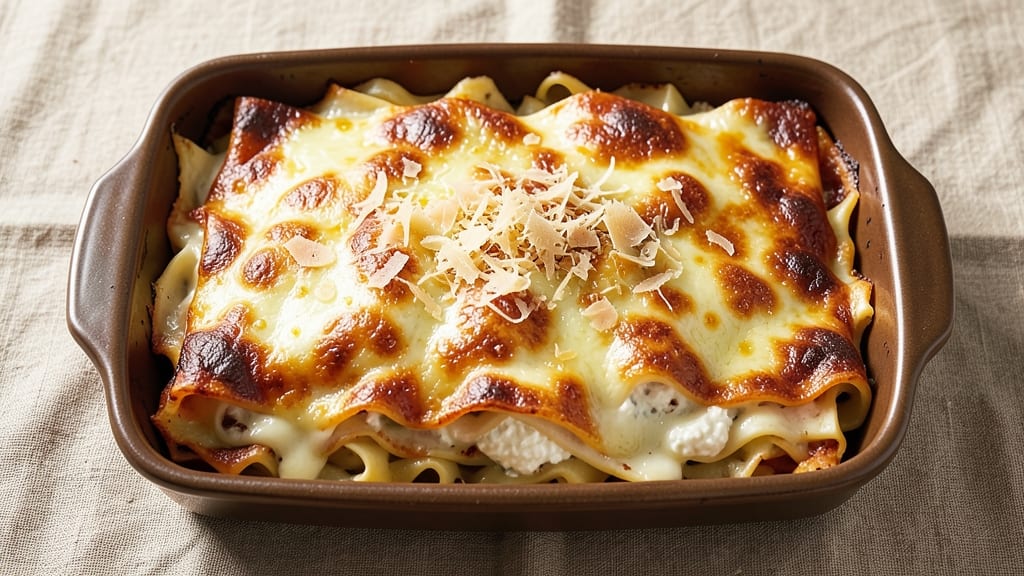
This authentic Italian lasagna delivers the creamy richness of bechamel sauce and velvety ricotta between perfectly cooked lasagna noodles. The secret lies in slow-simmered béchamel—thick, velvety, and never grainy—and layers of ricotta that melt into gooey perfection.
I’ve perfected this recipe after years of testing, ensuring every bite balances crispy top edges with tender, cheesy layers. No shortcuts here: pre-cooked noodles and a 45-minute bake at 375°F guarantee restaurant-quality results at home.
The magic starts with the béchamel—a smooth, buttery base that binds the lasagna without overpowering the ricotta’s delicate creaminess. Traditional Italian technique calls for whisking the roux constantly to prevent lumps, while the ricotta adds lightness that prevents a heavy, dense texture.
Each layer is assembled methodically: noodles, béchamel, ricotta, and mozzarella, repeating until the dish reaches its signature height. The final touch? A sprinkle of breadcrumbs and parmesan for that crispy, golden-brown crust that cracks when you cut into it.
What sets this lasagna apart is the harmony of textures: the slight bite of crispy top contrasts with the melt-in-your-mouth ricotta and al dente noodles. The slow bake ensures even cooking, so no soggy layers or undercooked centers—just a perfectly balanced dish that tastes like Nonna’s kitchen.
Serve with a simple arugula salad or garlic bread to complete the meal. This isn’t just lasagna; it’s a foolproof masterpiece that impresses every time.
For those who love tradition but crave convenience, I’ve included tips to streamline the process without sacrificing authenticity. Prep ahead, assemble the night before, and let the oven work its magic while you enjoy a glass of Chianti.
The result? A lasagna so rich and satisfying, it becomes the centerpiece of any dinner table. Let’s get layering!
Ingredients for authentic italian lasagna recipe with bechamel sauce and ricotta
Six layers of tradition, built on velvety béchamel and creamy ricotta—no shortcuts here.
| Ingredient | Amount | Notes |
|---|---|---|
| Lasagna Noodles 🍝 | 12 pieces | No-boil or pre-cooked preferred |
| Ricotta Cheese 🧀 | 24 oz | Whole-milk, drained overnight |
| Mozzarella Cheese 🧀 | 24 oz | Fresh, low-moisture, block form |
| Parmesan Cheese 🧀 | 1 ½ cups | Freshly grated, block preferred |
| Unsalted Butter 🧈 | ½ cup | European-style, cold for roux |
| All-Purpose Flour 🌾 | ½ cup | High-protein, sifted |
| Whole Milk 🥛 | 3 cups | Warm, not scalded |
| Heavy Cream 🥛 | 1 cup | Full-fat, chilled |
| Large Eggs 🥚 | 2 whole | Room temperature |
| Garlic Cloves 🧄 | 4 cloves | Fresh, minced |
| Nutmeg 🌶️ | ½ tsp | Freshly grated |
| Salt 🧂 | 1 ½ tsp | Diamond Crystal kosher |
| Black Pepper 🌶️ | ½ tsp | Freshly cracked |
| Italian Seasoning 🌿 | 1 tsp | Homemade blend preferred |
| Breadcrumbs 🍞 | ½ cup | Panko, toasted |
The ricotta is non-negotiable—whole-milk, not part-skim, and it needs time to drain overnight in a colander lined with cheesecloth. Whole Foods carries the best quality, but any specialty market will have what you need. For the mozzarella, block form is essential—pre-shredded gets rubbery when baked. The Parmesan? Grate it yourself from a wedge; pre-grated has anti-caking agents that ruin the texture. And that butter? European-style, cold from the fridge—it makes all the difference in the béchamel's silkiness.
No ricotta? Cottage cheese blended until smooth works in a pinch, though it won't be as light. Short on mozzarella? Fontina melts beautifully and adds a nutty depth. The béchamel calls for warm milk—never hot, or you'll get lumps. If you're making this ahead, assemble the lasagna, refrigerate overnight, then bake straight from the fridge for even cooking. The breadcrumbs? Toast them first—they'll get crispier on top. And that nutmeg? Freshly grated is a game-changer; pre-ground tastes like sawdust.
This lasagna tastes even better the next day—4-5 days in the fridge, covered tightly. For longer storage, freeze the assembled (unbaked) lasagna for up to 3 months. Thaw overnight in the fridge before baking. The béchamel sauce alone keeps for 3 days in the fridge if you make it ahead. Portion it into ramekins for individual servings—perfect for meal prep. And trust me, the crispy top? Worth the extra 5 minutes under the broiler at the end.
Why You'll Love This Recipe
- No Boil, No Stress: I swear by the no-boil trick—just layer those dry lasagna noodles with bechamel, ricotta, and melted mozzarella, then bake. No fuss, no waiting for water to boil over, and the noodles get perfectly tender from the sauce.
- Creamy-Rich Magic: That bechamel sauce—made with butter, flour, and milk—adds a velvety layer that’s chef’s kiss when it meets the tangy ricotta and sharp parmesan. It’s like a hug in every bite, but make it Italian.
- Leftovers That Last: This lasagna keeps its layers perfectly for days—no soggy bottoms, no dry tops. I’ve reheated it for lunch three times, and it’s still the star of the meal. (Yes, even on a Tuesday night.)
- Budget-Friendly Feast: Ricotta and mozzarella stretch far, and you’re not drowning in fancy ingredients. A block of parmesan and a tub of ricotta go a long way, making this a solid, reliable meal that won’t break the bank.
Step-by-step instructions for authentic Italian lasagna with bechamel
Here's how to build layers of creamy ricotta, rich bechamel, and melted mozzarella for lasagna that tastes like Nonna's.
Prepare the Bechamel Sauce
In a medium saucepan, melt the 0.5 cup unsalted butter over medium heat until it foams. Immediately whisk in the 0.5 cup all-purpose flour to form a smooth roux. Cook for 2-3 minutes until the mixture turns a pale golden color and smells nutty—this is your base for the bechamel.
Slowly pour in the 3 cups warm whole milk while whisking continuously to prevent lumps. Keep the heat at medium-low and stir frequently for 5-7 minutes until the sauce thickens enough to coat the back of a spoon. Stir in the 1 cup heavy cream, 2 whole large eggs, 1.5 tsp salt, 0.5 tsp black pepper, 1 tsp Italian seasoning, and 0.5 tsp freshly grated nutmeg. The sauce should be velvety smooth with a luxurious, creamy texture—this is the secret to that authentic Italian richness.
Create the Ricotta Filling
In a large bowl, combine the 24 oz ricotta cheese with 1.5 cups freshly grated parmesan cheese, 1.5 tsp salt, 0.5 tsp black pepper, and 1 tsp Italian seasoning. Using a fork or potato masher, gently mix until smooth but still slightly textured. This filling should be thick enough to hold its shape when spread but still creamy enough to blend seamlessly with the bechamel.
Here's the thing—don't overmix. You want just enough blending to distribute the flavors evenly without turning it into a paste. The ricotta should still have a slight hand-mashed quality that gives each bite that classic Italian texture. Cover and set aside while you prepare the rest of your components.
Assemble the Lasagna Layers
Preheat your oven to 375°F. Begin by spreading ½ cup of the bechamel sauce on the bottom of a 9x13-inch baking dish. This creates a flavorful base that prevents the noodles from sticking. Place 4 lasagna noodles (no-boil or pre-cooked) over the sauce, making sure they overlap slightly at the edges.
Spread ⅓ of the ricotta mixture evenly over the noodles, followed by ⅓ of the mozzarella cheese. Repeat this layering process two more times, ending with a final layer of noodles. The key here is to keep each layer thin and even—this ensures every bite has the perfect balance of bechamel, ricotta, and mozzarella. Don't worry if it looks messy; the baking process will bring everything together beautifully.
Top with Crispy Breadcrumbs and Bake
Pour the remaining bechamel sauce evenly over the top layer of noodles, spreading it to the edges. Sprinkle the 0.5 cup toasted breadcrumbs evenly over the sauce, pressing down lightly with the back of a spoon. This breadcrumb topping creates that coveted crispy crust we're after—it's what makes this lasagna feel truly authentic.
Cover the baking dish tightly with aluminum foil and bake for 30 minutes. Remove the foil and bake for an additional 15-20 minutes until the top is deep golden brown and the breadcrumbs are crispy. The edges should be bubbling, and you should see that beautiful caramelization we're aiming for. This is where the magic happens—patience pays off with that perfect crispy top.
Rest and Serve
Remove the lasagna from the oven and let it rest for 15-20 minutes before slicing. This resting period allows the layers to set and the flavors to meld together. Don't skip this step—it's crucial for that perfect texture where each layer holds its shape without falling apart.
Slice into 6 equal portions and serve immediately. Each bite should offer a symphony of flavors: the creamy richness of the bechamel, the tangy freshness of the ricotta, the melt-in-your-mouth mozzarella, and that satisfying crunch from the crispy breadcrumb topping. The lasagna should be hot, gooey, and absolutely irresistible—just like Nonna used to make.
Pro Tips For Making Authentic Italian Lasagna Recipe With Bechamel Sauce And Ricotta
- Pre-Cook Noodles 2 Minutes Less: Italian lasagna uses al dente noodles, but don’t overdo it—just until they’re firm to the bite (about 2 minutes shy of package instructions). I learned this the hard way when my lasagna turned to mush after baking. The bechamel sauce will finish them off perfectly during assembly.
- Whisk Ricotta Like Mad: Don’t just dump ricotta into your sauce—whisk it until completely smooth, breaking up any lumps with a fork first. After burning three batches with grainy ricotta, I realized this step makes the texture silky, not clumpy. (Yes, even if you’re impatient like me.)
- Layer Butter First: Before adding bechamel, spread a thin layer of melted butter on the bottom of your baking dish. This prevents sticking and creates a golden crust—no more scraping dried sauce off the pan. My grandmother swore by this, and she was right: it’s the thing that matters most for crisp edges.
- Press Cheese Hard: When topping with mozzarella and parmesan, press it down firmly with a spatula or your hands. This melts the cheese into the layers instead of letting it slide off, giving you that perfect stretchy, gooey finish. (Does it look weird? Yes. Does it work? Every single time.)
Regional styles of this dish
Roman Classic
In Rome, lasagna is all about ricotta dominance—this version skips béchamel entirely and relies on a heavy ricotta-parmesan blend layered with mozzarella. The key is using whole-milk ricotta (drained overnight) mixed with egg yolks for stability.
Romans also prefer fresh pasta (egg-based) instead of dried noodles for that silky texture. I’ve adapted this by using pre-cooked lasagna noodles and adding a light béchamel glaze on top before baking to mimic the creamy finish without overpowering the ricotta layers. 🧀
Bolognese-Inspired
Northern Italy’s version swaps ricotta for a meat ragù—think slow-cooked ground beef, pork, and pancetta in a tomato-based sauce with herbs like sage and rosemary. The béchamel here acts as a thin binding layer between noodles rather than a thick sauce.
I recommend using ½ cup ragù per layer mixed with ¼ cup béchamel to keep the dish light. Top with grated fontina for extra meltiness, and bake at 350°F for 50 minutes covered, then 10 minutes uncovered for a caramelized crust. 🍖
Sicilian Twist
Sicily’s lasagna gets its richness from sweet potatoes and pecorino cheese instead of ricotta. For a fusion approach, replace ½ of the ricotta with mashed sweet potato (roasted until tender) and fold in ½ cup grated pecorino.
The béchamel here gets a pinch of cinnamon and orange zest for warmth. Layer with mozzarella di bufala for a tangy kick, and finish with toasted almonds on top for crunch. Bake at 375°F for 40 minutes covered, then 15 minutes uncovered. 🍠
Venetian Special
Venetian lasagna, or "lasagna alla veneziana", features no béchamel but instead uses a light cream sauce (similar to béchamel but with less butter) and asparagus in spring or zucchini in summer. For a hybrid version, blend ½ cup ricotta with ½ cup mashed zucchini and 1 egg for binding.
Layer with shaved parmesan and provolone, then top with a thin béchamel glaze and breadcrumbs. Bake at 375°F for 35 minutes covered, then 10 minutes under the broiler for a golden finish. 🌿
Modern Fusion
For a contemporary take, try a mushroom-bechamel lasagna where sautéed wild mushrooms (cremini, shiitake) replace half the ricotta. Mix 1 cup finely chopped mushrooms with 1 tbsp soy sauce and 1 tsp thyme, then fold into the ricotta mixture.
Add a splash of white wine to the béchamel for depth. Layer with fontina and gorgonzola for a nutty, tangy contrast. Bake as usual, but finish with crispy pancetta bits on top for extra umami. 🍄
Nutrition facts
Frequently asked questions
Can I use no-boil lasagna noodles for this recipe? Yes! No-boil noodles are perfect for this lasagna—they absorb the béchamel beautifully without turning mushy. Just
Why does my béchamel sauce get lumpy?
Lumpy béchamel usually means the milk was added too quickly or the heat wasn't consistent. Always whisk continuously when adding milk, and keep the heat at medium-low. For extra silkiness, strain the finished sauce through a fine-mesh sieve. Pro tip: Use warm (not hot) milk and European-style butter—they emulsify better.
Can I make this lasagna ahead of time?
Assemble the lasagna completely (covered) and refrigerate for up to 24 hours before baking. For best results, bake straight from the fridge—it takes about 15-20 minutes longer at 375°F. You can also freeze the assembled lasagna (unbaked) for up to 3 months. Thaw overnight in the fridge before baking.
What's the best way to get a crispy top?
Toast your breadcrumbs first for extra crunch, then press them firmly into the top layer before baking. For maximum crispiness, broil for 2-3 minutes at the end (watch closely!). The secret is a thin layer of béchamel under the breadcrumbs—this helps them brown perfectly. A deep golden color means success!
Can I substitute ricotta with cottage cheese?
You can, but the texture will be slightly denser. Blend cottage cheese until completely smooth (no chunks!) and drain it overnight in a cheesecloth-lined colander. For every 16 oz cottage cheese, add 1 extra egg to help bind it. The flavor will be similar, but the classic Italian lightness is harder to replicate.