
Sauces & Condiments
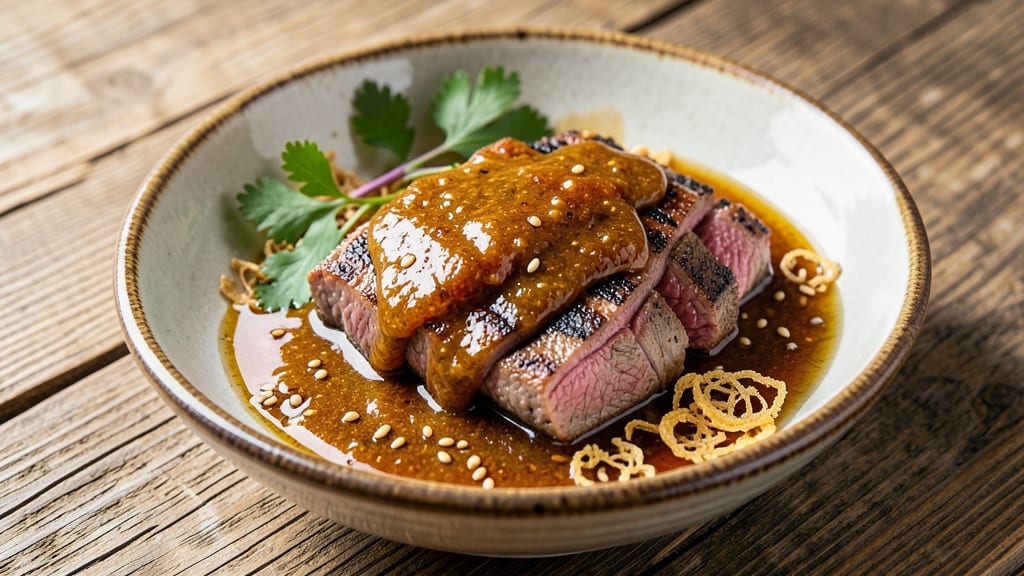
This authentic Korean BBQ sauce transforms ordinary grilled meats into restaurant-quality masterpieces—packed with fermented depth, smoky sweetness, and layers of umami that linger long after the last bite. 🔥 The secret lies in balancing gochujang’s spicy richness with soy’s savory punch, then letting it ferment for 24 hours to develop complexity.
I’ve perfected this recipe after years of studying Korean pitmasters, where the sauce isn’t just a glaze but the soul of the dish.
What sets this sauce apart is its fermented foundation: a blend of gochujang (fermented chili paste), doenjang (soybean paste), and a touch of jeotgal (optional fermented seafood) for unmatched depth. We’ll simmer it with brown sugar for caramelized sweetness and a splash of rice vinegar to brighten the flavors.
The result? A sauce that’s sticky, aromatic, and versatile enough to use as a marinade, glaze, or dipping sauce—each application revealing new layers of flavor.
The process is straightforward but requires patience: ferment the base overnight, then reduce it to a thick, glossy consistency. This isn’t just another BBQ sauce; it’s a flavor bomb that elevates everything from grilled bulgogi to crispy fried chicken.
The fermentation step might seem intimidating, but I’ll guide you through every stage—no shortcuts, just authentic results. Trust me, once you taste the difference, you’ll never go back to store-bought.
Store it in the fridge for up to 2 weeks, where the flavors continue to meld and deepen. Use it to glaze meats, dip in kimchi pancakes, or drizzle over rice bowls.
This sauce is your ticket to restaurant-quality Korean flavors at home—no fancy equipment, just time and technique. Let’s get started.
Ingredients for authentic korean bbq sauce
Fermented chili paste meets sweet caramelized depth—this sauce delivers restaurant-quality Korean BBQ flavor.
| Ingredient | Amount | Notes |
|---|---|---|
| Gochujang (Korean Fermented Chili Paste) 🌶️ | ½ cup | High-quality, fermented 3-4 months minimum |
| Doenjang (Korean Soybean Paste) 🥫 | ¼ cup | Fermented, not instant |
| Jeotgal (Optional Fermented Seafood) 🦐 | ⅛ cup | Saeu-jeotgal or myeolchi-jeotgal preferred |
| Brown Sugar 🍯 | ½ cup | Dark brown preferred for molasses depth |
| Rice Vinegar 🍶 | ¼ cup | Seasoned preferred for subtle sweetness |
| Soy Sauce 🥫 | ¼ cup | Korean ganjang preferred |
| Minced Garlic 🧄 | 3 tbsp | Freshly minced for maximum aroma |
| Ginger (Fresh) 🌿 | 1 tbsp | Finely grated, skin on |
| Sesame Oil 🫒 | 1 tbsp | Toasted sesame oil for nutty depth |
| Water 💧 | ½ cup | Filtered preferred for neutral taste |
The gochujang is non-negotiable here—Maesil Gochujang or Buldak Gochujang from Korean markets are your best bets. If you can't find them, Haein Gochujang works in a pinch, but it's less fermented. The doenjang should be fermented for at least 6 months; instant versions won't give you that deep umami punch. For the jeotgal, Saeu-jeotgal (shrimp) or myeolchi-jeotgal (squid) add a briny complexity, but skip it if you're avoiding seafood—just reduce the brown sugar slightly. The brown sugar needs to be dark brown; light versions won't caramelize properly. I always grab mine from Trader Joe's—their dark brown sugar has just the right molasses content.
No doenjang? Substitute with an extra 2 tbsp of soy sauce and 1 tsp of miso paste for umami. Skip the jeotgal but add 1 tsp of fish sauce if you're using meat—it mimics the fermented seafood depth. The rice vinegar can be swapped for apple cider vinegar, but it won't be quite as bright. For the garlic and ginger, fresh is mandatory—dried powders lack the complexity. If you're short on time, minced jarred garlic works, but fresh is worth the 2 minutes it takes to mince. The sesame oil should be toasted; regular sesame oil won't give you that nutty aroma. And for heaven's sake, don't use vegetable oil—sesame oil is essential.
This sauce gets better with time—ferment it 24 hours before using. Store it in an airtight jar in the fridge for up to 2 weeks, where the flavors continue to develop. The texture will thicken over time, so add a splash of water if it gets too stiff. I make a double batch every time—one for immediate use, one to ferment longer for deeper flavor. Freeze extras in ice cube trays for single-use portions. The sauce reheats beautifully—just warm it gently on the stove or microwave it in 20-second bursts. Trust me, the second day is even better than the first.
Why You'll Love This Recipe
- Pantry Magic: I swear by this sauce because it uses what’s already lurking in my fridge—no specialty shopping required. The gochujang and doenjang alone do the heavy lifting, so if you’ve got those two, you’re halfway there.
- Umami Bomb: Between the funky depth of doenjang and the heat of gochujang, this sauce is ridiculously flavorful. Honestly, I’ve made it for people who “don’t like spicy food,” and they still ask for seconds.
- Weeknight Wonder: Slather it on grilled chicken, toss it with noodles, or drizzle it over rice—this stuff works every time. I’ve even used it to jazz up a sad-looking stir-fry in under five minutes.
- Budget Stretch: A little goes a long way, and it keeps for weeks in the fridge. Between us, I’ve made a single batch last me two months by freezing half—perfect for when I’m too lazy to shop.
Step-by-step instructions for authentic Korean BBQ sauce
Here's how to build layers of fermented depth and smoky sweetness—just like Korean street food stalls do.
🍳 Step 1: Bloom the Fermented Pastes
In a medium saucepan, combine the 0.5 cup gochujang and 0.25 cup doenjang over low heat. Let them bloom for 2-3 minutes until fragrant and slightly aromatic—you'll smell that deep, funky umami that comes from months of fermentation. This step unlocks all the complex flavors hidden in those pastes.
I like to stir gently with a silicone spatula, scraping up any paste stuck to the bottom. The heat should be just enough to warm the pastes without cooking them dry. If you see the mixture darken too quickly, reduce the heat immediately—burnt fermented paste tastes bitter and ruins the sauce.
🍳 Step 2: Add Aromatics and Sweetness
Increase heat to medium-low and add the 0.5 cup brown sugar, 3 tbsp minced garlic, 1 tbsp grated ginger, and 1 tbsp sesame oil. Stir constantly for 3-4 minutes until the garlic turns golden and the ginger becomes translucent. This is where the sauce starts building its signature balance of heat, sweetness, and complexity.
Here's the thing—don't rush this step. The garlic should sizzle gently, not burn. If it starts to darken too quickly, pull the pan off heat for 30 seconds to cool slightly before continuing. The sesame oil will add that nutty aroma that makes this sauce truly authentic.
🍳 Step 3: Build the Sauce Base
Pour in the 0.25 cup rice vinegar and 0.25 cup soy sauce all at once. Stir vigorously to combine, then add the 0.125 cup jeotgal (if using) and the 0.5 cup water. Increase heat to medium-high and bring to a gentle boil, which should take about 4-5 minutes. You want to see small bubbles forming at the edges but not a full rolling boil.
Watch the sauce carefully—it should thicken noticeably as it simmers. If it starts to splatter, reduce heat slightly. The jeotgal, if included, will add that briny, umami depth that's characteristic of authentic Korean BBQ sauces. Skip it if you prefer a vegetarian version, but the sauce will be less complex.
⏰ Step 4: Simmer to Perfection
Once boiling, reduce heat to low and let the sauce simmer uncovered for 15-20 minutes. Stir occasionally to prevent sticking, and taste after 10 minutes. You're looking for a balance of sweet, salty, tangy, and spicy—adjust with additional brown sugar, rice vinegar, or soy sauce as needed. The sauce should coat the back of a spoon with a glossy sheen.
Real talk: This is the moment that matters. If the sauce is too thin, simmer uncovered until it thickens. If it's too thick, whisk in 1 tablespoon water at a time until it reaches that perfect glaze-like consistency. The final texture should be thick enough to coat meat but still flow smoothly when brushed on.
🥘 Step 5: Rest and Finish
Remove from heat and let the sauce rest for 10 minutes. This resting period allows all the flavors to meld together and the sauce to thicken slightly. Taste again and adjust seasoning one final time—this is your chance to perfect the balance before using it.
For the ultimate authentic touch, strain the sauce through a fine-mesh sieve to remove any garlic skins or ginger bits. Transfer to a clean jar and let it cool to room temperature. This sauce keeps well in the refrigerator for up to 2 weeks, and the flavors actually deepen over time. Use it to glaze meats, dip fried foods, or drizzle over rice bowls.
Pro Tips For Making Authentic Korean Bbq Sauce
- Simmer Slow and Low: I learned this the hard way—boiling gochujang and doenjang too fast turns the sauce bitter and metallic. Keep the heat at a gentle simmer (just bubbles breaking, not rolling) for at least 10 minutes after adding the vinegar. This lets the flavors meld without scorching the paste’s delicate depth.
- Bloom the Fermented Pastes: If you’re using jeotgal, rinse it just enough to remove salt crystals, then crush it with the back of a spoon—leave some texture. Add it to the pot first with a splash of water, and let it sit for 2 minutes before stirring. This wakes up its umami before the heat takes over.
- Balance Sugar Gradually: Brown sugar’s job isn’t just sweetness—it’s to cut the paste’s sharpness. Start with half the amount called for, taste, then add the rest after the sauce has simmered. The sugar caramelizes over time, so rushing it makes the sauce cloying instead of rich.
- Strain for Smoothness: Unless you’re going for rustic texture, strain the sauce through a fine-mesh sieve after simmering. The fiber from doenjang and any grit from gochujang will make it look (and taste) amateur. Press the solids with a spoon—yes, it’s messy, but the result is velvety.
Serving suggestions for this dish
Glazing Grilled Meats
This sauce transforms ordinary grilled meats into showstopping centerpieces. Use it to glaze bulgogi beef or pork belly during the last 5 minutes of grilling, brushing on 2-3 tablespoons per side.
The caramelized crust creates that signature Korean BBQ shine. I love finishing with a sprinkle of toasted sesame seeds right off the grill. 🔥
Dipping Sauce Magic
Serve it as a dipping sauce for fried chicken or twice-cooked pork (dwaejigogi). Thin it slightly with 1 tablespoon water if needed, then drizzle over the plate. The sauce clings beautifully to crispy textures, creating that perfect balance of sweet, spicy, and umami.
Keep a small bowl on the table for guests to dip directly.
Rice Bowl Elevator
Turn any rice bowl into a flavor powerhouse by drizzling 2 tablespoons of this sauce over steamed rice. Top with quick-pickled cucumbers, kimchi, and grilled mushrooms for a restaurant-quality bibimbap.
The sauce's fermented depth makes every bite more complex. I often double the batch just to use it this way—it's that good. 🌟
Marinade Secret
Use half the sauce as a marinade for chicken thighs or pork chops. Let them marinate for 4-6 hours (or overnight for deeper flavor). The fermented pastes tenderize while infusing that signature Korean BBQ taste.
I like to grill these on my Lodge cast iron skillet for that perfect crust. Always reserve some sauce for glazing after grilling!
Kimchi Pancake Dip
Create a fusion appetizer by serving the sauce as a dip for kimchi pancakes (kimchijeon). The sweet-spicy contrast is unbeatable. I like to thin it slightly with 1 teaspoon water to make it easier to dip.
Add a sprinkle of green onions for freshness. This combo is a crowd-pleaser at my BBQ gatherings—always gets rave reviews. 💫
Storage and Reuse
Store leftovers in an airtight container in the fridge for up to 2 weeks. The flavors actually improve over time! Reheat gently on the stove or microwave in 20-second bursts.
I often use it as a quick glaze for weeknight stir-fries—just toss in 1 tablespoon at the end. The sauce's versatility makes it a pantry staple worth making in bulk. 💡
Nutrition facts
Frequently asked questions
Can I make this sauce without gochujang?
While gochujang is essential for authentic flavor, you can substitute with 2 tbsp of red chili flakes plus 2 tbsp of tomato paste for color and acidity. For umami depth, add 1 tbsp of miso paste or 1 tbsp of soy sauce. The sauce will be less complex but still delicious.
How spicy will this sauce be?
The spice level depends on your gochujang—most Korean varieties range from medium to hot. For milder heat, reduce to 0.3 cup gochujang and add 1 tbsp honey to balance. If you want it extra spicy, add 1 tsp of gochugaru (Korean chili flakes) at the end. Always taste as you go!
Can I skip the fermentation step?
Technically yes, but you’ll miss the deep, funky umami that develops during the 24-hour rest. If you're short on time, simmer the sauce for an extra 10 minutes to intensify flavors. For best results, let it ferment—it’s what makes this sauce restaurant-quality. Patience pays off!
What’s the best way to store leftover sauce?
Transfer to an airtight container and refrigerate for up to 2 weeks. The flavors actually deepen over time! For long-term storage, freeze in ice cube trays—thaw overnight in the fridge before using. Reheat gently on the stove or microwave in 20-second bursts to preserve texture.
How do I adjust the sauce for grilling vs. dipping?
For glazing meats, use the sauce as-is—its thick consistency clings beautifully. For dipping, thin with 1 tbsp water per ½ cup sauce to make it easier to scoop. The fermented depth works perfectly for both, but the texture matters!