
Sauces & Condiments
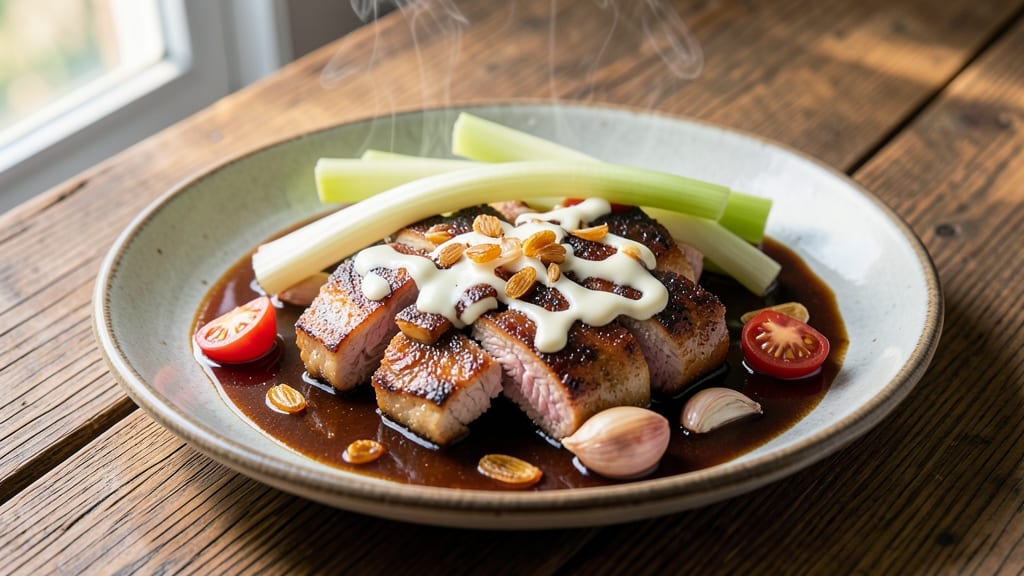
This babi pangang sauce transforms simple ingredients into a tangy, creamy masterpiece that elevates every bite of grilled pork. The perfect balance of vinegar, tomato, and celery creates a sauce that's both bold and subtly sweet—ideal for dipping or basting.
What makes this recipe stand out is the celery crunch that adds texture without overpowering the rich, savory base.
The secret lies in simmering the sauce just until it thickens, allowing the flavors to meld without losing their brightness. Garlic and shallots form the aromatic foundation, while soy sauce and vinegar bring depth and tang.
Unlike many sauces that rely on heavy cream, this version uses a smart combination of tomato paste and a touch of cream for a velvety finish without heaviness.
What you'll end up with is a sauce that's versatile enough for any occasion—perfect for dipping crispy babi pangang, drizzling over rice, or even as a marinade. The vinegar-kissed tomato base ensures a tangy bite, while the celery adds a refreshing crunch that keeps every bite interesting.
It stores well in the fridge for up to a week, making it a go-to for meal prep.
Whether you're serving a family dinner or hosting a gathering, this sauce will be the star. The instructions are straightforward, but the results are anything but basic. Let's get started on creating this restaurant-quality condiment at home.
Ingredients for babi pangang sauce
Simple pantry staples transform into a restaurant-worthy sauce with bold tang and creamy texture.
| Ingredient | Amount | Notes |
|---|---|---|
| Celery Stems 🧅 | 1 ½ cups | Finely chopped for texture |
| Can Tomato Paste 🍅 | ½ cup | San Marzano preferred |
| White Vinegar 💧 | ½ cup | Distilled for tang |
| Heavy Cream 🥛 | ¼ cup | Full-fat for richness |
| Garlic Cloves 🧄 | 4 cloves | Minced for aromatic base |
| Shallots 🧅 | 2 whole | Thinly sliced for sweetness |
| Soy Sauce 🥢 | 2 tbsp | Light or dark preferred |
| Granulated Sugar 🍚 | 1 tbsp | Balances tanginess |
| Salt 🧂 | 1 tsp | Diamond Crystal preferred |
| Black Pepper 🌶️ | ½ tsp | Freshly ground for heat |
Celery is the star here—fresh, crisp stalks make all the difference. Grab the inner stalks from the center of the bunch for the most tender texture. Trader Joe's and Whole Foods carry the best quality, but any grocery store's celery works if it's firm and bright green. The tomato paste? San Marzano is ideal for its sweetness, but any quality canned paste will do. Avoid the watery, low-quality brands—you'll taste the difference. For the vinegar, distilled white vinegar is key for that clean, sharp tang that cuts through the richness of the cream.
No fresh celery? Celery seed at half the amount works in a pinch, but it won't give that same satisfying crunch. Short on tomato paste? Fresh crushed tomatoes can replace it, but you'll need to simmer longer to thicken. The soy sauce is non-negotiable—it's what gives that umami depth. Light soy sauce for a cleaner taste, dark soy sauce for a deeper color. The sugar balances the acidity, but if you're avoiding it, a splash of honey or maple syrup works too. Black pepper should be freshly ground—pre-ground loses its punch quickly. Store your spices in a cool, dark place to keep them potent.
This sauce keeps beautifully in the fridge for up to 1 week, with flavors actually improving as it sits. For longer storage, freeze in ice cube trays—perfect for portion control. The celery crunch softens over time, so use it within 3-4 days for the best texture. If you make extra, drizzle it over rice, use it as a marinade, or save it for your next batch of grilled pork. The versatility is what makes this sauce a pantry staple.
Why You'll Love This Recipe
- Pantry Magic: I swear by this sauce—no fresh herbs, no fancy prep. Just chop a few celery stems, crush some garlic, and let the tomato paste and vinegar do the heavy lifting. Honestly, I keep a can of tomato paste in my cabinet just for this.
- Creamy-Tangy Balance: That splash of white vinegar cuts through the richness of the heavy cream like a breath of fresh air. The celery adds a subtle crunch, while the garlic? Oh, it’s there—warm, punchy, and impossible to ignore. (Yes, even on a Tuesday night.)
- Leftovers That Shine: This sauce actually improves the next day. Toss it with leftover grilled pork, stir into rice, or drizzle over eggs—it’s my lazy Sunday brunch secret. My daughter picks out the celery bits first, but still asks for seconds.
- Budget Booster: You’re using ingredients you already own. A can of tomato paste, a stalk of celery, a few cloves of garlic—no specialty shopping required. Not the prettiest, but the taste makes up for it every time. My wallet and my taste buds thank me.
Step-by-step instructions for babi pangang sauce
Here's how to craft this vibrant, tangy sauce with perfect balance.
Sauté Aromatics Until Translucent
Heat a medium saucepan over medium heat and add the 2 whole shallots and 4 cloves garlic cloves. Cook for 4-5 minutes until the shallots become translucent and the garlic releases its fragrant aroma. Stir occasionally to prevent burning—you want them golden but not browned.
The shallots should soften and turn slightly sweet, while the garlic should smell pungent but not bitter. This foundational step builds the sauce's depth of flavor. If the shallots start to brown too quickly, reduce the heat slightly to medium-low and continue cooking until they reach your desired translucency.
Add Tomato Paste and Soy Sauce
Reduce the heat to low and stir in the 0.5 cup can tomato paste and 2 tablespoons soy sauce. Cook for 2-3 minutes while stirring constantly to prevent the tomato paste from sticking to the bottom of the pan. The mixture will darken slightly as it cooks, developing a rich, caramelized flavor.
This step creates the sauce's umami backbone. The tomato paste will thicken slightly and deepen in color, while the soy sauce adds a savory depth. Don't rush this cooking time—allowing it to simmer gently ensures the flavors meld properly without burning.
Incorporate Vinegar and Sugar
Add the 0.5 cup white vinegar and 1 tablespoon granulated sugar to the saucepan. Stir well to combine and bring the mixture to a gentle simmer over medium heat. Cook for 3-4 minutes until the vinegar has mostly evaporated and the sugar has dissolved completely, creating a glossy sheen.
The vinegar will create a bright, tangy contrast to the rich tomato base, while the sugar balances the acidity. You'll notice the sauce becoming slightly thicker as it reduces. Taste the mixture at this point—it should be tangy, slightly sweet, and developing a complex flavor profile. If it tastes too sharp, add a pinch more sugar; if it needs more acidity, add a splash more vinegar.
Finish with Celery and Cream
Reduce the heat to low and stir in the 1.5 cups finely chopped celery stems and 0.25 cup heavy cream. Cook for an additional 2-3 minutes, stirring gently to incorporate the celery and cream evenly. The celery will soften slightly but maintain its crunchy texture, adding a refreshing contrast to the creamy sauce.
The heavy cream adds richness and helps balance the tangy vinegar. The celery should be tender-crisp, not mushy. Stir in the 1 teaspoon salt and 0.5 teaspoon black pepper at this point to season the sauce thoroughly. Taste again and adjust the seasoning if needed—you may need a bit more salt to enhance the flavors.
Simmer and Thicken
Continue cooking the sauce over low heat for 5-7 minutes, stirring occasionally, until it reaches your desired consistency. It should coat the back of a spoon but still be pourable. If it thickens too quickly, add a splash of water or vinegar to loosen it.
This final simmering step ensures all the flavors are fully integrated. The sauce should be glossy, with a balance of tangy, sweet, and savory notes. The celery should be tender but still retain a slight bite. Serve the sauce immediately over your choice of protein or use it as a dipping sauce for spring rolls or dumplings.
Pro Tips For Making Babi Pangang Sauce
- STIR THE TOMATO PASTE: Don’t just dump the tomato paste in—mix it into the oil first with a whisk or spoon until it’s fully dissolved and smooth. I used to skip this, and the sauce would clump like glue no matter how much I stirred later. A minute of extra work here makes the sauce silky.
- CHOP GARLIC THIN: Slice those cloves paper-thin instead of mincing them. Thin garlic cooks faster, burns less, and releases flavor without turning bitter. I was skeptical until I tried it—now I double-check my knife work for this dish.
- SIMMER THE VINEGAR: Let the white vinegar cook off for 2-3 minutes after adding it, until the sharp smell mellows. Rushing this step leaves the sauce tasting harsh. It’s a small wait, but it’s the difference between a balanced sauce and one that hits like a punch.
- WHISK IN THE CREAM LAST: Temper the heavy cream by whisking it into the warm sauce gradually, not all at once. Cold cream dumped in will curdle faster than you can say "babi pangang." Do it slow, and the sauce stays rich and velvety—no scrambling to fix lumps.
Serving suggestions for leftovers
Dipping Sauce Perfection
This sauce shines as a dipping sauce for crispy babi pangang or spring rolls. Serve it warm in a small bowl with a celery stalk on the side for extra crunch. The tangy tomato-cream balance cuts through the fat beautifully, while the celery adds a refreshing bite.
I like to drizzle it over steamed rice too—it transforms a simple meal into something special. 🥢
Basting for Grilled Pork
Brush this sauce generously over grilled pork during the last 5-7 minutes of cooking. The vinegar helps tenderize the meat while adding a glossy finish. For extra flavor, marinate the pork in ½ cup of this sauce for 1-2 hours before grilling.
The celery in the sauce will soften during cooking but still contribute subtle texture. 🔥
Rice Bowl Elevator
Turn your rice bowl into a restaurant-style dish by spooning this sauce over steamed jasmine rice. Top with sliced cucumbers and fried shallots for a complete meal. The creamy texture coats each grain perfectly, while the vinegar keeps it from feeling too heavy.
I often add a sprinkle of toasted sesame seeds for extra depth. ✨
Spring Roll Companion
Pair this sauce with crispy spring rolls for an authentic Filipino flavor experience. The celery crunch contrasts perfectly with the fried exterior, while the tangy-sweet sauce balances the richness.
Serve with pickled vegetables on the side for a complete appetizer spread. The sauce also works well with lumpia or egg rolls for a quick snack. 🥟
BBQ Glaze Adaptation
Use this sauce as a glaze for grilled or smoked meats like chicken or ribs. Simmer it for an extra 5 minutes to thicken slightly, then brush it on during the last 10 minutes of cooking.
The vinegar caramelizes beautifully when exposed to heat, creating a sticky, flavorful crust. Perfect for weekend BBQs or holiday feasts! 🍖
Storage and Reuse
Store leftovers in an airtight container in the fridge for up to 1 week. The flavors actually improve over time as the vinegar and spices meld. Freeze in ice cube trays for portion control—thaw and use as needed.
I often save extra sauce for stir-fries or as a quick marinade for grilled shrimp. The versatility makes it a pantry essential! 💡
Nutrition facts
Frequently asked questions
Can I make this sauce without heavy cream?
Yes! For a lighter version, substitute the ¼ cup heavy cream with ¼ cup coconut milk or ¼ cup Greek yogurt. The sauce will still be creamy but with a slightly different texture. If you prefer a completely dairy-free option, use ¼ cup cashew cream (blend soaked cashews with water) for richness. The vinegar and tomato base will still shine through.
How do I adjust the tanginess for picky eaters?
Reduce the vinegar by 2 tablespoons and add 1 extra tablespoon of sugar to balance the acidity. For a milder taste, you can also replace 2 tablespoons of vinegar with 2 tablespoons of chicken or vegetable broth**. The sauce will still have depth but with less sharpness. Taste as you go—you can always add more vinegar later if needed.
Can I use this sauce as a marinade?
Use ½ cup of this sauce per 1 pound of pork (or other protein) and marinate for 1-2 hours before grilling. The vinegar helps tenderize the meat, while the celery adds subtle flavor. For extra safety, reserve ¼ cup of sauce to brush on during the last 5 minutes of cooking. The sauce will caramelize beautifully on the grill!
Why does my sauce get too thick too quickly?
This usually happens if you simmer it too long or reduce the heat too low. Keep the heat at medium-low and stir occasionally. If it thickens too much, add 1-2 tablespoons of water or vinegar to loosen it. The sauce should coat the back of a spoon but still be pourable. Remember, the celery will release moisture as it cooks, helping to balance the consistency.
What’s the best way to store leftovers?
Transfer the sauce to an airtight container and refrigerate for up to 1 week. For longer storage, freeze in ice cube trays—thaw and use as needed. The celery will soften over time, so use it within 3-4 days for the best texture. The flavors actually improve as they meld, making it perfect for meal prep!