
Sauces & Condiments
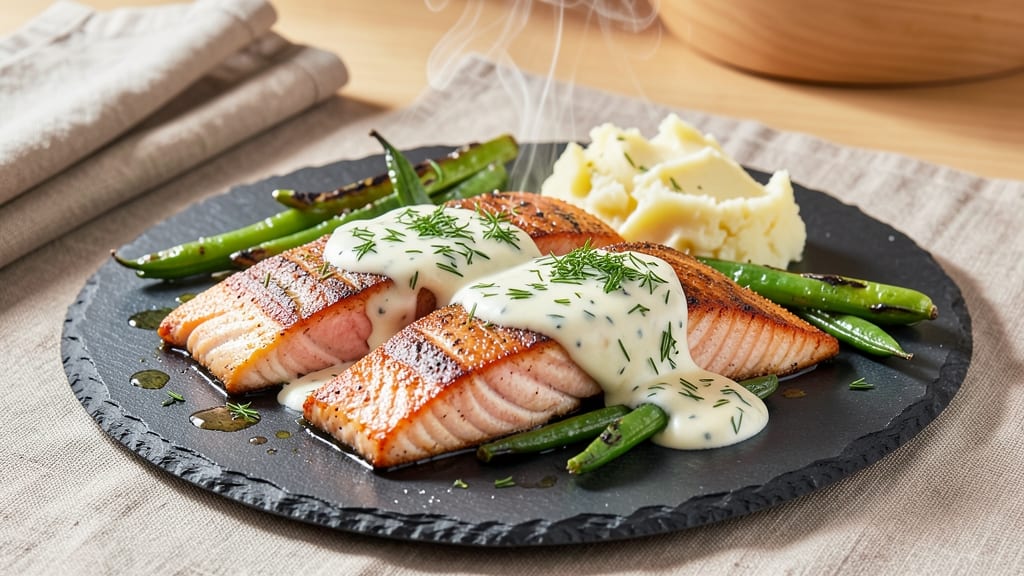
This baked salmon with sour cream dill sauce delivers perfectly flaky salmon paired with a bright, herby sauce that cuts through the richness. The secret lies in a simple seasoning blend and precise baking time—no overcooking, just melt-in-your-mouth texture.
What sets this dish apart is the sauce: tangy, creamy, and packed with fresh dill, transforming simple salmon into a restaurant-worthy meal.
The recipe balances ease and elegance—just 15 minutes of prep, followed by 12 minutes in the oven, and you’ll have golden, tender salmon ready for plating.
The sour cream dill sauce comes together in minutes, with just a handful of ingredients, and its cool, herby notes complement the salmon’s buttery flakes beautifully. This dish is a pescatarian standout, perfect for weeknight dinners or special occasions.
Pair it with roasted asparagus or a bed of quinoa to round out the meal, and garnish with extra fresh dill for a pop of color. The sauce can also be made ahead, giving you one less thing to worry about on busy days.
Every bite delivers a harmonious mix of creamy, tangy, and herby flavors that make this dish feel both comforting and refined.
Whether you're serving it for a light lunch or a dinner party, this recipe ensures foolproof results with minimal effort. The key is patience—letting the salmon bake just until it reaches 145°F guarantees perfect doneness without drying it out.
Trust this method, and you’ll have a dish that’s as impressive as it is delicious.
Ingredients for baked salmon with sour cream dill sauce
Just twelve ingredients for restaurant-quality salmon with tangy, herby sauce that's easier than takeout.
| Ingredient | Amount | Notes |
|---|---|---|
| Fresh Atlantic Salmon Fillets 🐟 | 4 pieces | Skin-on, 6-8 oz each, center-cut preferred |
| Sour Cream 🥛 | ½ cup | Full-fat for creaminess, room temperature |
| Fresh Dill 🌿 | ½ cup | Packed, stems removed, finely chopped |
| Lemon Juice 🍋 | 2 tbsp | Freshly squeezed, seeds strained out |
| Extra-Virgin Olive Oil 🫒 | 1 tbsp | For sauce richness, fruity variety |
| Garlic Cloves 🧄 | 2 cloves | Minced fine, fresh preferred |
| Dijon Mustard 🍯 | 1 tsp | For depth, not spicy |
| Kosher Salt 🧂 | 1 ½ tsp | Diamond Crystal preferred, plus more for seasoning |
| Ground Black Pepper 🌶️ | ½ tsp | Freshly cracked, coarse grind |
| Unsalted Butter 🧈 | 2 tbsp | Cold, cubed for salmon topping |
| Fresh Lemon Zest 🍋 | 1 tsp | Fine zest, for bright finish |
| All-Purpose Flour 🌾 | 1 tbsp | For dredging salmon, light coating |
The salmon makes or breaks this dish—center-cut fillets stay together better, and skin-on means crispy edges. Wild-caught Atlantic has the best texture, but any fresh fillet works. Look for bright red flesh, not graying at the edges. I grab mine from Whole Foods or the seafood counter at Trader Joe's—they usually have them pre-portioned. If you're buying whole, ask for it filleted yourself. The dill? Fresh is non-negotiable here—dried just won't give that same bright punch. Buy extra; you'll want it for garnish too.
No fresh dill? Dried at one-third the amount works in a pinch, but it'll taste different. Short on sour cream? Greek yogurt with an extra splash of lemon keeps it tangy. The Dijon mustard adds depth—skip it if you're sensitive to strong flavors, but I find it essential. For the butter topping, European-style butter like Plugrá melts beautifully. No need to thaw the salmon first—just pat it dry with paper towels. The flour dredge is optional but gives that perfect golden crust. If you're making the sauce ahead, hold off on the lemon zest until serving to keep it bright.
Salmon stays fresh 2 days in the fridge, but cook it within 24 hours for best texture. The sauce keeps 3 days covered in the fridge—it actually tastes better the next day as flavors meld. I like to make a double batch and freeze half in ice cube trays for quick future meals. For serving, warm the sauce gently (just until it's creamy) and garnish with extra dill and lemon zest. The salmon reheats beautifully—just 10 seconds in the microwave with a damp paper towel over it keeps it moist.
Why You'll Love This Recipe
- I swear by this: just pat the salmon dry, drizzle it with olive oil, and pop it in the oven. The dill sauce comes together in three minutes—whisk sour cream, chop fresh dill (or use my lazy shortcut: dried dill in a pinch), and squeeze in lemon. That’s it. No brining, no basting, no stress.
- Here’s the real win: the salmon stays perfect for days. Reheat slices in a skillet with a splash of water for that same flaky texture, or pile cold fillets with extra sauce over greens for a no-effort salad. And the sauce? It thickens beautifully when chilled—great for dolloping on eggs or toast the next morning. No sad, dry reheats here.
Step-by-step instructions for baked salmon with sour cream dill sauce
Here's how to create perfectly flaky salmon with a bright, herby sauce that ties everything together.
Prepare the Salmon for Even Cooking
Preheat your oven to 400°F and line a baking sheet with parchment paper. Pat each of the 4 pieces fresh atlantic salmon fillets completely dry with paper towels—this ensures crispy skin later. Place them skin-side down on the prepared sheet.
In a small bowl, mix together 1 tablespoon all-purpose flour, 1.5 teaspoons kosher salt, and 0.5 teaspoon ground black pepper. Lightly dredge each fillet in this mixture, pressing gently to adhere. This creates a delicate crust that locks in moisture and adds texture.
Here's the thing—don't skip the skin-side down placement. The skin acts as a natural barrier that prevents the fish from sticking and helps create those beautiful flakes. If your salmon has pin bones, use tweezers to remove them before baking.
Bake the Salmon Until Flaky
Bake the salmon for 12-15 minutes until the edges are lightly golden and the internal temperature reaches 135°F when measured with an instant-read thermometer. You'll see the salmon start to pull away slightly from the parchment paper—that's your visual cue it's nearly done.
During the last 2 minutes of baking, sprinkle 2 tablespoons unsalted butter, cubed, over each fillet. The butter will melt and baste the salmon, adding richness and helping create that signature buttery flake you're after. Don't overbake—salmon continues cooking slightly after you remove it from the oven.
I press down gently on the fillet during the first minute of baking—this prevents it from curling and ensures even contact with the pan. If you notice any pieces starting to brown too quickly, tent them loosely with foil to prevent overcooking.
Make the Sour Cream Dill Sauce
While the salmon bakes, prepare the sauce by combining 0.5 cup sour cream, 0.5 cup fresh dill, 2 tablespoons lemon juice, 1 tablespoon extra-virgin olive oil, 2 minced garlic cloves, 1 teaspoon dijon mustard, and 1 teaspoon fresh lemon zest in a small bowl. Mix until smooth and set aside.
This sauce needs to be perfectly balanced—tangy from the lemon, creamy from the sour cream, and fresh from the dill. If you're using a blender, pulse briefly for a smoother texture, but I prefer the rustic look of finely chopped herbs. Taste and adjust seasoning with more salt or pepper if needed.
Don't make this sauce too early—it's best served fresh alongside the warm salmon. The acidity in the lemon will help cut through the richness of the butter-basted fish, creating that perfect harmony of flavors.
Serve with Fresh Herbs and Bright Flavors
Once the salmon is done, transfer it to a serving platter and spoon the sauce over the top. The contrast between the warm, flaky salmon and cool, creamy sauce is what makes this dish special. Garnish with additional fresh dill and a sprinkle of fresh lemon zest for that final bright pop of flavor.
Serve immediately while the salmon is still warm and the sauce is fresh. The ideal presentation shows those beautiful salmon flakes with the herby sauce clinging to each piece. If you're serving with sides, pair it with roasted vegetables or a simple green salad to balance the richness.
Real talk: the sauce should be thick enough to coat the back of a spoon but still spoonable. If it's too thick after mixing, add a splash of water or more lemon juice to reach your desired consistency. This dish comes together quickly but feels like a restaurant-worthy meal—easy to make but impressive to serve.
Pro Tips For Making Baked Salmon With Sour Cream Dill Sauce
- Preheat Pan, Not Just Oven: Your oven can hit 400°F, but the pan needs to be scorchingly hot first—at least 3 minutes on high. I learned this after my salmon turned rubbery because the cold fish stole heat from the pan. Let that oil shimmer before adding the fillets, or you’ll regret the limp texture.
- Dry That Salmon Aggressively: Pat those fillets bone-dry with paper towels—no half-measures. Moisture is the enemy of crisp edges, and salmon releases it fast. I used to skip this, and my sauce would just steam off instead of caramelizing. Wipe them down like you’re polishing silver.
- Whisk the Sauce Cold: Mix your sour cream, dill, and lemon juice before baking—cold ingredients matter. Warm sour cream breaks, and you’ll end up with a sad, grainy sauce. Stir it in a chilled bowl, then let it sit while the salmon bakes. Trust me, your sauce will thank you.
- Bake Until Internal Temp Hits 125°F: Salmon’s done at 125°F, not when it looks "cooked." Overcook it, and it turns to mush—especially with that creamy sauce clinging to it. Use an instant-read thermometer; I’ve ruined perfectly good fillets by eyeballing it. Pull it out just before it hits, then tent with foil.
Storing and reheating your baked salmon with sour cream dill sauce
Refrigerator Storage
Store leftover baked salmon in an airtight container for up to 2 days—the sauce can be kept separately for an extra day. I always let the salmon cool completely before refrigerating to prevent condensation that can make it soggy.
For the sauce, transfer it to a small sealed jar and press plastic wrap directly on the surface to minimize exposure to air. 🌱
Freezer-Friendly Tips
Freeze the sauce in ice cube trays for easy portioning—just thaw overnight in the fridge before using. For salmon, wrap each fillet tightly in plastic wrap before placing in a freezer bag.
Label with the date—it stays good for 2 months. When reheating from frozen, add 1 extra minute to the microwave time or bake at 350°F for 10-12 minutes covered with foil.
Reheating Salmon
Microwave reheating works best: cover the salmon with a damp paper towel and heat on 50% power for 45-60 seconds. For stovetop, warm in a skillet over low heat for 2-3 minutes with 1 tablespoon water to prevent drying. Never reheat above 165°F—salmon can turn rubbery if overcooked.
Reviving the Sauce
If the sauce thickens in the fridge, stir in 1 teaspoon cold water or lemon juice until smooth. For extra creaminess, whisk in 1 teaspoon sour cream. I always reheat it gently in a small saucepan over low heat for 1-2 minutes—just until warm, never boiling.
Add a pinch of fresh dill after reheating to restore brightness.
Make-Ahead Sauce
Prepare the sauce 1 day ahead and store it in the fridge. The flavors deepen overnight, making it even more complex. If making ahead for a party, double the batch and keep it chilled until serving.
The sauce pairs perfectly with cold salmon too—great for meal prep lunches where you bake the salmon fresh and assemble later. 💡
Plating Leftovers
Use leftover salmon for salads or wraps—just flake it gently and toss with the sauce. For a quick lunch, serve over couscous or quinoa with a sprinkle of toasted pine nuts.
The sauce also works as a dip for vegetable sticks or crudités. Always garnish with fresh dill and lemon zest to keep it vibrant.
Nutrition facts
Frequently asked questions
Can I use frozen salmon for this recipe?
Yes, but thaw it properly first! Place frozen salmon in a sealed bag and submerge it in cold water for 30 minutes or thaw overnight in the fridge. Never use microwave thawing—it makes the edges rubbery. Pat completely dry before seasoning, as excess moisture prevents crispy skin.
What if I don't have fresh dill?
Use dried dill at one-third the amount (about 1.5 teaspoons instead of 0.5 cup fresh), but the flavor won't be as bright. For a substitute, try fresh parsley or tarragon—they add a different but complementary herbal note. The sauce will still taste good, just with a slightly different profile.
How do I prevent the salmon from sticking to the pan?
Line your baking sheet with parchment paper and place the salmon skin-side down. For extra insurance, lightly oil the parchment before adding the salmon. The flour dredge also helps create a barrier. If it still sticks, your salmon wasn't dry enough—pat it thoroughly next time.
Can I make this sauce without dairy?
Replace the sour cream with Greek yogurt or coconut yogurt for a dairy-free version. Add an extra 1 teaspoon lemon juice to boost tanginess. The texture will be slightly thinner, but it still delivers that fresh, herby flavor. Perfect for vegan diets!
What's the best way to reheat leftovers?
For salmon, microwave on 50% power for 45 seconds covered with a damp paper towel. For the sauce, warm gently in a saucepan over low heat for 1-2 minutes—never boil, or it may curdle. Stir in a pinch of fresh dill after reheating to restore freshness.