
Sauces & Condiments
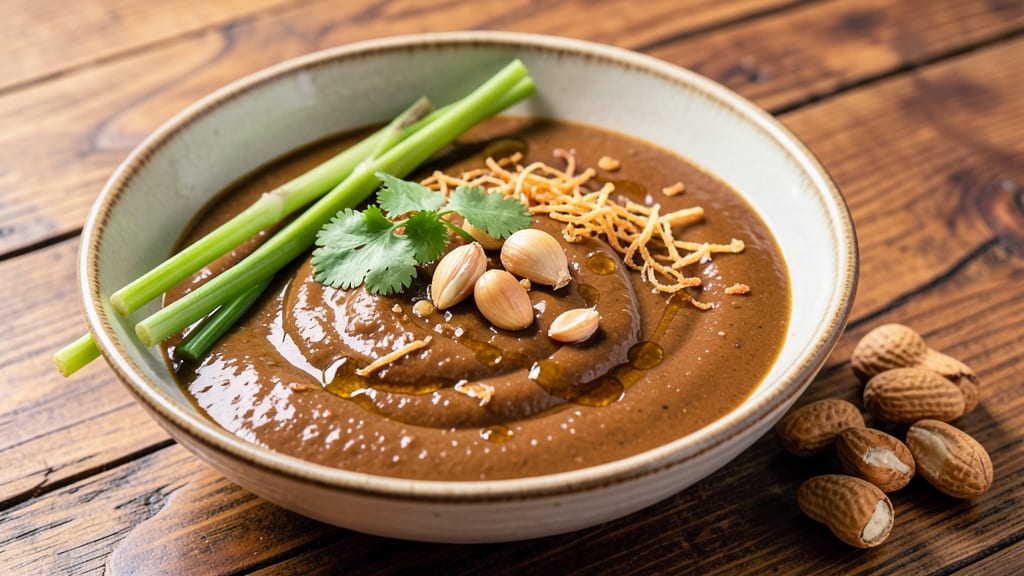
This Balinese peanut sauce recipe transforms simple pantry staples into a rich, aromatic condiment with layers of nutty depth and toasted sesame warmth.
The secret lies in balancing sweet, spicy, and umami flavors—roasted peanuts provide texture, while coconut milk creates a velvety base that clings perfectly to grilled meats or fresh vegetables.
I developed this version after years of refining the perfect ratio of spices and liquid, ensuring it stays creamy yet light enough for dipping or drizzling.
The sauce begins with a fragrant paste of garlic, shallots, and lemongrass—key components in Balinese cuisine that infuse the sauce with aromatic complexity. Toasted sesame seeds add an earthy crunch, while a touch of palm sugar caramelizes slightly when heated, creating a subtle sweetness that rounds out the spice.
Unlike many recipes that rely on heavy cream or peanut butter, this version uses natural peanut butter for a smoother texture without artificial additives.
What sets this sauce apart is its versatility—it works as a marinade for satay skewers, a dipping sauce for spring rolls, or a flavorful glaze for grilled chicken. The sauce thickens slightly when chilled, making it ideal for meal prep, yet remains spreadable at room temperature.
A squeeze of lime brightens the flavors just before serving, ensuring every bite is vibrant and balanced.
For those who prefer a sweeter profile, reduce the chili content slightly, or add a pinch more sugar. If you love heat, increase the chili flakes or add a dash of sambal oelek.
Store leftovers in an airtight container in the refrigerator for up to five days, or freeze for longer storage. Let's create this sauce that brings the bold flavors of Bali to your table.
Ingredients for balinese peanut sauce
Nine simple ingredients create this creamy, aromatic Balinese peanut sauce with perfect nutty-spiced balance.
| Ingredient | Amount | Notes |
|---|---|---|
| Natural Peanut Butter 🥜 | ½ cup | Smooth, unsweetened preferred |
| Coconut Milk 🥥 | ½ cup | Full-fat canned for creaminess |
| Lemongrass 🌿 | 3 inches | Lower stalk only, finely chopped |
| Garlic Cloves 🧄 | 4 cloves | Peeled, minced for paste |
| Shallots 🧅 | 2 whole | Minced, about 2 tbsp |
| Palm Sugar 🍯 | 2 tbsp | Or substitute brown sugar |
| Red Chili Flakes 🌶️ | 1 tbsp | Adjust for heat preference |
| Toasted Sesame Seeds 🌱 | 1 tbsp | Store-bought or homemade |
| Lime Juice 🍋 | 1 tbsp | Freshly squeezed, added last |
| Soy Sauce 🍶 | 1 tbsp | Light or dark preferred |
The peanut butter is non-negotiable—natural, unsweetened gives the best flavor without artificial gunk. Trader Joe's and Whole Foods carry great options, but any smooth peanut butter works. Lemongrass is the aromatic backbone—buy fresh stalks, not paste. The lower 3 inches of stalk is all you need, and it freezes beautifully for up to 3 months if you want to stock up. Shallots add depth, but if you're in a pinch, extra shallot powder works at half the amount. Palm sugar can be swapped for brown sugar, though it has a more caramelized finish that pairs perfectly with the peanut flavor.
No lemongrass? Lime zest plus a splash of lime juice gets you close, but it won't have the same complexity. Chili flakes too spicy? Reduce to 1 tsp and add 1 tsp more sugar. Sesame seeds can be skipped if you're avoiding nuts, but the toasty crunch is worth it. The coconut milk should be full-fat for that rich, velvety texture—light coconut milk will make the sauce separate. Soy sauce adds umami depth, but fish sauce works too if you're not avoiding it. For a smoother sauce, blend everything except the lime juice and sesame seeds first, then stir those in at the end.
This sauce keeps for 5 days in the fridge, but it actually tastes better the next day as flavors meld. For longer storage, freeze in ice cube trays—thaw and stir with a splash of water if it thickens too much. The lime juice should be added just before serving to keep it bright. Double the batch if you're making satay—it disappears fast. If the sauce gets too thick, thin it with a splash of water or coconut milk. Store sesame seeds separately if you want to sprinkle them fresh on top each time.
Why You'll Love This Recipe
- No-Fuss Blender Magic: I swear by this—just toss in the peanut butter, coconut milk, and a few smashed garlic cloves with shallots. The blender does all the work while I chop lemongrass (which, honestly, is the only slightly fussy part, but it’s worth it).
- Umami Bomb Combo: That first bite? The garlic and shallots caramelize just enough in the peanut butter, then the coconut milk smooths it out with this rich creaminess. It’s like a hug in sauce form—sweet, savory, and a little tangy from the lemongrass.
- Sauce for Everything: Slather it on grilled chicken, drizzle it over noodles, or toss it with veggies—it’s my go-to for weeknight dinners, potlucks, or even as a dip when I’m lazy. (Yes, even on a Tuesday night.)
- Leftovers That Won’t Let You Down: Make a big batch—it keeps for days in the fridge and freezes like a dream. The flavor actually gets deeper over time, so you’re not stuck with sad, watery sauce. Budget win, flavor win.
Step-by-step instructions for Balinese peanut sauce
This vibrant sauce comes together in minutes with bold flavors that dance on your tongue.
Toast the Aromatics for Deep Flavor
In a small skillet over medium heat, add the 2 whole shallots and 4 cloves garlic cloves (peeled and minced). Cook for 3-4 minutes until the shallots soften and begin to turn golden. You'll smell that irresistible nutty aroma—this is where the sauce's character starts building.
Next, add the 3 inches lemongrass (finely chopped) and 1 tablespoon red chili flakes to the pan. Stir constantly for 1 minute until the lemongrass releases its citrusy fragrance and the chili flakes become fragrant. This step develops the sauce's signature complexity—don't skip it. Remove the pan from heat and let the aromatics cool slightly before proceeding.
Blend the Base Ingredients
Transfer the toasted aromatics to a high-powered blender or food processor. Add the 0.5 cup natural peanut butter and 0.5 cup coconut milk to the blender. I like to use a tamper if I have one to ensure everything gets fully incorporated.
Blend on high speed for 1-2 minutes until completely smooth. You want a velvety texture with no visible peanut butter chunks—this ensures the sauce coats everything beautifully. If the mixture seems too thick, add 1-2 tablespoons water to help it blend properly. The sauce should have a rich, peanut-forward aroma with hints of coconut.
Sweeten and Season the Sauce
Return the blended mixture to the skillet and place it over low heat. Stir in the 2 tablespoons palm sugar and 1 tablespoon soy sauce, letting the sauce simmer gently for 3-4 minutes until the sugar dissolves completely. This step balances the heat from the chili with natural sweetness that makes the sauce irresistible.
Taste the sauce and adjust the seasoning if needed. You might want to add a pinch more palm sugar if you prefer it sweeter, or a bit more soy sauce for deeper umami. The sauce should be vibrant, with the peanut butter's richness balanced by the coconut milk's creaminess and the lemongrass's citrusy brightness.
Finish with Fresh Lime and Toasted Sesame
Remove the sauce from heat and stir in the 1 tablespoon lime juice and 1 tablespoon toasted sesame seeds. The lime juice adds a bright, tangy finish that cuts through the richness, while the sesame seeds contribute a nutty crunch that elevates every bite. Give it one final taste—this is where the sauce truly comes together.
For best results, use the sauce immediately, but it will keep in an airtight container in the refrigerator for up to 5 days. Stir well before using, as the sauce may separate slightly. This vibrant, nutty-spiced sauce pairs perfectly with grilled meats, noodles, or fresh spring rolls—it's the ultimate flavor booster for any dish.
Pro Tips For Making Balinese Peanut Sauce
- STRAIN THE COCONUT MILK: The first time I made this, I skimmed the cream off the top like I’d seen in other recipes, but Balinese peanut sauce needs that thick, creamy base to coat everything properly. Use full-fat coconut milk—no skimping—and let it sit for 10 minutes first so the thick cream settles at the bottom. Scoop out just the bottom third (about ½ cup) for the sauce, leaving the lighter milk for soups or smoothies. The difference in texture is night and day.
- TOAST THE PEANUT BUTTER: Natural peanut butter has oils that can make your sauce greasy if you don’t handle it right. Heat your peanut butter in a saucepan over low heat—just until it’s warm and fragrant, about 2-3 minutes. Stir constantly so it doesn’t scorch (I’ve done it; it’s a mess). This step deepens the nutty flavor and prevents the sauce from separating later. Skip this, and your sauce might taste flat or split like a bad vinaigrette.
- BLEND THE AROMS FIRST: Tossing whole shallots, garlic, and lemongrass into the peanut butter and coconut milk without prepping them first? You’ll end up with a chunky, uneven sauce. Pulse the shallots and garlic in a food processor until they’re a rough paste—just enough to break them down but not turn them into mush. Add the lemongrass (bruised or lightly crushed) last, then blend everything together. This ensures the sauce is silky smooth and the flavors meld properly.
- SWEAT THE AROMS LOW AND SLOW: I used to blast the shallots and garlic on high heat to get them golden fast, but that burns them before they release their sweetness. Instead, cook them over medium-low heat in a little oil (1 tbsp) for 8-10 minutes, stirring often, until they’re soft and just starting to turn golden. This step is where the sauce builds its depth—rush it, and you’ll taste bitterness instead of that rich, caramelized base. Patience here makes all the difference.
Common mistakes when making this dish
Overcooking Aromatics
Toast the shallots and garlic until they're golden, not browned—this creates deep flavor without bitterness. I've seen people char them, which adds a burnt taste that overpowers the delicate peanut and coconut notes.
Keep an eye on them and remove them from heat as soon as they're fragrant and just turning golden. 🌶️
Skipping the Blend
Using a regular blender instead of a high-powered one? You might end up with peanut butter chunks that ruin the sauce's silky texture. I recommend a Ninja food processor or Vitamix for that ultra-smooth finish.
If you're in a pinch, blend first, then strain through a fine-mesh sieve to remove any lumps.
Wrong Coconut Milk
Light coconut milk will make your sauce separate and turn watery. Always use full-fat canned coconut milk—the creaminess is essential for that velvety texture. Brands like Aroy-D or Thai Kitchen work perfectly.
If you're out of full-fat, a mix of ½ cup coconut milk + 1 tbsp coconut cream can help thicken it back up.
Adding Lime Too Early
The lime juice should be added last to keep its bright, tangy flavor intact. If you add it during cooking, the acid will break down the sauce's structure, making it thin and less vibrant.
Reserve it until the very end, just before serving. The same goes for the sesame seeds—their toasty crunch is best when added fresh.
Ignoring the Sugar
Palm sugar isn't just for sweetness—it caramelizes slightly when heated, adding depth that balances the heat from the chili. If you skip it or use a non-caramelizing sugar like white sugar, your sauce will taste flat.
For a quick substitute, use brown sugar, but it won't have the same complexity. A pinch of vanilla extract can also help enhance the sweetness if needed.
Storing Improperly
This sauce thickens when chilled, so store it in an airtight container with a splash of water or coconut milk to loosen it up before using. I like to keep it in a glass jar with a tight-sealing lid—it lasts 5 days in the fridge.
If you freeze it, use ice cube trays for easy portioning. Just
Nutrition facts
Frequently asked questions
Can I make this sauce without fresh lemongrass?
Yes, but the flavor won't be as authentic. Use 1 teaspoon lemongrass paste (found in Asian markets) or substitute with ½ teaspoon lime zest + ½ teaspoon lime juice. For deeper flavor, add ¼ teaspoon ground coriander to mimic lemongrass's earthy notes.
How spicy should this sauce be?
The recipe uses 1 tablespoon chili flakes for a mild-medium heat. For less spice, reduce to ½ tablespoon and add ½ teaspoon more sugar. For extra kick, add 1 teaspoon sambal oelek or ½ teaspoon cayenne pepper when blending.
Can I use this sauce as a marinade?
This sauce works beautifully as a marinade for chicken, tofu, or shrimp. Marinate for 30-60 minutes (no longer, or the acid in lime may toughen proteins). For extra tenderness, add 1 tablespoon honey to the marinade. Reserve some sauce for serving after cooking.
What's the best way to thicken separated sauce?
If your sauce separates when refrigerated, stir in 1-2 teaspoons cornstarch mixed with 1 tablespoon water while warming gently. For a smoother fix, blend again with 1-2 tablespoons coconut milk to restore creaminess. Always store in a glass jar to prevent future separation.
Are there vegetarian/vegan alternatives?
This recipe is naturally vegetarian. For vegan, ensure your peanut butter is 100% plant-based and use vegan soy sauce. Substitute palm sugar with coconut sugar, and check coconut milk for vegan certification. The sauce remains rich and flavorful without animal products.