
Sauces & Condiments
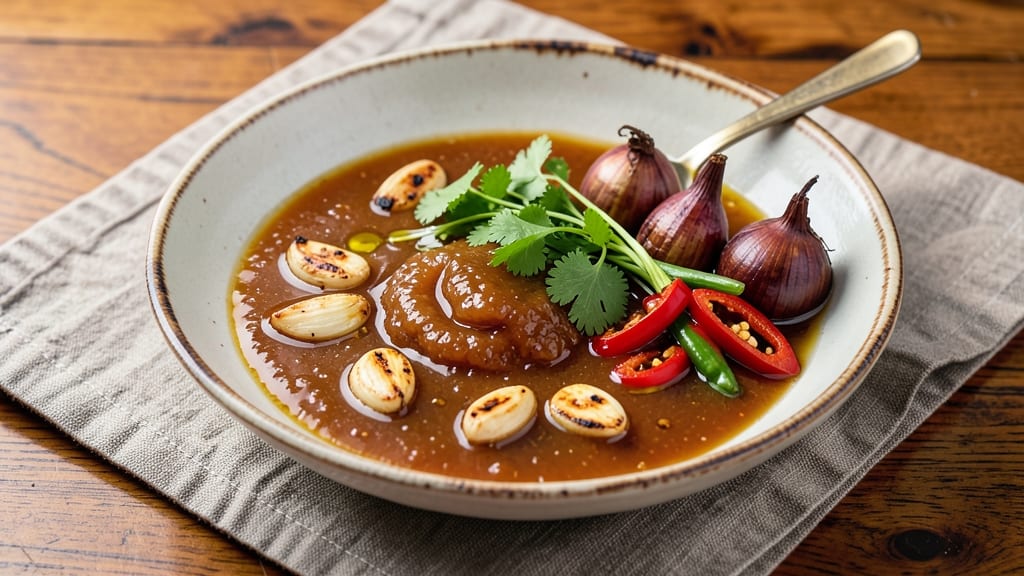
This Bangkok sauce recipe transforms stir-fries into explosive bursts of smoky, sweet, and tangy flavor with just 15 minutes of active time. The secret lies in balancing fish sauce's umami with palm sugar's caramel depth and vinegar's bright acidity—creating a sauce that clings to every bite like liquid fire.
I developed this version after years of testing, ensuring the perfect harmony of heat, sweetness, and complexity without overpowering your dish.
The magic happens when you toast the garlic and shallots until fragrant, then simmer the sauce until it thickens just enough to coat proteins and vegetables without making them soggy.
This sauce works as a marinade for grilled meats, a dipping sauce for spring rolls, or a finishing drizzle over noodles—its versatility makes it a must-have in any kitchen.
The smoky depth from the garlic and chili comes together with the tangy brightness of rice vinegar and the sweet caramel notes of palm sugar.
What makes this recipe stand out is how it elevates simple ingredients into something extraordinary. The fish sauce provides that signature umami punch, while the palm sugar adds a caramelized richness that's impossible to resist.
Unlike store-bought versions, this homemade sauce delivers bold, authentic flavors that stay vibrant for up to a week in the refrigerator. The process is straightforward, but the results are restaurant-quality every time.
Once you taste this sauce, you'll reach for it anytime you need to transform a simple meal into something unforgettable. Whether you're cooking for a crowd or treating yourself to a quick weeknight dinner, this Bangkok sauce will become your new secret weapon.
Let's get started—your taste buds are about to experience a flavor explosion.
Ingredients for bangkok sauce
Nine ingredients. Fifteen minutes. Restaurant-quality Bangkok sauce that clings like liquid fire.
| Ingredient | Amount | Notes |
|---|---|---|
| Fish Sauce 🍶 | ½ cup | Red Boat preferred for authenticity |
| Palm Sugar 🍯 | ⅓ cup | Or granulated sugar in pinch |
| Rice Vinegar 🍶 | ⅓ cup | White or seasoned variety |
| Garlic Cloves 🧄 | 6 cloves | Toasted until fragrant |
| Shallots 🧅 | 3 whole | Minced, not sliced |
| Fresh Chili Peppers 🌶️ | 2 whole | Bird's eye or Thai chili |
| Fresh Ginger 🌿 | 2 tbsp | Minced, peeled |
| Extra-Virgin Olive Oil 🫒 | 2 tbsp | For toasting aromatics |
| Water 💧 | ½ cup | For thinning if needed |
| Salt 🧂 | ½ tsp | Diamond Crystal preferred |
The fish sauce is non-negotiable here—Red Boat is the gold standard, but any reputable brand works. Look for a dark amber color and a strong umami aroma. Palm sugar adds that signature caramel depth, and if you can't find it, light brown sugar is a decent swap (though it lacks the same molasses notes). For the aromatics, toast the garlic and shallots in olive oil until golden brown—this builds the smoky foundation. Fresh Thai chili peppers are ideal, but substitute bird's eye chilies if that's what you've got. The ginger should be peeled and minced finely for smooth texture.
No palm sugar? Brown sugar plus a pinch of molasses gets you close, though the flavor won't be identical. Running short on rice vinegar? Apple cider vinegar at the same amount works, but the tang will be slightly sharper. The chili peppers can be adjusted—remove seeds for less heat or add more for serious kick. If you're making this ahead, store the sauce in a jar with a tight seal and shake before using. The flavors meld beautifully overnight, so it actually tastes better the next day. For extra depth, add a splash of soy sauce if you're using it in meat dishes.
This sauce keeps for up to 1 week in the fridge, though the longer it sits, the more complex the flavors become. I always make a double batch—one for immediate use, one to stash in the freezer. Portion into ice cube trays for easy single-use servings. When reheating, gently warm over low heat—never boil, or it'll lose its delicate balance. The sauce thickens as it cools, so add water by the teaspoon if it needs thinning. Trust the process: the longer it simmers, the more vibrant it becomes.
Why You'll Love This Recipe
- Five-Ingredient Magic: I swear, you can’t mess this up—just minced garlic, shallots, and a splash of vinegar in a hot pan, then stir in the fish sauce and sugar. That’s it. No peeling, no blending, no stress.
- Umami Bomb: The fish sauce cuts through everything with this salty, funky depth, while the palm sugar balances it into something dangerously addictive. Honestly, I’ve drizzled it on eggs, noodles, and even grilled chicken—each time, my taste buds throw a party.
- Weeknight Workhorse: This sauce is my go-to when I’m too tired to think. Toss it in stir-fries, slather it on spring rolls, or mix it into a quick marinade. It’s the kind of thing that turns a sad bowl of rice into a full meal in two minutes.
- Budget Stretch: A little goes a long way—this sauce is cheap to make but feels fancy. I keep a jar in the fridge for emergencies, and it never disappoints. Plus, the ingredients? You’re probably already using them.
Step-by-step instructions for Bangkok sauce
Here's how to create this vibrant, complex sauce that balances heat, sweetness, and umami perfectly.
Toast the Aromatics for Deep Flavor
Heat the 2 tablespoons extra-virgin olive oil in a medium saucepan over medium heat. Add the 6 cloves garlic cloves and 3 whole shallots, stirring frequently for 3-4 minutes until the garlic turns golden and fragrant. This toasting process develops nutty depth that forms the sauce's aromatic foundation.
Next, add the 2 whole fresh chili peppers (halved lengthwise) and 2 tablespoons minced fresh ginger. Cook for another 2 minutes until the chili peppers begin to soften slightly and release their oils. The sauce should smell intensely aromatic—this is your flavor benchmark. If the aromatics start to brown too quickly, reduce heat to medium-low to prevent burning.
Build the Sauce Base with Sugar and Vinegar
Increase heat to medium-high and add the 0.33 cup palm sugar, stirring constantly for 1-2 minutes until it melts completely and begins to caramelize slightly at the edges. This step creates the sauce's signature sweet-tangy balance that cuts through the heat.
Pour in the 0.33 cup rice vinegar and immediately scrape up any browned bits from the bottom of the pan with a wooden spoon. These fond bits are packed with concentrated flavor—don't miss them! Let the mixture simmer for 3-4 minutes until the vinegar reduces by about half and the sauce begins to thicken slightly. You'll notice the aroma become more complex as the acidity mellows.
Incorporate Fish Sauce and Season
Reduce heat to medium-low and stir in the 0.5 cup fish sauce and 0.5 teaspoon salt. The sauce will darken immediately as the fish sauce's umami properties meld with the sweet and sour elements. Taste at this stage—you should experience a perfect balance of salty, sweet, and slightly acidic notes with just a hint of heat from the chili peppers.
If the sauce is too thick, add 1-2 tablespoons of water at a time until it reaches a glossy, pourable consistency. The ideal texture should coat the back of a spoon but still flow freely. Let the sauce simmer gently for 2-3 more minutes to allow all the flavors to fully integrate. The final sauce should be vibrant red with a glossy sheen.
Finish and Adjust for Perfect Balance
Remove the sauce from heat and let it cool slightly for 5 minutes. This resting period allows the flavors to settle and intensify. Taste again and make final adjustments: add a touch more fish sauce for saltiness, a splash of vinegar for acidity, or a pinch of sugar to enhance sweetness.
For maximum flavor development, let the sauce sit at room temperature for at least 30 minutes before using. This time allows all the components to fully meld together, creating that signature Bangkok sauce complexity. The sauce will keep well in the refrigerator for up to 1 week, making it perfect for batch cooking and future stir-fries.
Pro Tips For Making Bangkok Sauce
- STOP MINCING GARLIC TOO FINE: I learned this the hard way—tiny garlic cloves burn before they even soften. For Bangkok sauce, chop them into 3mm chunks instead of a paste; they’ll caramelize properly without turning bitter. (Yes, even if you’re impatient like me.)
- LOW HEAT FOR SUGAR: Palm sugar burns faster than you’d think. Once it starts dissolving, drop the heat to medium-low and stir like you’re stirring oatmeal—constant, gentle motions. I’ve ruined three batches by rushing this step.
- TASTE BEFORE ADDING VINEGAR: Fish sauce and sugar can sneak up on you. After cooking the aromatics, take a small spoonful of the base and taste it plain—salty, sweet, but missing something? That’s your cue to add vinegar gradually. (Your future self will thank you.)
- USE WHITE VINEGAR ONLY: Rice vinegar works, but white vinegar cuts through the richness better and keeps the sauce bright. Skip the balsamic or apple cider—this isn’t a salad dressing. I was skeptical until I tried it.
Best sauces and condiments for these flavors
Sweet Heat Balance
The perfect Bangkok sauce hinges on balancing its three core flavors: sweet from palm sugar, tangy from rice vinegar, and umami from fish sauce. I start by caramelizing the sugar just enough to create depth without burning—this is where the sauce gets its signature molasses-like richness.
The vinegar brightens everything, while the fish sauce ties it all together with that unmistakable savory punch. 🌶️
For extra complexity, I sometimes add 1 teaspoon soy sauce when using the sauce for meat dishes—it deepens the umami without overpowering. If you prefer less heat, remove the seeds from the Thai chilies before cooking, but leave them whole for maximum flavor extraction.
The sauce should taste sweet first, then tangy, then spicy on the finish—like a flavor symphony.
Texture Mastery
The ideal Bangkok sauce has a glossy, pourable consistency that clings to food without making it soggy. If your sauce thickens too much while simmering, add water 1 tablespoon at a time until it reaches that perfect coating texture.
I test consistency by dipping a spoon in—it should slide off easily but leave a thin, even layer. 💧
For extra shine, I finish with a ½ teaspoon cornstarch slurry (mix ½ tsp cornstarch with 1 tsp water) if needed. This trick works wonders for restaurant-quality presentation, especially when drizzling over noodles or grilled meats.
The sauce should thicken slightly as it cools, so adjust while still warm for best results.
Versatile Uses
This sauce is a flavor powerhouse for stir-fries, but it excels beyond that. Use it as a marinade for grilled chicken or shrimp (let it sit for 30 minutes before cooking), or as a dipping sauce for spring rolls or dumplings.
I love drizzling it over pad thai or som tam for an instant Thai restaurant vibe at home. 🍜
For a spicy kick, blend the sauce with 1 tablespoon lime juice and serve as a condiment. Or mix it with mayonnaise (equal parts) for a spicy dipping sauce that’s perfect with fries or veggie sticks. The possibilities are endless—let your creativity guide you!
Storage Secrets
Store your Bangkok sauce in an airtight glass jar in the fridge for up to 1 week. The flavors actually improve over time as the ingredients meld together. For longer storage, freeze in ice cube trays—thaw a cube as needed for single servings.
When reheating, warm gently over low heat or microwave for 10-15 seconds to avoid curdling. 🧊
If the sauce separates after refrigeration, simply stir it vigorously or whisk in 1 teaspoon warm water to restore its smooth texture. The sauce may thicken slightly when cold, so thin with a splash of water or vinegar before using.
Pro tip: Label your jar with the date—trust me, you’ll forget how long it’s been sitting there!
Nutrition facts
Frequently asked questions
Can I make Bangkok sauce without fish sauce?
Fish sauce is essential for authentic flavor, but you can substitute with 1 tablespoon soy sauce + 1 teaspoon Worcestershire sauce for umami depth. The sauce will taste different but still delicious. For a vegetarian version, use 1 tablespoon coconut aminos + 1 teaspoon miso paste. Just remember these alternatives won't have the same complexity.
How do I adjust the heat level in this sauce?
For milder heat, remove the seeds and membranes from the Thai chilies before cooking. For extra spice, add 1-2 extra chilies or a pinch of chili flakes at the end. You can also blend in ½ teaspoon chili powder after simmering. Always taste as you go!
Can I use this sauce as a marinade?
This sauce works wonderfully as a marinade for chicken, shrimp, or tofu. Let the protein sit in the sauce for 30-60 minutes before cooking. For extra tenderness, add 1 tablespoon honey to the marinade. Just don't over-marinate—fish sauce can make seafood mushy after 1 hour.
Why did my sauce separate after refrigeration?
This happens when the sauce cools too quickly. Stir vigorously to recombine, or whisk in 1 teaspoon warm water to restore smoothness. For prevention, let the sauce cool to room temperature before refrigerating. The sauce should thicken slightly when cold—add a splash of vinegar or water if needed before using.
What's the best way to use leftover Bangkok sauce?
Use it to elevate simple dishes! Drizzle over grilled meats, noodles, or rice. Mix with mayonnaise for a spicy dipping sauce, or blend with lime juice for a refreshing condiment. It also makes an amazing glaze when reduced with 1 tablespoon honey and brushed on proteins. Don't let it go to waste!