
Sauces & Condiments
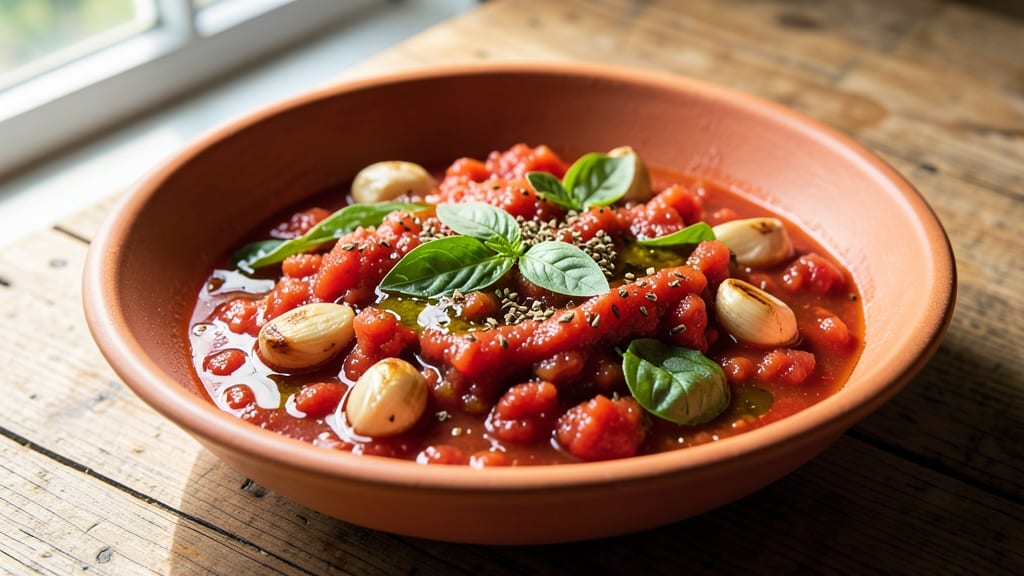
This chunky fresh tomato sauce transforms garden tomatoes into a vibrant, flavor-packed condiment that captures summer's essence. 🌞 I developed this recipe after years of perfecting the balance between bright acidity and rich tomato flavor, ensuring every spoonful delivers that fresh-from-the-vine taste.
The secret lies in minimal blending—just enough to create a thick, textured sauce while preserving those beautiful tomato pieces that add both visual appeal and texture.
The foundation begins with fresh tomatoes, garlic, and a splash of vinegar for brightness, all simmered until the flavors meld into harmony. Herbs like basil and oregano infuse layers of aromatic depth, while a touch of sugar rounds out any tartness.
This sauce isn't just for pasta—it elevates grilled meats, dips, or even as a topping for bruschetta. The beauty of this recipe is its versatility, yet it always delivers that restaurant-quality depth you crave.
What sets this sauce apart is its texture—thick enough to cling to every forkful but still light enough to let the tomato's natural sweetness shine through. The simmering process concentrates the flavors without losing freshness, creating a sauce that tastes like summer all year round.
Whether you're using homegrown tomatoes or the freshest market finds, this method guarantees a sauce that's vibrant, balanced, and full of character.
Perfect for meal prep or spontaneous cooking, this chunky tomato sauce keeps beautifully in the refrigerator for up to five days. The flavors only deepen over time, making it ideal for batch cooking.
Trust me—once you taste this sauce, you'll never go back to store-bought versions again. Let's get started on creating something truly special from your garden harvest.
Ingredients for chunky tomato sauce recipe with fresh tomatoes
Nine simple ingredients transform fresh tomatoes into vibrant, chunky sauce that tastes like summer.
| Ingredient | Amount | Notes |
|---|---|---|
| Fresh Tomatoes 🍅 | 4 lbs | Ripe, firm, vine-ripened preferred |
| Extra-Virgin Olive Oil 🫒 | ½ cup | High quality, fruity flavor |
| Garlic Cloves 🧄 | 6 cloves | Peeled, roughly chopped |
| Fresh Basil Leaves 🌿 | 1 cup | Packed, stems removed |
| Dried Oregano 🍃 | 1 tsp | Mediterranean or Italian blend |
| White Wine Vinegar 🍶 | 2 tbsp | For brightness and acidity |
| Granulated Sugar 🍬 | 1 tbsp | Balances acidity |
| Sea Salt 🧂 | 1 ½ tsp | Diamond Crystal preferred |
| Black Peppercorns 🌶️ | ½ tsp | Freshly cracked |
Tomatoes are the star—vine-ripened ones from your garden or farmers market have the best flavor. Heirloom varieties add sweetness, but any ripe tomato works. I usually grab 4 pounds at a time from local farms in season, but grocery store tomatoes in the off-season are fine too. Look for tomatoes that are firm but yield slightly to gentle pressure—those are the sweetest. If you're using San Marzano canned tomatoes as a backup, skip the sugar since they're naturally sweeter.
No fresh basil? Dried basil at one-third the amount works in a pinch, but it won't have that same bright flavor. The oregano is non-negotiable—it adds that Mediterranean depth. For the vinegar, apple cider vinegar adds a nice complexity. Want more texture? Add 1/2 cup diced red onion with the garlic. The sugar might seem odd, but it's crucial for balancing the acidity—trust me on this. If you're making this in summer, I always double the garlic and basil because they're so abundant.
This sauce tastes even better the next day as the flavors meld. Store in an airtight container in the fridge for up to 5 days. For longer storage, freeze in 1-cup portions—perfect for meal prep. I always make a big batch and freeze extras because it's so versatile. The sauce thickens as it cools, so you can thin it with a splash of water or broth if needed. Label your containers because this sauce disappears fast!
Why You'll Love This Recipe
- Same sauce, endless uses: toss it with pasta, slather it on grilled cheese, or serve it with crusty bread. I’ve even used it as a marinade for chicken—works every time, no extra effort.
- No Chopping Nightmare: I just toss in whole tomatoes, garlic cloves, and basil leaves—no dicing, no peeling, no fuss. The sauce breaks down beautifully while you sip wine and pretend you’re not cooking.
- Sunshine in a Jar: That first taste of fresh tomatoes caramelized with olive oil and garlic? It’s the kind of bright, herby flavor that makes you pause mid-bite. Honestly, store-bought sauce can’t compete—this one’s got soul.
- Weeknight to Party Fix: Same sauce, endless uses: toss it with pasta, slather it on grilled cheese, or serve it with crusty bread. I’ve even used it as a marinade for chicken—works every time, no extra effort.
Step-by-step instructions for chunky fresh tomato sauce
Here's how to transform garden tomatoes into a vibrant, chunky sauce bursting with summer flavor.
🍳 Step 1: Prep and Roast the Tomatoes
Preheat your oven to 425°F and line a large baking sheet with parchment paper. Cut the 4 lbs fresh tomatoes into 1-inch chunks, removing any cores or bruised spots. Spread them in a single layer on the prepared sheet, leaving ½-inch space between each piece for even browning.
Roast for 25-30 minutes until the edges are deeply browned and the tomatoes begin to collapse slightly. This caramelization concentrates their natural sweetness and deepens the flavor. Give them a stir halfway through if your oven has hot spots. The roasted aroma will fill your kitchen—trust me, it's worth the wait.
🍳 Step 2: Build the Sauce Base
Transfer the roasted tomatoes to a large, heavy-bottomed pot. Add the 6 cloves roughly chopped garlic cloves, 1 tsp dried oregano, 1.5 tsp sea salt, and 0.5 tsp freshly cracked black peppercorns. Pour in the 0.5 cup extra-virgin olive oil and 2 tbsp white wine vinegar, stirring gently to combine.
Bring the mixture to a gentle simmer over medium heat. Let it cook uncovered for 10-12 minutes until the tomatoes begin to break down and release their juices. You'll see the sauce thicken slightly and develop a glossy sheen. This is where all the magic starts happening—those roasted tomato flavors melding together beautifully.
🍳 Step 3: Add Sweetness and Simmer
Stir in the 1 tbsp granulated sugar and continue simmering for another 5-7 minutes. The sugar will help balance the acidity from the vinegar and caramelize slightly, adding another layer of depth to the sauce. Taste as you go—you want a bright acidity with underlying sweetness, not cloying sweetness.
Here's the thing—if your tomatoes are particularly watery, you might see some foam form. That's normal! Just skim it off occasionally. The sauce should reduce to about 3 cups total volume by the end. If it's too thick for your liking, you can add a splash of water or tomato juice later, but we're aiming for that perfect chunky consistency.
👨🍳 Step 4: Finish with Fresh Basil
Reduce the heat to low and stir in the 1 cup packed fresh basil leaves, removing any tough stems first. Let the sauce simmer gently for 3-5 minutes—just enough time for the basil to wilt and release its aromatic oils. Don't let it boil vigorously or the basil will turn bitter.
Give the sauce one final taste and adjust the seasoning if needed. You might want to add a pinch more salt or a splash more vinegar to perfect the balance. The sauce should be vibrant, bright, and full of fresh tomato flavor—not dull or one-dimensional. This is where home cooks often miss the mark, so pay attention to this final adjustment.
⏰ Step 5: Rest and Serve
Remove the pot from heat and let the sauce rest for 10 minutes before serving. This resting period allows all the flavors to truly meld together and the sauce to thicken slightly. I know it's tempting to dig in immediately, but trust me, this waiting makes all the difference.
Serve the sauce warm over your favorite pasta, drizzled with a little more olive oil and extra basil if desired. The chunks should be tender but still hold their shape, releasing juicy tomato goodness with each bite. This isn't a smooth, homogeneous sauce—it's a celebration of fresh tomatoes in their most vibrant form.
Pro Tips For Making Chunky Tomato Sauce Recipe With Fresh Tomatoes
- CHAR THE TOMATOES FIRST: Toss halved tomatoes in a hot, oiled pan for 3-4 minutes before adding anything else—this breaks down their skins and concentrates flavor. I used to skip this and ended up with watery, bland sauce every time. The edges should just start to blister, not burn.
- SALT THE GARLIC: Crush the garlic cloves with a pinch of salt before adding them to the oil—this prevents burning and makes them release flavor more evenly. (Yes, even if you’re impatient like me.) The oil will sizzle less violently, and the garlic won’t turn bitter.
- STIR THE BASIL LATE: Tear the basil leaves and fold them in only during the last 2-3 minutes of cooking—heat kills their bright flavor faster than you’d think. My grandmother swore by this, and she was right: fresh basil added early just turns the sauce dull.
- USE A SPLASH OF WATER: If the sauce thickens too fast, add 2 tablespoons of water or pasta water to loosen it—this keeps the texture chunky without diluting flavor. I was skeptical until I tried it: the sauce stays rich, and you avoid that sticky, gluey mess.
Essential equipment for great chunky tomato sauce recipe with fresh tomatoes
Heavy-Bottomed Pot
This is my non-negotiable piece of equipment for this sauce. A 5-6 quart Dutch oven like the Le Creuset Signature handles the simmering beautifully, distributing heat evenly and preventing scorching. I've tried stainless steel and it works, but enamel-coated pots like this one make cleanup a breeze.
The deep sides give you room to work with those 4 lbs of tomatoes without overflowing. If you're on a budget, a Calphalon stainless steel saucepan is a great alternative—just make sure it's heavy-gauge. 🔥
Baking Sheet
For roasting the tomatoes, you need a half-sheet pan (about 18x13 inches) with a light-colored, heavy-duty metal construction. I use All-Clad stainless steel sheets because they conduct heat evenly and last forever. The parchment paper is crucial—it prevents the tomatoes from sticking and makes cleanup effortless.
If you're roasting a large batch, consider using two pans at once to save time. Pro tip: Line your pans the night before so you're ready to go in the morning.
Immersion Blender
While this recipe emphasizes chunky texture, an immersion blender like the Ninja QN201 is my secret weapon for achieving perfect consistency. I use it for just 10-15 seconds to break down some of the larger pieces while keeping most of the texture intact.
This is especially helpful if you're using particularly tough tomato varieties. The handheld design makes it easy to control exactly how much blending you do—no need to transfer hot sauce to a food processor. 💡
Fine-Mesh Strainer
A 12-inch fine-mesh strainer is essential for removing any large seeds or skins that might make your sauce too chunky. I prefer the OXO Good Grips model because it's sturdy and has a deep bowl that won't clog.
After simmering, I give the sauce a quick pass through this strainer to ensure a smooth texture while preserving the beautiful tomato pieces. For extra-fine texture, you can line it with a cheesecloth or muslin square.
Wooden Spoon
Never use metal utensils when cooking this sauce—they can scratch your pot and release metallic flavors. A 12-inch wooden spoon like the OXO Good Grips is perfect for stirring and scraping up any browned bits from the bottom of your pot.
I keep one dedicated just for tomato sauces to prevent cross-contamination with other flavors. The wooden handle also provides a good grip when working with hot pots. For extra durability, I occasionally oil mine with food-grade mineral oil.
Digital Thermometer
While not strictly necessary, a digital instant-read thermometer like the ThermoWorks ThermoPop helps ensure your sauce reaches the perfect simmering temperature of 190-200°F. This range is ideal for developing deep flavor without overcooking the tomatoes.
I use mine to check the temperature of both the simmering sauce and the roasted tomatoes before adding them to the pot. It's a small investment that takes the guesswork out of temperature control. 🌡️
Nutrition facts
Frequently asked questions
Can I use canned tomatoes instead of fresh?
Fresh tomatoes give the brightest, most vibrant flavor, but you can use canned in a pinch. For best results, choose San Marzano tomatoes and skip the sugar since they're naturally sweeter. If using regular canned tomatoes, add 1 extra tablespoon of sugar to balance acidity. The texture will be slightly smoother since canned tomatoes break down faster during simmering.
How do I adjust the thickness of my sauce?
If your sauce is too thick, stir in 1-2 tablespoons of water or tomato juice while simmering. For extra-thick sauce, simmer uncovered for 5-10 extra minutes to reduce. Remember, the sauce will thicken more as it cools. The ideal consistency should coat the back of a spoon but still be pourable. Pro tip: Simmering in a wider pot creates more surface area for evaporation.
What if my tomatoes are underripe or mealy?
Underripe tomatoes will make your sauce tart and watery. Roast them longer (35-40 minutes) to concentrate flavors. For mealy tomatoes, add 1/2 cup tomato paste when building the sauce base to add body. If they're particularly watery, simmer uncovered for 15-20 minutes to evaporate excess liquid before adding other ingredients.
Can I make this sauce without an oven?
For stovetop roasting, cut tomatoes into 1-inch pieces and sauté in 1 tablespoon olive oil over medium-high heat for 8-10 minutes until deeply browned. Add 1/4 cup water to deglaze the pan, then proceed with the recipe. The flavor will be slightly different but still delicious—just more caramelized and concentrated.
How can I prevent my sauce from being too acidic?
Start by reducing the vinegar to 1 tablespoon instead of 2. Add the sugar earlier in the simmering process (after the initial 10 minutes) to help neutralize acidity. If it's still too tart, stir in 1/2 teaspoon baking soda (just a pinch!) to balance. Always taste as you go—this sauce should be bright, not sour.