
Sauces & Condiments
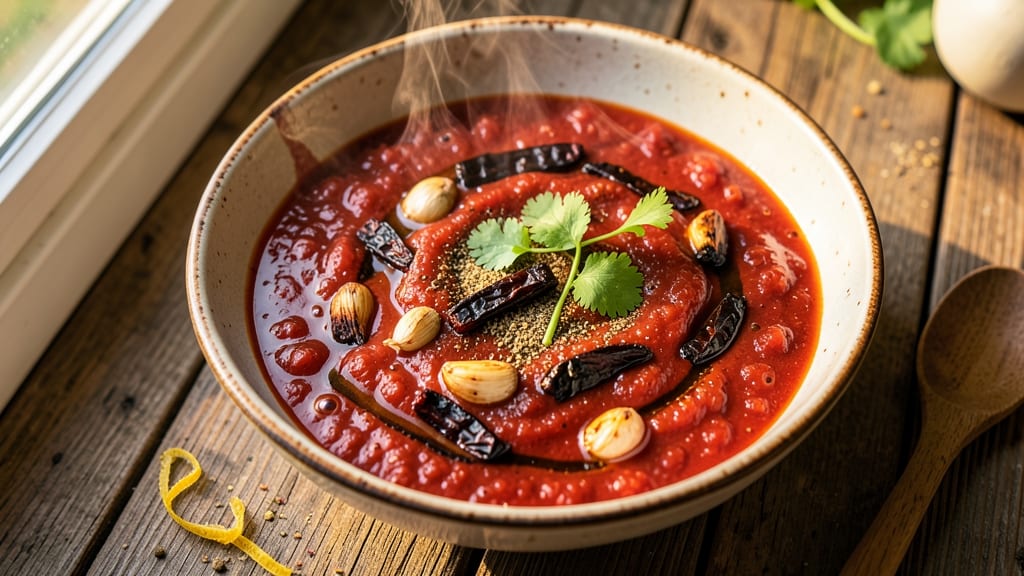
This enchilada sauce recipe transforms fresh tomatoes into a velvety, smoky masterpiece that elevates every dish it touches. The key lies in slow-cooked tomatoes, charred chiles, and aromatic spices that develop deep, complex flavors over time.
I’ve refined this technique to balance traditional methods with modern convenience—rich enough for enchiladas but versatile enough for dipping, tacos, or even grilled meats.
The foundation starts with ripe tomatoes roasted until their natural sugars caramelize, creating a luscious base. Charred dried chiles add smoky depth, while cumin, garlic, and a touch of cinnamon build layers of warmth.
Unlike canned sauces, this version delivers a fresh, vibrant taste that’s impossible to replicate with store-bought shortcuts. The result? A sauce so smooth and flavorful, it becomes the star of any meal.
What sets this recipe apart is its adaptability—use it as a dipping sauce for tortilla chips, a topping for grilled chicken, or the heart of classic enchiladas. The slow cooking process ensures a silky texture with no lumps, while the balance of acidity and sweetness keeps every bite harmonious.
Perfect for meal prep or last-minute gatherings, this sauce transforms simple ingredients into something extraordinary.
Once you taste the difference, you’ll never go back to canned. The secret is patience—letting the flavors meld and deepen over time. Trust me, the effort is worth it for a sauce that tastes homemade, restaurant-quality, and utterly addictive. Let’s get cooking!
Ingredients for enchilada sauce recipe fresh tomatoes
Fresh tomatoes and charred chiles form the velvety base of this restaurant-quality sauce.
| Ingredient | Amount | Notes |
|---|---|---|
| Fresh Roma Tomatoes 🍅 | 2 lb | Halved, cored, ripe and firm |
| Dried Ancho Chiles 🌶️ | 2 whole | Stemmed, seeded, charred lightly |
| Garlic Cloves 🧄 | 6 cloves | Peeled, roughly chopped |
| Ground Cumin 🌿 | 1 tbsp | Toasted for aromatic depth |
| Ground Coriander 🌿 | 1 tsp | Freshly ground preferred |
| Ground Cinnamon 🌿 | ½ tsp | For subtle warmth |
| Extra-Virgin Olive Oil 🫒 | ½ cup | High-quality, fruity variety |
| Lime Juice 🍋 | 2 tbsp | Freshly squeezed, strained |
| Salt 🧂 | 1 tsp | Diamond Crystal kosher salt |
| Black Pepper 🌶️ | ½ tsp | Freshly ground for brightness |
The tomatoes are the heart of this sauce—ripe Roma tomatoes with vibrant red skins and minimal seeds yield the smoothest texture. Local farmers markets often carry them at peak ripeness, but any grocery store with a produce section will have them labeled as 'plum' or 'paste' tomatoes. For the chiles, Penzeys Spices or specialty Latin markets offer the best selection of dried ancho peppers. Char them briefly over a gas flame or under a broiler for 30 seconds per side—just until fragrant and slightly blistered. This step unlocks their smoky depth without overpowering the tomato's natural sweetness. Never skip the charring—it's what transforms this from ordinary to extraordinary.
No fresh tomatoes? Canned San Marzano tomatoes (drained and crushed) work in a pinch, though they lack the caramelized depth. Swap ancho chiles for guajillo or pasilla—just adjust the quantity to taste, as each variety has distinct heat and earthiness. Ground cumin is non-negotiable for that authentic Mexican warmth, but if you're out, 1/4 tsp smoked paprika can mimic some of its complexity. For the olive oil, avoid light or refined varieties—look for labels indicating 'extra-virgin' with 20% or higher oleic acid content to ensure rich flavor. The lime juice should be freshly squeezed; bottled versions lack the bright acidity that balances the sauce's richness. Strain the pulp if you prefer an ultra-smooth texture, though I prefer leaving it slightly rustic for texture.
This sauce peaks after 3-4 days of refrigeration as flavors meld, but it's best used within 5-7 days for optimal freshness. Portion into glass jars with tight-sealing lids, leaving 1/2-inch headspace to prevent mold. For longer storage, freeze in ice cube trays—each cube makes a perfect single-serving portion for dipping or topping. Label containers with the date, as color darkens over time. Reheat gently on the stove with a splash of water or broth to restore its silky consistency. Never microwave—it breaks the sauce's delicate emulsion and creates a skin. The sauce also doubles as a marinade for grilled meats or a braising liquid for beans, so make extra if you're planning a taco night.
Why You'll Love This Recipe
- That’s the secret: ancho chiles steeped in hot water until they’re tender and rich. The cumin and coriander hit like a warm hug—earthy, bright, with just enough kick to make it unforgettable. (Yes, even on a Tuesday night.)
- No-Chop Sauce Base: I swear by this—just blanch the tomatoes, peel them, and toss into a pot. No dicing, no seeds to fuss with. The ancho chiles soak while you stir, and suddenly you’ve got a silky, smoky sauce with zero effort.
- Smoky Depth Magic: That’s the secret: ancho chiles steeped in hot water until they’re tender and rich. The cumin and coriander hit like a warm hug—earthy, bright, with just enough kick to make it unforgettable. (Yes, even on a Tuesday night.)
- Weeknight to Party Hero: Use it for enchiladas, tacos, or even drizzled over grilled fish. Freezes like a dream, so I make a double batch—one for now, one for when my in-laws visit. (They always ask for the recipe.)
Step-by-step instructions for enchilada sauce with fresh tomatoes
Transforming fresh tomatoes and ancho chiles into velvety, smoky sauce requires patience and precision.
Prepare the Ancho Chiles and Tomatoes
Begin by toasting the 2 whole dried ancho chiles in a dry skillet over medium heat for 1-2 minutes per side until fragrant and slightly puffed. This step deepens their smoky flavor. Immediately transfer them to a bowl, cover with hot water to soften, and let steep for 15 minutes while you prepare the tomatoes.
While the chiles soak, halve and core the 2 lb fresh Roma tomatoes, removing any seeds. Roughly chop them into ½-inch pieces—this increases surface area for even cooking. The tomatoes should be ripe but firm to prevent a watery sauce. Set aside in a separate bowl.
Toast the Spices and Bloom the Aromatics
Heat the 0.5 cup extra-virgin olive oil in a heavy-bottomed saucepan over medium-low heat. Add the 6 cloves peeled garlic cloves and toast for 1-2 minutes until fragrant but not browned—this prevents bitterness. Remove the garlic with a slotted spoon and set aside for later.
In the same pan, add the 1 tbsp ground cumin, 1 tsp ground coriander, and 0.5 tsp ground cinnamon. Toast the spices for 30 seconds, stirring constantly, until aromatic. This step unlocks their full flavor potential. Be careful not to burn them—spices darken quickly.
Simmer the Tomato-Chile Base
Drain the soaked ancho chiles and transfer them to a blender along with the chopped tomatoes. Blend until smooth, scraping down the sides as needed. Pour this mixture into the saucepan with the toasted spices and bring to a gentle simmer over medium heat. Stir occasionally for 15 minutes until the sauce thickens slightly.
Here’s the key: the sauce should reduce enough to coat the back of a spoon but remain silky, not gluey. If it thickens too quickly, add 1-2 tablespoons of water to maintain balance. The tomatoes will break down gradually, releasing their natural sweetness and acidity.
Finish with Acid and Seasoning
Remove the sauce from heat and stir in the reserved toasted garlic, 2 tbsp lime juice, 1 tsp salt, and 0.5 tsp black pepper. Taste and adjust the seasoning—this sauce should be bright, smoky, and slightly tangy. If the acidity needs balancing, add a pinch more salt or a splash of lime juice.
For the best texture, strain the sauce through a fine-mesh sieve to remove any remaining skins or seeds. This ensures a silky, restaurant-quality finish. Let it cool to room temperature before using—this allows the flavors to meld completely.
Use Immediately or Store Properly
This sauce is best used fresh, but it will keep in an airtight container in the refrigerator for up to 5 days or frozen for 3 months. For enchiladas, use ½ cup per serving to coat tortillas generously. The sauce’s depth of flavor comes from the marriage of fresh tomatoes and smoky ancho chiles—don’t rush this process.
Real talk: the longer you let the sauce sit after blending, the more complex its flavor becomes. If you have time, let it rest for 30 minutes before using—this is where the magic happens.
Pro Tips For Making Enchilada Sauce Recipe Fresh Tomatoes
- CHAR THE TOMATOES LOW: Roma tomatoes release their sweetness best when simmered gently—think 20-25 minutes at a barely bubbling pace, not a rolling boil. I learned this the hard way after burning the skin off three batches; now I keep the heat at a whisper and stir occasionally to prevent sticking.
- DESEED AND PEEL THE CHILES: Ancho chiles lose their depth if you don’t remove the seeds and stems first—those add bitterness you don’t want. Tear them open, scrape out the guts with your fingernail, then toast them whole in a dry skillet for 30 seconds per side. (Yes, even if you’re impatient like me.)
- TOAST THE SPICES: Blooming cumin and coriander in oil for 30 seconds before adding tomatoes makes a real difference—they wake up their flavors instead of just dissolving into the sauce. Use a splash of broth to deglaze the pan afterward; that’s where the magic hides.
- SALT THE TOMATOES FIRST: Sprinkle a generous pinch of salt over the raw tomatoes before cooking—it softens them faster and pulls out more juice, giving your sauce body without thinning it. Skip this, and you’ll end up with a watery, weak base. (Your future self will notice.)
Best sauces and condiments for enchilada sauce recipe fresh tomatoes
Tomato-Based Sauce Pairings
Pair this enchilada sauce with corn tortillas for classic enchiladas, but don’t stop there. Use it as a dipping sauce for blue corn chips or totopos—the smoky depth contrasts beautifully with their crispy texture.
For grilled meats, brush it onto skirt steak or chicken thighs during the last 5 minutes of cooking to create a sticky, caramelized crust. 🌶️
For vegetarian dishes, spoon it over black beans or roasted sweet potatoes to add richness. It also elevates quesadillas when layered with Oaxaca cheese and charred onions. The sauce’s balance of acidity and smokiness makes it a versatile topping for tostadas or taco salads too.
Spice-Forward Condiments
Boost the heat with habanero or chipotle peppers—add 1 tsp adobo sauce or ½ tsp cayenne to the finished sauce for a fiery kick. For a creamy contrast, mix ¼ cup sour cream or Greek yogurt into the sauce just before serving.
This creates a cooling dip perfect for nachos or taquitos. 🔥
Add pickled jalapeños or diced avocado as a garnish to cut through the sauce’s richness. For a tangy twist, stir in 1 tbsp apple cider vinegar or mango purée to complement the smoky tomato base.
Cheese and Dairy Enhancers
Melt Monterey Jack or pepper jack cheese into the warm sauce for a cheesy enchilada dip. The sauce’s acidity prevents the cheese from becoming greasy. For a creamy salsa, blend in ½ cup cotija cheese and 2 tbsp heavy cream until smooth.
This works wonders as a taco sauce or queso dip.
For a Mexican-style crema, whisk ¼ cup crème fraîche with 1 tbsp lime juice and drizzle it over the sauce. This adds a silky, tangy finish that’s perfect for tostadas or taco bowls.
Herb and Garnish Ideas
Fresh cilantro or Mexican oregano brightens the sauce’s flavor. Chop ½ cup cilantro and stir it in at the end, or sprinkle 1 tbsp oregano over the top for an aromatic touch. For a fresh crunch, top with thinly sliced radishes or pickled red onions.
Toasted pumpkin seeds or sesame seeds add a nutty contrast, while crumbled queso fresco brings a salty tang. A drizzle of chipotle oil or avocado oil enhances the smoky notes without overpowering the sauce.
Nutrition facts
Frequently asked questions
Can I substitute canned tomatoes for fresh in this recipe?
You can use canned tomatoes in a pinch, but fresh yields the best texture and flavor. For a similar result, choose high-quality San Marzano tomatoes (drained and crushed) and simmer them longer to develop depth. The sauce will lack the caramelized sweetness from fresh tomatoes, but it still works well for quick meals.
How do I adjust the spice level if ancho chiles are too mild?
Toast 1-2 dried chipotle or guajillo chiles alongside the ancho and blend them in for extra heat. For immediate spice, add ½ tsp cayenne pepper or 1 tsp adobo sauce to the finished sauce. Start with small amounts—you can always add more, but you can't remove excess spice.
Why does my sauce turn out watery?
Watery sauce usually means the tomatoes weren't cooked long enough or the heat was too high. Simmer uncovered over low heat for 20-25 minutes to reduce properly. If needed, add 1 tbsp cornstarch mixed with water to thicken it. The sauce should coat the back of a spoon but remain smooth.
Can I make this sauce ahead of time?
This sauce tastes even better after 24-48 hours of refrigeration as flavors meld. Store in an airtight container, leaving ½-inch headspace to prevent mold. Freeze in ice cube trays for single-serving portions—thaw overnight in the fridge before using.
What's the secret to making this sauce extra smooth?
Strain the blended sauce through a fine-mesh sieve after cooking to remove skins and seeds. For ultra-silky texture, blend again with ¼ cup water to emulsify. The key is patience—let it cool completely before straining to prevent breaking the sauce's delicate balance.