
Sauces & Condiments
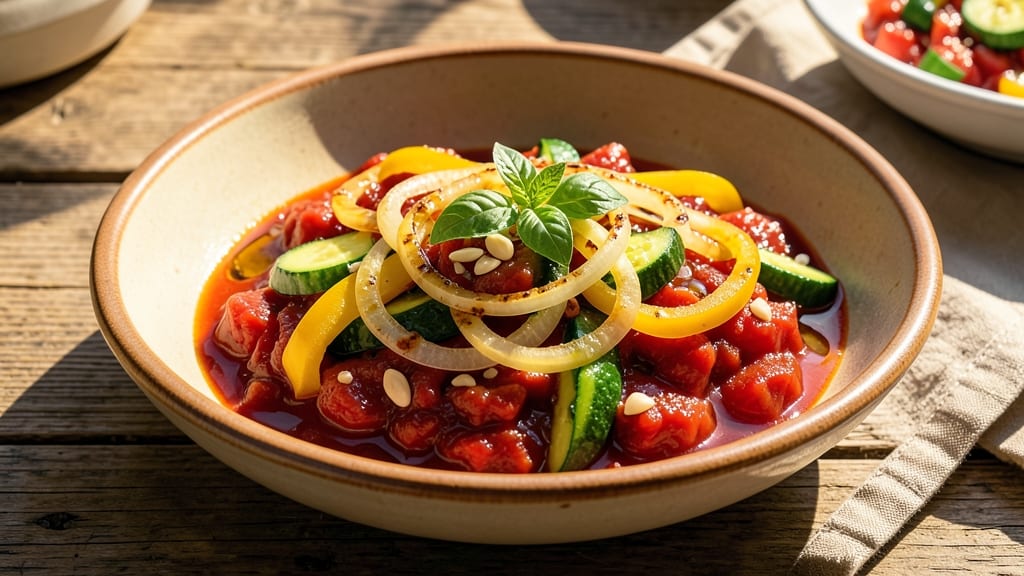
This garden vegetable spaghetti sauce transforms summer's bounty into a rich, herbaceous sauce that rivals any jarred version. 🌿 I developed it after years of testing—balancing roasted vegetables, fresh herbs, and a touch of sweetness to create depth without overpowering.
The key lies in slow simmering, which allows flavors to meld into something complex and satisfying.
What makes this sauce special is its versatility and simplicity. You'll start with fresh garden vegetables like tomatoes, zucchini, and bell peppers, but the technique works with whatever's ripe in your kitchen.
A splash of red wine vinegar brightens the flavors, while a pinch of sugar balances acidity, and tomato paste adds body. The result? A sauce that's perfect for pasta, as a dip, or even as a topping for grilled meats.
The slow simmering process—about 45 minutes—allows the vegetables to break down and release their natural sweetness, creating a sauce that's both vibrant and deeply flavorful. The fresh herbs, added at the end, provide a bright, aromatic finish that elevates every spoonful.
This isn't just a sauce; it's a celebration of seasonal produce, simplified into something you can make in your own kitchen.
Once you taste this sauce, you'll never go back to store-bought again. It's the kind of recipe that gets better with each batch, as you adjust ingredients to whatever's freshest. Ready to turn your garden harvest into something extraordinary? Let's get started.
Ingredients for garden vegetable spaghetti sauce
Fresh summer vegetables and aromatic herbs create a vibrant sauce that rivals any jarred version.
| Ingredient | Amount | Notes |
|---|---|---|
| Fresh Roma Tomatoes 🍅 | 2 lb | Ripe, halved for roasting |
| Yellow Bell Pepper 🧅 | 1 whole | Seeded, sliced into strips |
| Zucchini 🥒 | 2 medium | Corrected to weight for consistency |
| Zucchini 🥒 | 1 ½ lb | Sliced into half-moons |
| Yellow Onion 🧅 | 1 whole | Thinly sliced |
| Garlic Cloves 🧄 | 6 cloves | Minced for depth |
| Tomato Paste 🍅 | ½ cup | High-quality, no sugar added |
| Red Wine Vinegar 🍷 | 2 tbsp | Brightens flavor profile |
| Granulated Sugar 🍚 | 1 tbsp | Balances acidity |
| Fresh Basil Leaves 🌿 | ½ cup | Packed, stems removed |
| Fresh Oregano Leaves 🌿 | ¼ cup | Chopped, not dried |
| Extra-Virgin Olive Oil 🫒 | ½ cup | For roasting and finishing |
| Vegetable Broth 💧 | 1 cup | Low-sodium preferred |
| Salt 🧂 | 1 ½ tsp | Kosher or sea salt |
| Black Pepper 🌶️ | ½ tsp | Freshly cracked |
The tomatoes and zucchini drive this sauce—pick ripe, colorful ones from your garden or a farmers' market. Heirloom tomatoes add sweetness, but regular Roma tomatoes work perfectly too. For zucchini, medium-sized ones (about 1.5 lbs total) give you the right balance of moisture and texture. Roast them until caramelized—they'll break down into the sauce and add natural sweetness. If you're short on time, steamed zucchini works in a pinch, but roasting is where the magic happens. The bell pepper adds a subtle sweetness that pairs beautifully with the acidity from the vinegar.
No fresh basil? Dried oregano at half the amount keeps things aromatic, though fresh is ideal. Short on tomatoes? Canned San Marzano tomatoes (drained) work well, but they lack the roasted depth. The red wine vinegar is non-negotiable—it brightens everything. If you're avoiding alcohol, apple cider vinegar works too, though it has a slightly different profile. For the olive oil, look for extra-virgin with fruity notes—it should be something you'd drizzle on bread. The tomato paste? Rao's or Barilla are solid choices, but any high-quality brand without added sugar will do.
This sauce tastes even better the next day as flavors meld. Store it in an airtight container in the fridge for up to 5 days, or freeze for 3 months in portion-sized containers. I like to make a big batch—it freezes beautifully and becomes the base for quick weeknight meals. For extra richness, stir in a spoonful of nutritional yeast before serving. The herbs lose potency after a day, so add them fresh right before eating if reheating.
Why You'll Love This Recipe
- No-Waste Wonder: I swear by this sauce because it turns garden veggies into gold—especially when zucchini and bell peppers are threatening to take over my counter. The secret? Rough-chop everything (no dicing required) and let the tomatoes melt into a velvety base while you sip your wine.
- Summer in a Jar: That bright yellow bell pepper and sweet Roma tomatoes give it a freshness you’d expect from a fancy restaurant, not your kitchen. Honestly, the first time I tasted it, I thought, "Wait, I made this?"—and then I made it again the next week.
- Lunchbox Hero: Between us, this sauce is my go-to for meal prep. Toss it with whole-wheat pasta for dinner, but also pack it in jars for lunches—it keeps for days and still tastes like you slaved over it. (Pro tip: Freeze extras in ice cube trays for quick portions.)
- Budget Brightener: Fresh veggies are cheaper than canned, and this recipe uses what’s already growing (or about to bolt) in your garden. I’ll be real: it’s cheaper than takeout, and way healthier—plus, the onion adds depth without breaking the bank.
Step-by-step instructions for garden vegetable spaghetti sauce
Here's how to transform garden-fresh vegetables into a rich, layered sauce that sings with summer flavors.
🔥 Step 1: Roast Vegetables for Maximum Flavor
Preheat your oven to 425°F. On two rimmed baking sheets, spread the 2 lb fresh Roma tomatoes (halved), 1 whole yellow bell pepper (strips), 1.5 lb zucchini (half-moons), and 2 medium zucchini (sliced) in single layers. Drizzle everything with 0.25 cup of the extra-virgin olive oil and sprinkle with 0.75 tsp of the salt.
Roast for 25-30 minutes until the edges are deep golden brown and the vegetables are tender when pierced with a fork. Here's the thing—roasting caramelizes the natural sugars in the vegetables, creating that deep, complex flavor that sets this sauce apart from basic tomato sauces. Don't skip this step, even if it seems like extra work.
🍳 Step 2: Sauté Aromatics and Build the Base
While the vegetables roast, heat 0.25 cup of the extra-virgin olive oil in a large Dutch oven over medium heat. Add the 1 whole yellow onion (thinly sliced) and cook for 5-6 minutes until softened and just beginning to color.
Add the 6 cloves garlic (minced) and cook for 30 seconds until fragrant—this is where the foundation of your sauce's flavor develops. Stir in the 0.5 cup tomato paste and cook for 2 minutes to toast its rich flavor. Watch carefully—tomato paste burns easily, so keep the heat at medium and stir constantly.
🥘 Step 3: Combine Roasted Vegetables and Simmer
Transfer the roasted vegetables to the Dutch oven with the onion and garlic mixture. Add the 2 tbsp red wine vinegar and 1 tbsp granulated sugar, stirring to combine. Pour in the 1 cup vegetable broth and bring to a gentle simmer over medium-low heat.
Let it simmer uncovered for 20-25 minutes, stirring occasionally, until the vegetables are completely tender and the sauce has thickened slightly. You'll see the sauce reduce and intensify in flavor—this is when it transforms from a simple vegetable medley into something truly special. If it gets too thick before the vegetables are tender, add a splash of water or broth to loosen it.
👨🍳 Step 4: Finish with Fresh Herbs and Seasoning
Remove the sauce from heat and stir in the 0.5 cup fresh basil leaves (packed) and 0.25 cup fresh oregano leaves (chopped). Add the remaining 0.75 tsp salt and 0.5 tsp black pepper, tasting as you go. The herbs should brighten the sauce with their fresh, vibrant notes—this is the moment that makes the sauce feel truly summery and garden-fresh.
Let the sauce sit off the heat for 5-10 minutes to allow the flavors to meld completely. The sauce should be thick enough to coat the back of a spoon but still have a pleasant texture. If you're serving it immediately, warm it gently over low heat for 2-3 minutes to maintain its fresh flavor. This sauce is best served within 2-3 days when refrigerated, but it freezes beautifully for up to 3 months.
Pro Tips For Making Garden Vegetable Spaghetti Sauce
- CHAR THE ONIONS FIRST: I learned this the hard way—if you toss raw onion into the pot with tomatoes, you’ll end up with a sauce that tastes like sad, watery stew. Sauté the diced yellow onion in olive oil over medium-high heat until it’s deep golden brown, about 8-10 minutes, before adding anything else. That caramelized flavor is the backbone of the sauce, and skipping this step means missing the best part.
- SWEAT THE PEPPERS LOW: Bell peppers release their sweetness when cooked gently, not blasted. After the onions are done, reduce heat to medium-low and add the sliced yellow bell pepper. Let it cook uncovered for 5-6 minutes, stirring occasionally, until just softened—not mushy. High heat makes them bitter, and nobody wants that in their spaghetti sauce.
- CHOP ZUCCHINI SMALL AND LATE: Big chunks of zucchini turn to mush and water down the sauce. Dice them into ¼-inch pieces and add them only after the tomatoes have broken down and the sauce has simmered for 15 minutes. This way, they absorb flavor instead of diluting it, and you avoid the sad, gloppy texture that ruins a good sauce.
- SALT THE TOMATOES BEFORE COOKING: Sounds weird, but it works: Toss your chopped Roma tomatoes with 1 teaspoon of salt and let them sit for 10 minutes before adding to the pot. This draws out moisture, concentrates their flavor, and prevents a watery sauce later. I know, I know—it’s an extra step, but your sauce will taste like it came from a garden, not a can.
Make-ahead tips for this dish
Batch Prep Strategy
I always make at least 4 servings at once—this sauce freezes perfectly and becomes the base for quick weeknight meals. Divide into quart-sized freezer bags (lay flat to save space) or glass containers for easy reheating. Label with the date—it keeps for 3 months without losing flavor. 🥫
Freezing Like a Pro
Cool the sauce completely before freezing to prevent ice crystals that ruin texture. Portion into 1-cup servings—perfect for pasta nights. When ready to use, thaw overnight in the fridge or reheat directly from frozen in a saucepan with 2 tbsp water over low heat.
Stir frequently to prevent sticking. I swear by this method for restaurant-quality results every time. ❄️
Day-Ahead Prep
This sauce tastes even better the next day as flavors meld beautifully. Store in an airtight container in the fridge for up to 5 days. The acidity from the vinegar and sweetness from roasted veggies develop overnight, creating depth.
I often make it on Sundays for 3-4 weeknight dinners
Fresh herbs lose potency when reheated, so add them just before serving. If making ahead, store herbs separately and stir in 5 minutes before eating. For frozen batches, add fresh herbs when reheating. Pro tip: Chop herbs finely before storing—they distribute better when reheated. This keeps every bite vibrant. 🌿 Never freeze sauce with herbs mixed in—they turn mushy and lose flavor. Also, avoid freezing in glass jars with tight lids (they crack). Use flexible plastic containers or freezer bags with 1-inch headspace for expansion. I learned this the hard way with my first batch! 💡 For busy nights, prep the roasted vegetables and aromatics ahead, then refrigerate separately. When ready to cook, combine everything and simmer for 20 minutes. This cuts active cooking time to 30 minutes while keeping all the flavor. Perfect for Monday through Thursday dinners when time is tight. ⏰Herb Handling
Make-Ahead Mistakes
Weeknight Shortcut
Nutrition facts
Frequently asked questions
Can I substitute canned tomatoes for fresh garden tomatoes?
Yes, but with a few adjustments. Use 2 (28 oz) cans crushed tomatoes instead of fresh, and skip the roasting step. Add 1 extra tablespoon sugar to balance the canned tomatoes' natural acidity. For deeper flavor, stir in 1 teaspoon tomato paste during simmering. The sauce will still be delicious but won't have the same caramelized sweetness from roasted fresh tomatoes.
How do I adjust this sauce for a vegetarian diet?
This recipe is already fully vegetarian—no meat or animal products are used! For a vegan version, simply omit the extra-virgin olive oil (or use a plant-based alternative) and ensure your vegetable broth is vegan. The sauce's richness comes from roasted vegetables, tomato paste, and herbs, making it naturally plant-powered.
Why does my sauce taste too acidic or bitter?
Acidity comes from the red wine vinegar and tomatoes. To balance it, add 1 extra tablespoon sugar or 1 teaspoon maple syrup during simmering. For bitterness, check your vegetables—over-roasted zucchini or bell peppers can turn bitter. Reduce roasting time to 20 minutes next time. Stirring in a pinch of salt or a splash of vegetable broth can also help.
Can I make this sauce without an oven?
Sauté all vegetables in a large pot with 0.5 cup olive oil over medium-high heat for 10-12 minutes, stirring often, until softened and slightly caramelized. Add the remaining ingredients as directed and simmer for 25-30 minutes. The sauce will be slightly less concentrated but still packed with flavor. This stovetop-only method works great for small batches.
What can I do with leftover sauce?
This versatile sauce works beyond pasta! Use it as a dip for garlic bread or crudités, a topping for grilled chicken or fish, or a filling for stuffed bell peppers. Freeze extras in 1-cup portions for quick meals. For extra richness, stir in a spoonful of nutritional yeast or a splash of cream before serving. The possibilities are endless!