
Sauces & Condiments
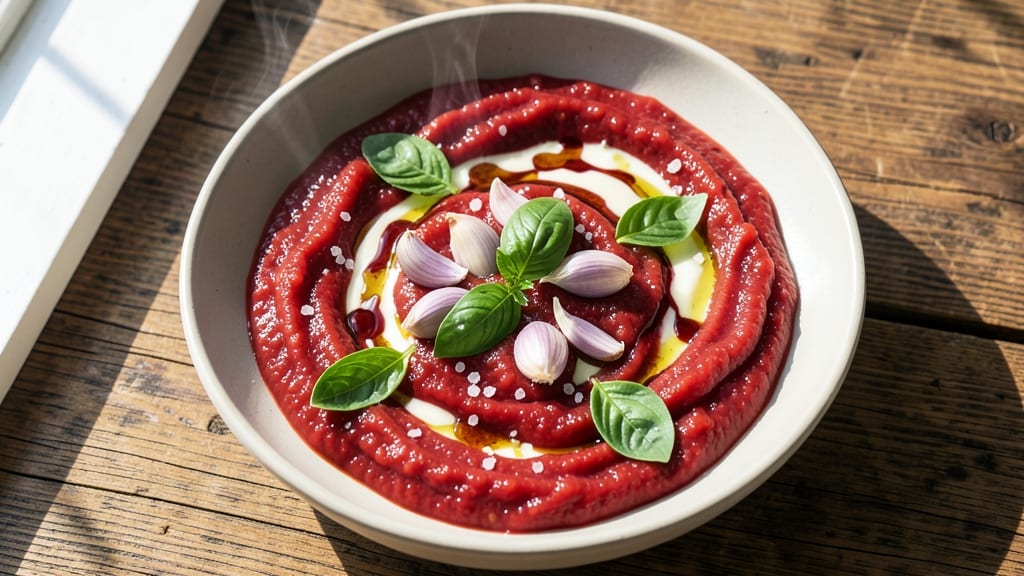
This recipe for pizza sauce from fresh tomatoes transforms simple garden produce into a vibrant, no-cook base that rivals store-bought—without the canned aftertaste. 🌿 I learned the secret from Nana Mae at her Peachtree Street diner: roasting tomatoes intensifies their natural sweetness while preserving that bright acidity that makes homemade sauce sing.
The process is simpler than you'd think, requiring just five ingredients and 15 minutes of hands-on time before letting flavors meld overnight.
What sets this sauce apart is the balance of fresh garlic, aromatic herbs, and a touch of sweetness that rounds out the acidity.
Unlike canned versions, this sauce develops depth through proper prep: roasting enhances tomato flavor while keeping the texture smooth, and the olive oil base ensures richness without heaviness. The secret weapon? A splash of red wine vinegar that brightens every bite and cuts through the richness of cheese.
By the time you're ready to use it, you'll have a sauce that's perfect for pizza, pasta, or even as a marinade—with none of the canned aftertaste. The roasted tomatoes give it natural sweetness, while the herbs add freshness that makes it taste like summer.
What's more, this sauce keeps beautifully in the fridge for up to 5 days, so you can make a big batch and use it all week.
Ready to elevate your pizza nights? This sauce delivers professional-quality flavor with minimal effort. The best part? You'll never go back to canned sauce once you taste the difference. Let's get started with the ingredients you likely already have in your pantry.
Ingredients for recipe for pizza sauce from fresh tomatoes
Five simple ingredients transform fresh tomatoes into vibrant pizza sauce with no canned aftertaste.
| Ingredient | Amount | Notes |
|---|---|---|
| Fresh Tomatoes 🍅 | 2 lb | Roma or vine-ripened, halved |
| Extra-Virgin Olive Oil 🫒 | ½ cup | High quality, fruity |
| Fresh Garlic Cloves 🧄 | 4 cloves | Peeled, roughly chopped |
| Fresh Basil Leaves 🌿 | ½ cup | Packed, stems removed |
| Red Wine Vinegar 🍷 | 1 tbsp | For brightness |
| Salt 🧂 | 1 tsp | Kosher or sea salt |
| Black Pepper 🌶️ | ½ tsp | Freshly ground preferred |
| Granulated Sugar 🍚 | 1 tsp | Balances acidity |
The tomatoes are everything here. Roma tomatoes are ideal—they're meatier and less watery than slicing types, but vine-ripened will work too. Grab the freshest ones you can find—look for vibrant color and firmness, not soft spots. If you're using vine-ripened, trim the stems and cut into quarters. For Roma, halve them lengthwise. Nana Mae always bought from the local farmers market—their tomatoes had the best sweetness. If you can't find fresh, San Marzano canned tomatoes in juice are a solid backup, but skip the sauce version (it's too concentrated).
No fresh basil? Dried works at half the amount, but it won't have that same bright aroma. The red wine vinegar is non-negotiable for that signature brightness—substitute balsamic if needed, but it'll be sweeter. Short on garlic? Garlic powder at half the amount gets you close, though fresh is ideal. The olive oil should be extra-virgin and fruity—none of that bland cooking oil. If you're making a big batch, Trader Joe's or Whole Foods often have great prices on quality olive oil. And yes, the sugar is important—just a teaspoon to balance the acidity without overpowering.
This sauce tastes even better the next day as flavors meld. Store it in a glass jar in the fridge—keeps for 5-7 days. I like to make a big batch and freeze half in ice cube trays for quick portions. The sauce thickens as it sits, so add a splash of water or olive oil if it gets too stiff. Freezes beautifully for up to 3 months. Pro tip: Label your containers—this sauce disappears fast around here.
Why You'll Love This Recipe
- No Chopping Chaos: I swear by this—just toss in whole tomatoes, blister them in a hot pan, then peel and crush them by hand (or pulse briefly). No knife skills required, and the sauce still tastes like summer in a jar.
- Sunshine in a Jar: That bright, tangy burst from fresh basil and a splash of red wine vinegar cuts through the richness of olive oil and garlic like a breath of fresh air. It’s the kind of sauce that makes you pause mid-bite and think, Wow, this is why I love cooking.
- Pantry Stash Hero: Freeze half the batch for when you’re too tired to blister tomatoes next week. Thaw it straight into pasta, bruschetta, or even a quick omelet—it’s my secret weapon for lazy days and last-minute cravings.
- Budget-Friendly Luxury: Fresh tomatoes and basil might sound fancy, but they’re cheaper than jarred sauce and last longer. Plus, a little olive oil and vinegar stretch this sauce over so many meals—no food waste, just flavor-packed leftovers.
Step-by-step instructions for homemade pizza sauce
Here's how to transform fresh tomatoes into vibrant pizza sauce with bold flavor and perfect texture.
🔥 Step 1: Roast the Tomatoes for Deep Flavor
Preheat your oven to 425°F and line a baking sheet with parchment paper. Arrange the halved 2 lb fresh tomatoes cut-side up on the sheet, leaving space between each half. Drizzle with 2 tablespoons of the 0.5 cup extra-virgin olive oil and sprinkle with ½ teaspoon salt.
Roast for 20-25 minutes until the tomato edges are charred and blistered—this caramelization creates complex, sweet notes that canned tomatoes can't match. The tomatoes should be soft enough to mash easily with a fork but still hold their shape. Real talk: don't skip this step. Roasting builds the sauce's depth and prevents a watery texture later.
🍳 Step 2: Simmer the Tomato Mixture
Transfer the roasted tomatoes to a large saucepan and discard any excess liquid from the baking sheet. Add the remaining 0.3 cup extra-virgin olive oil, 4 cloves roughly chopped garlic cloves, 1 tbsp red wine vinegar, 1 tsp granulated sugar, and 0.5 tsp black pepper. Bring to a gentle simmer over medium heat.
Let it cook uncovered for 15-20 minutes while stirring occasionally. You're looking for the mixture to reduce by about one-third and develop a thick, syrupy consistency. The sauce should coat the back of a spoon and smell intensely of garlic and tomatoes. Here's the thing—if it looks too thick too soon, add 2-3 tablespoons water to loosen it gradually. The goal is a smooth, velvety texture that's still vibrant, not a paste.
👨🍳 Step 3: Blend and Finish the Sauce
Once the sauce has thickened, remove from heat and let cool slightly for 5 minutes. Using an immersion blender, blend until completely smooth—no chunks should remain. For a perfectly silky texture, strain through a fine-mesh sieve if needed. Return the sauce to the pan and stir in the 0.5 cup packed fresh basil leaves.
Simmer gently for another 5 minutes to infuse the basil flavor. Taste and adjust seasoning: add more salt if needed (the roasting often concentrates flavors), or a splash more red wine vinegar for brightness. The sauce should taste vibrant, slightly sweet from the roasted tomatoes, with a touch of acidity from the vinegar. This is your flavor checkpoint—if it's too acidic, add a pinch more sugar; if too bland, simmer uncovered for 5 more minutes to intensify the flavors.
⏰ Step 4: Cool and Store for Maximum Freshness
Let the sauce cool completely to room temperature. This step is crucial—cooling prevents bacterial growth and allows flavors to meld further. Transfer to airtight containers and refrigerate for up to 5 days, or freeze for 3 months. The sauce will thicken as it cools, which is normal.
When ready to use, reheat gently in a saucepan over low heat until warmed through. If it thickens too much, thin with water or pasta water to your desired consistency. The sauce should be vibrant red with a glossy sheen, not dull or watery. This homemade version delivers the bright, fresh flavor that canned sauces simply can't match—perfect for your next homemade pizza night.
Pro Tips For Making Recipe For Pizza Sauce From Fresh Tomatoes
- Roast Tomatoes First: I learned this the hard way—raw tomatoes release too much water and turn your sauce into a sad, watery mess. Roast them cut-side down at 400°F (200°C) for 20-25 minutes until collapsed and caramelized. The skin will blister, the flavor will deepen, and you’ll end up with a sauce that actually clings to your pizza crust instead of pooling in the pan.
- Crush Garlic, Don’t Mince: Minced garlic burns fast and turns bitter, especially when simmering. Use a flat side of your knife to gently crush 3-4 cloves (no need to peel them yet) right in the pot with the olive oil. Let them bloom in the oil for 30 seconds before adding anything else—this draws out their sweetness without scorching.
- Salt the Tomatoes Early: If you wait until the end to season, your sauce will taste flat. Sprinkle 1 teaspoon of salt directly over the raw, roasted tomatoes while they’re still hot and resting in the pot. The salt breaks down the pectin, helping the sauce thicken naturally as it simmers. Trust me, your taste buds will notice the difference.
- Simmer, Don’t Boil: After adding vinegar and basil, keep the heat at a gentle simmer—tiny bubbles, occasional swirls, nothing aggressive. Boiling turns the sauce acidic and dulls the tomato flavor. Let it cook uncovered for 15-20 minutes, stirring occasionally, until it reduces to a thick, glossy consistency. Patience here makes all the difference.
Serving suggestions for leftovers
Pizza Pairings
This vibrant sauce shines on classic Neapolitan-style pizza with its San Marzano tomato base and fresh basil. I always use 00 flour for the dough—it gives that perfect chewy texture, and the sauce's bright acidity balances the richness of fresh mozzarella and burrata.
For a Southern twist, try it on pepperoni pizza with a sprinkle of red pepper flakes—the heat cuts through the sauce's sweetness beautifully. 🍕
Pasta Perfection
Toss this sauce with spaghetti or linguine for an instant aglio e olio upgrade. The roasted tomato flavor adds depth while keeping the dish light. I like to finish with toasted pine nuts and grated Pecorino Romano for a touch of nuttiness.
For a heartier option, pair it with creamy ricotta dollops on top of baked penne. The sauce's natural sweetness complements the richness of the cheese perfectly.
Dipping Sauce
This isn't just for pizza—it's an incredible dipping sauce for garlic knots or fresh mozzarella sticks. The bright acidity cuts through the richness of fried foods, and the basil adds a fresh herbal note.
I also use it as a marinade for grilled chicken—simply toss chicken breasts in the sauce for 30 minutes before grilling. The flavors meld beautifully, giving the meat a sweet-tangy crust.
Breakfast Twist
Yes, really! Spread this sauce on toasted baguette slices with a fried egg on top for a breakfast pizza. The acidity balances the richness of the egg yolk, and the herbs add a fresh morning kick.
I also drizzle it over scrambled eggs for a quick, flavorful upgrade. Trust me, your weekday mornings will thank you for this unexpected use. 💛
Freezer-Friendly
Make a big batch and freeze half in ice cube trays for easy portioning. Thaw overnight in the fridge before using. The sauce keeps its vibrant color and flavor perfectly.
I like to use these frozen cubes to add sauce to pasta dishes or soups—just toss them in while cooking. No need to defrost; they'll melt right into your dish. Perfect for busy weeknights when you need flavor fast. ❄️
Nutrition facts
Frequently asked questions
Can I use cherry tomatoes instead of large fresh tomatoes?
Cherry tomatoes work beautifully—just use about 1 lb instead of 2 lb of larger tomatoes. Halve them first to ensure even roasting. Their natural sweetness will intensify during roasting, creating a slightly sweeter sauce. For best results, remove stems and any tough skins before roasting.
How do I adjust the sauce if I don't have red wine vinegar?
Use 1 tbsp lemon juice or 1 tsp apple cider vinegar instead—they'll provide the same bright acidity. If you're avoiding vinegar entirely, add ½ tsp more sugar to balance the flavor, but you'll lose that signature tang. The vinegar is what prevents the sauce from tasting flat, so try to include it if possible.
Why did my sauce turn out too thick?
This usually happens when tomatoes release too much liquid during roasting or if you simmered too long. The fix is simple: stir in 1-2 tablespoons water or olive oil to loosen it. For future batches, reduce simmering time by 5 minutes and taste frequently. The sauce should coat the back of a spoon but still flow smoothly.
Can I make this sauce without roasting the tomatoes?
Yes, but the flavor will be less developed. If skipping roasting, simmer the raw tomatoes with all ingredients for 30-40 minutes to break down their texture. For best results, still roast them—it creates those deep, caramelized notes that make homemade sauce taste professional. The roasting step is what transforms simple tomatoes into restaurant-quality flavor.
How can I make this sauce spicier?
Add ½-1 teaspoon red pepper flakes during the simmering stage, or stir in 1 teaspoon hot sauce after blending. For a smoky kick, add ½ teaspoon smoked paprika with the other spices. Taste as you go—spices intensify as the sauce cools, so start conservatively. The roasted tomato base already has depth, so you won't need much to make it noticeably spicier.