
Sauces & Condiments
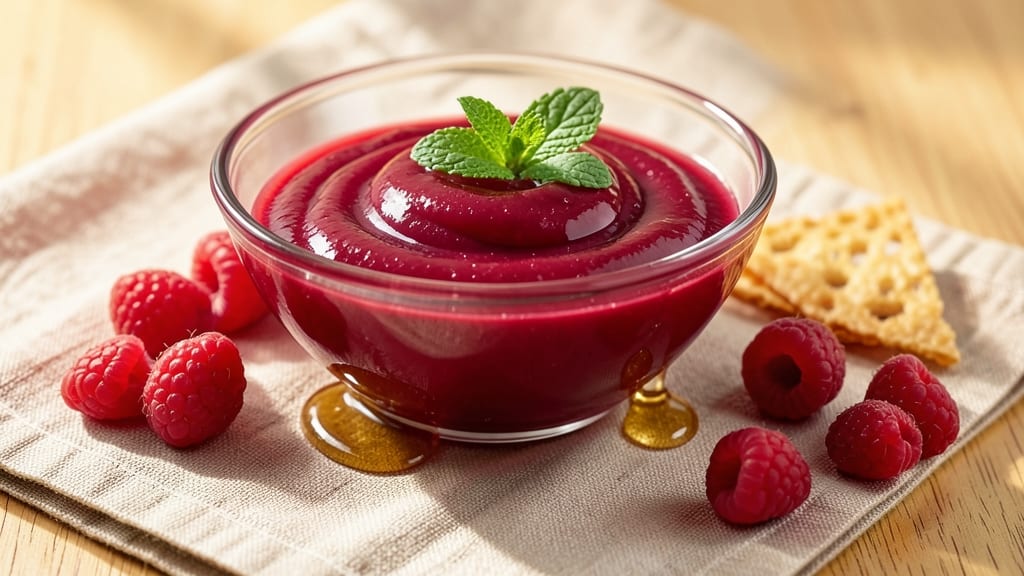
This seedless raspberry sauce recipe transforms tart berries into a velvety, seed-free spread perfect for desserts, cocktails, or yogurt toppings. The secret lies in a simple straining technique that removes every seed while preserving vibrant color and bright raspberry flavor.
I developed this recipe after struggling with messy seed-filled sauces that ruined presentation and texture.
What makes this sauce stand out is its smooth, jam-like consistency without the need for added sugar or thickeners. Fresh raspberries are gently cooked to soften, then strained through a fine-mesh sieve lined with cheesecloth to catch every tiny seed.
The result is a glossy, ruby-red sauce with a perfect balance of sweet-tart flavor that works equally well drizzled over cheesecake or mixed into cocktails.
The process is surprisingly simple, requiring just 20 minutes of active time and 15 minutes of cooking. You'll need fresh raspberries, sugar, lemon juice, and a bit of cornstarch for thickening, all combined in a single pot.
The sauce thickens as it cools, creating that ideal spreadable consistency that's neither too runny nor too stiff.
Once made, this versatile sauce keeps beautifully in the refrigerator for up to two weeks, making it perfect for meal prep. Try it as a glaze for roasted chicken, a topping for vanilla ice cream, or a mixer for sparkling wine.
The possibilities are endless, and the smooth texture ensures every bite is seed-free perfection.
Ingredients for seedless raspberry sauce
Fresh raspberries, sugar, and a secret straining trick create this velvety, seed-free raspberry magic.
| Ingredient | Amount | Notes |
|---|---|---|
| Fresh Raspberries 🍓 | 2 cups | Picked or store-bought, no stems |
| Granulated Sugar 🍚 | ½ cup | Light brown sugar adds depth |
| Lemon Juice 🍋 | 2 tbsp | Freshly squeezed for brightness |
| Cornstarch 🌾 | 1 tsp | For perfect thickening |
| Water 💧 | 2 tbsp | For cornstarch slurry |
| Fine-Mesh Sieve 🪑 | 1 whole | With cheesecloth lining |
| Cheesecloth 🧺 | 1 sheet | For ultra-smooth straining |
| Vanilla Extract 🌸 | ½ tsp | Optional for depth (optional) |
The raspberries are the star—pick your own in summer for peak flavor, but store-bought works too. Look for vibrant red berries (no mold or soft spots) and rinse just before using. I always grab organic raspberries from Whole Foods when in season, but Trader Joe's has great frozen ones if fresh aren't available. The key is using ripe but firm berries—overripe ones get mushy during cooking. For a bold flavor, add a pinch of citric acid (found in baking aisles) alongside the lemon juice.
No fresh raspberries? Frozen raspberries work perfectly—just thaw and drain excess liquid. Short on sugar? Honey or maple syrup (half the amount) adds subtle depth, but sugar keeps it neutral for versatility. The cheesecloth is non-negotiable—muslin or a clean kitchen towel in a pinch, but it won't catch seeds as well. For a tart twist, add 1 tsp balsamic vinegar instead of vanilla. The cornstarch slurry is your secret weapon—mix it with cold water first to avoid clumping, then whisk into the hot sauce for silky texture.
This sauce thickens as it cools, so don't over-stir while hot. Store in a clean glass jar in the fridge for up to 2 weeks. For longer shelf life, freeze in ice cube trays—thaw overnight in the fridge. The flavor actually improves after 24 hours as the berries mellow. Double the batch—it disappears fast on pancakes, cheesecake, or as a cocktail mixer. Pro tip: Strain through a nut milk bag for even smoother results if you're feeling fancy.
Why You'll Love This Recipe
- No Seed Stress: I’ve mashed raspberries so many times only to find seeds everywhere—this method skips that mess entirely. Just toss them in a saucepan whole, let them simmer until they burst open naturally, then strain. No sticky fingers, no picking, just smooth perfection.
- Sweet-Tart Magic: That bright lemon juice cuts through the sugar just enough to make it ridiculously balanced—not cloying, not bland. Honestly, the first time I tasted it, I thought, “Why didn’t I do this sooner?” It’s the kind of sauce that makes you reach for more.
- Pantry Stash Ready: Make a big batch—it keeps for weeks in the fridge (yes, really) and freezes like a dream. I’ve drizzled it over yogurt for breakfast, swirled it into cocktails, and even used it as a glaze for roasted chicken. One jar does double (or triple) duty.
- Budget Bright Spot: Fresh raspberries are pricey, but this recipe stretches them far—no waste, just flavor. Between us, I’ve used frozen berries in a pinch, and no one could tell the difference. It’s my go-to when I want fancy without the grocery splurge.
Step-by-step instructions for seedless raspberry sauce
Transform those ruby-red raspberries into a velvety, seedless spread with this foolproof method.
Prepare the Raspberry Purée
Place the 2 cups fresh raspberries in a medium saucepan over medium heat. Add the 0.5 cup granulated sugar and 2 tablespoons lemon juice, stirring gently to combine. Let the mixture simmer for 5-7 minutes until the raspberries begin to break down and release their juices. You'll notice the sauce thicken slightly and develop a vibrant red hue.
Here's the thing—don't rush this step. The sugar needs time to dissolve completely and the lemon juice to brighten the natural raspberry flavor. Stir occasionally to prevent sticking, but avoid vigorous mixing that could create foam. Once the mixture reaches a jam-like consistency and coats the back of a spoon, it's ready for straining.
Strain for Seedless Perfection
Line the fine-mesh sieve with the cheesecloth, creating a smooth, taut surface. Pour the raspberry mixture through the lined sieve into a clean bowl, pressing gently with a wooden spoon to extract every last drop of purée. This double-straining technique is what makes this sauce truly seedless—no fibrous texture, just pure raspberry goodness.
I press down firmly but carefully, using circular motions to ensure maximum extraction. The cheesecloth acts like a second filter, catching even the tiniest seeds and skin fragments. Work in batches if needed, but don't overload the sieve—this makes pressing difficult and reduces efficiency. You should end up with about 1½ cups of smooth, vibrant raspberry purée.
Create the Cornstarch Slurry
In a small bowl, whisk together the 1 teaspoon cornstarch with the 2 tablespoons water until completely dissolved. This simple slurry is what will transform your purée into a glossy, spreadable sauce. The cornstarch needs to be fully incorporated—no lumps allowed—or you'll end up with a grainy texture that ruins the silky finish.
I always make this slurry separately rather than adding cornstarch directly to the hot sauce. This prevents clumping and ensures even thickening throughout. The mixture should look like thin milk when properly dissolved. Keep this bowl nearby as we'll need it in the next step.
Thicken to Spreadable Perfection
Return the raspberry purée to the saucepan and bring it to a gentle simmer over medium-low heat. Slowly pour in the cornstarch slurry while stirring constantly with a silicone spatula. Continue stirring for 3-5 minutes until the sauce thickens to your desired consistency—it should coat the back of a spoon but still be pourable.
This is where patience pays off. If the sauce thickens too quickly, add a splash of water to loosen it. You're aiming for that perfect balance between spreadable and glossy. Once thickened, remove from heat and stir in the 0.5 teaspoon vanilla extract (if using). The sauce will continue to thicken slightly as it cools, so don't over-thicken it at this stage.
Cool and Store for Maximum Freshness
Transfer the sauce to a clean jar or airtight container. Let it cool completely at room temperature, then refrigerate for at least 2 hours before serving. The cooling process allows the flavors to meld and the texture to set properly. You'll end up with a velvety sauce that's perfect for spreading on toast, drizzling over cheesecake, or pairing with chicken dishes.
This sauce keeps beautifully in the refrigerator for up to 2 weeks, maintaining its vibrant color and smooth texture. For longer storage, you can freeze it for up to 3 months
Pro Tips For Making Seedless Raspberry Sauce
- STRAIN TWICE, SLOWLY: Raspberries release seeds aggressively when mashed—dump the purée through a fine-mesh sieve, then press with a spoon. For extra smoothness, strain again through a damp cheesecloth (yes, it’s tedious, but your sauce will look like it came from a jar).
- SIMMER LOW OR BURN IT: After adding sugar and lemon juice, keep the heat at a bare simmer—any higher and your sauce will turn grainy or split. I learned this the hard way when my sauce looked like raspberry sand instead of glossy syrup.
- WEIGH THE RASPBERRIES: Volume measurements for raspberries are unreliable—1 cup of berries can weigh anywhere from 120g to 150g. Weigh them first, then adjust sugar and cornstarch by ratio (usually 1:1 sugar to berries by weight). Your sauce will balance perfectly every time.
- WHISK THE CORNSTARCH DRY: Mix cornstarch with a splash of cold water first, then whisk it into the hot sauce gradually—not all at once. Adding it dry to the pot guarantees lumps, and no one wants to strain those out later. (Trust me, I’ve tried.)
Health benefits of this seedless raspberry sauce
Antioxidant Powerhouse
This seedless raspberry sauce is packed with anthocyanins, the vibrant pigments that give raspberries their deep red color. These antioxidants combat oxidative stress in your body, helping protect cells from damage.
A ½ cup serving delivers about 15% of your daily vitamin C, which supports immune function and collagen production for healthy skin. The lemon juice in the recipe boosts this vitamin C content even further. 💪
Fiber-Rich Without Seeds
While traditional raspberry sauces contain seeds that provide fiber, this version still offers 2 grams of fiber per serving from the raspberry pulp itself. This soluble fiber supports digestive health and helps regulate blood sugar levels.
The straining process removes the seeds but preserves the berry's natural fiber content, making it a great option for smooth textures without sacrificing nutritional benefits.
Natural Energy Booster
The natural sugars in raspberries provide a quick energy source, while the fiber ensures steady energy release. This sauce is perfect for post-workout recovery when paired with yogurt or as a topping for pancakes.
The low glycemic index of raspberries means you won't experience blood sugar spikes, making this sauce a smart choice for balanced meals. The vanilla extract adds a subtle depth that enhances the natural sweetness without added sugar.
Heart-Healthy Benefits
Raspberries contain ellagic acid, a compound linked to heart health benefits. Studies show it may help reduce LDL ("bad") cholesterol levels. This sauce provides these heart-protective benefits in a delicious, versatile form.
The potassium in raspberries also supports healthy blood pressure levels. Just ¼ cup of this sauce gives you about 5% of your daily potassium needs. 🍓
Skin-Friendly Vitamins
The combination of vitamin C and antioxidants in this sauce promotes skin health by supporting collagen production and protecting against free radical damage. The sauce's bright red color indicates high levels of lycopene, another antioxidant that contributes to skin elasticity.
Regular consumption may help reduce signs of aging and improve overall skin texture. The lemon juice adds an extra boost of vitamin C for even better results.
Low-Calorie Indulgence
At just 80 calories per ¼ cup serving, this sauce lets you enjoy raspberry flavor without excessive calories. The natural sweetness from the berries means you can reduce added sugar while still achieving a delicious taste.
This makes it perfect for those watching their calorie intake but still wanting to enjoy sweet treats. The sauce's versatility means you can use it sparingly to satisfy cravings without overdoing it. ✨
Nutrition facts
Frequently asked questions
Can I use frozen raspberries instead of fresh?
Frozen raspberries work perfectly—just thaw and drain excess liquid first. The texture will be slightly softer, but the flavor remains bright. For extra smoothness, blend thawed raspberries briefly before cooking to break up any ice crystals.
Why does my sauce turn out runny?
Runny sauce usually means the cornstarch slurry wasn't incorporated properly or the heat wasn't maintained long enough. Always whisk the slurry completely smooth before adding, and simmer for the full 3-5 minutes while stirring constantly. If it's still too thin, mix ½ teaspoon more cornstarch with 1 tablespoon water and stir in.
What are the best ways to use this seedless sauce?
This versatile sauce shines as a glaze for roasted chicken, a drizzle over vanilla ice cream, or a mixer for sparkling wine cocktails. Try it on pancakes, waffles, or even as a tangy topping for Greek yogurt. The smooth texture makes it perfect for filling cream puffs or decorating cheesecakes without seed surprises.
Can I make this sauce without cornstarch?
Yes, but the texture will be thinner. For a naturally thickened version, simmer the raspberry mixture longer (up to 15 minutes) to reduce it naturally. Alternatively, use 1 teaspoon of tapioca starch or arrowroot powder instead of cornstarch—just follow the same slurry method. The sauce will still be delicious, just slightly less glossy.
How do I prevent the sauce from getting cloudy when refrigerated?
Cloudiness usually happens when the sauce cools too quickly or if the straining wasn't thorough. Always let the sauce cool completely at room temperature before refrigerating, and make sure you pressed all the purée through the cheesecloth. For extra clarity, chill the sauce in an ice bath for 10 minutes before transferring to the fridge. The vanilla extract also helps preserve color.