
Sauces & Condiments
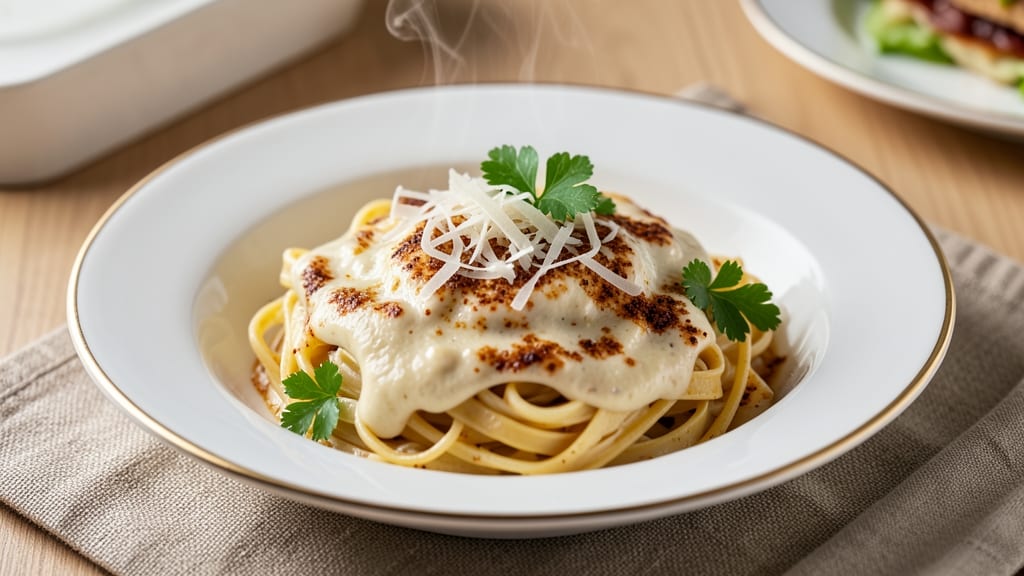
Mario Batali's alfredo sauce recipe delivers velvety, egg-emulsified richness that clings to every noodle like a restaurant-quality embrace. ✨ The secret lies in a precise balance of butter, cream, and Parmesan, elevated by a touch of white wine and vinegar for depth that transforms ordinary pasta into something extraordinary.
This isn't your basic Alfredo—it's a sauce that builds flavor in layers, starting with a silky roux before the eggs create that signature luxurious texture.
The technique is what sets this sauce apart from the heavy, greasy versions you might find elsewhere. By cooking the butter and flour to a perfect golden brown, we create a flavorful base that forms the foundation for the sauce's velvety body.
The addition of white wine brightens the sauce before the cream comes in to smooth everything out, while the vinegar—often overlooked—adds a subtle tang that prevents the sauce from tasting flat or overly rich.
What you'll end up with is a sauce so rich and flavorful it transforms even the simplest fettuccine into a gourmet masterpiece. The egg emulsion gives it that signature creamy texture that clings beautifully to pasta without turning it into a greasy mess.
This is the kind of sauce that makes you want to twirl your fork in every bite, savoring the perfect balance of creaminess and umami depth.
The best part? This recipe scales perfectly for any occasion, whether you're feeding a family of four or hosting a dinner party. The sauce keeps well in the refrigerator for up to three days, making it ideal for meal prep.
For an extra touch of elegance, finish with a sprinkle of fresh parsley or a drizzle of olive oil before serving.
Ingredients for alfredo sauce recipe mario batali
Nine ingredients transform ordinary pasta into restaurant-quality Alfredo magic.
| Ingredient | Amount | Notes |
|---|---|---|
| Unsalted Butter 🧈 | ¾ cup | Cold, cubed for even cooking |
| All-Purpose Flour 🌾 | ½ cup | Sifted for smooth texture |
| Large Egg Yolks 🥚 | 4 whole | Fresh, room temperature |
| Heavy Cream 🥛 | 1 ½ cups | Full-fat for richness |
| Parmesan Cheese 🧀 | 1 ½ cups | Freshly grated, fine |
| Dry White Wine 🍷 | ½ cup | Bold, dry variety |
| White Wine Vinegar 🍋 | 1 tbsp | For subtle tang |
| Salt 🧂 | 1 tsp | Kosher or sea salt |
| Black Pepper 🌶️ | ½ tsp | Freshly ground |
| Fresh Parsley 🌿 | ¼ cup | Chopped, for garnish |
The butter and flour are your flavor foundation. European-style butter (like Plugrá) has more fat content, which gives you that luxurious mouthfeel—worth the splurge if you're making this often. For flour, King Arthur or Bob's Red Mill are my go-tos; they're finely milled and create a smoother roux. The Parmesan? Parmigiano-Reggiano from a block—pre-grated tastes like sawdust. If you're buying a wedge, grate it yourself right before using. And that white wine? Sauvignon Blanc or Pinot Grigio works perfectly—whatever's open in your fridge.
No egg yolks? Vital wheat gluten or aquafaba can mimic the emulsion (though texture won't be identical). Running out of heavy cream? Half-and-half with 2 tbsp butter blended in gets you close. The vinegar is non-negotiable for that bright acidity—apple cider vinegar works in a pinch, but white wine vinegar gives you that restaurant-quality depth. For the parsley, fresh is ideal, but dried Italian seasoning at half the amount will save you if you're out. Pro tip: Toast your flour in the butter for 2 minutes before adding wine—this deepens the nutty flavor and prevents a raw taste.
This sauce is best made fresh, but it reheats beautifully—just warm gently over low heat with a splash of cream. Keeps for 3 days in the fridge, sealed tightly. For freezing, portion into ice cube trays, then transfer to a bag. Thaws perfectly and adds richness to any dish. I always make double batches—one for pasta night, one to drizzle over roasted veggies or grilled chicken the next day. The leftovers? Absolute game-changer for breakfast scrambled eggs.
Why You'll Love This Recipe
- Here’s what sold me: I make a big batch, let it cool, and store it for up to five days. The flavor actually improves after a night in the fridge—no leftovers wasted, just pure, creamy goodness whenever I need it.
- Five-Ingredient Magic: I swear, this sauce is foolproof—just melt butter, toss in flour, whisk in yolks, stir in cream, and finish with that perfect grating of Parmesan. No measuring cups, no guesswork, just pure, creamy perfection.
- Rich Without the Guilt: Between us, heavy cream and butter make this sauce dangerously indulgent—but the egg yolks add that velvety depth that makes it taste like a restaurant dish. (Yes, even on a Tuesday night.)
- Pasta Party Ready: This sauce doubles as a creamy dip for garlic bread, a drizzle for grilled chicken, or a quick sauce for roasted veggies. I’ve used it for everything from fettuccine to a last-minute lasagna—it’s my secret weapon for lazy dinners.
Step-by-step instructions for mario Batali's egg-emulsified Alfredo sauce
This is where the magic happens—creamy, velvety perfection with a secret tang.
🍳 Step 1: Create the Roux Foundation
Melt the 0.75 cup unsalted butter in a medium saucepan over medium heat. I like to use cold, cubed butter so it melts evenly without burning. Once fully melted, reduce heat to medium-low and whisk in the 0.5 cup all-purpose flour all at once.
Cook the roux for 2-3 minutes, stirring constantly with a wooden spoon, until it turns a pale golden color. You're looking for a nutty aroma—not brown yet, but definitely past the raw flour stage. This step builds the flavor base that will carry through your entire sauce. If it darkens too quickly, reduce the heat immediately to prevent bitterness.
🍷 Step 2: Deglaze with Wine and Vinegar
Pour in the 0.5 cup dry white wine and the 1 tbsp white wine vinegar, scraping up any browned bits from the bottom of the pan. This deglazing step captures all those flavorful fond particles that would otherwise stick to your pan. Let the mixture simmer gently for 2-3 minutes until the wine has mostly evaporated.
Here's the thing—this vinegar addition might seem weird, but it's Batali's secret weapon. It brightens the sauce and prevents that overly rich, heavy feeling. You'll smell the alcohol burn off first, then be left with just a subtle, sophisticated tang. Keep whisking gently to prevent lumps from forming.
🥛 Step 3: Build the Cream Base
Gradually whisk in the 1.5 cups heavy cream, about ¼ cup at a time, allowing each addition to incorporate completely before adding more. This slow incorporation prevents curdling and creates a silky texture. Once all the cream is added, increase heat to medium-low and simmer for 5-7 minutes until the sauce thickens enough to coat the back of a spoon.
Taste as you go—you should detect the wine's subtle fruitiness and the vinegar's bright note. If the sauce tastes flat, it needs more time. If it's too acidic, a pinch of salt will balance it. This is where patience pays off—rushing leads to broken emulsions and grainy textures.
🧀 Step 4: Incorporate the Egg Yolks
Temporarily remove the sauce from heat and let it cool slightly for 1-2 minutes—it should be warm but not hot to the touch. In a separate bowl, whisk together the 4 whole large egg yolks, 1.5 cups freshly grated parmesan cheese, 1 tsp salt, and 0.5 tsp black pepper until smooth.
Now here's the crucial part: slowly pour the warm sauce back into the egg mixture while whisking constantly. This reverse method prevents scrambling the eggs. Then, return the combined mixture to the saucepan and cook over very low heat, stirring constantly, until it thickens to a luxurious, creamy consistency—about 3-5 minutes. You're looking for a sauce that coats a spoon completely without being gluey.
🌿 Step 5: Finish and Garnish
Remove from heat and stir in the 0.25 cup chopped fresh parsley. The parsley adds freshness and a pop of color that makes the sauce look as good as it tastes. For serving, keep the sauce warm in a slow cooker on the "warm" setting—it continues to thicken slightly as it sits, so don't over-thicken it now.
This sauce should be rich but not heavy, creamy yet bright with that hidden vinegar zing. Serve immediately over fettuccine or your favorite pasta, and watch it disappear faster than you can say "Mario Batali." The secret to success? Temperature control and patience—don't rush the process, and you'll get restaurant-quality results every time.
Pro Tips For Making Alfredo Sauce Recipe Mario Batali
- Temper the Egg Yolks: Whisk them into the warm roux—not cold—so they cook gently instead of scrambling. I learned this the hard way when my sauce curdled like a bad custard. Let the butter-flour mix cool to 160°F (70°C) before adding yolks, or you’ll end up with a lumpy mess.
- Grate Your Own Parmesan: Pre-shredded cheese packs in starch and turns gritty when rehydrated. Freshly grated Parmigiano-Reggiano (none of that grocery-store dust) melts smoother and adds real depth. Use a microplane or box grater—just don’t pulse it in the food processor, or you’ll get cheese dust instead of shavings.
- Simmer, Don’t Boil: Keep the sauce at a gentle simmer (tiny bubbles, occasional swirls) after adding cream. Boiling it turns the sauce grainy and breaks the emulsion—like trying to unscramble an egg. If it splits, whisk in a splash of cold cream to fix it.
- Salt the Butter First: Toss a pinch of salt into the melted butter before cooking the flour—it seasons the roux directly. Skipping this means your sauce tastes flat until you add the final sprinkle of Parmesan. Trust me, it makes a real difference.
Regional styles of this dish
Classic Roman Style
Mario Batali’s version pays homage to Rome’s creamy, egg-rich tradition—where Alfredo di Lelio’s original recipe from the 1920s used just butter, cream, and Parmesan. The key Roman touch? Freshly grated Parmigiano-Reggiano (never pre-shredded) and slow-cooked cream to prevent curdling.
In Rome, they’d finish with a sprinkle of Pecorino Romano for a sharper, saltier bite. I’ve found that adding ½ tsp nutmeg (a Roman pantry staple) elevates the sauce’s depth without overpowering. 🌟
Northern Italian Twist
Up north, Alfredo sauce gets a lighter, wine-forward treatment—think Emilia-Romagna or Lombardy where prosciutto and truffle pairings reign. Swap the white wine for ½ cup dry Lambrusco (a local sparkling red) and add 1 tbsp truffle oil at the end for an earthy richness.
The region’s fontina cheese (instead of Parmesan) melts beautifully into the sauce, creating a silkier texture. For extra authenticity, finish with chopped fresh sage—a classic Northern Italian herb. 🍷
Modern Fusion Adaptations
Batali’s sauce lends itself perfectly to global twists. Try a Thai-inspired version by adding 1 tsp lemongrass paste and ½ tsp fish sauce to the roux, then finishing with lime zest.
For a Mexican fiesta, stir in ½ cup cotija cheese and 1 tsp chipotle powder after removing from heat. Even a smoky BBQ Alfredo works—deglaze with ½ cup bourbon instead of wine and add 1 tbsp smoked paprika to the cream.
The egg emulsion remains the star, but the flavor profile transforms completely. 🔥
Vegetarian-Friendly Versions
To keep it plant-based, replace the egg yolks with ¼ cup aquafaba (chickpea brine) whipped to stiff peaks, then slowly fold into the warm sauce. For extra richness, blend in 2 tbsp nutritional yeast with the Parmesan.
A cashew cream base (soaked ½ cup cashews blended with ½ cup water) replaces heavy cream—just strain before using. The result? A silky, umami-packed sauce that still clings beautifully to pasta. Trust me, even meat lovers won’t miss the dairy. 🌱
Regional Cheese Swaps
Parmesan isn’t the only star—regional cheeses add unique textures and flavors. In Tuscany, swap in Pecorino Toscano for a tangier profile. Piedmont’s Gorgonzola Dolce (½ cup crumbled) adds creamy bitterness—perfect for mushroom Alfredo.
For a Swiss Alps twist, use Gruyère (½ cup) with white wine for a nutty, caramelized depth. Each cheese alters the sauce’s mouthfeel and acidity, so taste as you go. The egg emulsion remains the secret weapon, but the cheese makes it sing. 🧀
Nutrition facts
Frequently asked questions
Why does Mario Batali's recipe use vinegar when most Alfredo sauces don't?
The 1 tbsp white wine vinegar is Batali's signature trick to prevent the sauce from tasting flat or overly rich. It adds a subtle tang that brightens the flavors and balances the creaminess, creating that signature restaurant-quality depth. Without it, the sauce can taste heavy or one-dimensional.
Can I make this sauce without eggs? What's the best substitute?
Yes! For a dairy-free version, replace the 4 egg yolks with ¼ cup aquafaba (chickpea brine) whipped to stiff peaks, then fold it in slowly. For a non-vegan option, try 2 tbsp vital wheat gluten mixed with 2 tbsp water—it mimics the binding properties of eggs. Just remember, texture may vary slightly.
How do I fix a broken emulsion if the sauce separates?
If your sauce breaks, immediately remove it from heat and whisk in 1 tbsp cold butter or 1 tbsp heavy cream while stirring vigorously. For a more permanent fix, blend the separated sauce until smooth, then return it to low heat and whisk in 1 tbsp cornstarch slurry to restore thickness. Always work gently to avoid scrambling the eggs.
What's the best way to reheat leftovers without making the sauce grainy?
Reheat gently over low heat in a saucepan, stirring constantly, and add 1-2 tbsp heavy cream or water to loosen the texture. For microwave reheating, cover with a damp paper towel and heat in 20-second intervals, stirring between each. Never boil—this causes separation. The sauce thickens as it cools, so adjust consistency with extra cream if needed.
Can I use this sauce for dishes other than pasta?
This rich, creamy sauce works beautifully on grilled chicken, roasted vegetables, or even as a breakfast sauce for pancakes or eggs. For seafood, add 1 tsp lemon zest and ½ tsp lemon juice to brighten the flavors. The egg emulsion gives it versatility beyond just pasta dishes.