
Sauces & Condiments
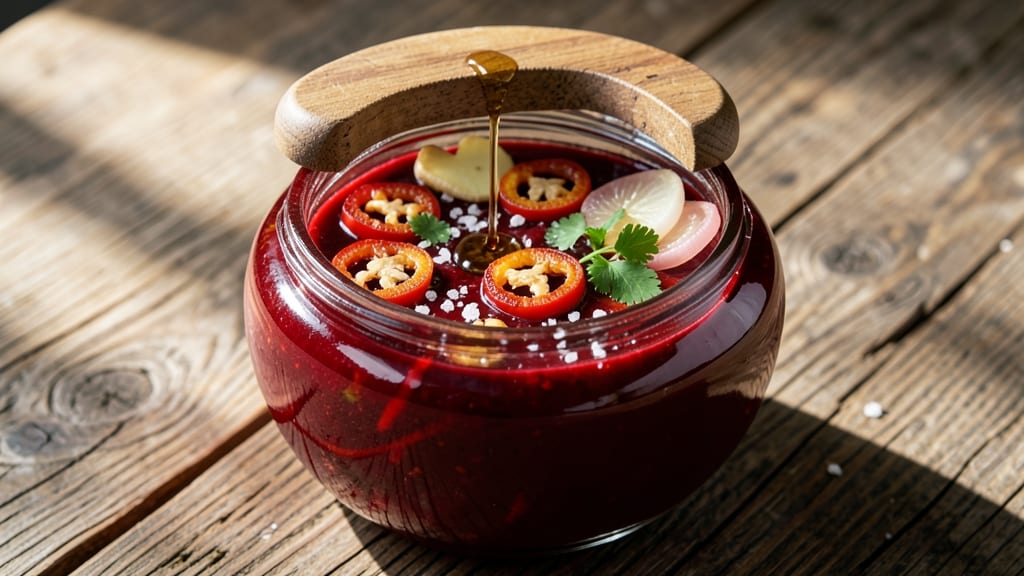
This amazing hot sauce recipe delivers the kind of fiery zing that turns every bite into an experience—think smoky depth, tangy brightness, and heat that builds just right. 🔥 The secret lies in fermenting fresh peppers with vinegar and garlic, creating layers of flavor that store-bought sauces can't match.
I've been perfecting this over years of trial (and a few too many chili-induced water breaks), and it's now my go-to for adding serious kick to tacos, wings, or even deviled eggs.
What makes this recipe special is the balance—it's not just about heat, but about complexity. We start with a simple ferment to develop depth, then blend in vinegar for tang, garlic for punch, and just enough sweetness to round out the flavor.
The result? A sauce that's smooth yet vibrant, with heat that lingers without overwhelming. No blender? No problem—we'll show you how to get that perfect texture with basic tools.
By the end, you'll have a bottle of hot sauce so versatile it belongs in your fridge year-round. It's fiery enough to challenge your spice tolerance but nuanced enough to elevate any dish.
The best part? You can adjust the heat level to your liking—whether you want a gentle tingle or full-on fireworks in your mouth. Ready to make something truly amazing?
We'll cover fermentation safety, storage tips, and ways to customize it with fruits or herbs. Let's get your kitchen shaking with flavor!
Ingredients for amazing hot sauce
Nine ingredients transform into a fiery, balanced hot sauce with layers of smoky depth and tangy brightness.
| Ingredient | Amount | Notes |
|---|---|---|
| Fresh Red Chili Peppers 🌶️ | 1 ½ cups | Chopped, stems/seeds removed |
| White Vinegar 💧 | 1 cup | Distilled white vinegar preferred |
| Garlic Cloves 🧄 | 6 cloves | Peeled, roughly chopped |
| Fresh Ginger Root 🌿 | 2 tbsp | Finely grated, peeled |
| Granulated Sugar 🍚 | ½ cup | White or brown sugar |
| Apple Cider Vinegar 🍎 | ½ cup | For extra tanginess |
| Salt 🧂 | 1 ½ tsp | Diamond Crystal kosher salt |
| Smoked Paprika 🌶️ | 1 tbsp | For smoky depth |
| Black Peppercorns 🌶️ | ½ tsp | Freshly cracked |
| Fresh Cilantro Leaves 🌿 | ¼ cup | Optional, for brightness |
The peppers are the heart of this sauce—jalapeños or serranos give a bright heat, while habaneros or ghost peppers crank up the fire. Grab them fresh from the produce section (or Trader Joe's if you want a variety pack). For the vinegar, distilled white vinegar is best for fermentation, but apple cider adds that extra tang. The ginger? Freshly grated makes all the difference—pre-grated loses its punch fast. If you're worried about heat, start with milder peppers and adjust later.
No fresh ginger? Ground ginger at half the amount works in a pinch, though it's not as vibrant. Running low on apple cider? Extra white vinegar plus a splash of lemon juice mimics the tang. The smoked paprika is non-negotiable for that deep, smoky flavor—Penzeys or the bulk section at Whole Foods have the best quality. For the cilantro, fresh is ideal, but dried at one-quarter the amount adds a hint of brightness if you're out. The black peppercorns? Crack them fresh with a mortar and pestle for maximum aroma—no need to overthink it, though pre-ground works too.
Ferment the peppers for 3-5 days before blending—this builds the depth. Store the finished sauce in a clean glass jar with a tight seal. Keeps for up to 6 months in the fridge, or 1 year if frozen in ice cube trays. Label with the date and heat level (mild, medium, hot) so you don't accidentally reach for it when you're hosting guests. I always make a double batch—one for immediate use, one to gift to spice-loving friends.
Why You'll Love This Recipe
- No Chopping Nightmare: I’ll be real—peppers can be stubborn, but here’s the hack: toss them whole into boiling water for 5 minutes. Skin slides right off, and you’re left with clean, ready-to-blend peppers in under 10 minutes. No knife skills required.
- Sweet Heat Balance: That sugar isn’t just for show—it tames the vinegar’s bite while letting the ginger’s zing and garlic’s punch take center stage. The result? A sauce that’s dangerously addictive on tacos, eggs, or even straight from the spoon.
- Pantry Stash Power: Between us, this recipe uses ingredients you’re already buying. Vinegar, sugar, garlic—check, check, check. The only splurge is fresh peppers, but one batch stretches for weeks, so it’s basically free flavor.
- Week-Long Flavor Bomb: Store it in the fridge, and this sauce only gets better with age. Honestly, I’ve had jars last months, and the acidity mellows into this rich, complex depth. Perfect for when you’re too lazy to cook but still want restaurant-level heat.
Step-by-step instructions for fermented fiery hot sauce
Here's how to transform bold flavors into a complex, fermented hot sauce that builds depth over time.
🍳 Step 1: Blend the Chili-Garlic-Ginger Base
Combine the 1.5 cups chopped fresh red chili peppers, 6 cloves roughly chopped garlic, and 2 tbsp finely grated ginger root in a food processor. Pulse until you achieve a coarse, chunky consistency—think of it as a thick paste with visible texture. I like to leave some bite in the blend rather than making it completely smooth, as this adds complexity to the final sauce.
Transfer the mixture to a clean, wide-mouth mason jar. The jar should be about 75% full—this leaves room for the fermentation process. Press down gently to remove air bubbles and ensure the mixture settles evenly. This step is crucial because proper packing prevents mold growth during fermentation.
🥘 Step 2: Create the Fermentation Brine
In a separate bowl, whisk together the 1 cup white vinegar, 0.5 cup apple cider vinegar, 0.5 cup granulated sugar, 1.5 tsp salt, 1 tbsp smoked paprika, and 0.5 tsp freshly cracked black peppercorns. The sugar and salt should dissolve completely, creating a slightly syrupy liquid. This brine is the magic behind the fermentation—it preserves the peppers while developing that tangy depth over time.
Pour the brine over the chili mixture in the jar, filling it to the top. Leave about ½ inch of headspace to prevent spillage during fermentation. Seal the jar tightly with the lid and give it a gentle shake to distribute the brine evenly. This ensures every chili pepper gets coated in flavor.
⏰ Step 3: Ferment for 3-5 Days at Room Temperature
Store the jar in a dark, warm place (around 70-75°F) for 3-5 days. You'll notice bubbles forming and the mixture expanding slightly—this is fermentation at work. After 2 days, open the jar and give it a quick stir to mix any settled solids back into the liquid. This prevents uneven fermentation and ensures consistent flavor throughout.
Taste a small amount after 3 days—you should detect a subtle tanginess developing alongside the heat. If you prefer a milder sauce, ferment for 3 days; for deeper complexity, let it go 5 days. The longer it ferments, the more complex the flavors become, but don't exceed 7 days or the sauce may become too vinegary.
🍳 Step 4: Strain and Blend for Silky Smoothness
After fermentation, transfer the contents to a fine-mesh strainer or cheesecloth-lined colander. Let it drain for 10-15 minutes, pressing gently on the solids to extract all the liquid. The strained liquid is your hot sauce base—bright, tangy, and packed with chili heat. Reserve the solids if you want to make a chunkier sauce later.
For a completely smooth sauce, transfer the strained liquid to a blender and blend until silky. If you prefer some texture, blend for just 10 seconds instead. Stir in the 0.25 cup fresh cilantro leaves (if using) and blend briefly to incorporate. The cilantro adds a bright, herbal note that cuts through the heat beautifully.
🥫 Step 5: Bottle and Age for Maximum Flavor
Transfer the hot sauce to clean, sterilized bottles or jars. Seal tightly and store in a cool, dark place for at least 1 week before using. This aging period allows the flavors to meld and intensify. The sauce will continue to develop complexity for up to 3 months—the longer it ages, the richer it becomes.
Shake the bottle well before each use, as the flavors may settle. Start with ½ teaspoon to taste—this sauce is potent! Use it to spice up tacos, drizzle over grilled meats, or mix into marinades. The perfect balance of heat, tang, and smokiness makes it a kitchen essential.
Pro Tips For Making Amazing Hot Sauce
- CHAR THE PEPPERS FIRST: Toss whole peppers in a 400°F (200°C) oven for 10–15 minutes until blistered and charred—this unlocks deeper flavor and makes peeling them effortless. I used to skip this and wondered why my sauce always tasted one-dimensional.
- PEEL GINGER LIKE A PRO: Use a spoon to scrape off the skin in one smooth motion after peeling the root—no need to waste time scrubbing under running water. Thick slices (about ½-inch) cook faster and infuse better than minced bits.
- SIMMER LOW AND SLOW: Reduce heat to a bare simmer after the first 10 minutes—boiling vinegar makes the sauce cloudy and dulls the heat. I learned this after a batch turned murky; now it’s always bright and balanced.
- SWEETEN GRADUALLY: Add sugar in two stages: first when blending, then again after 20 minutes of simmering to let the heat develop before balancing it. This prevents a cloying aftertaste and lets the chili’s natural sweetness shine.
Flavor customization for amazing hot sauce
Sweet Heat Balance
Adjust the sugar-to-vinegar ratio to control sweetness and heat. For a fruitier sauce, add 1 tbsp honey or ½ cup mango purée to the brine—this works especially well with habaneros. If you prefer dry heat, reduce sugar to ¼ cup and increase vinegar to 1.5 cups total.
I once made a batch with 1 tbsp maple syrup for depth, and it became my go-to for BBQ rubs. 🌶️
Smoky vs. Fruity Variations
For extra smokiness, swap 1 tbsp smoked paprika for ½ tsp liquid smoke (like La Choy) or add 1 chopped chipotle pepper in adobo. For fruity depth, blend in ¼ cup pineapple juice or 2 tbsp orange zest during the final blending step.
A friend’s mango-habanero version became legendary at our summer cookouts—just toss in ½ cup diced mango with the peppers before fermenting.
Herb Infusions
Fresh herbs elevate this sauce without overpowering. Add 1 tbsp chopped thyme or rosemary to the brine for Mediterranean vibes, or 1 tbsp basil for an Italian-inspired twist. For Asian fusion, stir in 1 tsp grated galangal or ½ tsp shiso leaves after blending.
I keep a small jar of cilantro + mint in my freezer to toss in later—it adds a refreshing contrast to the heat. ✨
Spice Level Control
Want mild heat? Use bell peppers + jalapeños (remove seeds/membranes). For medium, stick to serranos or Fresno peppers. Hotter than fire? Swap in habaneros or ghost peppers, but wear gloves—these babies pack a punch!
Pro tip: Freeze a few peppers before blending to dull the heat slightly while keeping flavor. Always taste the brine before fermenting to gauge intensity.
Global Twists
Transform this sauce into Carolina Gold by adding 1 tsp turmeric and ½ tsp coriander to the brine.
For Mexican-style, blend in 1 tsp cumin and ½ tsp oregano after fermenting. Thai-inspired? Add 1 tbsp fish sauce and 1 tsp shrimp paste (like Red Boat) to the final blend. Each global spice adds a unique layer—experiment and label your creations! 🌍
Texture Play
Skip blending entirely for a chunky sauce—just strain and bottle the fermented peppers whole. For creamy texture, blend in 2 tbsp coconut milk or 1 tbsp tahini after straining.
I once made a sriracha-style version by adding 1 tbsp rice vinegar and ½ tsp sesame oil—it became an instant hit for dipping. Texture changes how the heat hits your palate, so don’t be afraid to get creative! 💡
Nutrition facts
Frequently asked questions
Can I make this hot sauce without a food processor?
Use a sharp knife to finely chop the peppers, garlic, and ginger into a paste-like consistency. A mortar and pestle works too—just grind everything together until smooth. The key is creating a thick, even mixture that ferments properly. You might need to strain it more carefully to remove any large chunks.
How do I know when the fermentation is done?
Taste it! After 3 days, you should detect a tangy, slightly sweet flavor alongside the heat. For deeper complexity, ferment 5 days. Watch for bubbles and a slight expansion—this confirms fermentation. If it smells sour or off, discard it immediately. Never ferment beyond 7 days or the vinegar flavor will dominate.
What if my hot sauce turns moldy?
Mold is rare but possible if the jar isn't sealed properly or the peppers aren't submerged. If you see fuzzy spots, discard the batch immediately—mold can produce harmful toxins. To prevent this, always leave ½ inch of headspace, use clean jars, and store in a dark place. Sterilize equipment with boiling water before use. When in doubt, toss it!
Can I adjust the heat level after fermenting?
Yes! For milder heat, blend in 1-2 tbsp honey or sugar to balance the spice. To increase heat, add ½ tsp cayenne powder or a few drops of hot sauce. If the flavor is too vinegary, stir in 1 tsp apple cider vinegar or a splash of fruit juice. Always taste as you go!
How long will this hot sauce last?
Properly stored in a clean glass jar, this sauce keeps for 6 months in the fridge or 1 year if frozen in ice cube trays. Label with the date and heat level (mild/medium/hot) to track freshness. The flavor actually improves with time—let it age 1-3 months for maximum depth.