
Sauces & Condiments
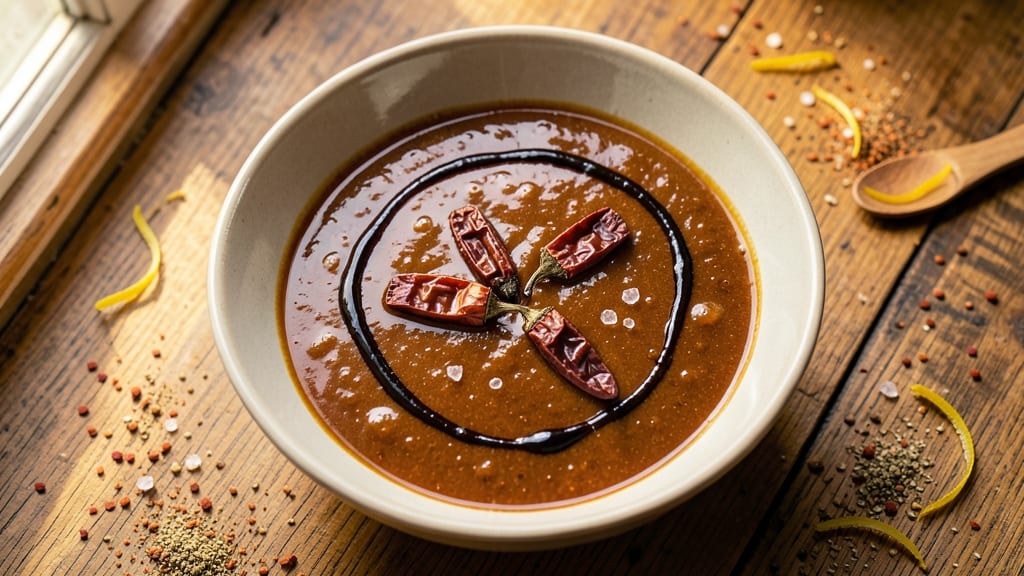
This ancho BBQ sauce recipe transforms smoky dried chiles into a complex, vegetarian-friendly sauce that's perfect for grilled vegetables, tofu, or even as a marinade. The key lies in ancho chiles' deep, earthy sweetness balanced by vinegar's tang and molasses' richness—no meat required. I developed this after years of perfecting smoky profiles, and the celery topping adds a satisfying crunch that elevates every bite.
The process is straightforward: toast the chiles to deepen their smokiness, then simmer them with vinegar, molasses, and spices until thick and glossy. The sauce reduces naturally, intensifying flavors while creating that signature BBQ stickiness.
What sets this apart is the celery topping—finely chopped celery seeds and fresh celery leaves add texture and brightness that cuts through the richness.
What you'll end up with is a sauce that's smoky yet balanced, sweet without being cloying, and packed with depth from the ancho chiles. It's versatile enough for weeknight dinners or competition-worthy BBQ, yet simple enough to make in under 30 minutes.
The celery topping adds a professional touch that makes it feel like you've spent hours perfecting it.
Store it in the fridge for up to 2 weeks or freeze for 3 months—it only gets better with time as flavors meld. Adjust the heat by adding more chiles or the smokiness with a touch of liquid smoke.
This is the kind of sauce that transforms ordinary meals into something extraordinary.
Ingredients for ancho bbq sauce
Smoky, sweet, and packed with depth—these ingredients transform simple pantry staples into restaurant-quality BBQ sauce.
| Ingredient | Amount | Notes |
|---|---|---|
| Dried Ancho Chiles 🌶️ | 4 whole | Stems and seeds removed |
| Apple Cider Vinegar 🍎 | 1 cup | Raw, unfiltered preferred |
| Molasses 🍯 | ½ cup | Unsulphured for best flavor |
| Granulated Sugar 🍚 | ¼ cup | Light brown preferred |
| Ground Cumin 🌿 | 1 tbsp | Toasted for deeper aroma |
| Smoked Paprika 🌶️ | 1 tbsp | High-quality for smokiness |
| Garlic Powder 🧄 | 1 tbsp | Freshly ground preferred |
| Onion Powder 🧅 | 1 tbsp | For depth of flavor |
| Celery Seeds 🥬 | 1 tsp | Finely ground for topping |
| Fresh Celery Leaves 🌿 | ¼ cup | Chopped for garnish |
| Liquid Smoke 💨 | ½ tsp | Optional for extra smokiness |
| Salt 🧂 | 1 tsp | Diamond Crystal preferred |
| Black Pepper 🌶️ | ½ tsp | Freshly cracked |
Ancho chiles are the heart of this sauce, so pick plump, vibrant ones—the deeper the red, the better. Trader Joe's and Mexican markets usually carry them, but if you can't find them, guajillo chiles work in a pinch (just remove the seeds). Toasting them in a dry skillet until fragrant unlocks their smoky potential—don't skip this step. For the vinegar, raw, unfiltered apple cider vinegar adds complexity, while molasses should be unsulphured to avoid bitterness. If you're feeling adventurous, Penzeys Spices carries high-quality smoked paprika that elevates the smokiness.
No ancho chiles? Guajillo or pasilla chiles are solid substitutes, but you'll need to toast them longer. Running out of molasses? Maple syrup or date syrup work in a bind, though the flavor will shift slightly. The celery seeds and leaves add that signature crunch—if you can't find fresh celery leaves, dried celery flakes at half the amount will do, but texture will suffer. For extra depth, liquid smoke (just a half-teaspoon) amps up the smokiness without overpowering. The sugar balances the acidity, so don't skip it—light brown adds subtle caramel notes, but granulated works fine if that's what you've got.
This sauce only gets better with time, so make a double batch—it keeps for 2 weeks in the fridge or 3 months frozen. Store it in a clean glass jar with a tight seal, and the flavors will meld beautifully. For the celery topping, pulse the seeds in a spice grinder and chop the leaves just before serving to keep them crisp. If you're prepping ahead, store the sauce and topping separately, then mix before using. A splash of water or vinegar can thin it out if it gets too thick—just stir and simmer until smooth.
Why You'll Love This Recipe
- No Soaking Required: Honestly, the dried ancho chiles just need a quick toast and soak in hot water—no overnight prep, no fuss. I’ve made this sauce on a Friday night after work, and it’s still been spot-on every time.
- Smoky-Sweet Magic: That molasses and sugar combo with the deep, earthy ancho? It’s the kind of balance you’ll want to drizzle on everything—pulled pork, grilled veggies, even toasted bread. The cumin adds this warm, cozy kick that makes it feel like a hug in sauce form.
- Weeknight Meal Upgrade: Between us, this sauce turns a simple grilled chicken breast or baked beans into something that feels restaurant-worthy. I keep a jar in the fridge for those nights when I don’t want to cook but still crave flavor—just toss it on whatever’s easiest.
- Stretches Your Budget: A little goes a long way, and the ingredients won’t break the bank. That jar of ancho chiles lasts for multiple batches, and the vinegar and molasses are pantry staples you’re probably already using. Plus, it freezes like a dream for future lazy days.
Step-by-step instructions for ancho BBQ sauce
Let's create a rich, smoky sauce that balances sweetness with deep chile heat.
Toast and Rehydrate the Dried Ancho Chiles
Preheat your oven to 350°F. Place the 4 whole dried ancho chiles on a baking sheet and toast them for 2-3 minutes until fragrant. This step enhances their natural sweetness and depth of flavor. Immediately transfer them to a heatproof bowl and pour over the 1 cup apple cider vinegar—this helps loosen their skins.
Let the chiles soak for 20 minutes while you prepare the remaining ingredients. The vinegar will soften them enough to blend smoothly, but don't let them soak too long or they'll turn mushy. I like to use raw, unfiltered vinegar here—it adds subtle complexity that regular vinegar misses.
Blend the Sauce Base
After the chiles have soaked, drain them and remove any stems or seeds that might have loosened. Transfer them to a blender along with the 0.5 cup molasses, 0.25 cup granulated sugar, 1 tbsp ground cumin, 1 tbsp smoked paprika, 1 tbsp garlic powder, 1 tbsp onion powder, 0.5 tsp liquid smoke, 1 tsp salt, and 0.5 tsp black pepper.
Blend until completely smooth, scraping down the sides as needed. You want a velvety texture with no visible chile bits—this ensures every bite of your dish gets that perfect balance of smoky, sweet, and spicy flavors. If the mixture seems too thick, add 1-2 tablespoons of water to help it blend properly.
Simmer and Reduce for Depth of Flavor
Transfer the blended mixture to a medium saucepan and bring to a gentle simmer over medium heat. Let it cook uncovered for 20-25 minutes, stirring occasionally, until it thickens slightly and coats the back of a spoon. You're looking for a consistency that's still pourable but clings nicely to meats or vegetables.
Here's where the magic happens: the molasses and vinegar caramelize, creating layers of complexity. If the sauce starts to stick, add 1 tablespoon of water at a time until it reaches your desired consistency. Taste as you go—adjust seasoning with more salt or sugar if needed, but remember that the celery topping will add another dimension of flavor.
Prepare the Crunchy Celery Topping
While the sauce simmers, finely grind the 1 tsp celery seeds in a spice grinder or mortar and pestle. Then, chop the 0.25 cup fresh celery leaves into small pieces. The seeds will add a subtle, aromatic crunch while the leaves bring a fresh, herbal brightness that cuts through the richness of the sauce.
Toast the celery seeds in a dry skillet over low heat for 1-2 minutes until fragrant—this intensifies their flavor. Let them cool completely before mixing with the chopped celery leaves. Store them in a small jar until ready to use, as they'll keep their crunch much longer when stored separately from the sauce.
Combine and Rest for Perfect Balance
Once your sauce has thickened to your liking, remove it from heat and let it cool slightly. Stir in the toasted celery seeds and chopped celery leaves, reserving a small amount for garnish if desired. The contrast between the smooth, smoky sauce and the crisp celery topping is what makes this sauce truly special.
Let the sauce rest for at least 30 minutes before using—this allows all the flavors to meld together. The sauce will thicken further as it cools, so you may need to add a splash of water or vinegar if it becomes too thick. Store any leftovers in an airtight container in the refrigerator for up to 2 weeks, or freeze for up to 3 months.
Pro Tips For Making Ancho Bbq Sauce
- Toast the Chiles: I learned this the hard way—skipping the toasting step means a sauce that tastes flat and one-dimensional. Dry-toast the ancho chiles in a skillet over medium heat for 30 seconds per side until fragrant (they won’t blister like jalapeños). This deepens their smoky depth and cuts through the sweetness later.
- Strain Like a Pro: After simmering, resist the urge to just dump everything into your blender—you’ll end up with a gritty mess. Line a fine-mesh strainer with cheesecloth and press the mixture through it. The extra effort removes seeds and skins, leaving a silky texture that clings to ribs or pulled pork.
- Balance the Vinegar: Apple cider vinegar is the soul of this sauce, but too much makes it sharp and unbalanced. Start with ¼ cup and taste as you go—add another tablespoon only if the molasses and sugar need cutting. The sauce should taste tangy but not sour enough to pucker.
- Simmer Low and Slow: After blending, reduce the sauce on low heat for at least 15 minutes—no rushing. This lets the flavors meld and the sugar caramelize slightly, giving it that glossy, restaurant-quality finish. High heat turns it into syrup; patience gives it depth.
Best sauces and condiments for these flavors
Smoky Depth Boosters
For an extra layer of smokiness, add ½ tsp chipotle powder or ¼ tsp cayenne pepper to the blend—these amplify the ancho chiles' natural heat without overpowering. I’ve also found that a dash of mesquite smoke powder (like Smokin’ Joe’s) adds a campfire-like depth that’s perfect for grilled dishes.
If you’re using liquid smoke, start with just ¼ tsp and taste before adding more—it’s easy to overdo it. 💨
Sweetness Adjustments
Need to balance the heat? Swap ¼ cup molasses for maple syrup or date syrup—both add sweetness with a lighter touch. For a caramelized finish, simmer the sauce uncovered for an extra 5 minutes to let the sugars deepen.
If the sauce tastes too sweet, a splash of apple cider vinegar (just 1 tbsp) brightens it up beautifully.
Herbal Brighteners
Fresh herbs like cilantro or oregano add brightness to the smoky base. Stir in 1 tbsp chopped cilantro or 1 tsp dried oregano at the end for a fresh, herbal note. I love adding a pinch of thyme for an earthy touch that pairs perfectly with grilled vegetables or tofu.
These herbs should be added after the sauce has cooled slightly to preserve their aroma.
Spicy Variations
For a fiery kick, blend in 1-2 dried arbol chiles (seeds removed) with the ancho chiles—they pack a punch without overpowering. If you prefer a smoother heat, reduce the smoked paprika to ½ tbsp and add ½ tsp cinnamon for warmth instead.
For a tangy-spicy twist, mix in 1 tbsp lime juice at the end—it cuts through the richness and adds a zesty finish. 🌶️
Thickening Tricks
If your sauce is too thin, simmer it uncovered for another 10 minutes to reduce it naturally. For a quicker fix, mix 1 tsp cornstarch with 1 tbsp cold water, stir it into the sauce, and cook for 2-3 minutes until thickened.
Avoid over-thickening—you want it to coat, not glue. If it’s too thick, thin it with 1-2 tbsp water or vinegar while warm.
Storage Hacks
Store the sauce in a clean, airtight glass jar in the fridge for up to 2 weeks—it only gets better as flavors meld. For longer storage, freeze it in ice cube trays for easy portioning, then transfer to a freezer bag.
To reheat, warm gently on the stove with a splash of water or vinegar to restore its glossy texture. The celery topping keeps best in a separate container to maintain its crunch.
Nutrition facts
Frequently asked questions
Can I substitute ancho chiles with other dried chiles?
Guajillo or pasilla chiles work well as substitutes, but toast them longer (3-4 minutes) to match ancho's natural sweetness. For extra heat, add 1-2 dried arbol chiles (seeds removed) with the ancho. Each chile brings unique flavors—guajillo adds fruitiness while pasilla offers deeper earthiness. Just adjust the quantity based on your preferred heat level.
How do I adjust the sweetness or heat level?
For more sweetness, increase molasses to ⅔ cup or add 1 tbsp maple syrup. To reduce sweetness, swap ¼ cup molasses for apple cider vinegar. For heat, add ¼ tsp cayenne or ½ tsp chipotle powder during blending. Always taste as you go—balance is key! The celery topping helps cut through any overpowering flavors.
Can I make this sauce without a blender?
Yes! If you don't have a blender, toast and rehydrate the chiles as directed, then finely chop them by hand. For a smoother texture, strain the mixture through a fine-mesh sieve after simmering. The sauce will be slightly chunkier but still delicious. Just be patient—it takes a bit more effort but achieves the same rich, smoky result.
What's the best way to use this sauce?
This sauce shines on grilled vegetables, tofu, or as a marinade for meats. Try brushing it on eggplant or zucchini before grilling, or use it as a dipping sauce for crispy fries. For extra depth, simmer it with 1 tbsp soy sauce for 5 minutes before using on Asian-inspired dishes. The celery topping adds a great contrast to any application—just sprinkle it on top right before serving.
Why does my sauce turn out too thick or too thin?
Sauce consistency depends on simmering time. For thicker sauce, simmer uncovered for 5-10 extra minutes to reduce naturally. If too thin, mix 1 tsp cornstarch with 1 tbsp water, stir into the sauce, and cook for 2-3 minutes. For thinning, add 1-2 tbsp vinegar or water while warm. Always taste test—you want a balance between pourable and clingy for best results.