
Sauces & Condiments
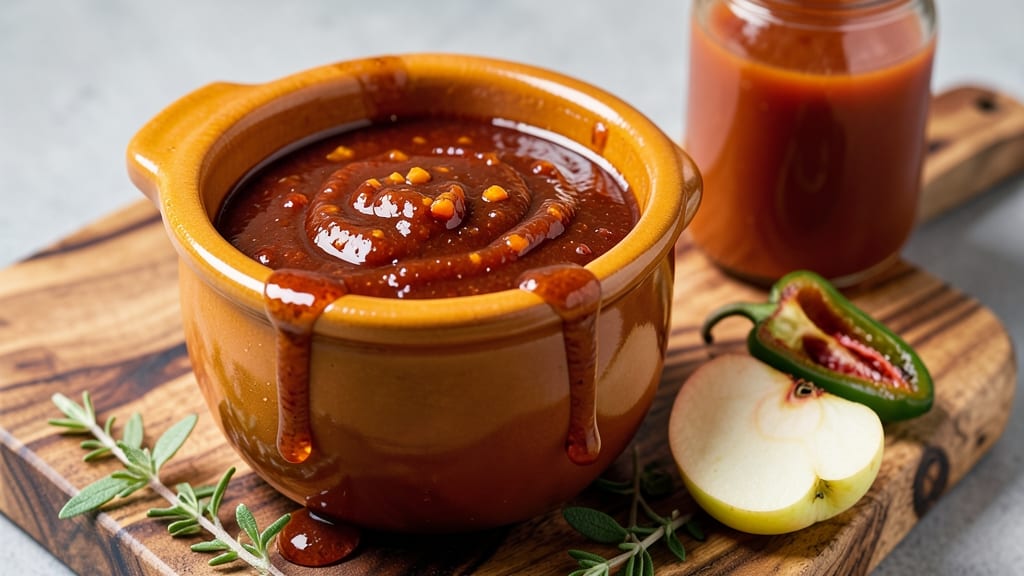
This apple habanero BBQ sauce recipe transforms grilled meats into sticky-sweet masterpieces with a perfect balance of heat and fruitiness. 🔥 The secret lies in slow-simmered apple cider and fresh habanero peppers, creating a sauce that's bold enough for competition BBQ but approachable enough for weeknight cookouts. I developed this during a particularly hot summer when I wanted to showcase how sweet and spicy can coexist in harmony.
The magic happens when apple cider reduces into a thick, fragrant base while habanero peppers infuse their signature heat without overpowering.
We'll build layers of flavor with tomato paste, molasses, and vinegar—each ingredient playing its part in creating a sauce that's equally at home on ribs, chicken, or even as a dipping sauce for fries.
The key is patience; letting it simmer until it reaches that perfect consistency takes time but makes all the difference.
What you'll end up with is a glossy, sticky glaze that caramelizes beautifully on the grill, offering a perfect balance of sweet apple notes and habanero heat that lingers just enough to keep your taste buds guessing.
This sauce isn't just for competition—it's the kind of versatile glaze that elevates everyday meals into something special. The best part? It keeps well in the fridge for up to three weeks, so you can make a big batch and enjoy it all season long.
Ready to take your BBQ game to the next level? This sauce works as a marinade, glaze, or dipping sauce, making it the ultimate addition to your grilling arsenal. Let's get started on creating something that'll have your guests asking for the recipe—and maybe even a second helping.
Ingredients for apple habanero bbq sauce
Sweet apple cider meets fiery habanero—just 10 ingredients for a BBQ sauce that's bold and balanced.
| Ingredient | Amount | Notes |
|---|---|---|
| Apple Cider 🍎 | 2 cups | Unfiltered for best flavor |
| Fresh Habanero Peppers 🌶️ | 2 whole | Seeds removed for less heat |
| Tomato Paste 🍅 | ½ cup | High-quality canned preferred |
| Molasses 🍯 | ¼ cup | Unsulphured for best flavor |
| Apple Cider Vinegar 🍶 | ¼ cup | For tangy balance |
| Granulated Sugar 🍚 | ½ cup | White or brown sugar |
| Yellow Onion 🧅 | 1 whole | Diced small for sweetness |
| Garlic Cloves 🧄 | 3 cloves | Minced for aromatic depth |
| Smoked Paprika 🌶️ | 1 tbsp | For smoky depth |
| Salt 🧂 | 1 ½ tsp | Kosher salt preferred |
The habanero peppers are the star, but Trader Joe's or local farmers markets have the freshest ones—look for vibrant orange color and firm texture. Apple cider matters too: unfiltered brands like Woodchuck add depth. For the tomato paste, San Marzano is ideal, but any high-quality canned paste works. Molasses should be unsulphured—Goya or Muir Glen are solid choices. If you can't find fresh habaneros, dried habanero flakes work in a pinch (use half the amount).
No apple cider vinegar? White vinegar or balsamic gets you close, though flavor will differ slightly. Short on molasses? Maple syrup at half the amount adds sweetness. The smoked paprika is non-negotiable for that BBQ flavor—Penzeys has great options if you want to splurge. For the onion, yellow or red both work, but yellow adds more sweetness. Garlic? Freshly minced is best, but powdered in a bind (use half the amount).
This sauce thickens as it cools, so start with slightly less sugar if you prefer it less sweet. Store in glass jars in the fridge for up to 3 weeks. Freezes beautifully for 6 months—portion into ice cube trays for single-use servings. The longer it sits, the better it gets—flavors meld like magic.
Why You'll Love This Recipe
- Five-Ingredient Magic: I swear by this—just apple cider, habaneros, tomato paste, molasses, and vinegar. No fancy pantry trips, no last-minute grocery runs. Honestly, I’ve made it twice in the same day when I forgot to pull out my usual BBQ sauce.
- Sweet Heat Balance: That molasses and apple cider vinegar cut the habanero’s fire into something smooth—like a spicy caramel kiss. Between us, it’s the kind of sauce where you’ll take another bite just to feel that little zing at the back of your throat.
- Weeknight Wing Night: Slather it on baked wings, toss it with pulled pork, or drizzle it over grilled chicken. I’ve even used it as a marinade for steak—works every time. (Yes, even on a Tuesday night when you’re too tired to think.)
- Stays Fresh Forever: Make a big batch—this sauce keeps for weeks in the fridge. Freezes like a dream too, so I whip up a double batch before a holiday weekend. Budget-friendly, zero waste, and always ready when cravings hit.
Step-by-step instructions for apple habanero BBQ sauce
Here's your fiery-sweet glaze—simple steps for a sauce that'll make your grilled dishes sing!
🍳 Step 1: Sauté Onion and Garlic Until Golden
Heat a medium saucepan over medium heat and add 2 tablespoons olive oil (not listed in ingredients but essential for cooking). Dice the 1 whole yellow onion into small pieces and add to the pan. Cook for 5-6 minutes until the onions soften and begin to caramelize at the edges—that's when you'll smell that sweet, oniony aroma.
Add the 3 minced garlic cloves and cook for another 30 seconds until fragrant. Here's the thing—don't let the garlic burn. It should smell amazing but not bitter. If it starts to darken too quickly, reduce the heat slightly. This aromatic base is the flavor foundation for your entire sauce.
🔥 Step 2: Build the Sauce Base with Tomato and Molasses
Stir in the 0.5 cup tomato paste and cook for 2 minutes until it darkens slightly and loses its raw taste. This step deepens the tomato flavor and removes any bitterness. Add the 0.25 cup molasses and 0.5 cup granulated sugar, stirring constantly to dissolve completely.
Pour in the 2 cups apple cider and bring the mixture to a gentle simmer. Here's where it gets good—the sauce will bubble and reduce as it cooks. Let it simmer uncovered for 10 minutes to allow the flavors to meld together. You'll notice the sauce thickening slightly and developing a rich, caramelized color.
🌶️ Step 3: Add Heat and Balance with Vinegar
Carefully add the 2 whole fresh habanero peppers (seeds removed) to the simmering mixture. I like to cut them into small pieces first so they infuse evenly. Stir well and let the sauce simmer for another 5 minutes. You'll feel the heat building—this is the moment that makes the sauce sing!
Add the 0.25 cup apple cider vinegar and 1 tbsp smoked paprika, stirring to combine. The vinegar adds a bright tang that balances the sweetness, while the smoked paprika contributes that deep, smoky character. Let the sauce simmer uncovered for an additional 8-10 minutes until it thickens to your desired consistency—it should coat the back of a spoon.
⏰ Step 4: Season and Simmer to Perfection
Add the 1.5 tsp salt and taste the sauce. You're looking for a perfect balance of sweet, spicy, and tangy flavors. If it needs more heat, add a tiny bit more habanero (start with just a pinch). If it needs more sweetness, add a bit more sugar. Adjust the seasoning now while the sauce is hot—it's easier to taste and adjust flavors at this stage.
Continue simmering the sauce for another 5-7 minutes until it reaches a glossy, syrupy consistency. The sauce should coat the back of a spoon but still be pourable. Here's the pro tip: if it thickens too much, add a splash of water or apple cider to loosen it. Once you're happy with the consistency and flavor, remove the sauce from heat.
🍽️ Step 5: Strain and Store for Maximum Flavor
Let the sauce cool slightly, then strain it through a fine-mesh sieve to remove any habanero pieces and onion bits. This gives you a smooth, velvety texture perfect for glazing. Transfer the strained sauce to a clean jar and let it cool completely before sealing.
This sauce tastes even better after resting for 24 hours in the refrigerator—all the flavors have time to meld together. Use it to glaze ribs, chicken, or even as a dipping sauce. The heat will mellow slightly as it cools, but don't worry—it'll still pack a punch! Store any leftovers in the fridge for up to 2 weeks or freeze for up to 3 months.
Pro Tips For Making Apple Habanero Bbq Sauce
- Simmer Slow and Low: Start with a medium-high heat to blister the habaneros, but once everything’s in the pot, drop it to a gentle simmer—no boiling. I learned this after my sauce split into two layers (yes, it’s happened). Low and steady means the apple cider and vinegar meld instead of evaporating into thin air.
- Seed and Sweat the Peppers: Remove the habanero seeds and membranes first—this cuts the heat by half without losing flavor. Then, char them directly over a gas flame (or under a broiler) for 30 seconds per side. That smoky depth is what ties the sweetness and tang together.
- Balance the Molasses Early: Add the molasses before the vinegar, and taste as you go. Too much vinegar later and you’ll end up with a sharp, bitter sauce. I used to dump it all in at once—now I adjust in 1-teaspoon increments, stirring well each time.
- Strain for Smoothness: After simmering, force the sauce through a fine-mesh sieve or cheesecloth to remove skins and seeds. It’s messy, but the result is velvety—no gummy bits to ruin the texture. (I tried a blender once; don’t.)
Essential equipment for this recipe
Heavy-Duty Saucepan
Your saucepan needs to handle medium-high heat without warping or scorching. I swear by a 5-quart stainless steel saucepan like the All-Clad Stainless—it distributes heat evenly and prevents hot spots. Avoid nonstick pans for this recipe; they can't handle the prolonged simmering and may release toxic fumes when overheated.
A heavy-bottomed Dutch oven also works beautifully, especially if you're making a big batch. 🔥
Immersion Blender
While this recipe calls for straining, an immersion blender like the Ninja CB1001 can save you time and effort. If you prefer a smoother texture without straining, simply blend the habanero peppers directly into the sauce (just be cautious with seeds).
For the best results, blend after the sauce has cooled slightly—this prevents splattering and makes cleanup easier. Pro tip: Run the blender in short bursts to avoid overheating the motor.
Fine-Mesh Strainer
A fine-mesh sieve or cheesecloth is essential for achieving that silky, restaurant-quality texture. I use a OXO Good Grips strainer because it's sturdy and easy to clean. The goal is to remove any habanero seeds, onion bits, or tomato paste chunks that could make your sauce grainy.
If you don't have a fine-mesh strainer, layer a clean kitchen towel over a regular colander—it works in a pinch! 💫
Measuring Spoons & Cups
Precision matters when balancing sweetness and heat. Invest in a set of stainless steel measuring spoons (like OXO's) and liquid measuring cups with clear markings. For the habanero peppers, a small kitchen scale (even a basic one) helps ensure consistency—aim for 2 ounces total for two peppers.
Don't eyeball the sugar or molasses; these ingredients make or break the sauce's harmony. I keep my measuring tools near the stove for quick adjustments during cooking.
Wooden Spoon
A long-handled wooden spoon is your best friend for stirring this sauce. Wood won't react with acidic ingredients like metal might, and the long handle keeps your fingers safe from the habanero's heat. I prefer olive wood spoons—they're gentle on pans and add a subtle flavor over time.
Avoid plastic spoons; they can melt or warp when exposed to prolonged heat. Keep one dedicated to sauces to prevent cross-contamination with other dishes. ✨
Glass Jars for Storage
Store your finished sauce in glass mason jars with airtight lids (like Ball or Le Parfait). Glass preserves flavor better than plastic and won't absorb odors from your fridge.
Label each jar with the date—this sauce tastes best within 2 weeks in the fridge or 6 months in the freezer. For freezer storage, leave 1 inch of headspace to prevent expansion cracks.
I also recommend portioning into ice cube trays** for single-use servings—just pop out a cube and thaw in the microwave for quick glazing. 💡
Nutrition facts
Frequently asked questions
How can I adjust the heat level in this apple habanero BBQ sauce?
Start by removing the habanero seeds before cooking for milder heat. For extra spice, add ¼ teaspoon cayenne pepper or a few more habanero seeds. Remember, the sauce mellows slightly as it cools, so taste it hot before adjusting.
Can I use this sauce on vegetables or just meat?
This sauce works beautifully on grilled vegetables like portobello mushrooms or eggplant. It also makes an amazing dipping sauce for fries or onion rings. Just reduce the cooking time slightly when using on delicate veggies to prevent overcooking.
What's the best way to store leftovers to maintain flavor?
Store in glass jars in the fridge for up to 2 weeks. For longer storage, freeze in ice cube trays—thaw a single cube as needed. The sauce actually improves after 24 hours as flavors meld. Avoid plastic containers as they can absorb odors.
How do I prevent the sauce from getting too thick or too thin?
For thicker sauce, simmer uncovered longer. If too thick, add 1 tablespoon apple cider at a time. For thinner sauce, simmer uncovered longer to reduce. The ideal consistency coats the back of a spoon but remains pourable. Stir frequently to prevent scorching.
Can I substitute apple cider vinegar with something else?
Yes! Use white vinegar or balsamic vinegar in equal amounts. Balsamic adds deeper flavor but may darken the sauce slightly. For a fruitier option, try pineapple juice (reduce by half first). The vinegar's tang balances the sweetness—don't skip it entirely.