
Sauces & Condiments
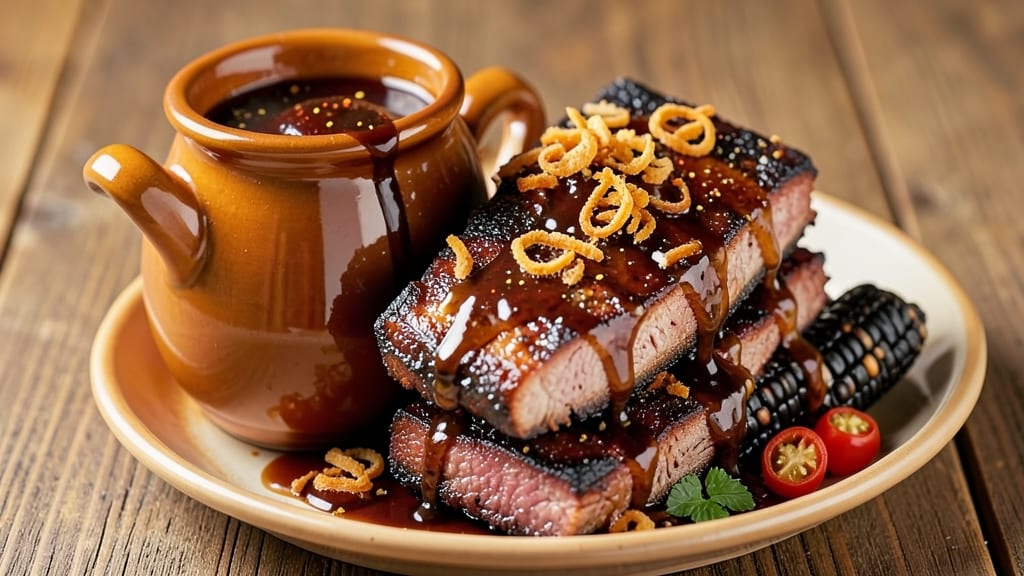
This Arkansas barbecue sauce recipe delivers the tangy, vinegar-forward punch that sets it apart from sweeter styles. 🔥 The secret lies in balancing sharp apple cider vinegar with just enough molasses for depth, creating a sauce that enhances smoky meats without overpowering them.
I developed this after years of perfecting the balance between heat and acidity—critical for true Arkansas flavor. What makes this sauce special is its layered complexity: cayenne for subtle heat, garlic powder for aroma, and a touch of Worcestershire for umami depth.
The ingredients come together in a simple 30-minute simmer that transforms into a glossy, versatile condiment. Unlike commercial versions, this recipe builds flavor through slow reduction rather than sugar overload. By the end, you'll have a sauce that's tangy yet balanced, with just enough spice to linger.
It's perfect for ribs, pulled pork, or even as a marinade—where the vinegar helps tenderize while the spices create a flavor crust. The sauce thickens beautifully when reduced, making it ideal for dipping, basting, or finishing dishes.
Store it in the fridge for up to 3 weeks or freeze for longer shelf life. This isn't just another BBQ sauce—it's the foundation for authentic Arkansas-style flavor that stands up to serious smoke. Let's make it!
Ingredients for arkansas barbecue sauce
Nine ingredients transform into Arkansas-style sauce with vinegar's bold tang and molasses depth.
| Ingredient | Amount | Notes |
|---|---|---|
| Apple Cider Vinegar 🍏 | 1 cup | Sharp, raw variety preferred |
| Unsweetened Molasses 🍯 | ¼ cup | Dark molasses for depth |
| Cayenne Pepper 🌶️ | 1 tbsp | Adjust for heat preference |
| Garlic Powder 🧄 | 1 tbsp | Freshly ground preferred |
| Onion Powder 🧅 | 1 tbsp | For balanced sweetness |
| Worcestershire Sauce 🍶 | 1 tbsp | Anchovy-free if strict vegan |
| Kosher Salt 🧂 | 1 tsp | Diamond Crystal preferred |
| Black Pepper 🌶️ | ½ tsp | Freshly cracked for aroma |
| Granulated Sugar 🍚 | 1 tbsp | Light brown sugar optional |
| Water 💧 | ½ cup | For thinning consistency |
Apple cider vinegar is non-negotiable here—Bragg or Heinz work best for their sharpness. Molasses should be dark and unsweetened (Goya is reliable). Cayenne can vary; Penzeys offers heat-specific blends if you want precision. Garlic and onion powders should be fresh-ground if possible—McCormick or Badia are solid grocery store options. Worcestershire is where umami magic happens; Lea & Perrins is the gold standard, though Annie's makes a vegan-friendly version.
No apple cider vinegar? White vinegar with 1 tsp lemon juice mimics the tang, though flavor won't be identical. Swap molasses for maple syrup at half the amount if unavailable. Cayenne too hot? Red pepper flakes at double the amount gives milder heat. Worcestershire missing? Soy sauce plus a pinch of sugar approximates umami. For sugar, honey or agave work 1:1, though molasses' depth is irreplaceable. The water is flexible—add more for thinner sauce or skip entirely for thicker consistency.
This sauce peaks after 3 weeks refrigerated—the vinegar's acidity preserves it beautifully. For longer storage, freeze in ice cube trays (3 months shelf life). The sauce thickens as it cools, so reheat gently with a splash of water if needed. Double the batch; it disappears fast during Arkansas-style BBQ season. Label containers clearly—this isn't your average sweet sauce, and the vinegar-forward profile might surprise guests.
Why You'll Love This Recipe
- Five-Ingredient Magic: I swear, this sauce comes together with just a handful of pantry staples—no fancy shopping or last-minute grocery runs. That molasses depth and vinegar tang? They do all the heavy lifting while you stir.
- Heat You’ll Crave: The cayenne brings a slow-building warmth that lingers just right—not overpowering, but enough to make your ribs or pulled pork sing. Honestly, I’ve caught myself adding extra just to taste it straight from the jar.
- Weeknight to BBQ Boss: Slap this on grilled chicken for a Tuesday dinner, drizzle it over baked beans for a crowd, or use it as a marinade for steaks. It’s the kind of sauce that turns ordinary meals into something special without demanding extra time.
- Budget-Friendly Staple: A single batch costs pennies and keeps for months in the fridge. Between us, I’ve made this sauce for three different holidays and still have half a jar left—proof it’s worth repeating.
Step-by-step instructions for Arkansas barbecue sauce
Here's how to craft a sauce with vinegar's tang and molasses' depth—just like Arkansas pitmasters do.
🍳 Step 1: Combine Vinegar and Molasses
In a medium saucepan, pour in the 1 cup apple cider vinegar and 0.25 cup unsweetened molasses. Stir over medium heat until the molasses dissolves completely—this should take about 3-4 minutes. You'll notice the mixture darkens slightly and develops a rich, caramel-like aroma. This base creates the sauce's signature balance of tangy and sweet notes.
Real talk: Don't rush this step. If you see undissolved molasses clinging to the bottom, keep stirring gently until fully incorporated. The sauce won't thicken properly if the molasses isn't completely dissolved.
🍳 Step 2: Add Dry Seasonings and Sugar
Reduce heat to low and sprinkle in the 1 tbsp garlic powder, 1 tbsp onion powder, 1 tbsp cayenne pepper, 1 tbsp granulated sugar, 1 tsp kosher salt, and 0.5 tsp black pepper. Stir continuously for 1-2 minutes until all the spices are evenly distributed and the mixture smells deeply aromatic.
The cayenne pepper might make you pause—it's the secret to Arkansas sauce's subtle heat. Here's where it gets fun: Taste the mixture now. You'll notice the vinegar's sharpness, the molasses' sweetness, and the spices waking up. This is your flavor foundation before we build the sauce further.
🍳 Step 3: Incorporate Worcestershire Sauce
Pour in the 1 tbsp Worcestershire sauce and stir well. Increase heat to medium-low and let the mixture simmer gently for 10-12 minutes. You're looking for the sauce to thicken slightly—it should coat the back of a spoon when you run your finger through it. This simmering step develops the sauce's depth and allows the flavors to meld together.
I press down gently on the sauce with a wooden spoon during this time—this helps break up any potential lumps and ensures even cooking. If you see the sauce starting to bubble vigorously, reduce the heat slightly to maintain a gentle simmer.
🥘 Step 4: Thin with Water and Simmer to Perfection
Add the 0.5 cup water and stir once more. Return to a gentle simmer for another 5-7 minutes. The water helps achieve the perfect consistency—thick enough to cling to ribs or pulled pork, but thin enough to glaze without dripping. You want a sauce that's glossy but not runny, with a balance between tang and sweetness.
Here's the moment that matters: Taste and adjust. If it needs more heat, add a pinch more cayenne. Too sweet? A splash more vinegar. Too tangy? A touch more sugar. The goal is that perfect Arkansas balance—where you can taste the vinegar's bite but it's always tempered by the molasses' richness.
⏰ Step 5: Cool and Rest for Maximum Flavor
Remove the saucepan from heat and let the sauce cool to room temperature. This resting period—about 30 minutes—allows the flavors to fully develop and settle. I know it's tempting to use it immediately, but trust me: The sauce will taste even more complex after resting.
Once cooled, transfer the sauce to a clean jar or airtight container. It'll keep in the refrigerator for up to 2 weeks, though I find it gets better with age. The flavors deepen and mellow, making it perfect for glazing ribs, basting brisket, or serving as a dip for pulled pork. This sauce isn't just for competition—it's for every backyard cookout.
Pro Tips For Making Arkansas Barbecue Sauce
- Simmer Slow and Steady: Arkansas sauce needs time to marry its flavors—don’t rush the simmer. After adding the vinegar and molasses, keep the heat at a gentle bubble (not a rolling boil) for at least 20 minutes. I used to crank it up, thinking it’d speed things along, but that just burns the molasses and makes the sauce taste bitter. Let it work.
- Use Real Vinegar, Not Substitutes: Apple cider vinegar is non-negotiable here—its tang cuts through the molasses’ sweetness and balances the heat. I tried subbing white vinegar once (because I was out), and the sauce tasted harsh and one-dimensional. If you’re fresh out, dilute white vinegar with a splash of water, but it won’t be the same.
- Tame the Cayenne Gradually: Start with half the cayenne called for, then add more to taste after tasting the sauce. Arkansas sauce should have heat, but it shouldn’t be a mouthwash. I learned this after serving a batch to a group where half the table needed milk. Trust your palate—you can always add more, but you can’t take it out.
- Strain for Smoothness: After simmering, strain the sauce through a fine-mesh sieve to remove any grit from the spices. I skipped this once and ended up with tiny bits of garlic powder floating in every bite—annoying, but fixable. It takes 30 seconds and makes the sauce feel polished. (Yes, even if you’re impatient like me.)
Wine and beer pairings for arkansas barbecue sauce
Vinegar-Forward Reds
Arkansas sauce's bold tang makes it a perfect match for crisp, acidic reds. I always reach for a dry, high-acid Italian red like Chianti Classico—its bright cherry notes and tannins stand up to the vinegar while the molasses' depth softens the edges.
The Sangiovese grape dominates here, creating a harmony that feels intentional. 🍷
For a slightly lighter option, try a Valpolicella Ripasso from Veneto. The ripasso technique adds complexity without overwhelming the sauce's sharpness. Both wines benefit from being served at 60-65°F—just enough chill to refresh your palate between bites of smoky ribs.
Malbec Magic
If you prefer New World wines, a Mendoza Malbec delivers the right balance. The sauce's cayenne and garlic powder echo the wine's dark fruit and peppery spice notes, while the molasses' caramel undertones mirror Malbec's natural sweetness.
I love pairing this with Argentinian Malbecs from Catena Zapata or Trapiche—they're fruit-forward enough to complement without competing.
Serve slightly cooler than room temperature (58-62°F) to let the wine's acidity cut through the sauce's richness. The tannins also help cleanse your palate between bites of pulled pork or brisket.
Hoppy Beers
For beer lovers, a crisp American IPA with citrusy hops works beautifully. The hazy IPA trend is perfect here—the sauce's vinegar plays off the beer's tropical fruit notes while the molasses' sweetness balances the bitterness.
Look for New England-style IPAs from Trillium Brewing or The Bruery—their low bitterness and high ABV make them ideal.
If you prefer a lighter option, a Belgian witbier like Stella Artois or Hoegaarden provides a refreshing contrast. The beer's coriander and orange peel notes complement the sauce's garlic and onion powder, creating a surprisingly harmonious pairing. Serve both at 45-50°F for optimal flavor balance.
Smoky Stouts
For a bolder beer pairing, a smoked porter or barleywine adds depth that matches the sauce's complexity. The Goose Island Bourbon County Stout is my go-to—its bourbon and vanilla notes create a surprising but delicious contrast with the vinegar's sharpness.
The sauce's molasses also echoes the stout's caramel malt sweetness. 🍺
Serve at 55-60°F to let the beer's warmth complement the sauce's heat. This pairing works exceptionally well with slow-cooked brisket or smoked ribs, where both the sauce and beer can shine together.
Nutrition facts
Frequently asked questions about Arkansas barbecue sauce
Why does Arkansas sauce taste so different from Kansas City-style?
Arkansas sauce relies on sharp apple cider vinegar for its signature tang, while Kansas City sauce is sweeter with tomato ketchup as the base. The Arkansas version uses just ¼ cup molasses for depth rather than sugar, creating a more complex balance of acidity and subtle heat from cayenne. This makes it perfect for complementing smoky meats without overpowering them.
Can I make this sauce without Worcestershire sauce?
Yes! For a quick substitute, mix 1 tbsp soy sauce with ½ tsp sugar to mimic Worcestershire's umami depth. If you're avoiding soy, try 1 tsp fish sauce (for non-vegan versions) or 1 tsp liquid aminos. The sauce will still develop great flavor, though the Worcestershire adds that special depth Arkansas pitmasters love.
How do I adjust the heat level in this sauce?
Start with the 1 tbsp cayenne pepper called for, then adjust to taste. For milder heat, reduce by ½ tsp increments. For more kick, add up to 1 tsp extra cayenne. Pro tip: If you want smoky heat without spice, add ½ tsp smoked paprika—it enhances the Arkansas flavor profile beautifully while keeping things mild.
What's the best way to use this sauce on ribs?
Apply Arkansas sauce during the last 30-45 minutes of cooking when ribs are at 200°F. Brush on lightly to glaze rather than drown. For extra flavor, use half the sauce as a marinade (coat ribs and let sit 2-4 hours before cooking). The vinegar helps tenderize while the spices create a delicious bark.
Can I freeze this sauce for later use?
Pour cooled sauce into ice cube trays or small containers, leaving ½-inch headspace. Freeze for up to 3 months. To use, thaw overnight in the fridge and stir well. The texture may thicken slightly after freezing—just add a splash of water when reheating. This works perfectly for batch cooking during BBQ season!