
Sauces & Condiments
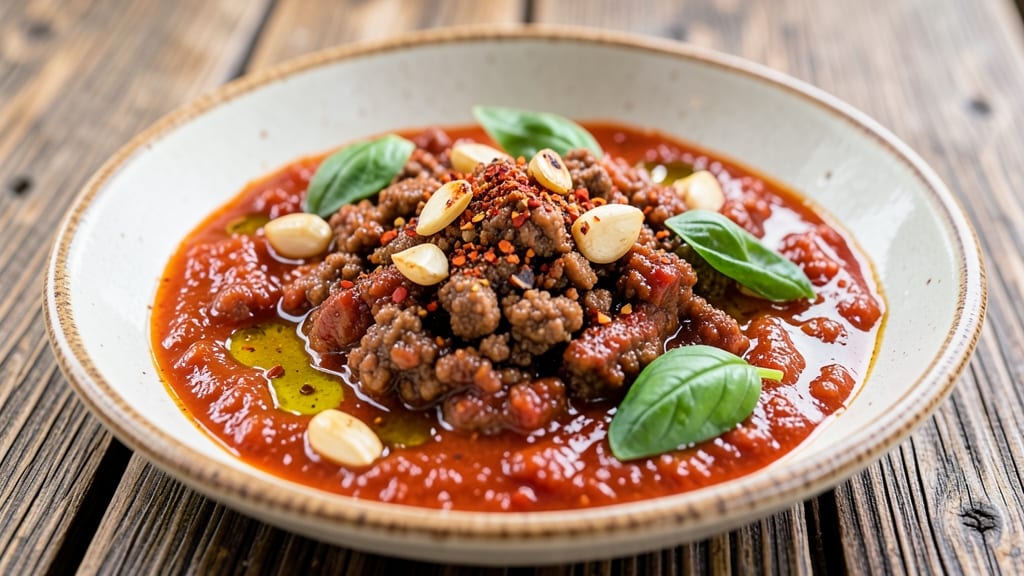
This arrabbiata meat sauce recipe delivers the perfect balance of fiery tomato heat and rich, meaty depth that defines Roman cuisine. 🔥 The secret lies in slow-cooked ground pork that dissolves into the sauce, creating a velvety texture while chili flakes and garlic build layers of spicy complexity.
Unlike many quick versions, this method develops deep flavor through proper simmering—no shortcuts, just authentic Italian technique.
What sets this recipe apart is the technique: browning the meat thoroughly before deglazing with white wine creates a flavorful foundation, while canned San Marzano tomatoes provide that signature sweet-tart balance.
The sauce thickens naturally as it simmers, coating every bite with that perfect spicy-tangy richness. This isn't just a sauce—it's a flavor experience that transforms simple pasta into a restaurant-quality meal.
By the time you're done, you'll have a sauce that's bold enough to stand alone but perfect over al dente spaghetti or as a hearty meat-topped sauce. The chili heat lingers just right—enough to excite your palate without overwhelming it.
Serve with grated pecorino and fresh basil for that final authentic touch. Let's make this sauce from scratch.
This recipe works equally well as a weeknight dinner or weekend project—just adjust the cooking time. The beauty of arrabbiata lies in its versatility: use it for pasta, as a pizza topping, or even as a filling for stuffed shells.
The key is patience and proper technique, which I'll walk you through step by step. Here's everything you need to make authentic arrabbiata at home.
Ingredients for arrabiata meat sauce
The perfect balance of fiery tomato heat and rich, meaty depth awaits with these authentic ingredients.
| Ingredient | Amount | Notes |
|---|---|---|
| Ground Pork 🥓 | 1 lb | Italian pork sausage preferred |
| San Marzano Tomatoes 🍅 | 28 oz | Canned, crushed by hand |
| Extra-Virgin Olive Oil 🫒 | ¼ cup | For browning meat and deglazing |
| Garlic Cloves 🧄 | 4 cloves | Minced for maximum flavor |
| Dry Chili Flakes 🌶️ | 1 ½ tbsp | Adjust for heat preference |
| White Wine 🍷 | ½ cup | Dry variety like Pinot Grigio |
| Vegetable Broth 💧 | ½ cup | Low-sodium preferred |
| Fresh Basil Leaves 🌿 | ¼ cup | Chopped for garnish |
| Pecorino Romano Cheese 🧀 | ½ cup | Freshly grated from block |
| Salt 🧂 | 1 ½ tsp | Diamond Crystal preferred |
| Black Pepper 🌶️ | ½ tsp | Freshly cracked |
| Red Pepper Flakes 🌶️ | 1 tsp | Optional extra heat |
| Spaghetti 🍝 | ½ lb | Al dente preferred |
The ground pork is non-negotiable here—Italian pork sausage or a blend of pork and beef gives that authentic Roman depth. Trader Joe's and Whole Foods carry excellent options, but any quality ground pork works. Look for good marbling if buying whole cuts to grind yourself. The San Marzano tomatoes are worth the splurge—their sweet-tart balance is what makes this sauce sing. If you can't find them, whole peeled tomatoes crushed by hand will do, though the flavor won't be quite the same. Fresh basil and Pecorino Romano should be purchased from specialty shops if possible—they make all the difference in that final authentic touch.
No white wine? Dry vermouth or even apple cider vinegar will work in a pinch, though the flavor won't be identical. Running short on chili flakes? Crushed red pepper or cayenne at half the amount gets you close. The vegetable broth can be swapped for water, but low-sodium is key—you don't want to dilute the bold flavors. For extra richness, add 1 tbsp of tomato paste at the beginning. And if you're feeling adventurous, toss in a pinch of smoked paprika for depth. The spaghetti should be al dente—that's non-negotiable for the perfect texture contrast.
This sauce tastes even better the next day as the flavors meld. Store in an airtight container in the fridge for up to 5 days, or freeze for 3 months in portion-sized containers. The basil wilts fast, so store it wrapped in damp paper towels in a sealed bag. For leftovers, reheat gently on the stove with a splash of water or broth to restore that velvety texture. Double the recipe if you're feeding a crowd—it's that good.
Why You'll Love This Recipe
- No-Fuss Weeknight Win: I swear by this sauce when I’m too tired to fuss—just brown the pork, toss in the garlic and chili flakes, then let the San Marzano tomatoes do the work. The only real step is patience (and maybe a glass of wine while it simmers).
- Spicy-Sweet Magic: That first bite? The smoky depth of the pork, the bright acidity of the tomatoes, and the heat from the chili flakes waking up your taste buds—it’s the kind of sauce that makes you reach for another forkful without thinking.
- Leftovers That Shine: Between us, this sauce better taste better the next day. Reheat it with a splash of water, and it’s even richer—perfect for lazy lunches or tossing into pasta when you’re not feeling fancy.
- Budget-Friendly Powerhouse: Ground pork stretches further than you’d think, and a single can of San Marzano tomatoes feeds a family for days. Honestly, it’s the kind of recipe that makes me feel like I’m feeding a crowd without breaking the bank.
Step-by-step instructions for arrabiata meat sauce
Here's how to build a sauce that balances spicy tomato heat with rich, meaty depth—every step matters!
🔥 Step 1: Brown the Ground Pork Perfectly
Heat the 0.25 cup extra-virgin olive oil in a large, heavy-bottomed skillet over medium-high heat until shimmering. Add the 1 lb ground pork and break it up with a wooden spoon, letting it sizzle undisturbed for 5-6 minutes until it loses its raw color and turns deep golden brown. This step is crucial—it develops the meaty depth that sets this sauce apart from tomato-only versions.
Once the pork is fully browned, drain all but 1 tablespoon of the rendered fat (you'll need it for flavor later) and set the pork aside in a bowl. If you're using Italian pork sausage, break it into smaller pieces first for even cooking. The goal is crispy, caramelized edges on every piece—this creates the rich umami foundation for your arrabiata.
🍳 Step 2: Build Flavor with Aromatics and Wine
In the same skillet (no need to wipe it clean—those browned bits are pure flavor), add the 4 minced garlic cloves and cook for 30 seconds until fragrant but not browned. Here's where it gets exciting—pour in the 0.5 cup white wine and let it bubble vigorously for 2-3 minutes until reduced by half. This deglazing step captures all those meaty bits stuck to the pan, creating a velvety sauce base.
Stir in the 1.5 tbsp dry chili flakes and 1 tsp red pepper flakes (if using) and cook for another 30 seconds until the spices are toasted and aromatic. The wine should have mostly evaporated by now, leaving behind a rich, slightly spicy foundation. This is the moment when all the flavors start coming together—don't rush it.
🥘 Step 3: Simmer the Tomato Base
Add the 28 oz crushed San Marzano tomatoes, 1.5 tsp salt, and 0.5 tsp black pepper to the skillet. Stir well to combine, then bring to a gentle simmer over medium-low heat. Let it cook uncovered for 20-25 minutes, stirring occasionally, until the sauce thickens slightly and the acidity mellows. You're looking for a sauce that coats the back of a spoon but still has a vibrant red color.
Here's a pro tip: If the sauce gets too thick before the flavors meld, add 0.25 cup vegetable broth to loosen it. The tomatoes should break down into a smooth, velvety consistency with just a hint of their original texture. This is where the authentic arrabiata character develops—bright, spicy, and deeply tomato-forward without being watery.
⏰ Step 4: Finish with Cheese and Fresh Basil
Return the browned pork to the skillet and stir to combine, letting it heat through for 2-3 minutes. Reduce the heat to low and sprinkle in the 0.5 cup freshly grated Pecorino Romano cheese, stirring constantly until fully melted and smooth. The cheese should create a luxurious, creamy finish that balances the spicy heat.
Remove from heat and stir in the 0.25 cup chopped fresh basil leaves. Let the sauce sit for 5 minutes to allow the flavors to meld completely. The basil should brighten the sauce while the cheese adds a salty, umami richness. Taste and adjust seasoning—you might need a touch more salt or red pepper flakes to achieve the perfect balance of spicy, tangy, and savory.
🍽️ Step 5: Serve Over Al Dente Spaghetti
Cook the 0.5 lb spaghetti in salted boiling water until al dente (about 1 minute less than package instructions). Reserve 0.5 cup pasta water before draining. Toss the hot spaghetti with 2-3 tablespoons of the arrabiata sauce, then add the remaining sauce gradually, using reserved pasta water as needed to create a silky, clinging sauce.
Plate immediately, garnishing with additional grated Pecorino Romano cheese and fresh basil leaves. Each bite should deliver a perfect harmony of spicy tomato heat, rich pork flavor, and creamy cheese notes. Serve with crusty bread to soak up every last drop of that incredible sauce!
Pro Tips For Making Arrabiata Meat Sauce
- CRACK THE GARLIC: Smash those cloves with the flat side of your knife first—no chopping needed. This releases more flavor into the oil, and you’ll taste the difference when the pork starts browning. (Yes, it’s messy, but worth it.)
- SIMMER LOW AND LONG: After adding tomatoes, drop the heat to a bare simmer—think tiny bubbles, not rolling. Rushing this turns the sauce rubbery. I used to walk away after 45 minutes, but 1.5 hours lets the acidity mellow and the flavors meld. (Your future self will notice.)
- SALT THE TOMATOES FIRST: Toss crushed San Marzano tomatoes with a pinch of salt before adding them to the pot. This draws out excess water, concentrating their sweetness. Skip this, and you’ll end up with a thinner sauce that needs constant stirring to thicken.
- BROWN THE PORK IN BATCHES: Overcrowding the pan steams the pork instead of searing it. Work in two batches if needed, and don’t skimp on olive oil—about 2 tablespoons per batch. Undercooked pork? Tastes bland. Overcooked? Turns to mush. Aim for a deep, caramelized crust before draining.
Troubleshooting your arrabiata meat sauce
Sauce Too Thin?
If your arrabiata sauce is too watery after simmering, don't panic—this happens when tomatoes haven't broken down enough. Reduce heat to low and simmer uncovered for another 10-15 minutes, stirring occasionally.
For instant thickening, mix 1 tbsp cornstarch with 2 tbsp cold water, stir into the sauce, and simmer 2-3 minutes until it reaches your desired consistency. 💫
Sauce Too Thick?
Over-thickened sauce is common when cooking too long. Loosen it by adding 2-3 tablespoons of hot water or reserved pasta water, then simmer gently for 5 minutes to blend.
If it's still too stiff, add 0.25 cup vegetable broth and cook until smooth. Remember, arrabbiata should coat the back of a spoon but still flow easily.
Meat Not Cooked Through?
If your pork feels undercooked after simmering, return it to the skillet and cook over medium heat for an additional 5 minutes, stirring occasionally. The internal temperature should reach 160°F.
For extra flavor, add 1 tbsp tomato paste to the sauce and simmer 2 minutes to deepen the meaty notes. Never skip this step—undercooked pork can ruin your sauce.
Lacking Spicy Heat?
If your sauce tastes mild, boost the heat by adding ½ tsp extra chili flakes or ¼ tsp cayenne pepper and simmer 2 minutes to toast the spices. For a smoky kick, stir in ½ tsp smoked paprika.
If you prefer a sweeter heat, add 1 tsp honey or 1 tbsp balsamic vinegar to balance the spice. Taste as you go—arrabbiata should have a noticeable but not overwhelming heat.
Sauce Tastes Bland?
Bland sauce usually means the flavors haven't melded properly. Boost it by adding 1 tbsp red wine vinegar for brightness, ½ tsp dried oregano for depth, or 1 anchovy fillet (mashed) for umami.
Simmer 5 minutes to let the new flavors integrate. The key is patience—authentic arrabbiata builds flavor through slow cooking, not quick fixes.
Cheese Not Melting?
If your Pecorino Romano stays clumpy, reduce the sauce heat to lowest setting and stir constantly for 3-4 minutes until fully melted. For extra help, add 1 tbsp heavy cream or 1 tbsp pasta water to create an emulsifying agent.
Avoid high heat—it can cause the cheese to separate or develop a soapy taste. The sauce should be silky smooth with no visible cheese chunks.
Nutrition facts
Frequently asked questions
Can I substitute ground beef for pork in arrabbiata?
Yes, but pork gives the sauce its authentic richness. Use 80% lean ground beef for the best texture, and add 1 tbsp tomato paste to compensate for the pork's natural fat. For extra depth, mix half pork and half beef. The sauce will still be delicious but with a slightly different umami profile.
How do I adjust the heat level in this sauce?
The recipe starts with 1.5 tbsp chili flakes for a balanced spice. For more heat, add ½ tsp cayenne pepper or 1 tsp crushed red pepper. To mellow it, reduce the chili flakes to 1 tbsp and add 1 tsp sugar or 1 tbsp balsamic vinegar to balance. Taste as you go—arrabbiata should have a noticeable kick without being overwhelming.
Can I make this sauce in a slow cooker?
Brown the meat and aromatics first, then transfer everything to the slow cooker and cook on low for 6-8 hours or high for 3-4 hours. The slow cooking enhances the meaty depth. Add 0.25 cup broth if the sauce gets too thick. The flavors will meld beautifully, though the texture will be slightly thicker than stovetop.
What's the best way to store leftovers?
Let the sauce cool completely, then transfer to an airtight container. It keeps in the fridge for 5 days or freezes for 3 months. For reheating, warm gently on the stove with a splash of water or broth. The flavors actually improve overnight as the ingredients meld further. Store the basil separately and add fresh when serving.
Can I use arrabbiata sauce for other dishes besides pasta?
This versatile sauce works perfectly on pizza, as a meat topping for polenta, or stuffed into ravioli. For pizza, spread 2-3 tbsp per crust and top with mozzarella. For polenta, spoon the sauce over and broil until bubbly. The rich tomato-meat combination elevates any dish it touches—just adjust the thickness for different applications.