
Sauces & Condiments
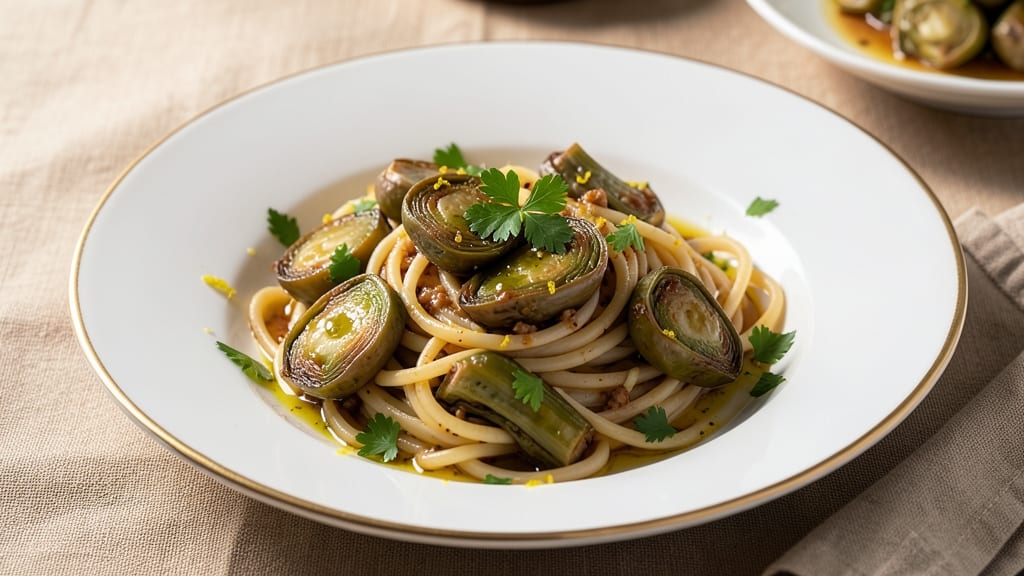
This artichoke pasta sauce transforms simple weeknight dinners into restaurant-worthy meals with its bright, herb-infused profile and satisfying crunch. The secret lies in blending tender artichoke hearts with garlic, lemon zest, and fresh herbs, creating a sauce that's both creamy and vibrant.
What sets this apart is the optional celery topping—crispy, caramelized bits that add texture and depth with every bite.
The base builds on classic Italian techniques but with a modern twist—no heavy cream needed to achieve that velvety consistency.
Instead, we rely on a combination of olive oil, lemon juice, and a touch of Parmesan (or nutritional yeast for a vegan version) to create a sauce that clings beautifully to pasta.
The artichokes provide natural creaminess while their slight bitterness balances the richness, making this sauce versatile enough for penne, grilled chicken, or roasted vegetables.
What you'll end up with is a sauce that's bright enough to cut through rich proteins yet rich enough to stand alone. The celery topping adds a satisfying crunch that contrasts perfectly with the smooth sauce, while the herbs infuse freshness that keeps the flavors lively.
This isn't just a side—it's the star of your plate, elevating even the simplest ingredients into something extraordinary.
Best of all, this sauce keeps beautifully in the fridge for up to five days, making it perfect for meal prep.
Whether you're serving it over pasta, drizzling it on grilled fish, or using it as a dip for crusty bread, this artichoke pasta sauce delivers restaurant-quality results with minimal effort. Let's get started!
Ingredients for artichoke pasta sauce
Nine simple ingredients transform into a bright, restaurant-worthy sauce with satisfying crunch.
| Ingredient | Amount | Notes |
|---|---|---|
| Marinated Artichoke Hearts 🌿 | 14 oz | Drained and chopped |
| Extra-Virgin Olive Oil 🫒 | ½ cup | High quality, fruity |
| Garlic Cloves 🧄 | 4 cloves | Peeled and minced |
| Lemon Zest 🍋 | 1 tbsp | Freshly grated |
| Fresh Lemon Juice 🍋 | 2 tbsp | Freshly squeezed |
| Fresh Flat-Leaf Parsley 🌿 | ¼ cup | Chopped, stems removed |
| Fresh Basil Leaves 🌿 | ¼ cup | Chopped, stems removed |
| Nutritional Yeast 🧂 | ¼ cup | For cheesy flavor (vegan) |
| Celery Stalks 🥬 | 2 whole | Thinly sliced for topping |
| Salt 🧂 | 1 tsp | Diamond Crystal preferred |
| Black Pepper 🌶️ | ¼ tsp | Freshly ground |
The artichoke hearts are the star—marinated ones from Trader Joe's have the best flavor, but any jarred kind works. Look for ones packed in water or light brine (not oil) for cleaner taste. Fresh herbs are non-negotiable here: parsley and basil from the grocery store produce section (the plastic-wrapped kind) will work, but if you've got a farmers market nearby, grab the freshest you can find. The nutritional yeast is what gives that cheesy depth without dairy—Bob's Red Mill brand is my go-to, but any store-brand works fine. Celery? Any kind will do, but crisp, fresh stalks make the best crunchy topping.
No fresh herbs? Dried parsley or basil at half the amount gets you close, though it won't be as vibrant. Short on nutritional yeast? Skip it entirely—the sauce will still be delicious, just more herb-forward. The artichoke hearts can be water-packed or oil-packed, but drain them well before chopping. For the celery topping, thin slices caramelize best—use a mandoline if you're feeling fancy. The lemon zest and juice are what brighten everything up, so don't skimp here. If you're making this ahead, store the sauce and celery separately—the celery keeps its crunch better that way.
This sauce keeps beautifully for 5 days in the fridge, and the celery topping stays crisp if you store it separately. Freeze the sauce portion for up to 3 months—just thaw it in the fridge overnight. For the celery topping, toss it with a little olive oil and salt before storing to keep it from drying out. I like to make a double batch—one for dinner and one to freeze for lazy nights. The celery topping can be made ahead too, just reheat it in a dry pan for 2-3 minutes before serving to restore its crispness.
Why You'll Love This Recipe
- No-Chop Required: I swear by jarred artichoke hearts here—just drain, chop once with a knife, and toss. That’s it. No peeling, no waiting for fresh artichokes to steam, just the good stuff ready in minutes.
- Bright & Tangy Magic: The lemon zest and juice cut through the richness of the olive oil like a breath of fresh air. Honestly, the first time I added it, I thought, "Why didn’t I do this sooner?"—it’s that good.
- Meal Prep MVP: This sauce keeps for days in the fridge, and it only gets better as the flavors meld. I make a big batch on Sundays, toss it with pasta, and have effortless lunches all week. (Yes, even on a Tuesday night.)
- Budget Bright Spot: Marinated artichokes are cheap, and a little goes a long way. I stretch this sauce over fettuccine, mix it into grains, or even slather it on toast—always feels fancy, never breaks the bank.
Step-by-step instructions for artichoke pasta sauce
This bright, herb-infused sauce comes together in minutes with simple techniques.
Sauté Garlic in Olive Oil Until Fragrant
Heat the 0.5 cup extra-virgin olive oil in a large skillet over medium heat until shimmering but not smoking. Add the 4 minced garlic cloves and cook for 30-45 seconds until the garlic releases its aroma and turns golden around the edges.
Here's the thing—don't let it brown or it'll turn bitter. You're just looking for that sweet garlic scent to fill your kitchen. If the oil starts to bubble vigorously, reduce the heat slightly. The garlic should be soft but still bright in color when done.
Add Artichokes and Lemon for Bright Flavor
Drain and chop the 14 oz marinated artichoke hearts into small, even pieces. Add them to the skillet with the garlic and cook for 2-3 minutes until heated through. Stir in the 1 tablespoon lemon zest and 2 tablespoons fresh lemon juice, letting the mixture simmer gently for 1 minute.
The lemon zest will brighten everything up while the juice adds a tangy contrast to the rich artichokes. At this point, you should smell that fresh, citrusy aroma—this is where the sauce starts to come alive. If the mixture looks too dry, add 1-2 tablespoons water to keep it loose.
Build the Herb and Nutritional Yeast Base
Reduce the heat to low and stir in the 0.25 cup chopped fresh parsley, 0.25 cup chopped fresh basil leaves, and 0.25 cup nutritional yeast. Cook for 1-2 minutes until the herbs wilt slightly but still retain their vibrant color. Season with the 1 teaspoon salt and 0.25 teaspoon black pepper.
This is where the magic happens—the herbs release their oils while the nutritional yeast adds that cheesy depth without any dairy. Give everything a good stir so the herbs distribute evenly. The sauce should look glossy and well-combined, with visible herb flecks throughout.
Prepare the Crunchy Celery Topping
While the sauce simmers, thinly slice the 2 whole celery stalks into paper-thin rounds. You can use a mandoline for perfect slices, or carefully slice by hand. The thinner you cut them, the better they'll crisp up.
Here's a pro tip: Toss the sliced celery with 1 teaspoon olive oil and a pinch of salt. Spread them out on a baking sheet and bake at 375°F for 8-10 minutes until golden and crisp. Watch them closely—they'll crisp in seconds once they start browning.
Combine and Serve Immediately
Toss the warm pasta directly in the skillet with the sauce, coating it evenly. If the sauce seems too thick, add 2-3 tablespoons pasta water to loosen it. Transfer to serving plates and immediately top with the crispy celery slices.
Serve while everything is hot for that perfect texture contrast—creamy, herby sauce with crisp celery on top. The sauce should cling beautifully to the pasta with that bright, lemony flavor shining through. Don't skip the celery topping—that crunch makes all the difference!
Pro Tips For Making Artichoke Pasta Sauce
- Drain and Pat Dry: Marinated artichoke hearts cling to their briny liquid like glue—skip draining, and your sauce will taste like a pickle jar. After draining, spread them on a towel and press gently with another towel (yes, even if they’re stubborn). This guarantees they crisp up properly in the oil instead of steaming in their own juice.
- Sweat Garlic Low: I learned this the hard way—burnt garlic ruins everything. Use a wide pan and cook the minced cloves over low heat with a splash of olive oil until just golden, not brown. If you’re impatient like me, stir constantly and resist the urge to crank the heat.
- Zest Before Juicing: Fresh lemon zest has more flavor than juice, but most people waste it by zapping the whole fruit. Use a fine grater and rub the peel over the sauce before juicing—this releases oils that brighten the dish instantly. Save the juice for finishing, not mixing in early.
- Finish with Oil: Tossing the pasta with olive oil after cooking seals the sauce and adds richness. Use about 1 tablespoon per serving—just enough to coat the strands. (I know, I know, but trust the process: this is the thing that makes it taste restaurant-worthy.)
Common mistakes when making this dish
Overcooking Garlic
Watch that garlic like a hawk—it burns faster than you think! When those cloves turn golden around the edges, they're ready. Once they brown, they release bitter compounds that ruin the delicate balance of flavors.
I've learned this the hard way after making sauce taste like a charred campfire. Keep the heat at medium and remove the garlic immediately after 30-45 seconds. 🌡️
Skipping the Lemon
The lemon zest and juice aren't just for flavor—they're the secret to that bright, restaurant-quality taste. Without them, your sauce will taste flat and one-dimensional. I once made this sauce without lemon and was shocked at how dull it was.
Add the zest first, then the juice, and let it simmer for that crucial 1 minute to really wake up the flavors.
Using Dried Herbs Only
Fresh herbs make all the difference in this sauce. Dried herbs won't provide that vibrant pop of flavor you're going for. If you're short on fresh parsley or basil, use a mix of both fresh and dried—about half the amount of dried herbs.
I keep a small pot of fresh herbs on my windowsill so I always have them ready when I need them.
Ignoring the Celery Topping
Don't skip the celery topping—it's what gives this sauce its signature crunch and texture contrast. If you're in a rush, at least thinly slice it and sauté it for 1-2 minutes in the same pan as the sauce.
The celery adds a fresh, slightly sweet note that balances the richness of the artichokes. I've tried this sauce without it, and it's just not the same!
Not Adjusting Seasoning
Taste your sauce as you go and adjust the seasoning. The artichokes and herbs can vary in saltiness, so you might need to add more salt or lemon juice at the end.
I like to taste it after adding the herbs and nutritional yeast, then again after combining with the pasta. A little extra salt or a splash of lemon juice can make all the difference. 💡
Using Low-Quality Olive Oil
Don't skimp on the olive oil—it's the foundation of this sauce. A high-quality, fruity extra-virgin olive oil will make your sauce taste luxurious. I always reach for California Extra Virgin or Colavita brands.
Cheap oil will make the sauce taste flat and unappetizing. The right oil adds a rich, fruity depth that ties all the flavors together.
Nutrition facts
Frequently asked questions
Can I make this artichoke sauce without nutritional yeast?
If you're avoiding nutritional yeast or don't have it on hand, simply omit it and add ¼ cup grated Parmesan cheese instead for that same creamy, cheesy depth. The sauce will still be delicious—just slightly richer. For a dairy-free alternative, try ½ cup cashew cream blended with a splash of pasta water to thin it out.
How can I make this sauce ahead of time?
This sauce keeps beautifully for 5 days in the fridge when stored in an airtight container. For best results, store the sauce and celery topping separately—the celery stays crisp longer that way. Reheat the sauce gently on the stove with a splash of water or pasta water to restore its creamy texture. To freeze, portion into 1-cup containers and freeze for up to 3 months. Thaw overnight in the fridge before reheating.
What's the best pasta shape for this sauce?
This bright, chunky sauce pairs perfectly with pasta shapes that have ridges or crevices to hold it—think penne, fettuccine, or rigatoni. For extra texture contrast, try farfalle or gemelli. If you're using smooth pasta like spaghetti, toss it with the sauce and top generously with the crispy celery. The sauce also works well as a dip for crusty bread or a topping for grilled chicken or fish.
Can I substitute jarred artichoke hearts with fresh?
Fresh artichokes will work, but they require more prep! Trim off the tough outer leaves, cut off the top and bottom, then slice the artichoke in half lengthwise and remove the choke. The flesh can be chopped and used just like jarred hearts, but you'll need about 3-4 medium fresh artichokes to match the flavor and texture of 14 oz jarred. Fresh artichokes have a slightly more intense flavor, so you might want to reduce the lemon slightly if you prefer a milder taste.
Why does my sauce look too thick after cooking?
If your sauce seems too thick, it's likely because the artichokes released their moisture and it evaporated during cooking. The fix is simple: add 2-3 tablespoons pasta water or plain water, one tablespoon at a time, while stirring constantly. The sauce should coat the back of a spoon but still be loose enough to drizzle. If you're serving it over pasta, toss it in the hot pasta water to loosen it further.