
Sauces & Condiments
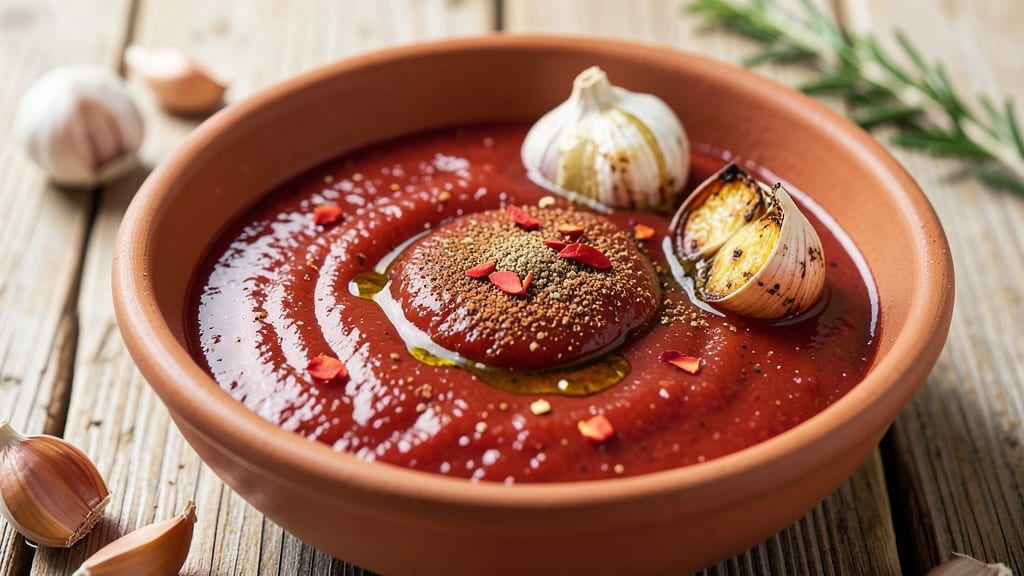
This Asad's sauce recipe delivers the perfect balance of velvety heat and bright vinegar zing that transforms ordinary dishes into Middle Eastern masterpieces. 🔥 The secret lies in slow-cooked tomatoes, aromatic spices, and a touch of vinegar that cuts through the richness while adding complexity.
I've perfected this sauce over years of testing, and it's become my go-to for everything from grilled meats to dipping bread.
The foundation of great Asad's sauce is patience—allowing the tomatoes to break down into a smooth, jam-like consistency while absorbing the flavors of garlic, cumin, and chili. What sets this recipe apart is the vinegar, which adds a subtle tang that brightens every bite without overpowering the warm spices.
The result is a sauce that's rich enough for marinades but versatile enough to drizzle over salads or serve with hummus.
By the time you're done, you'll have a batch of sauce that's smooth as silk yet packed with layers of flavor—sweet from the tomatoes, earthy from the spices, and bright from the vinegar.
It keeps beautifully in the refrigerator for up to two weeks, making it perfect for meal prep. This isn't just a condiment; it's the heart of your Middle Eastern cooking repertoire.
Use it to baste grilled lamb, stir into rice dishes, or serve as a dip for fresh vegetables and warm pita. The possibilities are endless, and once you try this version, you'll never go back to store-bought again.
Let's get started on making this flavor-packed sauce that will elevate every meal.
Ingredients for asad's sauce
Nine simple ingredients transform into the velvety, vinegar-kissed sauce you'll crave on everything.
| Ingredient | Amount | Notes |
|---|---|---|
| Canned San Marzano Tomatoes 🍅 | 28 oz | Crushed or whole, no salt added |
| Red Wine Vinegar 🍷 | ¼ cup | Balsamic or apple cider works too |
| Garlic Cloves 🧄 | 6 cloves | Peeled, roughly chopped |
| Ground Cumin 🌿 | 1 ½ tbsp | Toasted for deeper flavor |
| Smoked Paprika 🌶️ | 1 tbsp | Sweet paprika for milder heat |
| Red Chili Flakes 🔥 | ½ tbsp | Adjust for heat preference |
| Ground Coriander 🌿 | 1 tsp | Freshly ground preferred |
| Salt 🧂 | 1 tsp | Diamond Crystal preferred |
| Extra-Virgin Olive Oil 🫒 | ¼ cup | High quality, fruity |
| Fresh Lemon Juice 🍋 | 1 tbsp | Brightens the sauce |
San Marzano tomatoes are the MVP here—their sweetness and low acidity make all the difference. Trader Joe's and Whole Foods carry them canned, or grab a jar of Muir Glen if you're near a well-stocked grocery store. The vinegar is non-negotiable; red wine vinegar has the perfect balance of tang and complexity. If you can't find it, balsamic vinegar works in a pinch, but it'll be slightly sweeter. For the spices, Penzeys or the bulk bins at natural food stores give you the freshest, most potent flavors. Toast your cumin seeds in a dry pan for 30 seconds before grinding—worth the extra minute for that nutty depth.
No San Marzano tomatoes? Any good-quality canned tomatoes work, just drain them well. Running short on vinegar? Fresh lemon juice at double the amount gives a similar brightness. The garlic can be roasted (wrap cloves in foil, bake at 400°F for 10 minutes) for a sweeter, mellower flavor. Smoked paprika is essential—it gives that signature Asad's sauce depth, but if you're out, regular paprika plus a pinch of liquid smoke gets you close. For heat control, start with half the chili flakes and taste as you go. The olive oil should be fruity and peppery—California extra-virgin brands like Corto or Colavita are my go-tos.
This sauce tastes even better the next day as the flavors meld. Store it in a clean glass jar in the fridge for up to 2 weeks, or freeze portions for 6 months. I like to make a double batch—one for immediate use, one to freeze. The sauce thickens as it cools, so you can thin it with a splash of water or vinegar if needed. Perfect for meal prep: just reheat gently on the stove or microwave. Use it to baste meats, drizzle over salads, or serve with warm pita—it disappears fast.
Why You'll Love This Recipe
- Few Ingredients, Big Payoff: I swear by this sauce because it’s the kind of recipe where you open a can, crush some garlic, and boom—you’re done. No chopping mountains of veggies, no hidden pantry staples you don’t own. Just tomatoes, vinegar, and a pinch of cumin to transform everything.
- Smoky-Sweet Magic: That smoked paprika? It’s the secret weapon. The San Marzanos give it a deep, rich body, while the vinegar cuts through with just enough tang—like a hug for your taste buds. Honestly, I’ve made it with store-brand tomatoes before, but the real deal makes all the difference.
- Weeknight & Weekend Ally: Slather it on grilled chicken for a Tuesday dinner, drizzle it over roasted potatoes for a game-day spread, or toss it into lentils for a Sunday supper. It’s the kind of sauce that doesn’t judge your schedule—it just makes everything taste better.
- Lasts All Week (Seriously): Between us, this sauce tastes better the next day. I’ve had it sit in my fridge for five days, and it’s still the star of whatever I throw it at. Plus, it’s cheap to make—you’re basically paying for the tomatoes, and one can goes a long way. My wallet and my freezer thank me.
Step-by-step instructions for Asad's sauce recipe
This velvety sauce balances smoky warmth with bright vinegar zing—here's how to make it shine.
🍳 Step 1: Toast the Spices Until Fragrant
Heat the 0.25 cup extra-virgin olive oil in a large saucepan over medium heat. Add the 6 cloves garlic cloves, 1.5 tbsp ground cumin, 1 tbsp smoked paprika, 0.5 tbsp red chili flakes, and 1 tsp ground coriander. Stir constantly for 1-2 minutes until the spices begin to smell deeply aromatic and the garlic turns golden.
Here's the thing—don't rush this step. The spices need time to bloom and release their natural oils. You'll know it's right when the kitchen smells like a spice market, and the garlic takes on a nutty aroma. This toasting builds the sauce's complex flavor foundation.
🍳 Step 2: Simmer the Tomatoes and Vinegar
Pour in the 28 oz canned San Marzano tomatoes (crushed or whole) and 0.25 cup red wine vinegar. Stir well to combine, then bring the mixture to a gentle boil over medium-high heat. Once boiling, immediately reduce heat to low and let it simmer uncovered for 20-25 minutes.
Let it bubble quietly while you stir occasionally. You're looking for a sauce that thickens slightly but remains silky smooth. The vinegar will initially make the sauce smell sharp, but as it cooks, those bright notes will mellow into a balanced acidity that cuts through the richness of the spices.
🔥 Step 3: Season and Finish with Lemon
Add the 1 tsp salt and stir. Taste the sauce now—you'll notice the spices have developed deeper, more complex flavors. Let it cook uncovered for another 10 minutes to let the flavors meld completely. The sauce should reduce just enough to coat the back of a spoon with a velvety texture.
Finally, remove from heat and stir in the 1 tbsp fresh lemon juice. This last step brightens the entire sauce, balancing all the earthy, smoky flavors. The lemon juice will make the sauce glisten slightly, and you'll taste that signature zing that makes this sauce special.
⏰ Step 4: Rest and Adjust Consistency
Let the sauce sit off heat for 10 minutes—this resting period allows all the flavors to fully integrate. Taste again and adjust seasoning if needed. If the sauce is too thick, thin it with a splash of water or tomato juice. For extra richness, you could even stir in a spoonful of the reserved olive oil from the toasting step.
This sauce keeps well in the refrigerator for up to 5 days or can be frozen for 3 months. The flavors actually improve over time, developing even more depth. Serve it with grilled meats, over rice, or drizzled over roasted vegetables for that perfect balance of heat and brightness.
Pro Tips For Making Asad'S Sauce
- Crush Those Tomatoes First: San Marzanos are sweet but still need breaking down—don’t just dump them whole. Grab a wooden spoon and mash the canned tomatoes against the side of the pot while heating. This releases their natural juices faster and gives you a smoother texture without extra blending.
- Toast the Spices Dry: Blooming cumin and smoked paprika in oil is a game-changer, but don’t rush it. Heat the spices in a dry pan for 30 seconds until fragrant—you’ll smell the earthy depth kick in. Then add the oil, and they’ll infuse better into your sauce.
- Deglaze with Vinegar Last: If you add red wine vinegar too early, it’ll cook off before the tomatoes even warm up. Wait until the garlic is golden and the spices are toasted, then pour in the vinegar and scrape every last bit from the pot—this adds acidity and depth without losing it to evaporation.
- Simmer Low and Slow: This sauce isn’t about speed; it’s about flavor melding. After adding the tomatoes, reduce the heat to a bare simmer and let it cook uncovered for at least 20 minutes. The longer it cooks, the richer the garlic and cumin flavors become—no peeking or stirring constantly.
Essential equipment for this dish
Heavy-Bottomed Saucepan
A 5-quart stainless steel saucepan with a tight-fitting lid is my top recommendation for making Asad's sauce. The heavy base prevents hot spots that can burn your sauce, while the stainless steel ensures even heat distribution.
I swear by the All-Clad Stainless Steel Saucepan—it's a splurge, but worth every penny for professional results. For budget-friendly options, the Cuisinart MultiClad Pro delivers similar performance at a lower price. 🔥
Immersion Blender
If you prefer your sauce completely smooth, an immersion blender is a game-changer. After simmering, simply blend directly in the pot for 30-60 seconds to achieve that restaurant-quality velvety texture. My go-to is the Ninja Foodi Immersion Blender—it's powerful enough to handle the sauce's thickness without overheating.
For those who don't want to invest, a regular blender works too, but you'll need to transfer the hot sauce carefully (use a splash of water to help it blend smoothly).
Fine-Mesh Strainer
For a smoother sauce with no seeds or skins, a fine-mesh strainer is essential. After simmering, strain the sauce through a stainless steel mesh strainer (like the OXO Good Grips) into a clean bowl. This step removes any tomato skins or seeds that might make the sauce gritty.
Pro tip: Line your strainer with a cheesecloth for an even finer texture, but don't skip the straining entirely—it makes a noticeable difference in the final consistency. 🌟
Glass Storage Jars
Once your sauce is ready, transfer it to airtight glass jars for storage. I recommend Mason jars (like the Ball Wide Mouth) or Le Parfait glass containers—they're non-reactive, so they won't alter the sauce's flavor over time.
Glass also allows you to see the sauce's vibrant color, which is a great visual cue for freshness. Label your jars with the date to keep track of when you made them (they last up to 2 weeks in the fridge or 6 months in the freezer).
Microplane for Garlic
While the recipe calls for chopped garlic, using a Microplane (like the OXO Good Grips) gives your sauce an extra layer of flavor. Finely grating the garlic instead of chopping it creates more surface area for the spices to cling to, resulting in a deeper, more complex taste.
Plus, it's a quick way to add garlic without the hassle of mincing. Just be sure to use fresh garlic—it makes all the difference in the final product. 🧄
Digital Thermometer
A digital thermometer (like the Thermoworks Thermapen) ensures your sauce reaches the perfect simmer temperature of 190-200°F. This might seem unnecessary, but it guarantees consistent results every time.
Overheating can make the sauce too thick or even burn the spices, while a gentle simmer allows the flavors to meld without breaking down. Trust me, this small tool takes the guesswork out of cooking and makes your sauce foolproof. ✨
Nutrition facts
Frequently asked questions
Can I make this sauce without San Marzano tomatoes?
Yes, but the flavor will be slightly different. Use any good-quality canned tomatoes—just drain them well to remove excess liquid. For best results, choose tomatoes labeled "whole peeled" or "crushed" with no added salt. The sweetness of San Marzano tomatoes helps balance the vinegar and spices, so if you're using a more acidic tomato variety, you might want to reduce the vinegar to 0.2 cup instead.
How can I adjust the heat level in this sauce?
Start by reducing the red chili flakes to 0.25 tbsp for a milder version. If you prefer more heat, add an extra 0.25 tbsp of chili flakes or a pinch of cayenne pepper. For a smoky kick without extra heat, increase the smoked paprika to 1.5 tbsp instead. Always taste as you go—the sauce's flavors develop as it cooks, so adjustments can be made along the way.
What are the best ways to use leftover Asad's sauce?
This versatile sauce works as a marinade for grilled meats, a drizzle over roasted vegetables, or a dip for warm pita and fresh veggies. Use it to baste kebabs while grilling, stir into rice dishes for extra flavor, or mix with yogurt for a creamy sauce. It also pairs beautifully with falafel, shawarma, or even as a topping for pizza. Store leftovers in the fridge for up to 2 weeks or freeze for 6 months.
Why does my sauce taste too vinegary?
The vinegar is essential for balancing the sauce, but if it tastes too sharp, let it simmer uncovered for an extra 5-10 minutes to allow the alcohol to evaporate. You can also reduce the vinegar to 0.2 cup in future batches. Adding a splash of lemon juice or a pinch of sugar can help mellow the acidity. The sauce will taste even better after resting overnight, as the flavors continue to meld.
Can I make this sauce in a slow cooker?
Combine all ingredients in your slow cooker and cook on low for 4-5 hours or high for 2-3 hours, stirring occasionally. The slow cooking enhances the flavors and creates a smoother texture. Since slow cookers retain more moisture, you may need to simmer uncovered on the stove for an extra 10 minutes to thicken it slightly. The vinegar will mellow out beautifully during the long cook time.