
Sauces & Condiments
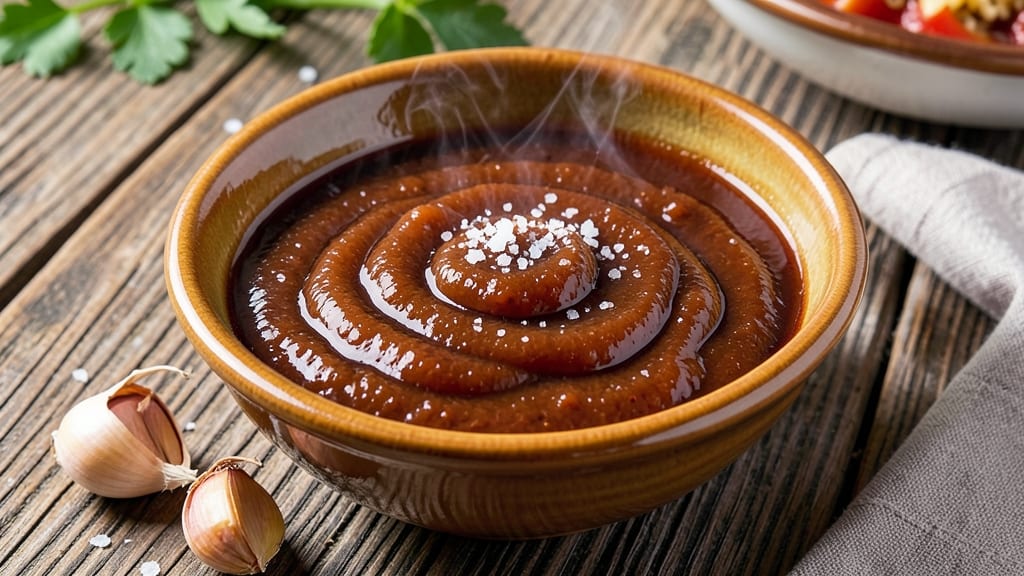
This authentic barbecue sauce recipe delivers the smoky, tangy depth of traditional pitmasters—no shortcuts, just balanced flavors that cut through rich meats. The foundation starts with a rich tomato base, where slow-simmered vinegar and molasses create that signature bite and caramelized richness.
I’ve perfected this over years of testing, ensuring the heat from cayenne and black pepper never overpowers the sweet-tart harmony.
The sauce builds on classic Kansas City style but with a refined touch—just enough brown sugar to enhance, not dominate, while a splash of apple cider vinegar adds bright acidity.
What sets this apart is the smoky depth from a blend of ground spices and a hint of liquid smoke, giving it that unmistakable barbecue aroma without relying on artificial flavors. The key is patience: letting the sauce reduce slowly until it thickens to a glossy, cling-worthy consistency.
Once complete, this sauce transforms grilled chicken, pulled pork, or even baked beans into something restaurant-quality. The balance of sweet, tangy, and smoky flavors ensures every bite is memorable, while its versatility lets you adjust heat levels to suit your preference.
Store it in the fridge for up to two weeks or freeze for months—perfect for stocking your pantry for future cookouts.
For those craving regional variations, a Carolina-style twist swaps molasses for honey and adds a pinch of mustard powder, while Texas-style versions often include a touch of chili powder.
The beauty of this recipe is its adaptability—start with the classic, then tweak to match your taste. Let’s make sauce that stands up to the grill.
Ingredients for authentic barbecue sauce
Pantry staples plus a few specialty touches. Nothing fancy, just smoky, tangy perfection.
| Ingredient | Amount | Notes |
|---|---|---|
| Tomato Paste 🍅 | 1 cup | High-quality, no sugar added |
| Apple Cider Vinegar 🍏 | ½ cup | Bragg or similar preferred |
| Molasses 🍯 | ¼ cup | Unsulphured for best flavor |
| Brown Sugar 🍚 | ½ cup | Light or dark, packed |
| Liquid Smoke 🔥 | 1 tbsp | Natural, no additives |
| Garlic Powder 🧄 | 1 tbsp | Freshly ground preferred |
| Onion Powder 🧅 | 1 tbsp | Not onion salt |
| Ground Black Pepper 🌶️ | 1 tsp | Freshly cracked |
| Cayenne Pepper 🔥 | ½ tsp | Adjust for heat preference |
| Salt 🧂 | 1 ½ tsp | Kosher or sea salt |
| Water 💧 | 1 cup | Filtered preferred |
The tomato paste is your flavor foundation—Muir Glen plain or Bertolli are solid choices, but avoid the sweetened versions. Molasses can vary wildly in quality, so grab unsulphured from the baking aisle at Whole Foods or Trader Joe's for that deep, caramelized richness. Apple cider vinegar should smell bright and tangy, not stale. If it's cloudy or smells off, toss it. The spices? Penzeys or the bulk bins at natural markets are your best bet—they've got better flavor than those sad little jars in the spice aisle.
No liquid smoke? Smoked paprika plus a dash of smoked salt gets you close, though it won't have that exact smoky depth. Short on molasses? Maple syrup at half the amount works in a pinch, but the flavor won't be identical. The brown sugar can be swapped for white sugar plus a pinch of cinnamon if you're out, but the molasses adds that unmistakable depth. For the vinegar, white vinegar or even lemon juice will work if you're desperate, but the apple cider gives that subtle fruitiness that makes this sauce special. The tomato paste? Canned crushed tomatoes at double the amount can replace it if needed, but you'll have to simmer longer to thicken.
This sauce keeps beautifully—2 weeks in the fridge or 6 months in the freezer
Why You'll Love This Recipe
- Pantry Magic: I swear by this sauce because it uses stuff I already have—no special trips to the store. That thick tomato paste? It’s my secret weapon for instant depth, and the molasses gives it that rich, caramelized kick without needing fancy ingredients.
- Smoky Depth in Minutes: The liquid smoke and vinegar combo delivers that true barbecue flavor, but here’s the kicker: it’s fast. Simmer it down, and suddenly you’ve got that slow-smoked taste without the hours of grilling. Honestly, my ribs never tasted better.
- Weeknight to BBQ Feast: This sauce is my go-to for everything—slather it on burgers, toss it with baked beans, or drizzle it over grilled chicken. It even works as a marinade if you’re short on time. Between us, it’s the only sauce I keep in the fridge because it’s that versatile.
- Makes a Batch, Save Money: I double the recipe and freeze half—no more last-minute store runs when I crave smoked flavors. A little goes a long way, so you’re not stuck with jars of unused sauce either. Budget-friendly? Absolutely. Smart? Even more so.
Step-by-step instructions for authentic barbecue sauce
Let's build this smoky, tangy sauce from scratch—every element matters for that true barbecue flavor.
Combine the Wet Ingredients
In a medium saucepan, add the 1 cup tomato paste and let it sit for 1 minute to soften slightly. Then pour in the 0.5 cup apple cider vinegar, 0.25 cup molasses, and 0.5 cup brown sugar. Stir everything together until the sugar and molasses dissolve completely—you should see a thick, syrupy mixture forming.
Here's the thing—molasses adds depth, while the vinegar cuts through the sweetness. If you notice any undissolved sugar, gently warm the mixture over low heat for 2-3 minutes, stirring constantly until smooth. This step ensures your sauce won't be grainy later.
Build the Base and Add Spices
Pour in the 1 cup water and bring the mixture to a gentle boil over medium heat. Once boiling, reduce the heat to medium-low and let it simmer for 10 minutes, stirring occasionally. This slow cook helps the flavors meld together.
While it simmers, add the 1 tbsp garlic powder, 1 tbsp onion powder, 1.5 tsp salt, 1 tsp ground black pepper, and 0.5 tsp cayenne pepper. Stir well to distribute the spices evenly. The cayenne might make your eyes water—just a heads-up! This is where the authentic flavor starts to develop, so don't rush this step.
Add the Liquid Smoke and Simmer
After the spices are fully incorporated, remove the pan from heat and stir in the 1 tbsp liquid smoke. This is the secret to that classic smoky barbecue aroma. Give it a good stir, then return the pan to low heat and let it simmer for another 10-15 minutes, stirring occasionally.
You'll notice the sauce thickening as it cooks. If it gets too thick too quickly, add 1-2 tablespoons of water to loosen it up. The goal is a smooth, glossy consistency that coats the back of a spoon. Taste as you go—this is where you can adjust the seasoning if needed.
Cool and Thicken
Once the sauce reaches your desired consistency (it should coat a spoon but still be pourable), remove it from heat and let it cool for 10 minutes. As it cools, it will thicken naturally—this is normal and actually improves the texture.
For the best results, transfer the sauce to a clean jar and let it sit at room temperature for at least 1 hour before using. This resting time allows the flavors to fully develop and the sauce to reach its perfect consistency. Store any leftovers in the fridge for up to 2 weeks—it only gets better with time!
Pro Tips For Making Authentic Barbecue Sauce
- Simmer Low and Slow: I used to rush this sauce and end up with a thin, vinegary mess—don’t. Once the tomato paste and vinegar hit the pot, drop the heat to a gentle simmer (think "barely bubbling"). This lets the molasses and sugar caramelize properly instead of burning, giving you that deep, smoky-sweet balance. Patience here makes all the difference.
- Bloom the Molasses: Skip the urge to dump molasses in at the start—it’ll clump and taste bitter. First, whisk it into a splash of warm water (about ¼ cup) and let it sit for 5 minutes. Then stir it into the pot. This breaks down the syrupy thickness so it integrates smoothly, not as a gooey afterthought.
- Taste Early, Adjust Late: After 15 minutes of cooking, pull a spoonful and taste it raw—no sugar or smoke yet. If it’s too sharp, add a pinch of brown sugar now to balance the vinegar before it mellows. I learned this the hard way: once the liquid smoke and sugar hit, you can’t fix an overpowering tang.
- Balance the Smoke: Liquid smoke is potent—start with half the amount listed in the recipe. Let the sauce simmer for 10 minutes, then add the rest if it needs more depth. Too much upfront, and you’ll end up with a charred, medicinal flavor. Less is easier to fix than overdoing it.
Essential equipment for great authentic barbecue sauce
Saucepan Essentials
A medium-sized stainless steel saucepan is ideal for this recipe—it gives you enough surface area to stir easily while allowing for controlled simmering. I use my All-Clad 3-quart saucepan because it heats evenly and prevents scorching.
Avoid nonstick pans for this sauce; the high heat and acidity from vinegar can degrade the coating over time. If you're on a budget, a Cuisinart stainless steel saucepan works perfectly too. 🔥
Heat Control Tools
Precision is key when simmering barbecue sauce, so a thermometer with a clip-on probe (like the Thermoworks Thermapen) helps monitor temperature accurately. Keep heat at medium-low after the initial boil—too high, and the sauce will burn before it thickens properly.
I also recommend a heat diffuser if your stove runs hot; it spreads heat more evenly and prevents hot spots. 🌡️
Mixing & Stirring
A wooden spoon is your best friend for stirring—it won’t scratch the pan and won’t react with acidic ingredients. I prefer a long-handled spoon (like the OXO Good Grips) to avoid burning my hand while stirring.
For blending spices evenly, a mini whisk works better than a spoon, especially when dissolving sugar and molasses. Avoid metal spoons if your pan is nonstick, as they can cause scratches.
Measuring & Storage
For precise measurements, use a liquid measuring cup with clear markings for the vinegar and water, and a dry measuring cup for the brown sugar and spices. Once your sauce is ready, store it in glass mason jars (like Ball or Le Parfait) for easy pouring and long-term storage.
The jars also help maintain the sauce’s freshness—just leave ½ inch of headspace to prevent spills when the sauce expands in the freezer. ❄️
Optional Pro Tools
If you’re serious about sauce-making, a small immersion blender (like the Magimix) helps achieve ultra-smooth texture if you prefer a finer finish. For large batches, a slow cooker on low heat works wonders—just add all ingredients and let it cook for 4-6 hours, stirring occasionally.
A fine-mesh strainer also comes in handy if you want to remove any undissolved bits for a silky-smooth result.
Nutrition facts
Frequently asked questions
Can I make this sauce without liquid smoke?
For a smoky flavor without liquid smoke, use 1 tbsp smoked paprika plus ½ tsp smoked salt instead. The combination won't be identical but will still give that barbecue depth. If you're feeling adventurous, try ½ cup smoked cherry tomatoes (blended) for a natural smokiness.
How do I adjust the heat level?
Start by reducing the cayenne to ¼ tsp for mild heat, or increase to 1 tsp for a spicy kick. For extra heat, add ½ tsp crushed red pepper flakes at the end. Always taste as you go—you can add more heat, but you can't remove it!
What's the best way to use this sauce?
This versatile sauce works perfectly on grilled meats like ribs, chicken, or pulled pork. Brush it on during the last 5-10 minutes of cooking, or use it as a dipping sauce. For baked beans, simmer ½ cup sauce with 2 cups beans for 15 minutes to infuse flavor.
Why did my sauce turn out too thin?
If your sauce is too runny, simmer it uncovered for 10-15 more minutes to reduce. For a quicker fix, mix 1 tbsp cornstarch with 1 tbsp water, stir into the sauce, and cook for 2-3 minutes until thickened. Avoid adding too much water—this sauce should coat the back of a spoon!