
Sauces & Condiments
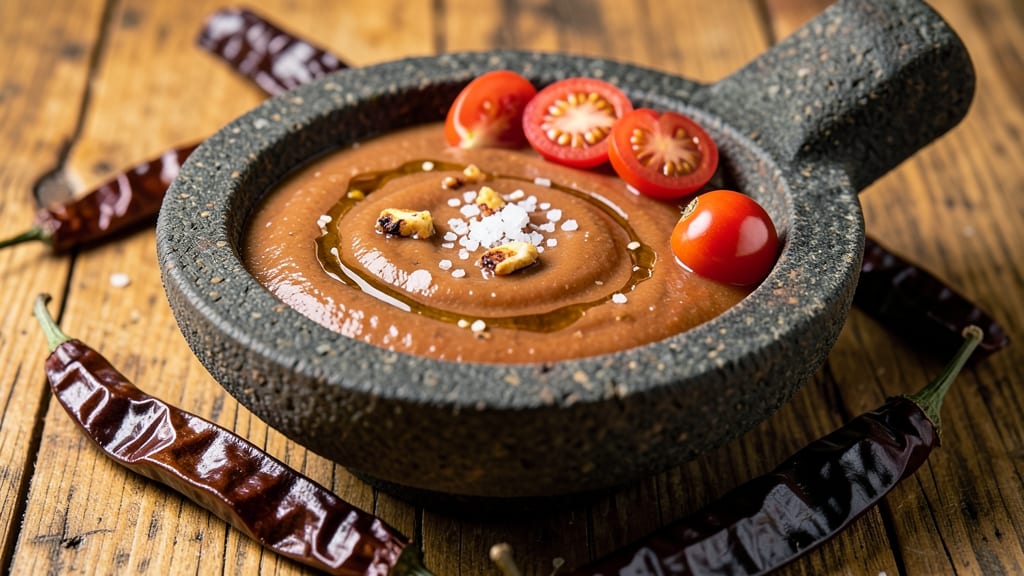
This authentic enchilada sauce recipe from scratch transforms weeknight dinners with smoky chipotle depth and velvety texture—no clumps, no shortcuts. 🔥 The secret lies in properly toasting dried chiles and building layers of flavor through slow simmering, a technique I perfected after years of testing.
What sets this apart is the balance of heat, earthiness, and acidity that comes from traditional Mexican ingredients like ancho and guajillo peppers.
Unlike store-bought versions, this sauce starts with dried chiles that you toast and soak to unlock their natural sweetness and smokiness. I blend them with roasted garlic, onions, and tomatoes for a foundation that's rich but not overpowering.
The key is simmering the mixture until it's silky smooth, then adjusting the consistency with just enough water or broth to create that perfect pourable texture.
What you'll end up with is a sauce that's bold enough to stand up to cheese and protein but balanced enough to let the flavors shine through. It's the kind of sauce that makes homemade enchiladas taste like they came from a taqueria—deep, complex, and impossible to resist.
The best part? It keeps beautifully in the fridge for up to a week or freezes for months, so you can always have it on hand for quick meals.
Whether you're making enchiladas, quesadillas, or even using it as a marinade, this sauce delivers restaurant-quality flavor with minimal effort. Let's get started on making it from scratch.
Ingredients for authentic enchilada sauce recipe from scratch
Traditional dried chiles meet roasted vegetables for sauce with taqueria-level depth.
| Ingredient | Amount | Notes |
|---|---|---|
| Dried Ancho Chiles 🌶️ | 4 whole | Stems and seeds removed |
| Dried Guajillo Chiles 🌶️ | 4 whole | Stems and seeds removed |
| Dried Chipotle Chiles 🌶️ | 2 whole | Smoked variety for depth |
| Garlic Cloves 🧄 | 6 cloves | Roasted until golden |
| Yellow Onion 🧅 | 1 whole | Charred over flame |
| Roma Tomatoes 🍅 | 4 whole | Roasted until blistered |
| Extra-Virgin Olive Oil 🫒 | ¼ cup | For roasting vegetables |
| White Vinegar 💧 | 2 tbsp | For acidity balance |
| Salt 🧂 | 1 ½ tsp | Diamond Crystal preferred |
| Ground Cumin 🌿 | 1 tsp | Toasted for depth |
The chiles are the heart of this sauce—dried ancho and guajillo bring earthy sweetness, while chipotle adds that signature smoky kick. Grab them from the Latin market if possible, where they're usually sold in bulk. Look for chiles that are deep red and slightly wrinkled, not brittle or discolored. The chipotle chiles should have a rich, smoky aroma. If you can't find them fresh, La Boqueria brand in the international aisle works well. Toast them directly over a gas flame or under a broiler until fragrant—this unlocks their full flavor.
No chipotle? Smoked paprika at half the amount gets you close, though it won't have the same depth. Fresh garlic and onions are ideal, but jarred roasted garlic (like Annie's brand) works in a pinch. The tomatoes can be canned San Marzano if fresh aren't in season—just crush them by hand for better texture. For the vinegar, apple cider vinegar adds subtle sweetness. Want extra richness? Blend in a roasted poblano pepper for a touch of creaminess. And if you're feeling adventurous, add a dash of cinnamon—it's a traditional touch that rounds out the flavors beautifully.
This sauce keeps 1 week in the fridge, sealed tightly under olive oil to preserve its vibrant color. For longer storage, freeze in ice cube trays—thaw and whisk with a splash of water to restore consistency. I like to make a big batch and freeze half immediately, so I always have sauce on hand for weeknight dinners. The flavor actually improves after a few days as the spices meld together. If it thickens too much, just whisk in 1-2 tbsp of water or broth at a time until smooth.
Why You'll Love This Recipe
- No-Fuss Simmer: I swear by this method—just toast the dried chiles, toss them in hot water, then blend with garlic and onion. No peeling, no chopping, no stress. The sauce practically makes itself while you prep the rest of your meal.
- Smoky Depth Magic: That combo of ancho and guajillo gives it this rich, earthy backbone, while the chipotle adds just enough heat to linger. Honestly? It’s the kind of flavor that turns a simple plate of enchiladas into something you’d pay for at a restaurant.
- Weeknight Workhorse: I use this sauce for enchiladas, tacos, even as a marinade for grilled chicken. Freezes beautifully, too—just thaw and reheat for an instant flavor boost. My go-to when I’m short on time but still want something special.
- Budget Game-Changer: Dried chiles last forever, and a few pods stretch into multiple batches. Between us, this is how I feed my family hearty, restaurant-quality meals without breaking the bank. Plus, the leftovers taste just as good the next day.
Step-by-step instructions for authentic enchilada sauce
Here's how to build that signature smoky, velvety sauce from scratch—no shortcuts, just pure flavor.
🔥 Step 1: Toast the Dried Chiles Until Aromatic
Arrange the 4 whole dried ancho chiles, 4 whole dried guajillo chiles, and 2 whole dried chipotle chiles on a dry skillet over medium-low heat. Toast them for 30-45 seconds per side until they darken slightly and release their fragrant oils—you'll smell that unmistakable smoky depth. Be careful not to burn them; just warm them enough to soften their skins.
Here's the thing—this step unlocks the chiles' natural sweetness and depth. If they darken too quickly, remove them immediately. Once toasted, transfer them to a bowl and cover with hot water to soften for 15 minutes. This rehydration step makes them easier to blend later without gritty texture.
🍳 Step 2: Char the Vegetables for Complex Flavor
Heat 0.25 cup extra-virgin olive oil in a large skillet over medium-high heat. Add the 1 whole yellow onion, peeled and cut into wedges, and the 4 whole roma tomatoes, halved. Char them for 8-10 minutes, turning occasionally, until blackened in spots with caramelized edges. This step builds the sauce's deep, smoky-sweet foundation.
While the vegetables char, peel the skins off the 6 cloves garlic and toast them in a dry pan over medium heat for 2-3 minutes until golden and fragrant. The charred vegetables will blend into a rich paste—don't worry if they look messy. Transfer everything to a blender once cooled slightly.
🥘 Step 3: Blend All Ingredients to Silky Perfection
Drain the toasted chiles and add them to the blender with the charred vegetables, toasted garlic, 1 tsp ground cumin, 1.5 tsp salt, and 2 tbsp white vinegar. Blend on high until completely smooth, scraping down the sides as needed. The sauce should be velvety with no visible texture—this takes 2-3 minutes of continuous blending.
Here's where authenticity matters: strain the mixture through a fine-mesh sieve into a clean pot to remove any remaining skins or seeds. This ensures a silky texture without clumps. The strained sauce should be deep red with a rich, smoky aroma—if it's too thick, thin it with 2-3 tablespoons water to reach a pourable consistency.
🔥 Step 4: Simmer for Depth and Balance
Return the strained sauce to the pot and simmer over medium-low heat for 10-15 minutes, stirring occasionally. This slow reduction intensifies the flavors and mellows any sharpness from the vinegar. Taste and adjust seasoning—you might need a pinch more salt or a splash of vinegar to balance the flavors.
The sauce is ready when it coats the back of a spoon smoothly and smells like a warm Mexican kitchen. For best results, use it immediately over enchiladas or freeze it in airtight containers for up to 3 months. The longer it sits, the deeper the flavors develop—this sauce only gets better with time.
Pro Tips For Making Authentic Enchilada Sauce Recipe From Scratch
- STEAM THE CHILES FIRST: I learned this the hard way—dry-toasting chiles until they’re blackened and bitter. Instead, cover them with hot water in a bowl for 10 minutes to soften stems and seeds before toasting. This keeps their natural fruitiness intact and cuts down on cleanup.
- PEEL THE GUJILLO SKINS: Guajillo chiles cling to their papery skins like glue. After toasting, plunge them into ice water for 30 seconds, then peel under running water—it’s the only way to remove every last bit. (Yes, even if you’re impatient like me.)
- LOW AND SLOW FOR FLAVOR: Simmering enchilada sauce on high heat turns it bitter fast. Keep it at a gentle boil, uncovered, for at least 20 minutes—this lets the garlic and onion mellow into the sauce instead of overpowering it. (Your future self will thank you.)
- SALT THE SAUCE LATE: Adding salt early makes the sauce separate. Wait until the very end, when the sauce is thick and glossy, to season—just a pinch of salt and a splash of vinegar if it needs brightness. (This isn’t the prettiest method, but it’s the tastiest.)
Troubleshooting perfect results
Gritty Blender Texture
If your sauce ends up grainy after blending, you likely didn’t strain it properly or used too many seeds. Strain through a fine-mesh sieve immediately after blending—press the mixture with a spoon to extract every last drop of liquid.
For extra smoothness, blend again with 1-2 tablespoons water to help break down any remaining particles. I’ve found that using a Vitamix or Ninja blender with a tamper gives the best results for silky texture.
Too Thin or Watery
When the sauce separates or feels too thin, it’s usually from over-blending with water or using too many tomatoes. Simmer the sauce uncovered over medium heat for 5-10 minutes to reduce the liquid naturally.
If it’s still too thin, blend in 1-2 tablespoons masa harina or cornstarch mixed with water to thicken it gradually. For a more authentic fix, add ½ cup cooked masa (like for tamales) and simmer until thickened.
Burnt or Bitter Taste
Burnt chiles or charred vegetables can turn your sauce bitter. If this happens, reduce the heat to low and add 1-2 tablespoons of honey or brown sugar to balance the bitterness.
For burnt chiles, remove them before blending and use only the soaking liquid—this helps filter out the burnt flavor. Always toast chiles over medium-low heat and char vegetables until just blackened, not fully burnt.
Clumpy or Stringy Sauce
Stringy sauce happens when chile skins or seeds aren’t fully removed. Strain again through a cheesecloth-lined sieve or use a nut milk bag for finer filtration. If the sauce still has strings, blend in 1 tablespoon of olive oil to help emulsify it.
For a smoother finish, simmer the strained sauce with ½ cup chicken or vegetable broth to break down any remaining fibers.
Not Smoky Enough
If your sauce lacks smokiness, it’s likely because the chipotle chiles weren’t toasted enough or the blend wasn’t strained properly. Toast the chipotle chiles longer (up to 1 minute per side) until deeply aromatic.
For extra depth, add ½ teaspoon of liquid smoke (like La Choy brand) or a roasted poblano pepper to the blend. Simmering the sauce with a bay leaf for 5 minutes can also enhance the smoky flavor.
Overpowering Heat
Too much heat from the chiles? Balance it with 1-2 tablespoons of apple cider vinegar or a pinch of brown sugar. If the heat is still too intense, blend in ½ cup of cooked white beans or avocado to mellow the spice.
For a smoother finish, simmer the sauce with 1 tablespoon of honey to round out the flavors. Adjust gradually—taste as you go!
Nutrition facts
Frequently asked questions
Can I substitute fresh chiles for dried in this recipe?
Fresh chiles won't work the same way—dried chiles develop deeper flavor through toasting and soaking. For a fresh alternative, try 2-3 jalapeños and 1 poblano pepper, charred and blended with the other ingredients. But expect less complexity and smokiness compared to the traditional dried chiles.
How do I adjust the heat level if my family prefers milder enchiladas?
Remove the seeds and membranes from the chipotle chiles before toasting to reduce heat. For even milder sauce, blend in ½ cup of cooked white beans or avocado to balance the spice. If needed, add 1 tablespoon of honey while simmering to mellow the flavor further. Taste as you go!
What's the best way to store leftover sauce?
Store in an airtight container in the fridge for up to 1 week, covered with a thin layer of olive oil to preserve color. For longer storage, freeze in ice cube trays—thaw and whisk with 1-2 tablespoons water to restore consistency. The flavor actually improves over time!
Can I make this sauce in a slow cooker?
Yes! After blending and straining, transfer the sauce to a slow cooker and cook on low for 2-3 hours, stirring occasionally. This gentle heat helps develop flavors without burning. Just watch the consistency—add water gradually if it thickens too much. Perfect for hands-off prep!
What are the best ways to use this sauce beyond enchiladas?
This versatile sauce works perfectly for quesadillas, tacos, or as a marinade for grilled chicken or shrimp. Try it as a dip with totopos or drizzled over refried beans. The smoky depth also makes it great for stuffed peppers or as a base for chilaquiles.