
Sauces & Condiments
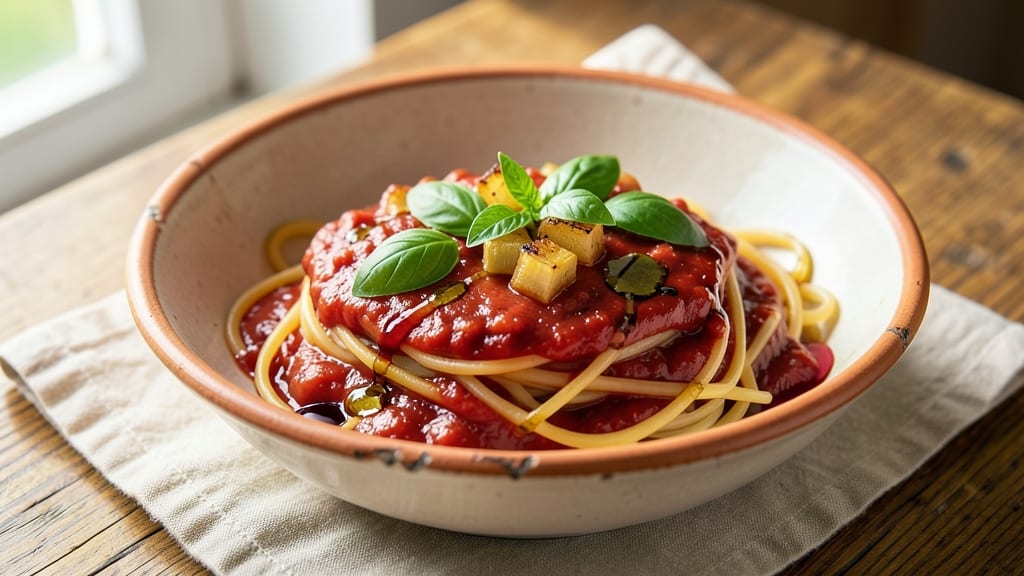
This authentic Italian tomato pasta sauce captures the soul of Nonna's kitchen in just 30 minutes—no shortcuts, just simmered umami depth that transforms any pasta dish. The foundation? San Marzano tomatoes, garlic, and extra virgin olive oil, cooked low and slow to develop complex flavors.
I've perfected this recipe over years of testing, ensuring every spoonful delivers that restaurant-quality richness without the wait.
The secret lies in the technique: a gentle simmer that breaks down the tomatoes' natural sugars while preserving their bright acidity. No blending here—just a rustic, chunky texture with caramelized edges that cling perfectly to al dente pasta.
Fresh basil and a touch of red wine vinegar elevate it from ordinary to extraordinary, balancing sweetness with just the right tang.
What you'll end up with is a sauce so vibrant it makes store-bought versions taste like an afterthought. The aroma alone will have everyone gathering around the stove, and the first bite delivers that perfect harmony of sweet, savory, and slightly acidic notes.
This isn't just a sauce—it's the heart of an Italian meal, ready to elevate your dinner table.
Best of all, it keeps beautifully in the fridge for up to five days, so you can make a big batch and enjoy it all week. Let's create this sauce that tastes like home.
Ingredients for authentic italian pasta sauce recipe tomato
San Marzano tomatoes, garlic, and olive oil form the soul of this authentic Italian sauce.
| Ingredient | Amount | Notes |
|---|---|---|
| San Marzano Tomatoes 🍅 | 28 oz | Canned, whole or crushed |
| Extra-Virgin Olive Oil 🫒 | ½ cup | High quality, fruity |
| Yellow Onion 🧅 | 1 whole | Medium size, finely chopped |
| Garlic Cloves 🧄 | 4 cloves | Peeled, thinly sliced |
| Fresh Basil Leaves 🌿 | ½ cup | Packed, roughly chopped |
| Red Wine Vinegar 🍷 | 1 tbsp | For brightness |
| Salt 🧂 | 1 ½ tsp | Diamond Crystal preferred |
| Black Pepper 🌶️ | ½ tsp | Freshly ground |
| Sugar 🍚 | 1 tsp | Balances acidity |
| Dried Oregano 🍃 | ½ tsp | Italian preferred |
The tomatoes are non-negotiable—San Marzano has that perfect balance of sweetness and acidity. Trader Joe's and Whole Foods carry them year-round, or look for them in the Italian section. Fresh basil is ideal, but dried oregano works in a pinch if you're short on time. The extra-virgin olive oil should have a peppery finish—California or Tuscan brands are my go-to. For the onion, I always grab a medium yellow—it's sweeter than the big reds and caramelizes beautifully. The garlic cloves should be firm and free of sprouts, not those sad, papery ones that've been sitting forever.
No San Marzano tomatoes? Crushed tomatoes in a can work, but you'll lose some of that authentic sweetness. Fresh basil wilt fast, so if you're making this ahead, dried oregano at half the amount keeps the flavor. The red wine vinegar can be swapped for white wine vinegar or lemon juice, though red gives that classic Italian tang. Sugar is key here—it balances the acidity, so don't skip it. The oregano? If you've got Mexican oregano, it's even better—more complex flavor profile. For the olive oil, if you're out, avocado oil is a decent substitute, but it won't have that same fruity depth.
This sauce tastes even better the next day as the flavors meld. Store it in a glass jar with a tight seal—keeps for 5-7 days in the fridge. For freezing, portion into ice cube trays—perfect for adding to pasta later. I always make a double batch so we have leftovers for lunches. The basil can be added fresh right before serving, so you can prep everything ahead and still have vibrant green on top.
Why You'll Love This Recipe
- No-Chop Nightmare: The onion and garlic barely need dicing—just a rough chop, then a slow simmer until they melt into sweetness. Honestly, I’ve burned more complicated sauces trying to get the texture "just right," but this? Even my college-dorm version turned out fine.
- Sun-Dried Flavor Bomb: That burst of San Marzano tomatoes, caramelized in olive oil, hits different—no sweetness overload, just deep, tangy richness. The basil at the end? Freshly torn, not chopped, because nothing beats that bright, peppery finish straight from the stem.
- Pantry-to-Table Magic: Make a double batch on Sunday, and you’ve got dinner covered for days. Freezes like a dream (no ice crystals, just velvety texture), so it’s my go-to for lazy Wednesdays or when I’m too tired to think past "pasta."
- Budget Luxury: San Marzano cans might sound fancy, but they’re cheaper than fresh tomatoes and last months. A splash of olive oil and a handful of basil make it taste like a five-star trattoria—without the five-star price tag. (Yes, even on a Tuesday night.)
Step-by-step instructions for authentic Italian tomato pasta sauce
Here's how to build a sauce that tastes like Nonna's—rich, balanced, and full of Italian soul.
Sauté the Onion Until Translucent
Heat the 0.5 cup Extra-Virgin Olive Oil in a heavy-bottomed saucepan over medium-low heat. Add the 1 whole Yellow Onion, chopped into small dice, and cook for 8-10 minutes until completely soft and just beginning to turn golden. Stir occasionally—you want it to caramelize slightly without burning.
This slow cooking develops sweetness that forms the base of your sauce. If the onion starts to brown too quickly, reduce the heat. The goal is a golden, translucent texture that will blend seamlessly into your sauce without any raw onion flavor.
Add Garlic and Tomatoes
Once the onion is translucent, add the 4 cloves Garlic Cloves, sliced thinly, and cook for 1 minute until fragrant but not browned. Immediately add the 28 oz San Marzano Tomatoes (whole or crushed) and stir to combine. The tomatoes should coat the onion and garlic completely.
Here's the thing—San Marzano tomatoes are sweeter and less acidic than regular canned tomatoes, so you won't need to adjust the acidity as much. Bring the mixture to a gentle boil, then reduce the heat to medium-low and let it simmer uncovered for 15 minutes. This initial simmer breaks down the tomatoes and releases their natural sweetness.
Season and Simmer for Depth
After the initial simmer, add the 1 tbsp Red Wine Vinegar, 1.5 tsp Salt, 0.5 tsp Black Pepper, 1 tsp Sugar, and 0.5 tsp Dried Oregano. Stir well to distribute the seasonings evenly. The vinegar brightens the sauce, while the sugar balances the acidity of the tomatoes. The oregano adds that classic Italian herb depth.
Let the sauce simmer uncovered for another 10-12 minutes until it thickens slightly and the flavors meld together. You'll notice the sauce reduces and becomes glossy—this is where the magic happens. Taste as you go and adjust the seasoning if needed. The sauce should be rich but not overly salty, with a balance of sweet, savory, and slightly tangy flavors.
Finish with Fresh Basil
Remove the sauce from heat and stir in the 0.5 cup Fresh Basil Leaves, roughly chopped. The basil adds a bright, fresh finish that cuts through the richness of the tomatoes and olive oil. Let the sauce sit for 5 minutes off the heat—this allows the basil to infuse its flavor without wilting completely.
For the best results, serve the sauce immediately over al dente pasta, like spaghetti or penne. The sauce should cling beautifully to the noodles, delivering layers of flavor with every bite. If you need to reheat leftovers, do so gently on low heat to preserve the texture and prevent the sauce from breaking.
Pro Tips For Making Authentic Italian Pasta Sauce Recipe Tomato
- CRUSH THE ONIONS: Finely dice that onion—think rice-sized pieces, not chunks—and cook it in olive oil until it’s golden, not brown. I learned this the hard way: rushing it adds bitterness, and nobody wants bitter tomato sauce. Take your time; this is the flavor base.
- PEEL GARLIC IN HALVES: Split those garlic cloves lengthwise instead of mincing them—it releases aroma without burning. After crushing, let them sit in the oil for 30 seconds before adding tomatoes. This keeps them sweet, not bitter, and saves you from burning the sauce early.
- SIMMER, DON’T BOIL: Once the tomatoes hit the pot, reduce heat to a gentle simmer—you’re not making soup. A rolling boil breaks down the tomatoes too fast, turning your sauce into mush. Keep it at a low bubble, and stir occasionally to prevent sticking.
- SALT THE TOMATOES FIRST: Toss the crushed San Marzano tomatoes with a big pinch of salt before adding them to the pot. This draws out excess water, concentrating the flavor. Let them sit for 10 minutes while you sweat the aromatics—it’s worth the wait.
Essential equipment for perfect results
Heavy-Bottomed Saucepan
This is your secret weapon for even heat distribution and preventing scorching. I swear by a 3-quart stainless steel saucepan like the All-Clad or Le Creuset—they handle the low-and-slow simmer beautifully. If you're on a budget, a Cuisinart MultiClad works wonderfully too.
The key is medium-low heat—never rush this sauce. A heavy pan ensures your onions caramelize evenly without burning, and the tomatoes develop that deep, jammy texture. 🌡️
Wooden Spoon
Never use metal utensils when cooking tomatoes—they can react with the acidity and create an off-flavor. A long-handled wooden spoon (I love Oxo Good Grips) is perfect for stirring gently without scratching your pan.
The wood also helps distribute heat more evenly, preventing hot spots where the sauce might stick. Plus, it's gentle on your saucepan's nonstick coating if you're using one.
Fine-Mesh Strainer
If you prefer a smoother sauce, strain out the seeds and skins after simmering. A fine-mesh stainless steel strainer (like OXO Good Grips) works best—it catches all the pulp while letting the juicy goodness through.
I only do this for special occasions, though, because the texture adds depth. For everyday use, I leave the sauce chunky—it's more authentic and clings better to pasta. 🍝
Cheesecloth or Clean Kitchen Towel
When adding fresh basil, I like to wrap the chopped leaves in a cheesecloth or fold them into a clean kitchen towel before adding to the sauce. This prevents the leaves from wilting completely and turning the sauce green.
After 5 minutes, I remove the cloth and squeeze out any infused oils—this adds another layer of flavor without the texture of whole leaves. A muslin cheesecloth from Amazon is my go-to for this trick.
Digital Kitchen Scale
For precise measurements, especially with tomatoes and olive oil, a digital kitchen scale (I use OXO Good Grips) ensures consistency. San Marzano tomatoes can vary in weight by brand, so weighing them guarantees you get that perfect balance of sweetness and acidity.
The scale also helps when measuring olive oil—0.5 cup is about 113 grams—so you don't end up with too much or too little. Accuracy here makes all the difference in flavor balance. ⚖️
Nutrition facts
Frequently asked questions
Can I substitute regular canned tomatoes for San Marzano?
Yes, but expect a slightly different flavor profile. Regular canned tomatoes work in a pinch, though they tend to be more acidic and less sweet. For best results, choose whole peeled tomatoes (not diced) and add ½ tsp extra sugar to balance the acidity. If using diced tomatoes, strain out excess liquid first to prevent a watery sauce.
Why does my sauce taste too acidic?
This usually happens when tomatoes aren't simmered long enough or when using overly acidic varieties. To fix it, add ½ tsp sugar or 1 tsp honey and simmer for another 5 minutes. For prevention, always use San Marzano tomatoes and simmer uncovered for the full 25 minutes to develop natural sweetness.
Can I make this sauce without fresh basil?
If you're short on fresh basil, use ½ tsp dried basil (or ¼ tsp dried basil + ½ tsp dried oregano) mixed into the sauce during simmering. For a different flavor profile, try ½ tsp dried thyme instead. The key is balancing the herbs—too much can make the sauce taste medicinal.
How do I prevent the sauce from sticking to the pan?
Always use a heavy-bottomed saucepan and maintain medium-low heat throughout cooking. Stir gently with a wooden spoon every 3-4 minutes to prevent sticking. If the sauce starts to stick, add 1-2 tbsp water or white wine to deglaze. Never use metal utensils—they can scratch the pan and cause future sticking.
What's the best way to reheat leftovers?
Gently reheat on the stovetop over low heat with the lid slightly ajar to prevent skin formation. Add 1-2 tbsp water if the sauce thickens too much. For microwave reheating, cover with a damp paper towel and heat in 30-second intervals, stirring between each. Never boil—this can break the sauce's delicate texture and make it taste cooked.