
Sauces & Condiments
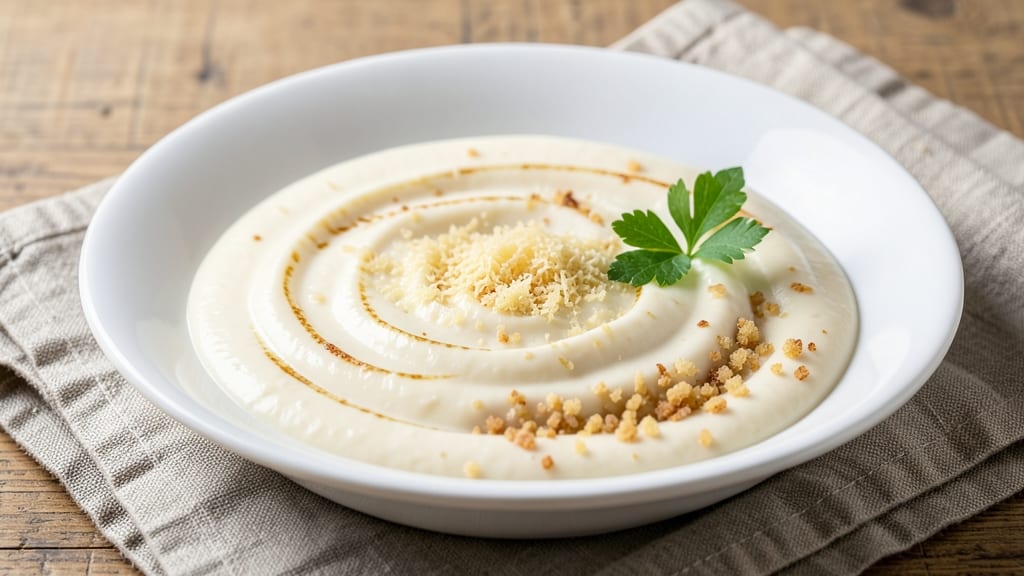
This authentic Italian white sauce recipe transforms simple pantry staples into velvety perfection that elevates every pasta dish. The secret lies in a perfect roux and egg emulsification—a technique that ensures restaurant-quality creaminess without lumps or separation.
I’ve perfected this version over years of testing, and it’s the foundation for my favorite Italian classics like fettuccine Alfredo and lasagna.
What sets this sauce apart is its foolproof method: a smooth butter-flour base cooked to a golden hue, then slowly combined with warm milk and enriched with egg yolks for that signature silky texture.
Nutmeg and Parmesan add depth, while garlic or white wine can be incorporated for variations. The result? A sauce so rich and balanced, it turns even the simplest pasta into a gourmet masterpiece.
This recipe delivers perfectly emulsified sauce every time—no guesswork, no failures. The key is patience: letting the roux develop flavor before adding milk, and tempering the eggs to prevent scrambling. Once mastered, you’ll never buy store-bought sauce again. Ready to elevate your Italian cooking? Let’s begin.
The beauty of this sauce is its versatility—use it for creamy pasta, as a base for béchamel, or even as a luxurious topping for grilled fish. It keeps well in the fridge for up to 3 days, making it ideal for meal prep.
For extra richness, stir in a splash of heavy cream or a handful of grated Pecorino Romano at the end.
Ingredients for authentic italian white sauce
Nine simple ingredients create velvety perfection for pasta that tastes like Nonna's.
| Ingredient | Amount | Notes |
|---|---|---|
| Unsalted Butter 🧈 | ½ cup | Cold from fridge for smooth roux |
| All-Purpose Flour 🌾 | ½ cup | Sifted for smooth texture |
| Large Egg Yolks 🥚 | 4 whole | Separated from whites |
| Whole Milk 🥛 | 2 cups | Warm, not boiling |
| Freshly Grated Parmesan Cheese 🧀 | ½ cup | Block preferred, not pre-grated |
| Ground Nutmeg 🌿 | ¼ tsp | Freshly grated preferred |
| Salt 🧂 | ½ tsp | Kosher or sea salt |
| White Wine (optional) 🍷 | ¼ cup | Dry variety preferred |
| Garlic Cloves (optional) 🧄 | 2 cloves | Minced for added depth |
| Heavy Cream (optional) 🥛 | ¼ cup | For extra richness |
The butter and flour are your foundation—don’t rush the roux. European-style butter from Trader Joe's or Whole Foods gives the best flavor, but any good-quality brand works. For the flour, King Arthur or Caputo are my go-tos, but all-purpose will do. The egg yolks? Separate them carefully—you only need the yolks for that signature creaminess. Pro tip: use room-temperature eggs—they emulsify better. And if you're feeling fancy, toast the flour in the butter for a nutty depth—worth the extra minute.
No Parmesan? Pecorino Romano works perfectly—just grate it yourself. Short on milk? Half-and-half or whole milk both work, but whole milk gives the richest texture. The nutmeg is non-negotiable for that authentic Italian flavor, but if you're out, a pinch of cinnamon can mimic it in a pinch. Want extra richness? Heavy cream or a splash of white wine adds complexity—just add it at the end. And if you're feeling adventurous, a clove of garlic or a pinch of lemon zest can take this sauce to the next level.
This sauce is best made fresh, but it reheats beautifully—just warm it gently on low heat, stirring constantly. Keeps in the fridge for 3-4 days, covered tightly. For longer storage, freeze in ice cube trays—thaw and reheat as needed. The key to reheating? Low heat only, or you'll risk breaking the emulsion. And if it ever separates? Just whisk in a splash of warm milk and you're back in business.
Why You'll Love This Recipe
- Five-Ingredient Magic: I swear, this sauce is the kind of recipe that makes you feel like a pro—just butter, flour, yolks, milk, and Parmesan. No fancy gadgets, no stress, just a sauce so smooth it’ll have you questioning why you ever bought store-bought.
- Rich Without Effort: That moment when you whisk in the egg yolks and the sauce thickens into velvety perfection? Pure satisfaction. The Parmesan adds this deep, nutty punch that turns ordinary pasta into something that feels special—no heavy cream needed.
- Weeknight Hero: I make this at least twice a week because it’s my secret weapon for lazy nights. Toss it with chicken, dump it over veggies, or slather it on toast—it’s the kind of sauce that turns leftovers into a meal. (Yes, even on a Tuesday night.)
- Budget-Friendly Luxury: Between us, this is one of those recipes that costs next to nothing but tastes like you spent hours in the kitchen. A little butter goes a long way, and that Parmesan? A small block stretches for days. Fancy dinner without the fancy price tag.
Step-by-step instructions for authentic Italian white sauce
Here's how to make that velvety, egg-enriched sauce Italians use for fettuccine al burro.
Make the Perfect Roux
Melt the 0.5 cup unsalted butter in a medium saucepan over medium-low heat. Once fully melted and foaming subsides, add the 0.5 cup all-purpose flour all at once. Stir constantly with a wooden spoon for 2-3 minutes until the mixture turns a pale golden color and smells nutty.
This is your roux foundation—don't rush it. You're looking for a smooth paste that coats the back of a spoon without being dark brown. If it starts to brown too quickly, reduce the heat slightly. The roux should be the color of pale toast, not chocolate.
Whisk in Warm Milk Gradually
Slowly pour in the 2 cups warm whole milk while whisking vigorously to prevent lumps. Keep the heat at medium-low and continue whisking for 5-7 minutes until the sauce thickens enough to coat the back of a spoon. You'll see the sauce transform from a thin liquid to a glossy, creamy consistency.
Here's the thing—if you add milk too quickly, you'll get lumps. I like to pour it in a thin stream while whisking constantly. The sauce should be smooth as silk by the time you finish. If it's still too thin after 7 minutes, let it simmer uncovered for another minute or two.
Create the Egg Emulsion
In a separate bowl, whisk together the 4 whole large egg yolks, 0.5 cup freshly grated parmesan cheese, 0.25 tsp ground nutmeg, and 0.5 tsp salt until smooth and pale. Slowly temper the egg mixture by ladling in about 1 cup of the hot sauce while whisking constantly.
Once the egg mixture is warmed through, gradually pour it back into the saucepan with the remaining sauce. Stir continuously over low heat for 3-4 minutes until the sauce thickens and becomes glossy. This is where the magic happens—the eggs create that authentic Italian creaminess that separates this sauce from basic béchamel.
Finish and Adjust
Remove from heat and stir in the 0.25 cup white wine (if using) and 2 minced garlic cloves (if using). Let it simmer gently for 1-2 minutes to allow the wine to cook off and the garlic to infuse. For extra richness, stir in the 0.25 cup heavy cream (if using).
Taste and adjust seasoning—you might need a bit more salt or nutmeg to balance the flavors. The sauce should be velvety smooth with a perfect balance of richness and acidity. If it's too thick, whisk in 1-2 tablespoons of warm milk to reach your desired consistency.
Use Immediately for Best Results
This sauce is best used immediately on freshly cooked pasta. Toss it with your favorite pasta while it's still hot, allowing the sauce to cling beautifully to each strand. The residual heat from the pasta will help the sauce coat evenly, creating that restaurant-quality finish.
If you need to reheat leftovers, do so gently over low heat, stirring constantly to prevent curdling. This sauce keeps well in the refrigerator for up to 3 days, but it's at its best fresh off the stove.
Pro Tips For Making Authentic Italian White Sauce
- Low and Slow for Creaminess: Whisk your butter and flour on medium-low heat—no rushing. I learned this the hard way after scorching three batches; the sauce thickens best when the heat stays gentle and steady, not when you’re impatiently stirring like your kitchen’s on fire.
- Whisk Like Your Life Depends on It: Use a wire whisk, not a spoon, and keep it moving constantly. Lumps in your roux mean future graininess in the sauce, and nobody wants that—especially when you’re going for that velvety Italian texture.
- Temper Those Yolks: Warm the milk first, then slowly drizzle it into the egg yolks while whisking furiously. Cold milk in hot yolks curdles faster than you can say disastro. Do this in a separate bowl before combining, and you’ll avoid that sad, lumpy mess.
- Parmesan Last, Not First: Add the grated Parmesan at the very end, off the heat, while stirring like you’re trying to win an arm-wrestling match. It melts better and keeps the sauce from breaking—plus, it gives that sharp, nutty finish that makes the whole dish sing.
Creative variations of these flavors
Classic Fettuccine Alfredo
This sauce was born for fettuccine—its wide, flat strands create the perfect surface for clinging to the creamy sauce. Cook 12 ounces fettuccine al dente, reserving ½ cup pasta water, then toss with the sauce while still hot.
For extra luxury, finish with ¼ cup crumbled pecorino Romano and a sprinkle of freshly cracked black pepper. 🍝
Creamy Risotto Base
Replace the milk with 2 cups warm chicken stock and reduce the butter to ¼ cup. Add the sauce at the end of cooking risotto (Arborio rice) for a velvety finish.
Stir in 1 tablespoon white wine and ½ cup grated Parmesan at the very end. This technique transforms risotto into a restaurant-worthy dish.
Seafood Sauce Twist
Add ½ cup heavy cream and 2 minced shallots to the finished sauce, then simmer for 2 minutes. Use this luxurious sauce over grilled shrimp or scallops with a sprinkle of parsley. The richness balances perfectly with delicate seafood proteins.
Vegetable-Friendly Version
For a vegetarian option, stir in 1 cup sautéed mushrooms or roasted asparagus at the end. Add 1 tablespoon lemon zest for brightness. This works beautifully with penne or farfalle pasta—just toss the sauce with the cooked pasta and veggies.
Pasta Bake Layer
Spread half-cooked pasta (like penne) in a baking dish, top with this sauce, then add a layer of mozzarella and Parmesan. Bake at 375°F for 15 minutes until bubbly. The sauce's creaminess prevents drying while adding rich flavor to every bite.
Sauce for Grilled Chicken
Use this sauce as a post-grill glaze for chicken breasts. Simmer the sauce with 1 tablespoon Dijon mustard and brush it over grilled chicken during the last 3 minutes of cooking. The sauce caramelizes beautifully, creating a sticky, flavorful crust.
Nutrition facts
Frequently asked questions
Can I use half-and-half instead of whole milk?
Yes, you can substitute 2 cups half-and-half for the whole milk, but the sauce will be slightly lighter in texture. For best results, use 1 cup whole milk + 1 cup half-and-half to balance richness and creaminess. The sauce will still emulsify beautifully, though the color may be paler.
Why did my sauce separate? How do I fix it?
Sauce separation usually happens when eggs scramble or heat is too high. To fix it, whisk in 1-2 tablespoons warm milk while stirring constantly over low heat until smooth. For prevention, always temper eggs with hot sauce gradually and keep heat at medium-low throughout.
Can I make this sauce without eggs?
Yes! For an egg-free version, replace the yolks with ½ cup mashed potatoes or cornstarch slurry (mix 2 tbsp cornstarch with 2 tbsp cold milk). Whisk this into the sauce at the end and simmer until thickened. The texture will be slightly lighter but still creamy.
How do I adjust the thickness for different dishes?
For pasta, aim for a consistency where the sauce coats the back of a spoon but isn't gluey. For lasagna, make it slightly thicker by simmering 1-2 extra minutes. To thin: whisk in warm milk. To thicken: simmer uncovered for 1-2 minutes or add 1 tsp cornstarch mixed with cold water.
What's the best cheese substitute if I don't have Parmesan?
Use ½ cup freshly grated Pecorino Romano (more pungent) or ¼ cup sharp white cheddar for a milder flavor. For a vegetarian option, try nutritional yeast (1 tbsp) mixed with a pinch of salt—it adds umami depth without dairy. Avoid pre-shredded cheese (it contains anti-caking agents that prevent smooth texture).