
Sauces & Condiments
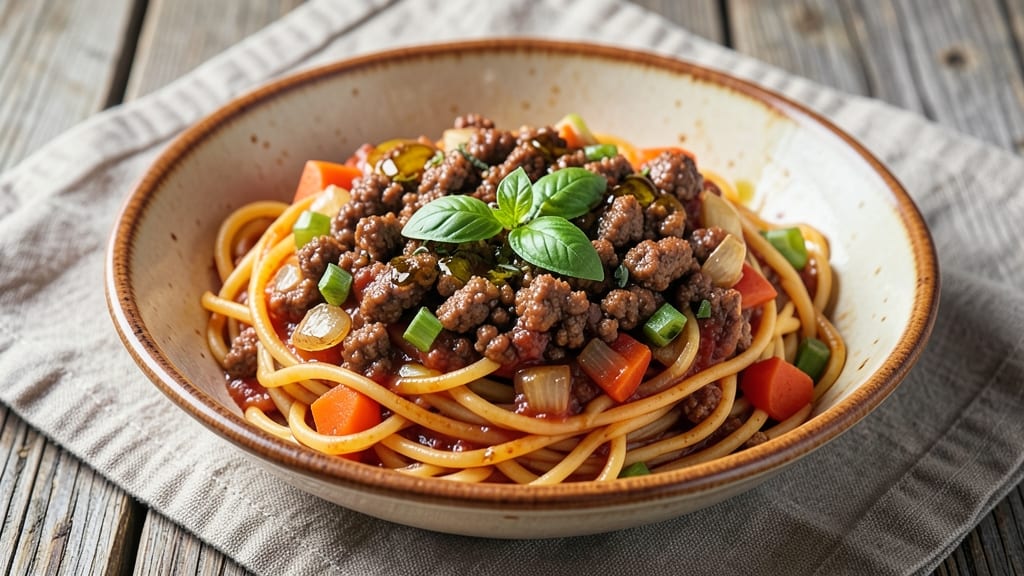
This authentic spaghetti meat sauce recipe transforms simple ingredients into a rich, slow-simmered ragù that clings to every strand of pasta like it belongs there. The secret lies in browning the meat properly and letting it develop deep, umami flavors over time—no shortcuts, just patience and technique.
I’ve perfected this recipe after years of testing, and it’s the kind that makes dinner feel like a celebration, even on a weeknight.
The foundation starts with a proper soffritto—onions, carrots, and celery cooked until soft—then ground beef or pork browned until deeply caramelized. Tomato paste and crushed tomatoes create the base, while red wine and herbs add layers of complexity.
The sauce simmers for hours, allowing flavors to meld into something richer than anything you’d find in a jar.
By the time you twirl that first forkful, you’ll taste the difference: tender meat, sweet tomatoes, and aromatic herbs all balanced perfectly. The sauce coats the pasta generously, leaving no strand untouched. Serve it with freshly grated Parmesan and a sprinkle of fresh basil for that final touch of authenticity.
This isn’t just a sauce—it’s a labor of love that turns a simple plate of spaghetti into a restaurant-worthy meal. Let’s get cooking.
Ingredients for authentic spaghetti meat sauce
The heart of this ragù lies in a proper soffritto and slow-simmered umami flavors.
| Ingredient | Amount | Notes |
|---|---|---|
| Ground Beef 🥩 | 1 ½ lb | 80% lean, finely ground |
| Onion 🧅 | 1 whole | Yellow or red, diced |
| Carrot 🥕 | 2 medium | Peeled, finely diced |
| Celery 🧄 | 2 stalks | Finely diced |
| Garlic Cloves 🧄 | 4 cloves | Minced |
| Tomato Paste 🍅 | ¼ cup | High quality, smooth |
| Crushed Tomatoes 🍅 | 2 cups | San Marzano preferred |
| Red Wine 🍷 | ½ cup | Bold, dry variety |
| Beef Broth 💧 | 1 cup | Homemade or quality store-bought |
| Tomato Sauce 🍅 | 1 cup | For finishing, optional |
| Fresh Basil Leaves 🌿 | ¼ cup | Chopped, for garnish |
| Fresh Parsley 🌿 | 0.1 cup | Chopped, for garnish |
| Dried Oregano 🍃 | 1 tsp | Or 1 tbsp fresh |
| Bay Leaves 🌿 | 2 whole | Removed before serving |
| Salt 🧂 | 1 ½ tsp | Kosher or sea salt |
| Black Pepper 🌶️ | ½ tsp | Freshly ground |
| Spaghetti 🍝 | 12 oz | Dry weight, per serving |
| Parmesan Cheese 🧀 | ½ cup | Freshly grated |
The ground beef is non-negotiable—80% lean gives you that perfect balance of flavor and texture. Costco or local butchers usually carry the best quality, finely ground beef. If you're using pre-ground from the store, pat it dry before browning to get that perfect crust. The soffritto trio—onion, carrot, and celery—should be finely diced, almost paste-like, so they dissolve into the sauce without chunks. San Marzano tomatoes are worth the splurge for their sweetness and acidity balance, but any quality canned tomatoes will work in a pinch. For the red wine, Cabernet Sauvignon or Chianti add depth without overpowering.
No red wine? Substitute beef broth with a splash of balsamic vinegar—it mimics the acidity and complexity. Fresh herbs are ideal, but dried oregano at one-third the amount works if you're short on time. The tomato paste can be replaced with 1 cup of crushed tomatoes if you prefer, though it won't have the same concentrated flavor. For a vegetarian twist, swap the beef for lentils or mushrooms, but the sauce will have a different texture. If you're short on carrots, substitute with an extra stalk of celery—it adds a similar earthiness.
This sauce tastes even better the next day as flavors meld together. Store it in an airtight container in the fridge for up to 5 days, or freeze portions for 3 months. I always make a double batch—one for dinner and one to freeze for lazy weeknights. When reheating, add a splash of water or broth to loosen it up. The Parmesan should be freshly grated at serving time for the best flavor—pre-grated cheese gets clumpy and loses its punch. Keep the fresh basil and parsley in the fridge, wrapped in damp paper towels, for up to 5 days.
Why You'll Love This Recipe
- No-Chop Struggle: I swear by the "sofrito" trick—just pulse onion, carrot, and celery in a food processor until they’re the consistency of wet sand. That’s it. No crying over onions, no tiny dice to lose down the sink.
- Umami Bomb: The ground beef gets browned just right, then simmered with garlic until it caramelizes—that’s where the magic happens. The slow cook lets those flavors meld into something so rich, my picky husband actually asks for seconds.
- Leftover Hero: This sauce only gets better the next day. Honestly, I make a double batch on Sundays because it’s the star of my lunchbox all week. Just reheat and toss—no sad, dry pasta here.
- Budget Stretch: Ground beef, a few veggies, and pantry staples? This feeds six for under $15. Between us, I’ve fed my book club, my college kid, and my grumpy dad with the same pot—no one complained. (They always ask for the recipe.)
Step-by-step instructions for authentic spaghetti meat sauce
This traditional method builds rich, layered flavor through slow simmering and proper technique.
Build the Flavor Base with Soffritto
Heat a large Dutch oven over medium heat and add the 1.5 lb ground beef. Cook until browned, breaking it into small pieces with a wooden spoon. This should take about 8-10 minutes. Remove the beef with a slotted spoon and set aside, leaving the rendered fat in the pot.
In the same pot, add the 1 whole diced onion, 2 medium finely diced carrots, and 2 stalks finely diced celery. Cook for 8-10 minutes, stirring occasionally, until the vegetables soften and release their moisture. Add the 4 minced garlic cloves and cook for 30 seconds until fragrant. This aromatic vegetable mixture is called soffritto - the foundation of authentic Italian meat sauce.
Develop Depth with Tomato Paste and Wine
Stir in the 0.25 cup tomato paste and cook for 2-3 minutes, stirring constantly, until it darkens slightly. This step deepens the sauce's color and flavor. Pour in the 0.5 cup red wine and scrape up any browned bits from the bottom of the pot. Let the wine simmer for 3-4 minutes until it reduces by half.
Add the 2 cups crushed tomatoes, 1 cup beef broth, 1 cup tomato sauce, 1 tsp dried oregano, 1.5 tsp salt, and 0.5 tsp black pepper. Stir well to combine. The sauce should bubble gently - this indicates proper heat for flavor development. Return the browned beef to the pot and add the 2 whole bay leaves. Bring to a gentle simmer.
Simmer Slowly for Maximum Flavor
Reduce heat to low and let the sauce simmer uncovered for 1.5-2 hours. Stir occasionally to prevent sticking. The sauce should reduce slightly, becoming thicker and more concentrated. You'll know it's ready when it coats the back of a spoon and the flavors have melded together. This slow cooking process is essential for authentic flavor development.
About 15 minutes before the sauce is done, stir in the 0.25 cup chopped fresh basil leaves and 0.1 cup chopped fresh parsley. Remove and discard the bay leaves before serving. The herbs should be added just before serving to preserve their fresh flavor and vibrant color.
Cook the Spaghetti and Finish
While the sauce simmers, cook the 12 oz spaghetti in salted boiling water until al dente, about 1 minute less than package instructions. Reserve 1 cup pasta water before draining. Toss the drained spaghetti with the meat sauce, adding reserved pasta water as needed to create a silky consistency. The sauce should cling to every strand of pasta.
Serve immediately, garnished with 0.5 cup freshly grated Parmesan cheese. The sauce should have a rich, complex flavor with layers of meaty umami, sweet tomatoes, and aromatic herbs. Each bite should deliver perfectly balanced flavors with the pasta's slight bite and the sauce's velvety texture.
Pro Tips For Making Authentic Spaghetti Meat Sauce
- CRANK THE HEAT FIRST: That ground beef won’t brown properly if you start slow—get your pan screaming hot before adding it. I used to worry about burning it, but a quick 2-3 minutes on high heat builds real flavor, and the meat will release its juices properly once you lower the heat.
- CHOP VEGETABLES UNIFORM: Dice that onion, carrot, and celery into tiny, even pieces—think rice-sized, not chunky. My grandmother called this the "soffritto secret": smaller bits cook faster and dissolve into the sauce instead of sitting as identifiable lumps. (Yes, even if you’re impatient like me.)
- DON’T DROWN THE MEAT: Resist the urge to add all the sauce at once—start with just a splash of water or broth to deglaze the pan after browning the beef. Too much liquid too soon turns your rich meat sauce into a thin stew. Add the rest later, when the vegetables are soft.
- SALT THE MEAT BEFORE SEASONING: Sprinkle the ground beef with a pinch of salt before adding any other seasonings—let it sit for 5 minutes while you prep the veggies. This guarantees the salt penetrates the meat, not just the surface. (Your future self will notice the difference.)
Health benefits of authentic spaghetti meat sauce
Protein Powerhouse
This meat sauce delivers high-quality protein from the 1.5 lb ground beef, providing about 45 grams per serving. That’s nearly half your daily protein needs in one meal, perfect for muscle repair and keeping you full for hours.
The slow simmering process actually enhances the meat’s digestibility, making it easier for your body to absorb those essential amino acids. 💪
Heart-Healthy Fats
The 80% lean ground beef used here offers a balance of protein and healthy fats, including omega-3s that support cardiovascular health. Unlike fatter cuts, this choice keeps saturated fat in check while still delivering rich flavor.
Pairing it with San Marzano tomatoes adds lycopene, an antioxidant that protects your heart when cooked with a little fat (like the olive oil in your pasta water).
Tomato Antioxidants
The 2 cups crushed tomatoes and 1 cup tomato sauce provide a concentrated dose of vitamin C, potassium, and lycopene, which research shows may reduce inflammation and support skin health.
Cooking tomatoes with a touch of oil (from the beef fat) actually increases lycopene absorption, making this sauce a nutritional powerhouse beyond just flavor. 🍅
Fiber Boost
While the sauce itself isn’t high in fiber, serving it with whole wheat spaghetti (if you substitute) adds 5 grams of fiber per serving, supporting digestion and keeping blood sugar stable.
The onion, carrot, and celery in the soffritto contribute additional fiber and vitamins, making this a well-rounded meal when paired with a side salad or garlic bread.
Umami Flavor Benefits
The red wine, tomato paste, and long simmering time create deep umami flavors that aren’t just delicious—they also stimulate digestion and may even enhance your body’s ability to absorb nutrients from other foods on your plate.
This is why the sauce tastes even better the next day: the umami compounds develop fully over time, creating a flavor experience that’s both satisfying and subtly beneficial. 🌟
Balanced Meal
This dish checks all the boxes for a complete meal: protein from the beef, complex carbs from the pasta, healthy fats from the cooking process, and vitamins from the vegetables and tomatoes.
It’s the kind of home-cooked meal that supports your health without requiring special ingredients—just good technique and patience. The best part? It tastes like a restaurant-quality dish while being packed with nutrients. ✨
Nutrition facts
Frequently asked questions
Can I make this meat sauce without red wine?
If you don't have red wine, substitute with ½ cup beef broth plus 1 tablespoon balsamic vinegar. This mimics the acidity and depth that wine provides. The sauce will still develop rich flavors, though the wine adds a unique complexity that's hard to replicate. For a non-alcoholic alternative, use ½ cup apple cider vinegar instead.
How do I prevent the sauce from getting too thick?
The sauce should naturally thicken as it simmers, but if it becomes too concentrated, stir in 1-2 tablespoons of reserved pasta water or beef broth. This keeps the texture velvety while maintaining flavor. For a thinner sauce, add a splash of water or broth during the final 15 minutes of simmering. The key is patience—don't rush the cooking process!
What's the best way to store leftovers?
Let the sauce cool completely, then transfer to an airtight container. It keeps in the refrigerator for 5 days and freezes beautifully for 3 months. When reheating, add a splash of water or broth to restore moisture. The flavors actually improve after the first day as the ingredients meld together. Label your container with the date for easy tracking!
Can I use ground turkey or chicken instead of beef?
Yes, but expect a lighter flavor. For turkey, use 1.5 lb ground turkey (93% lean) and add 1 tablespoon Italian seasoning to compensate. Chicken works too, but it's more prone to drying out—simmer it for 1 hour maximum and add a splash of broth if needed. The texture will be slightly different, but the technique remains the same for authentic results.
Why does my sauce taste bland compared to restaurant versions?
Restaurant sauces often use longer simmering times (2-3 hours) and dried porcini mushrooms for depth. At home, try adding 1 teaspoon fish sauce or Worcestershire sauce during the final 30 minutes of cooking for umami punch. Also, ensure you're browning the meat thoroughly and tasting as you go—seasoning gradually is key to building authentic flavor!