
Sauces & Condiments
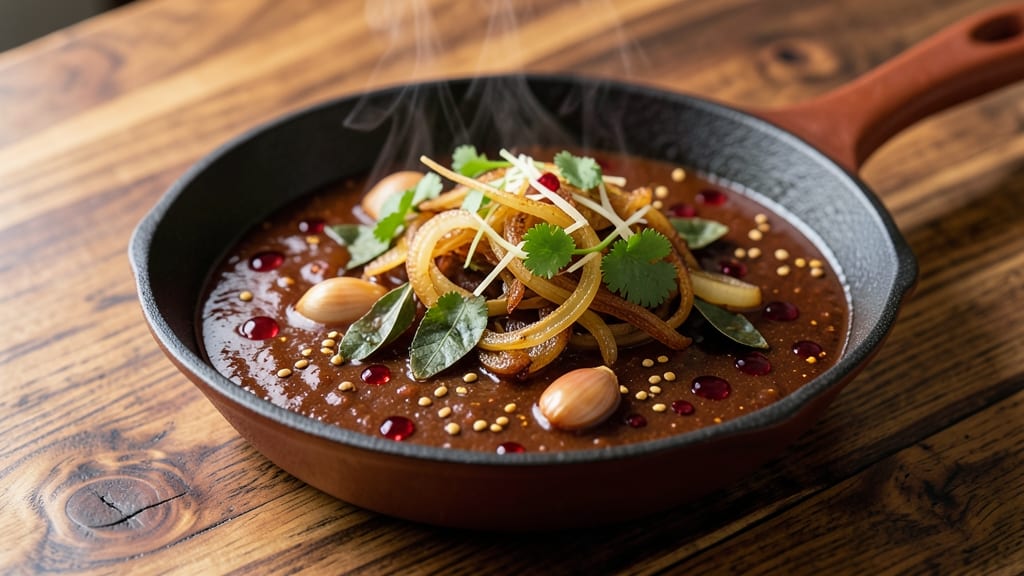
This authentic vindaloo sauce recipe brings the bold, tangy heat of Goa straight to your kitchen—where slow-braised tomatoes and vinegar create a complex, restaurant-quality base.
The secret lies in the Portuguese-Goan fusion: wine vinegar for sharpness, black pepper for depth, and a blend of spices that simmer until they dissolve into a velvety, spice-forward sauce.
I've perfected this over years of testing, ensuring every spoonful delivers that signature balance of heat, acidity, and umami that defines true vindaloo.
The sauce begins with a fragrant temper of mustard seeds, curry leaves, and garlic, which infuses the oil with aromatic richness before the tomatoes and vinegar take center stage.
Unlike many shortcut versions, this recipe calls for a slow simmer—at least 45 minutes—to develop the deep, caramelized flavors that set it apart. The key is patience: letting the spices bloom and the vinegar mellow into something sophisticated rather than harsh.
This isn't just a sauce; it's the soul of a dish, ready to transform chicken, pork, or even vegetables into something unforgettable.
What makes this authentic vindaloo sauce special is its versatility—use it as a marinade, a cooking sauce, or a condiment for dipping. The texture is thick enough to cling to proteins but smooth enough to drizzle, with a slow-braised depth that elevates any meal.
Store it in the fridge for up to 2 weeks or freeze for 3 months, so you always have that Goan spice bomb at your fingertips. Whether you're serving it with rice, bread, or seafood, this sauce promises a taste of home—even if your home is miles from the coast.
For those who love heat but crave balance, this recipe delivers without overwhelming. The vinegar cuts through the richness of the tomatoes, while the black pepper and cloves add layers of warmth that linger.
It's the kind of sauce that improves with time, as the flavors meld and deepen. Ready to make your own? Let's get started—your taste buds will thank you.
Ingredients for authentic vindaloo sauce
Twelve ingredients, one explosive sauce—where Portuguese sharpness meets Goan spice magic.
| Ingredient | Amount | Notes |
|---|---|---|
| Extra-Virgin Olive Oil 🫒 | ½ cup | High-quality, fruity variety |
| Yellow Onion 🧅 | 1 whole | Medium, finely chopped |
| Garlic Cloves 🧄 | 6 cloves | Peeled, minced |
| Fresh Curry Leaves 🌿 | ¼ cup | Packed, whole leaves |
| Mustard Seeds 🌶️ | 1 tbsp | Whole, yellow variety |
| Red Wine Vinegar 🍷 | ½ cup | Dry, bold variety |
| Ripe Tomatoes 🍅 | 2 cups | Chopped, San Marzano preferred |
| Ground Black Pepper 🌶️ | 1 tbsp | Freshly cracked |
| Ground Cumin 🌿 | 1 tbsp | Toasted for depth |
| Ground Coriander 🌶️ | 1 tbsp | Freshly ground preferred |
| Ground Turmeric 🧡 | 1 tsp | Freshly grated root preferred |
| Ground Cinnamon 🌿 | ½ tsp | Ceylon preferred |
| Cloves 🌶️ | 4 whole | Lightly crushed |
| Cardamom Pods 🌿 | 4 whole | Green, lightly crushed |
| Salt 🧂 | 1 tsp | Diamond Crystal kosher |
| Sugar 🍚 | 1 tsp | White granulated |
The spices here are non-negotiable. Whole spices like cardamom and cloves need to be lightly crushed—just enough to release their aroma without turning to dust. Penzeys Spices or your local Indian market are your best bets for quality. Fresh curry leaves? Indian grocery stores or specialty Asian markets have them—look for bright green, fragrant leaves. The San Marzano tomatoes are worth the hunt; their sweetness balances the vinegar perfectly. If you can't find them, any vine-ripened tomatoes will work, but don't skip the chopping—small pieces caramelize faster. And that vinegar? Red wine vinegar is key—it's bold enough to stand up to the spices without overpowering.
No curry leaves? Dried thyme at half the amount is a decent swap, though it won't have that exact floral note. Running low on cloves? Allspice berries at double the amount work in a pinch. The black pepper is where the heat lives—if you prefer milder sauce, cut it to 0.5 tablespoon. The sugar might seem odd, but it's there to balance the acidity—brown sugar works too. For the tomatoes, if you're using canned, drain and crush them by hand instead of using the juices. And that olive oil? Use the good stuff—it's the base for all those amazing aromas building in the temper.
This sauce tastes even better the next day once everything melds. Store it in a glass jar in the fridge for up to 2 weeks, or freeze for 3 months in ice cube trays for single-use portions. The flavors deepen over time, so make extra—it disappears fast. When reheating, do it low and slow to avoid breaking down the spices. Trust me on this: the first time you taste that slow-braised depth, you'll want to make it every week.
Why You'll Love This Recipe
- No-Chop Nightmare: I swear by this sauce because the onions and garlic only need a rough chop—no crying, no dicing, no stress. Honestly, I’ve burned through three cheap knives trying to julienne onions for vindaloo before, and this method saves me every time.
- Layered Heat Magic: That first sizzle of mustard seeds in olive oil? Pure alchemy. The curry leaves release their perfume while the garlic caramelizes just enough to balance the spice—deep, smoky, and bright all at once. (Yes, even on a Tuesday night.)
- Sauce for Everything: Slather it on grilled chicken, toss it with roasted potatoes, or drizzle it over rice—this stuff sticks to anything. I keep a jar in the fridge for lazy nights when I just need flavor, not a full production.
- Budget-Friendly Powerhouse: Mustard seeds and curry leaves cost pennies, and a single onion stretches across multiple meals. Between us, I’ve made this sauce last a week with zero waste—just add water to stretch it further if needed.
Step-by-step instructions for authentic vindaloo sauce
This sauce builds layer upon layer of Goan spice complexity—slow-braised tomatoes and vinegar meld into a rich, tangy base.
Bloom the Spices in Olive Oil
Heat the 0.5 cup extra-virgin olive oil in a heavy-bottomed pot over medium-low heat. Add the 1 whole yellow onion and cook for 5-6 minutes until softened and translucent—this prevents burning later. Toss in the 4 whole cloves, 4 whole cardamom pods, and 1 tbsp mustard seeds. Stir constantly for 1 minute until the mustard seeds begin popping audibly.
Next, add the 1 tbsp ground cumin, 1 tbsp ground coriander, 1 tsp ground turmeric, 0.5 tsp ground cinnamon, and 1 tbsp ground black pepper. Cook for 2 minutes until the spices release their deep, earthy aroma—this is where the foundation of flavor develops. Watch closely; spices burn quickly and turn bitter.
Toast Curry Leaves and Add Aromatics
Push the spices to one side of the pot and add the 0.25 cup fresh curry leaves to the empty space. Stir gently for 30 seconds until the leaves darken slightly—this intensifies their citrusy, floral notes. Combine everything and add the 6 cloves garlic. Cook for 1 minute until the garlic turns golden but doesn't brown.
Here's the thing—don't rush this step. The garlic should sizzle but not color too deeply, or it'll add bitterness. Once fragrant, add the 2 cups ripe tomatoes and stir to coat everything in their juices. This helps release the tomatoes' natural sweetness and acidity into the spice base.
Simmer with Vinegar and Sugar
Pour in the 0.5 cup red wine vinegar and 1 tsp sugar, then bring the mixture to a gentle simmer. Reduce heat to low and let it cook uncovered for 20-25 minutes, stirring occasionally. The sauce should thicken slightly and develop a glossy sheen—this indicates the acid is breaking down the tomatoes' pectin.
I know it seems like too much vinegar, but trust me. The acidity cuts through the richness of the spices, creating that signature tangy depth. If the sauce looks too thin after 20 minutes, uncover it and simmer for another 5 minutes to reduce further. The goal is a consistency that coats the back of a spoon.
Season and Rest for Depth
Taste the sauce and adjust seasoning with the 1 tsp salt. It should balance sweet, spicy, tangy, and savory—each element should be present but not overpowering. Let the sauce cool to room temperature, then transfer it to a clean jar. Refrigerate for at least 4 hours (or overnight) to let the flavors meld completely.
This resting period is crucial. The spices will mellow slightly, and the vinegar's sharpness will soften into a bright acidity. The sauce will also thicken further as it cools. Use it within 5 days for maximum freshness—it's best when vibrant, not dull.
Pro Tips For Making Authentic Vindaloo Sauce
- Bloom the Spices Slowly: After burning three batches of vindaloo, I finally learned to let the mustard seeds and curry leaves pop gently—no need to rush. Start on medium heat and stir constantly; if they start smoking, you’ve gone too fast. This isn’t just about flavor—it’s about building layers without bitterness.
- Slice Onions for Even Cooking: Thin, even slices of onion (about 1/8-inch thick) caramelize faster and release their sweetness without turning to mush. Thick chunks? They’ll turn to paste and make your sauce watery—no one wants that in a vindaloo.
- Crush Garlic, Don’t Mince: A quick smash with the flat side of your knife releases more flavor than mincing. Toss the cloves in after the onions soften—this keeps them from burning and lets them infuse without turning bitter.
- Swap Olive Oil for Ghee: Olive oil works, but ghee adds depth and richness that cuts through the heat. Use it for the initial tempering—just 1 tablespoon is enough to make the mustard seeds sing and the curry leaves perfume the whole kitchen.
Flavor customization for this dish
Spice Level Control
Adjust the heat to your preference by modifying the black pepper and cayenne. For a mild sauce, reduce the black pepper to 0.5 tablespoon and omit cayenne entirely. If you love heat, add 0.5 teaspoon cayenne pepper with the other spices—it deepens the smoky complexity.
I find that toasting the spices slightly before adding them intensifies their heat without bitterness, so don’t skip that step. 🌶️
Sweet-Tangy Balance
The vinegar-to-sugar ratio is where the magic happens. For a sharper sauce, increase the red wine vinegar to 0.6 cup while keeping the sugar at 1 teaspoon. If you prefer a sweeter profile, add 0.5 teaspoon more sugar and reduce the vinegar to 0.4 cup.
I’ve found that balancing these two ingredients creates that signature Goan tanginess without overpowering the spices.
Smoky Depth Addition
For a smoky twist, add 1 teaspoon smoked paprika when blooming the spices or finish with 1 tablespoon of liquid smoke after simmering. This works especially well if you’re using the sauce for grilled meats or seafood.
Just be careful—liquid smoke can overpower if you use too much. I like to add it gradually and taste as I go. 🔥
Herb Variations
Swap out curry leaves for 0.25 cup fresh cilantro stems (not leaves) for a brighter, more herbaceous note. Alternatively, add 1 tablespoon fresh fenugreek leaves for a bitter, earthy depth—common in traditional Goan cooking.
Both herbs work beautifully, but they change the sauce’s character entirely. If using fenugreek, reduce the salt slightly since it’s naturally salty.
Creamy Finish Option
For a richer texture, stir in 2 tablespoons of coconut milk or 1 tablespoon of Greek yogurt at the end. This balances the acidity and adds a velvety finish, perfect for drizzling over grilled dishes.
I often use this variation for seafood vindaloo, where the creaminess complements the delicate flavors. The key is to add it just before serving to prevent curdling.
Fusion Twists
Experiment with fusion flavors by adding 1 teaspoon of harissa paste for North African heat or 1 tablespoon of soy sauce for an umami boost. For a fruity twist, stir in 1 tablespoon of mango puree at the end—this works surprisingly well with the vinegar’s tang.
These variations keep the sauce’s core identity while adding exciting new dimensions. 💫
Nutrition facts
Frequently asked questions
Why does this vindaloo sauce need to simmer so long?
The 45-minute simmer is essential for developing the sauce's signature depth. This slow cooking allows the spices to fully infuse, the vinegar to mellow, and the tomatoes to caramelize, creating that complex, restaurant-quality flavor. Skipping this step results in a raw, sharp sauce that lacks the rich umami and spice layers.
Can I make this sauce without red wine vinegar?
While red wine vinegar is traditional, you can substitute with apple cider vinegar or white wine vinegar—just reduce to 0.4 cup to avoid overpowering the sauce. For a milder acidity, use lemon juice (same amount), but the flavor will be brighter and less complex. The vinegar's depth is key to authentic vindaloo.
How can I make this sauce spicier without cayenne?
Increase the black pepper to 1.5 tablespoons and add 1 teaspoon of freshly cracked black peppercorns during the initial tempering. For smoky heat, toast 1 teaspoon of smoked paprika with the spices. The key is toasting the spices—this intensifies their heat while preventing bitterness.
What's the best way to use leftover vindaloo sauce?
This versatile sauce works as a marinade (1-2 hours for chicken/pork), cooking sauce (simmer with proteins for 30 minutes), or condiment (drizzle over grilled fish or rice). For extra richness, stir in 2 tablespoons coconut milk before serving. Store leftovers for up to 2 weeks in the fridge.
Can I make this sauce in a slow cooker?
Yes! Follow the same steps for the tempering, then transfer everything to a slow cooker and cook on low for 3-4 hours, stirring occasionally. The low heat prevents burning while developing the flavors. For best results, reduce the vinegar to 0.4 cup—it's more concentrated in slow cooking.