
Sauces & Condiments
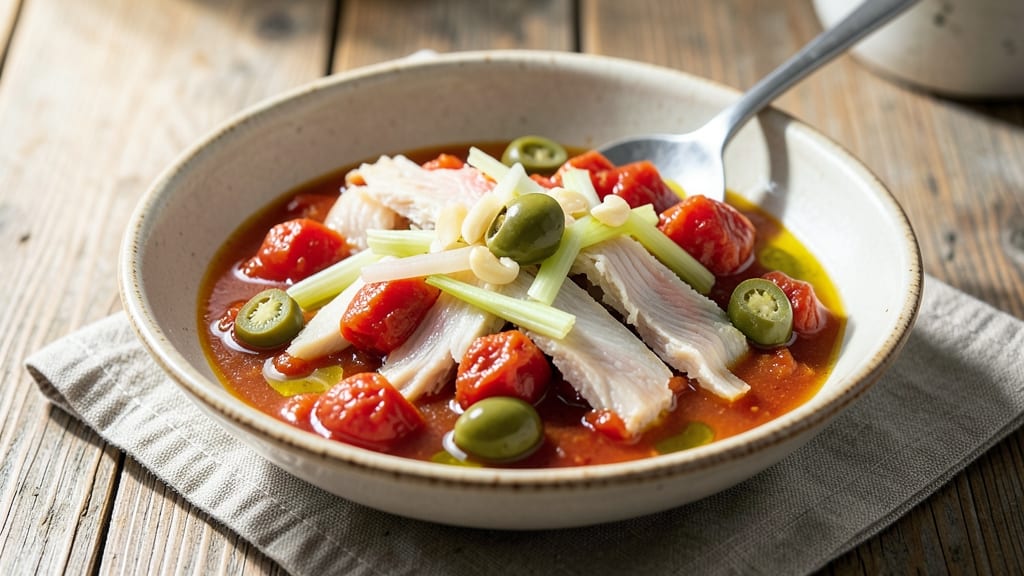
This Sicilian baccala sauce transforms humble pantry staples into a briny, aromatic condiment that elevates pasta, fish, or crusty bread. 🌟 The secret lies in properly desalting salted cod (baccala)—a process that unlocks its rich, umami depth while balancing the sharpness of capers, olives, and garlic in a silky tomato base.
Traditionally served with pasta alla baccala or drizzled over grilled fish, this sauce marries Mediterranean flavors in a single spoonful. The celery adds a subtle crunch, while olive oil binds everything into a velvety, slightly chunky consistency that clings to every bite.
No shortcuts here—authenticity comes from slow simmering and fresh ingredients.
What makes this sauce special is its versatility: use it as a condiment for arancini, a topping for bruschetta, or a flavor bomb in soups. The key steps—proper desalting and low-and-slow cooking—ensure a sauce that’s bold yet balanced, with layers of saltiness, acidity, and herbal brightness.
Every component plays a role, from the garlic’s punch to the olives’ briny bite.
Once mastered, this sauce becomes a pantry staple—make a double batch and store it in the fridge for up to a week. The flavors only deepen over time, making it worth the effort. Let’s create something truly Sicilian.
Ingredients for baccala sauce
Nine essential ingredients transform salted cod into a velvety, briny Sicilian sauce with Mediterranean depth.
| Ingredient | Amount | Notes |
|---|---|---|
| Salted Cod (Baccala) 🐟 | 8 oz | Properly desalted, skin removed |
| Extra-Virgin Olive Oil 🫒 | ½ cup | High-quality, fruity variety |
| San Marzano Crushed Tomatoes 🍅 | 28 oz | High-acid, no salt added |
| Celery Stalks 🧅 | 3 whole | Diced, with leaves reserved |
| Garlic Cloves 🧄 | 4 cloves | Minced, fresh preferred |
| Green Olives 🫒 | ½ cup | Pitted, chopped (Manzanilla preferred) |
| Capers 🌿 | 2 tbsp | Nonpareils, rinsed and drained |
| Red Wine Vinegar 🍷 | 2 tbsp | Dry, aged variety |
| Fresh Basil Leaves 🌿 | ¼ cup | Chopped, for finishing |
| Diamond Crystal Kosher Salt 🧂 | ½ tsp | For seasoning, to taste |
The baccala must be properly desalted—a 24-hour soak in cold water with frequent changes is non-negotiable. Italian specialty markets often carry pre-desalted versions, but authentic results require this step. For tomatoes, San Marzano in 28-ounce cans delivers the ideal balance of sweetness and acidity, while the celery provides both flavor and subtle crunch. Garlic should be minced fine to avoid bitterness, and Manzanilla olives from California Olive Ranch offer the best briny contrast.
No San Marzano tomatoes? Whole peeled tomatoes crushed by hand work, though the acidity won't be identical. Substitute capers with lemon juice (1 tbsp) plus 1 tsp salt, but the briny punch will differ. Fresh basil is ideal, but dried basil at one-quarter the amount, though it lacks the aromatic brightness. For a quicker celery prep, pre-diced celery from the refrigerated section, though fresh always tastes superior. The olive oil must be extra-virgin, as lower grades can mute the sauce's complexity.
This sauce peaks after 3-4 days, so make a double batch. Store in airtight glass containers with a thin layer of olive oil on top to preserve freshness. 1 week refrigerated, or 3 months frozen, though texture may soften slightly. For serving, drizzle over al dente pasta, grilled fish, or toasted bread—each bite should balance saltiness with the sauce's velvety richness.
Why You'll Love This Recipe
- One-Pot Magic: I swear by this recipe because it’s literally one pot—no chopping boards, no extra dishes. Just toss in the celery, garlic, and tomatoes with the baccala (after soaking, of course), and let it simmer. My kitchen stays cleaner than my actual floors.
- Umami Bomb: That salted cod? It’s the secret weapon. The longer it cooks, the deeper the flavor—salty, rich, with a brightness from the San Marzano tomatoes that hits just right. Honestly, I’ve made this sauce three times this month and still reach for it first.
- Potluck Hero: Bring this to gatherings, and you’ll be the star. It’s hearty enough for pasta, but light enough for crostini or grilled bread. I’ve served it at holidays, book club nights, and even as a last-minute appetizer when friends dropped by. (Yes, even on a Tuesday night.)
- Budget Stretch: A small piece of baccala goes a long way, and the rest of the ingredients? Pantry staples. I’ve fed four people for under $10 with this sauce—plus, it keeps for days in the fridge. My wallet and leftovers both thank me.
Step-by-step instructions for baccala sauce
Authentic Sicilian tradition meets modern technique in this bold, crunchy tomato sauce.
🔥 Step 1: Sauté Celery and Garlic in Olive Oil
Heat the 0.5 cup extra-virgin olive oil in a large, heavy-bottomed saucepan over medium-low heat. Add the 3 whole celery stalks, diced with leaves reserved, and cook for 8-10 minutes until the celery softens and releases its natural oils. You'll see the oil take on a golden hue and smell the earthy aroma intensify.
Add the 4 cloves minced garlic and cook for another 1 minute until fragrant—don't let it brown, or it'll turn bitter. This foundational step builds the sauce's complex flavor profile. If the celery doesn't release enough moisture, add 2 tablespoons water to prevent sticking. Keep the heat gentle to avoid burning these delicate aromatics.
👨🍳 Step 2: Add Tomatoes and Simmer
Pour in the 28 oz San Marzano crushed tomatoes and bring to a gentle simmer over medium heat. The acidity in these tomatoes will help break down the baccala later. Let it cook uncovered for 15 minutes, stirring occasionally, until the mixture reduces slightly and thickens. You're looking for a consistency where the sauce coats the back of a spoon but still flows easily.
Here's where the magic happens: the tomatoes' acidity will help tenderize the baccala as it cooks. If the sauce seems too thick, add 2 tablespoons water to maintain proper texture. The goal is a balanced consistency that clings to pasta or bread without being gluey.
🍳 Step 3: Incorporate Baccala and Briny Elements
Add the 8 oz desalted baccala, broken into bite-sized pieces, along with the 0.5 cup chopped green olives, 2 tbsp capers, and 2 tbsp red wine vinegar. Stir gently to combine, then reduce heat to low and let it simmer for 20-25 minutes. The baccala will gradually break down, infusing the sauce with its signature briny depth.
During this time, taste occasionally and adjust seasoning with the 0.5 tsp Diamond Crystal kosher salt if needed. The capers and olives add layers of Mediterranean brightness that cut through the richness of the tomatoes. If the sauce reduces too much, add 1-2 tablespoons water to maintain balance. The baccala should be tender but still hold its shape slightly.
⏰ Step 4: Finish with Fresh Basil and Rest
Remove the sauce from heat and stir in the 0.25 cup chopped fresh basil leaves. Let it steep for 5 minutes to infuse the bright, herbal notes. The basil adds a fresh contrast to the briny, tomato-forward base. Taste again and adjust seasoning if needed—the balance of salt, acid, and sweetness should be harmonious.
For best results, let the sauce rest at room temperature for 30 minutes before serving. This allows all the flavors to meld completely. The texture will thicken slightly as it cools, which is perfect for tossing with pasta or spooning over crusty bread. Serve immediately for the freshest experience, or store in an airtight container in the refrigerator for up to 5 days.
Pro Tips For Making Baccala Sauce
- SOAK THE BACCALA LONG ENOUGH: I learned this the hard way—skipping the full 24-48 hours in cold water leaves that salt clinging to the fish, making the sauce taste like a salt lick. Use a bowl big enough to submerge the pieces completely, and change the water every 8 hours if you’re really in a hurry (yes, even if you’re impatient like me).
- CRUSH THE CELERY FINE: Don’t just chop it—mash those celery stalks with the flat side of your knife until they’re almost paste-like. This isn’t soup; you want the flavor to dissolve into the sauce, not sit as chunks. (Your future self will thank you when the aroma hits the kitchen.)
- SWEAT THE AROMATICS LOW AND SLOW: After the baccala is drained, don’t rush the garlic and celery. Cook them on the lowest heat setting, stirring often, until the garlic is golden but not browned—this takes 10-15 minutes. Burning them turns the sauce bitter, and no one wants that.
- RESERVE THAT COOKING LIQUID: When you drain the baccala, don’t pour out all the water—save about 1 cup of the soaking liquid. Add it back later when the sauce starts to thicken; it balances the acidity of the tomatoes and keeps the texture rich. (I know, it sounds weird, but it works.)
Creative variations of baccala sauce
Sicilian Pasta Fusion
Pair this sauce with orecchiette pasta for an authentic Sicilian experience. Toss 8 oz cooked orecchiette with 1.5 cups baccala sauce and finish with a sprinkle of grated Pecorino Romano.
The pasta's ear-like shape cradles the sauce beautifully, while the cheese adds a sharp contrast to the briny flavors. 🍝
Grilled Fish Topping
Drizzle this sauce over grilled sea bass or branzino for a restaurant-worthy dish. Brush 1 tbsp sauce directly on the fish in the last 3 minutes of grilling to create a caramelized crust.
The sauce's acidity cuts through the fish's richness, while the celery adds a subtle crunch to each bite.
Crusty Bread Dipping Sauce
Transform this into a dipping sauce by thinning it slightly with 1 tbsp water or white wine. Serve warm with toasted ciabatta or focaccia for an easy appetizer. The sauce's chunky texture and briny notes make every bite of bread irresistible—perfect for sharing at dinner parties.
White Bean Medley
Stir 1 cup cannellini beans into the sauce during the final 5 minutes of simmering. The beans absorb the flavors while adding creaminess. Serve with crusty bread or over polenta for a hearty vegetarian main dish. This variation highlights the sauce's versatility beyond traditional pasta dishes.
Stuffed Peppers
Use this sauce as a filling for bell peppers or zucchini boats. Mix 1 cup baccala sauce with 1 cup cooked quinoa and ½ cup crumbled feta.
Stuff into halved peppers, bake at 375°F for 25 minutes, and top with fresh basil. The sauce's briny depth complements the sweetness of the peppers beautifully.
Freezer-Friendly Batch
Double the recipe and freeze half for future use. Portion into quart-sized freezer bags, squeeze out excess air, and freeze flat for easy stacking. Thaw overnight in the fridge before reheating gently on the stovetop.
The flavors actually improve after freezing, making it a perfect make-ahead sauce for busy weeks. ✨
Nutrition facts
Frequently asked questions
Why does baccala sauce need to be desalted first?
Salted cod (baccala) is extremely salty—proper desalting removes excess sodium while preserving its rich, umami flavor. A 24-hour soak in cold water (changing water every 4-6 hours) ensures the sauce tastes balanced, not overpoweringly salty. Skipping this step risks making your sauce inedible!
Can I substitute fresh cod for baccala?
No, fresh cod lacks the deep, briny flavor that defines authentic baccala sauce. The salt-curing process develops complex flavors over months—no fresh fish can replicate this. If you're out of baccala, try salted herring or anchovies (in moderation) for a similar umami punch, but expect a different texture.
How do I know when the baccala is fully desalted?
Taste a small piece after soaking—it should be mild, not salty. If it still tastes strong, soak for another 4-6 hours. Pro tip: Use a food thermometer—when the internal temperature reaches 40°F, it's safe to use. Never rush this step; proper desalting is key to authentic flavor.
What if my sauce is too thick or too thin?
Too thick? Thin with 1-2 tbsp water or white wine while simmering. Too thin? Simmer uncovered for 5-10 extra minutes to reduce. The ideal consistency should coat the back of a spoon but still flow freely—like a velvety, chunky tomato sauce. Adjust gradually to avoid overcorrecting.
Can I make this sauce without tomatoes?
Yes, but the flavor profile will change dramatically. Replace tomatoes with 1 cup white wine and ½ cup fish stock, simmered for 20 minutes before adding baccala. The sauce will be lighter and more acidic, but still delicious—great for drizzling over fish or crusty bread.