
Sauces & Condiments
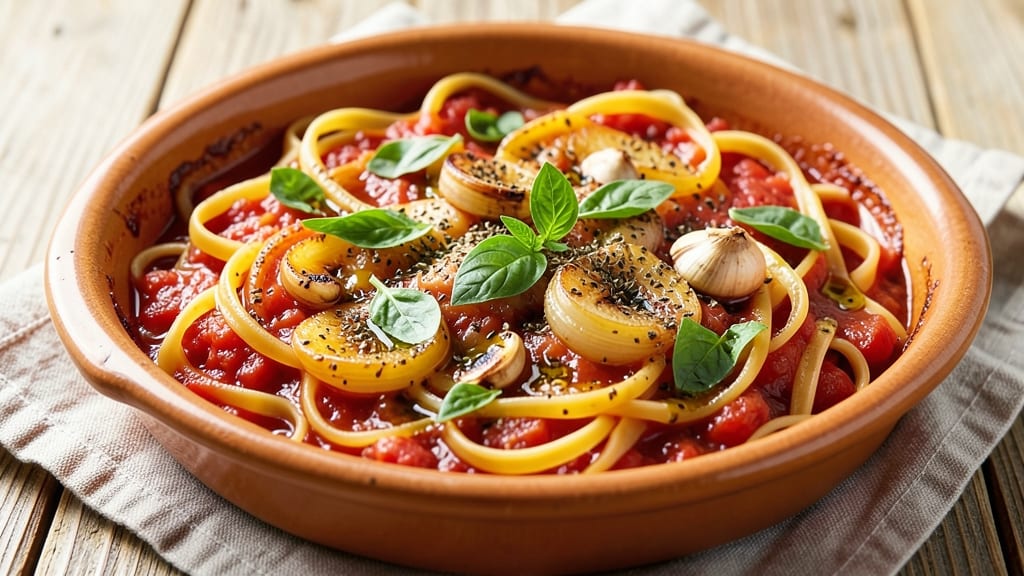
This baked pasta sauce recipe transforms ordinary baked dishes into restaurant-quality masterpieces with its rich, slow-simmered umami depth. 💛 The secret lies in balancing tomatoes, garlic, and herbs while baking the sauce to concentrate flavors—no blender required.
Perfect for lasagna, baked ziti, or manicotti, this sauce delivers that perfect balance of tangy, savory, and slightly sweet notes that elevate every bite.
The beauty of this recipe is its simplicity: just a handful of pantry staples simmered into perfection. We start with crushed tomatoes for natural sweetness, then build layers of flavor with garlic, onions, and fresh herbs.
The real magic happens during the baking phase, where the sauce reduces to a velvety consistency with deep, caramelized notes that cling beautifully to pasta and cheese.
What sets this sauce apart is its versatility—it works equally well as a standalone topping or layered between pasta sheets. The slow cooking process develops complex flavors that bottled sauces simply can’t match, while the baked finish ensures a rich, glossy texture that’s impossible to resist.
Every forkful delivers that comforting, homemade taste that makes baked pasta night feel like a celebration.
Best of all, this sauce keeps well in the fridge for up to a week, making it ideal for meal prep. Whether you're hosting a dinner party or simply craving a comforting weeknight meal, this recipe delivers professional-quality results with minimal effort. Ready to elevate your baked pasta dishes?
Ingredients for baked pasta sauce
Nine simple ingredients transform into that restaurant-quality sauce you crave for baked pasta dishes.
| Ingredient | Amount | Notes |
|---|---|---|
| Crushed Tomatoes (400g can) 🍅 | 1 can | San Marzano preferred for sweetness |
| Extra-Virgin Olive Oil 🫒 | ½ cup | High-quality, fruity variety |
| Yellow Onion 🧅 | 1 whole | Finely diced, medium size |
| Garlic Cloves 🧄 | 6 cloves | Minced, fresh preferred |
| Fresh Basil Leaves 🌿 | ½ cup | Packed, stems removed |
| Dried Oregano 🍃 | 1 tbsp | Italian variety preferred |
| Ground Black Pepper 🌶️ | ½ tsp | Freshly ground preferred |
| Sea Salt 🧂 | 1 ½ tsp | Diamond Crystal preferred |
| Freshly Grated Parmesan Cheese 🧀 | ½ cup | From block, freshly grated |
| Tomato Paste 🍅 | 2 tbsp | Squeeze tube preferred |
The tomatoes are the foundation—San Marzano cans from the Italian aisle at Whole Foods or Trader Joe's give that perfect balance of sweetness and acidity. If you're using regular crushed tomatoes, just add a pinch more salt since they're often salted. The garlic and onion combo is where the magic starts—fresh garlic makes all the difference, and I always toast the onions in olive oil for about 5 minutes to deepen their flavor. Fresh basil is worth the extra trip to the market (or even growing a small pot on your windowsill), but dried oregano works in a pinch if you're short on time.
No fresh basil? Dried basil at half the amount works, though it won't have that same bright punch. Running low on tomato paste? A tablespoon of ketchup in a bind gives similar thickness, though it won't have the same depth. For the Parmesan, grate it yourself—pre-grated cheese gets clumpy and loses flavor fast. Want to make this sauce even richer? Add 2 tablespoons of heavy cream at the end of cooking. The olive oil matters too—avoid the cheap stuff (you can taste the difference), and if you're feeling fancy, toast the oil with the onions to add nutty notes.
This sauce tastes even better the next day as the flavors meld together—make extra and freeze portions in ice cube trays for easy use later. Keeps in the fridge for up to 7 days covered tightly, or freeze for 3 months in airtight containers. For meal prep, I always double the batch—one for immediate use and one to freeze. The baked finish gives it that glossy, velvety texture that makes it perfect for lasagna, baked ziti, or even as a pizza sauce. Trust me, this is the sauce that'll have everyone asking for seconds.
Why You'll Love This Recipe
- Pantry Magic: I swear by this sauce because it’s the kind of meal that turns up when you’ve got nothing else. One can of tomatoes, a head of garlic, and a handful of basil—that’s it. No fancy prep, no last-minute grocery runs.
- Garlic-Basil Bomb: That moment when the sauce bubbles and the basil’s bright, peppery aroma mixes with the deep, toasty garlic? It’s the kind of flavor that makes you pause mid-stir and think, “I should’ve made more.” The olive oil ties it all together like a hug.
- Weeknight Superhero: Between us, this is my go-to when I’ve got a houseful and zero energy. Toss it on sheet pans with pasta, bake it all together, and boom—dinner’s done. Even my picky-eating teenager doesn’t complain.
- Budget Win: A single can of tomatoes and a few cloves of garlic stretch to feed four (or more, if you’re like me and sneak extra servings). Freeze leftovers for lazy Mondays—no takeout needed, no guilt. Pure savings.
Step-by-step instructions for slow-simmered umami pasta sauce
This rich, flavorful sauce builds depth through slow cooking—here's how to make it shine.
🍳 Step 1: Sauté Onion and Garlic for Flavor Foundation
Heat the 0.5 cup extra-virgin olive oil in a large, heavy-bottomed saucepan over medium heat. Add the finely diced yellow onion and cook for 5-6 minutes until softened and translucent. You'll see the onion edges turn slightly golden—that's your cue.
Lower the heat to medium-low and add the 6 minced garlic cloves. Cook for just 30 seconds until fragrant—don't let it brown or it'll turn bitter. Here's the thing: fresh garlic makes all the difference in this sauce, so don't skip this step. The aroma alone will transform your dish.
🍳 Step 2: Build Depth with Tomato Paste and Crushed Tomatoes
Stir in the 2 tbsp tomato paste and cook for 1-2 minutes until it darkens slightly and becomes aromatic. This step concentrates the tomato flavor and creates that beautiful deep color. Pour in the 1 can crushed tomatoes and add 1.5 tsp sea salt and 1 tbsp dried oregano.
Bring the mixture to a gentle simmer over medium-low heat. Here's where patience pays off—let it bubble softly for 10 minutes without stirring constantly. The sauce will thicken naturally as it cooks, developing that rich umami depth we're after. If it gets too thick too soon, add 2-3 tablespoons of water to maintain consistency.
🥘 Step 3: Simmer and Season for Complex Flavor
Add the 0.5 tsp ground black pepper and stir. Reduce heat to low and let the sauce simmer uncovered for 20-25 minutes. You'll notice the flavors melding together—this is where the magic happens. The sauce should reduce by about 25%, becoming thicker and more concentrated.
Real talk: This is the moment that matters. Taste the sauce and adjust seasoning if needed. I usually add a pinch more salt or a splash of water to reach my desired consistency. The sauce should coat the back of a spoon but still be pourable. If it's too acidic, a small pinch of sugar can help balance it out.
👨🍳 Step 4: Finish with Fresh Herbs and Parmesan
Remove the saucepan from heat and stir in the 0.5 cup fresh basil leaves and 0.5 cup freshly grated parmesan cheese. Let it sit for 5 minutes—this allows the cheese to melt slightly and the basil to infuse its bright flavor. The sauce will look vibrant and inviting, with little flecks of cheese throughout.
Give it one final taste and adjust seasoning if needed. The basil adds freshness that cuts through the richness of the tomatoes and cheese. For extra depth, you can also add a splash of red wine or a pinch of red pepper flakes at this stage. This sauce is now ready to toss with your favorite pasta or use as a base for baked dishes.
Pro Tips For Making Baked Pasta Sauce
- Sweat the Onion First: Ditch the raw onion chunks—finely dice that yellow onion and cook it in olive oil over medium heat until it’s translucent and just starting to caramelize. I learned this the hard way: skipping this step leaves your sauce with a harsh, uncooked bite, and no amount of simmering later fixes it.
- Crush Garlic Like a Pro: Smash those garlic cloves with the flat side of your knife before mincing them into the pot. It releases more flavor without burning, and you won’t end up with bitter, charred bits. (Yes, even if you’re impatient like me—just don’t walk away from the pan.)
- Simmer, Don’t Boil: After adding crushed tomatoes, keep the heat at a gentle simmer (tiny bubbles, not rolling) for at least 20 minutes. Boiling turns the sauce watery and dulls the tomato flavor—this isn’t soup, it’s a concentrated base for baked pasta.
- Salt in Stages: Add half the salt when you start cooking the onions, then taste again after the tomatoes have simmered. Crushed tomatoes vary in saltiness, and adding it all at once can make your sauce taste flat or overly salty by the end. (Your future self will thank you.)
Wine and beer pairings for this dish
Red Wine Pairings
A Chianti Classico from Tuscany is my go-to choice for this sauce—its bright acidity and cherry notes cut through the richness while complementing the tomato's natural sweetness. Look for a 100% Sangiovese with 12-15% ABV for perfect balance.
I love the Castello di Volpaia or Ruffino Chianti Classico for their approachable price and quality. 🍷
White Wine Options
For those who prefer white, a dry Pinot Grigio from Alto Adige offers crisp citrus notes that refresh your palate between bites. I recommend Santa Margherita Pinot Grigio—it's affordable and pairs beautifully with the sauce's umami depth. Avoid oaky whites like Chardonnay, as they'll clash with the tomato's acidity.
Beer Pairings
A light Italian lager like Peroni or Moretti is my top beer recommendation—its subtle maltiness enhances the sauce's caramelized notes without overpowering them. For craft beer lovers, a Belgian witbier with coriander and orange peel adds an interesting contrast.
Skip heavy stouts or IPAs, as they'll compete with the sauce's flavors. 🍺
Non-Alcoholic Options
For a refreshing non-alcoholic pairing, try a sparkling blood orange soda like Fever-Tree Blood Orange. The citrusy effervescence cleanses your palate beautifully. Alternatively, a sparkling water with a twist of lemon keeps things light while letting the sauce's flavors shine.
Dessert Wine Finish
If you're serving this sauce with a baked pasta dish that includes a cheese course, finish with a dry Moscato d'Asti—its delicate bubbles and stone fruit notes complement the meal's richness. I love the Saracco Moscato d'Asti for its perfect balance of sweetness and acidity.
Nutrition facts
Frequently asked questions
Can I make this sauce without fresh basil?
Use 1 tbsp dried basil instead, but reduce the amount by half since dried herbs are more concentrated. For extra flavor, add a pinch of red pepper flakes or a splash of red wine when finishing the sauce. The dried version won't be as bright, but it still delivers great depth of flavor.
How do I prevent my sauce from getting too thick?
If your sauce thickens too quickly, simply add 2-3 tablespoons of water or pasta water while simmering. Stir gently and let it cook for another 5 minutes to see if it reaches your desired consistency. For baked dishes, a slightly thicker sauce works better, but you can always thin it further with a splash of water or broth.
Can I use this sauce for non-baked pasta dishes?
Yes! This sauce works perfectly for any pasta dish. For al dente pasta, toss it with 8 oz cooked spaghetti or penne and finish with extra Parmesan. The rich, umami flavors complement both baked and fresh pasta equally well. Just adjust the amount of sauce based on your pasta quantity.
What's the best way to reheat leftover sauce?
Gently reheat in a saucepan over low heat with a splash of water or pasta water to prevent burning. Stir frequently until warmed through (3-5 minutes). Avoid microwaving, as it can make the sauce watery. For baked dishes, reheat the entire casserole covered with foil at 350°F for 15-20 minutes.
Can I make this sauce in a slow cooker?
Yes! Combine all ingredients in your slow cooker and cook on low for 6-8 hours or high for 3-4 hours. The slow cooking enhances the flavors even more. Just add a splash of water if it gets too thick. The texture will be slightly thicker than stovetop, but perfect for baked pasta dishes.