
Sauces & Condiments
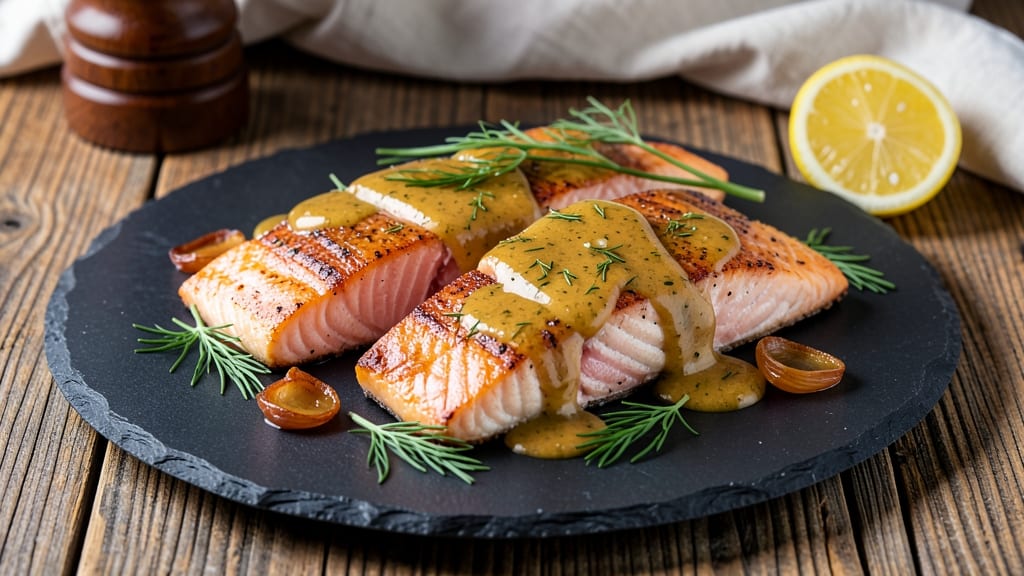
This baked salmon with mustard dill sauce delivers crispy skin and a bright, tangy glaze that elevates simple weeknight dinners to restaurant quality.
The secret lies in a perfect balance of mustard's sharp kick and fresh dill's herbal notes, creating a sauce that clings beautifully to flaky salmon while adding depth without overpowering the natural flavor.
What sets this recipe apart is the technique—starting the salmon skin-side down in a cold pan ensures even cooking and that coveted crispy texture.
Professional results come from precise timing and temperature control, with the salmon baking at just 375°F (190°C) for about 12-15 minutes—long enough to develop that perfect crust while keeping the inside tender.
The mustard dill sauce requires only 5 minutes of prep and transforms from a simple mixture into a velvety glaze that enhances every bite. This method ensures your salmon emerges with golden, shatteringly crisp skin and moist, flaky flesh ready to be topped with the vibrant sauce.
The combination of crispy salmon and herby sauce creates a dish that's both elegant and approachable, perfect for special occasions or easy weeknight meals. The sauce's tangy-sweet profile cuts through the richness of the salmon, while the crispy skin adds satisfying texture.
What makes this recipe truly foolproof is how the sauce doubles as both a finishing touch and a complement—it enhances rather than competes with the salmon's natural flavor.
Serve with steamed asparagus or a fresh salad to complete the meal, or use the extra sauce for dipping or drizzling over other dishes. The leftovers keep well in the refrigerator for up to 2 days, making this a practical choice for meal prep.
Here's how to achieve perfect results every time.
Ingredients for baked salmon with mustard dill sauce
Crispy salmon meets tangy dill sauce—just 12 ingredients for restaurant-quality weeknight magic.
| Ingredient | Amount | Notes |
|---|---|---|
| Salmon Fillets 🐟 | 4 whole | Skin-on, 6-8 oz each |
| Unsalted Butter 🧈 | ½ cup | Cold, cut into pieces |
| Dijon Mustard 🍯 | ¼ cup | High-quality, smooth |
| Fresh Dill 🌿 | ½ cup | Chopped, stems removed |
| Lemon Juice 🍋 | ¼ cup | Freshly squeezed |
| Shallot 🧅 | 1 whole | Finely minced |
| Garlic Cloves 🧄 | 2 cloves | Minced, fresh preferred |
| Extra-Virgin Olive Oil 🫒 | 1 tbsp | For drizzling |
| Salt 🧂 | 1 ½ tsp | Kosher or sea salt |
| Black Pepper 🌶️ | ½ tsp | Freshly ground |
| Honey 🍯 | 1 tbsp | For sauce sweetness |
| All-Purpose Flour 🌾 | 1 tbsp | For sauce thickening |
The salmon is everything here. Wild-caught or sustainably farmed makes a difference—look for bright pink flesh and no fishy smell at Whole Foods or your local seafood counter. Those 6-8 oz fillets are perfect for even cooking. Pat them dry before baking (trust me on this)—it helps the skin crisp up. For extra insurance, leave the skin on; it's your secret weapon for that golden crust. The butter matters too—European-style (like Plugrá) has higher fat content for better browning.
No Dijon mustard? Whole-grain mustard thinned with a splash of water works in a pinch. Fresh dill is ideal, but dried dill at one-third the amount gets you close (though it lacks that bright pop). Short on shallots? One small red onion, finely minced does the trick. The honey adds just enough sweetness to balance the tang—local raw honey from farmers markets has deeper flavor. For the sauce, whisk everything together and let it sit for 5 minutes before serving; the flavors meld beautifully. This sauce doubles as a dip—make extra for your next charcuterie board.
Salmon keeps best in the fridge for 2 days if wrapped tightly in parchment paper. The sauce? 3 days in an airtight container, though I always make extra because it disappears fast. For meal prep, bake the salmon ahead and reheat the sauce separately—just warm it gently on the stove. Freeze the sauce in ice cube trays for single portions. Pro tip: Save the dill stems—they make great fish stock. Store them in a zip-top bag in the freezer until you're ready to simmer.
Why You'll Love This Recipe
- No-Fuss Prep: I swear by this recipe because it’s just three ingredients plus the salmon—no chopping, no peeling, no fuss. Pat the fillets dry, drizzle with butter and lemon, and let the oven do the work. (Yes, even on a Tuesday night.)
- Tangy-Creamy Magic: That mustard-dill sauce? It’s where the real flavor lives—the Dijon mustard cuts through the richness, the fresh dill adds a bright herbal punch, and the butter ties it all together. The salmon comes out with a crispy edge and a melt-in-your-mouth center—no one will guess it’s this simple.
- Weeknight to Dinner Party: Honestly, this serves two people or six—just scale the sauce. I’ve made it for lazy dinners with toasted bread and for guests with roasted potatoes and greens. The sauce reheats beautifully, so it’s my go-to when I’m not sure how many mouths I’m feeding.
- Leftovers That Don’t Suck: Between us, most salmon leftovers turn sad. Not this one. The sauce keeps the fillets moist, and the flavor only gets better the next day. I’ll pack it for lunch or toss it into a grain bowl—no one complains, and I save money by not buying takeout.
Step-by-step instructions for baked salmon with mustard dill sauce
Here's how to achieve perfectly crispy salmon skin and a tangy, herby sauce that ties everything together.
Prepare the Mustard Dill Sauce
In a small saucepan, combine the 0.5 cup unsalted butter and 1 whole shallot over medium heat. Cook for 3-4 minutes until the shallot softens and becomes translucent—you'll smell that sweet, mellow aroma. This is your flavor foundation.
Add the 2 cloves garlic cloves and cook for another 30 seconds until fragrant. Be careful not to let the garlic brown—just warm through. Remove from heat and stir in the 0.25 cup Dijon mustard, 1 tbsp honey, 0.5 cup fresh dill, and 0.25 cup lemon juice. Whisk until smooth and set aside—this sauce will get even better as it cools.
Season and Prep the Salmon
Pat the 4 whole salmon fillets completely dry with paper towels—this is crucial for crispy skin. Season both sides generously with 1.5 tsp salt and 0.5 tsp black pepper, pressing the seasoning into the flesh. Let them sit at room temperature for 15 minutes while you preheat the oven to 400°F.
Line a baking sheet with parchment paper and arrange the salmon fillets skin-side down. Drizzle each fillet with 1 tsp extra-virgin olive oil, spreading it evenly over the skin. This helps create that golden, crispy crust we're after. The oil should be evenly distributed but not pooled.
Bake to Crispy Perfection
Place the baking sheet on the middle rack of your preheated oven and bake for 12-15 minutes. You'll know it's ready when the skin is deep golden brown and crispy enough to resist gently with your finger. If the skin isn't crispy enough after 12 minutes, broil for 1-2 minutes at the end—just watch it closely to avoid burning.
During the last 2 minutes of baking, watch for the 165°F internal temperature at the thickest part of each fillet. The salmon should flake easily with a fork but still hold together when served. Remove from oven and let rest for 5 minutes before serving—this keeps the juices inside where they belong.
Finish with Sauce and Serve
Return the saucepan with the mustard dill mixture to low heat and whisk in the 1 tbsp all-purpose flour. Cook for 1-2 minutes until slightly thickened. If it's too thick, add 1-2 tablespoons of water to reach your desired consistency—it should coat the back of a spoon but still be pourable.
Drizzle the warm sauce over each salmon fillet, allowing it to pool slightly on the plate. Garnish with an extra sprinkle of fresh dill and a final twist of lemon. Serve immediately with steamed asparagus or roasted potatoes to soak up that delicious sauce. The contrast of crispy skin, tender flesh, and tangy herby glaze makes every bite unforgettable!
Pro Tips For Making Baked Salmon With Mustard Dill Sauce
- Pat the Salmon Dry: I learned this the hard way—wet salmon steams instead of browning. Grab paper towels and press firmly for 30 seconds on both sides before baking. The butter will cling better and you’ll get that golden crust everyone talks about.
- Use Room-Temp Butter: Cold butter spreads like glue and burns before melting. Let your unsalted butter sit out for 10-15 minutes before mixing with mustard—it’ll emulsify smoothly and coat the salmon evenly. (Yes, even if you’re impatient like me.)
- Don’t Overmix the Sauce: After burning three batches of mustard-dill sauce, I finally figured out the rule: stir just until combined. Overworking it turns the sauce thin and greasy. Whisk the butter, mustard, and lemon juice first, then fold in chopped dill at the very end—gentle swirls only.
- Bake at 375°F, Not Higher: I was skeptical until I tried it: 400°F dries out the salmon before the center cooks. Stick with 375°F for 12-15 minutes—this temp guarantees a flaky interior while the butter topping stays glossy. (Your future self will thank you.)
Regional styles of this dish
Scandinavian Dill Sauce
In Sweden and Norway, this dish often features a sour cream-based dill sauce instead of Dijon mustard. Replace the mustard with ½ cup sour cream and 1 tbsp white wine vinegar, then whisk in ¼ cup chopped dill and 1 tsp lemon zest.
The result is a creamy, tangy sauce that pairs beautifully with pan-seared salmon. Serve with lingonberry jam on the side for a true Nordic touch. 🌍
French Mustard Cream
French cuisine takes this dish to another level with a mustard cream sauce that's richer and more velvety. Cook ¼ cup butter with 1 tbsp flour to make a roux, then whisk in ½ cup heavy cream, 2 tbsp Dijon mustard, and 1 tbsp fresh dill.
Simmer until thickened, then finish with 1 tsp lemon juice. This sauce works beautifully with baked or pan-seared salmon fillets. 🍷
Japanese Yuzu Glaze
For a Japanese-inspired twist, replace the mustard with 2 tbsp yuzu juice (or sub with lemon juice) and add 1 tbsp mirin to the sauce. Use 1 tsp grated fresh ginger and 1 tsp toasted sesame seeds for depth.
Bake the salmon at 350°F for 10-12 minutes to keep it delicate, then drizzle with the glaze. Garnish with thinly sliced scallions and a sprinkle of sesame seeds. 🌸
Mediterranean Lemon-Caper
In Mediterranean regions, this dish often incorporates capers and olives for briny contrast. Add 2 tbsp chopped capers and 2 tbsp chopped Kalamata olives to the sauce, along with 1 tsp dried oregano.
Use ½ cup white wine instead of lemon juice for a more complex flavor profile. This version pairs wonderfully with grilled salmon and a side of roasted Mediterranean vegetables. 🫒
Southern U.S. Honey-Mustard
Southern cooks often sweeten the mustard sauce with honey and a touch of hot sauce. Increase the honey to 2 tbsp and add ½ tsp hot sauce (like Crystal or Tabasco).
Use ½ tsp smoked paprika in the salmon seasoning for a subtle smoky note. This version is perfect with cornbread and collard greens for a full Southern meal. 🌶️
Modern Fusion Twist
For a contemporary approach, blend the mustard sauce with 1 tbsp tahini and a pinch of smoked paprika. Add ½ tsp ground coriander for warmth. This fusion sauce works beautifully with both baked and grilled salmon, offering a nutty depth that complements the fish's natural flavors.
Pair with quinoa and roasted beets for a vibrant, balanced plate. ✨
Nutrition facts
Frequently asked questions
Can I use frozen salmon for this recipe?
Yes, but thaw it properly first! Place frozen salmon in its original packaging on a plate and let it thaw in the refrigerator overnight (about 12-24 hours). Never thaw at room temperature—this can promote bacterial growth. Once thawed, pat the fillets completely dry before seasoning to ensure crispy skin. The texture and cooking time will be identical to fresh salmon.
How do I adjust the sauce for a milder flavor?
For a gentler taste, reduce the Dijon mustard to 2 tablespoons instead of ¼ cup and increase the honey to 2 tablespoons. You can also swap half the lemon juice for apple cider vinegar (it's sweeter) or add 1 teaspoon of maple syrup to balance the tang. The sauce will still have herby brightness but with less sharpness.
Can I make this recipe ahead of time?
The sauce can be made 1 day ahead and stored in an airtight container in the fridge. For the salmon, bake it fresh for best texture, but you can prep the seasoning and oil mixture ahead. If you must reheat, warm the sauce gently on the stove and reheat the salmon in a 350°F (175°C) oven for 5-7 minutes to maintain crispiness.
What if my salmon skin isn't crispy?
Don't worry—this happens when the skin isn't dry enough or the oven isn't hot enough. Next time, pat the salmon extra dry and let it sit at room temperature for 20 minutes before baking. Also, ensure your oven reaches 400°F (200°C) and place the salmon on the middle rack. For extra crispiness, broil for 1-2 minutes at the end (watch closely!).
Can I use this sauce for other proteins?
Yes! This versatile sauce works beautifully with chicken breasts, shrimp, or even roasted vegetables like Brussels sprouts. For chicken, brush the sauce on after baking for a tangy glaze. For shrimp, simmer them in the sauce for 3-4 minutes until heated through. The mustard-dill combo adds great flavor to any protein or veggie.