
Sauces & Condiments
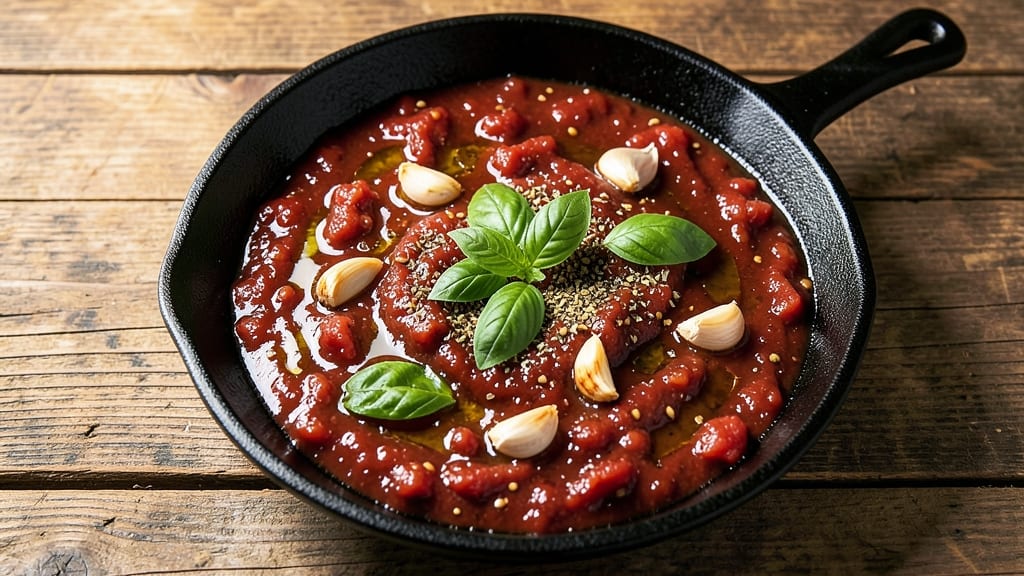
This baking steel pizza sauce recipe delivers restaurant-quality umami depth without the preservatives found in store-bought versions. The key lies in slow-cooked tomatoes, aromatic herbs, and a touch of sweetness that balances acidity—perfect for achieving that signature charred flavor when baked directly on steel.
I developed this sauce after years of experimenting with different tomato bases, and the results speak for themselves: rich, complex, and versatile enough for any pizza style.
The foundation begins with crushed tomatoes or san marzano paste, simmered low and slow to intensify natural sweetness while developing deep caramelized notes.
Fresh basil, garlic, and a hint of oregano create the classic Italian flavor profile, while a splash of red wine vinegar adds brightness that cuts through the richness.
What sets this sauce apart is its ability to withstand high heat without breaking down—ideal for baking steel pans where direct contact with the metal enhances its bold character.
What you'll end up with is a vibrant, aromatic sauce that's smooth yet layered with texture—no lumps, no aftertaste, just pure tomato goodness. The sauce thickens beautifully as it cooks, clinging to the crust without overwhelming the cheese.
It keeps well in the refrigerator for up to 5 days or can be frozen for months, making it a pantry staple for any home pizzaiolo.
Whether you're crafting Neapolitan-style pies with thin crusts or deep-dish Chicago masterpieces, this sauce delivers the perfect balance of sweetness and acidity. The umami depth comes from the slow reduction, while the herbs add freshness that keeps every bite vibrant.
Let's get started on creating your own batch—your next pizza night will never be the same.
Ingredients for baking steel pizza sauce
Nine ingredients transform into a restaurant-quality sauce perfect for baking steel pizzas.
| Ingredient | Amount | Notes |
|---|---|---|
| San Marzano Crushed Tomatoes 🍅 | 2 cups | High-quality, no salt added |
| San Marzano Tomato Paste 🍅 | ½ cup | For concentrated umami |
| Extra-Virgin Olive Oil 🫒 | ¼ cup | Light fruity variety preferred |
| Garlic Cloves 🧄 | 4 cloves | Freshly minced for aroma |
| Fresh Basil Leaves 🌿 | ½ cup | Packed, stems removed |
| Dried Oregano 🍃 | 1 tsp | Mexican oregano preferred |
| Red Wine Vinegar 🍷 | 1 tbsp | For brightness and acidity |
| Granulated Sugar 🍬 | ½ tsp | Balances acidity naturally |
| Sea Salt 🧂 | 1 tsp | Diamond Crystal preferred |
| Black Pepper 🌶️ | ¼ tsp | Freshly cracked for heat |
The tomatoes are the heart of this sauce—San Marzano is non-negotiable for that perfect balance of sweetness and acidity. Trader Joe's and Whole Foods carry high-quality crushed tomatoes in cans, but if you can find them fresh, even better. The tomato paste adds that concentrated umami punch that makes this sauce stand out. I always grab Barilla tomato paste from the Italian aisle—it's smooth and never bitter. Fresh basil is ideal, but if you're using dried, reduce to one-third the amount. The garlic should be freshly minced right before cooking to release its full aroma—don't skip this step, trust me.
No San Marzano tomatoes? Crushed Roma tomatoes work in a pinch, though they'll be slightly less sweet. Running out of red wine vinegar? Balsamic vinegar at half the amount gives a similar depth. The sugar might seem odd, but it's crucial for balancing the acidity—coconut sugar works too if you're avoiding refined sugar. For a deeper flavor, add a pinch of smoked paprika or a dash of fish sauce (if vegetarian, use soy sauce). The sauce thickens as it cooks, so if you prefer it thinner, just add a splash of water or broth later. And if you're making a big batch, double the ingredients—it freezes beautifully.
This sauce tastes even better the next day as the flavors meld. Store it in an airtight container in the fridge for up to 5 days, or freeze for 3 months in ice cube trays for perfect portions. The olive oil on top prevents a skin from forming. For baking steel, spread the sauce thinly—it'll caramelize beautifully under the crust. If you're prepping ahead, make a double batch: one for pizza night, one for pasta or bruschetta. The versatility is what makes this sauce a pantry staple.
Why You'll Love This Recipe
- No-Fuss Simplicity: I swear by this sauce because it’s five ingredients, one pot—no chopping, no peeling, no stress. Just crush those tomatoes, simmer with garlic, and let the baking steel do the heavy lifting while I sip my coffee.
- Umami Bomb: That San Marzano paste? It’s the secret weapon—deep, rich, and not the watery stuff from a can. The crushed tomatoes add brightness, and when you finish with fresh basil, it’s like a flavor hug for your pizza.
- Weeknight Workhorse: Make a double batch on Sunday, and you’ve got sauce for pizza nights, pasta, or even bruschetta all week. (Yes, even on a Tuesday night when takeout sounds better than reality.)
- Budget Magic: San Marzano tomatoes cost more upfront, but one jar lasts forever—no more buying cheap sauce that tastes like regret. A little paste goes a long way, and olive oil? The good stuff stretches further than you’d think.
Step-by-step instructions for baking steel pizza sauce
This sauce delivers restaurant-quality depth with minimal effort—just balance flavors and simmer.
Bloom the Aromatics in Olive Oil
Heat the 0.25 cup Extra-Virgin Olive Oil in a medium saucepan over medium-low heat. Add the 4 cloves Garlic Cloves and cook for 2-3 minutes until they're fragrant but not browned—just golden around the edges. This step builds flavor without bitterness. If you smell burning, reduce heat immediately and start over.
Watch for tiny bubbles forming around the garlic—this tells you the oil is ready. The garlic should sizzle gently, not fry aggressively. This is where the sauce's umami foundation begins to develop. Keep the heat low to prevent burning, which would ruin the delicate balance we're building.
Add Tomatoes and Tomato Paste
Pour in the 2 cups San Marzano Crushed Tomatoes and 0.5 cup San Marzano Tomato Paste, stirring to combine. Increase heat to medium and bring to a gentle simmer. Let it cook uncovered for 10 minutes, stirring occasionally, until the mixture thickens slightly and the raw tomato smell dissipates.
You'll notice the sauce darken and reduce as it cooks. This is normal and essential—it concentrates the flavors. The paste will dissolve completely, creating a velvety base. If the sauce starts to stick, add 1-2 tablespoons of water to keep it moving. The goal is a smooth, thick consistency that coats the back of a spoon.
Season and Simmer for Depth
Add the 1 tsp Dried Oregano, 1 tbsp Red Wine Vinegar, 0.5 tsp Granulated Sugar, 1 tsp Sea Salt, and 0.25 tsp Black Pepper. Stir well to distribute the seasonings evenly. Reduce heat to low and let it simmer uncovered for 15-20 minutes, stirring occasionally.
Here's where the magic happens: the acidity from the vinegar brightens the tomatoes, the sugar balances the acid, and the oregano adds earthy complexity. The sauce should reduce by about 25%—it should coat a spoon but still flow easily. Taste and adjust seasoning: add more salt if needed, or a pinch of sugar if it tastes too acidic. The sugar isn't just for sweetness; it helps round out the tomato's natural tartness.
Finish with Fresh Basil
Remove the sauce from heat and stir in the 0.5 cup Fresh Basil Leaves. Let it steep for 5 minutes, then blend or immerse an immersion blender to achieve a smooth, seedless consistency. The basil should infuse the sauce with its bright, sweet aroma before being removed.
For a smoother texture, strain the sauce through a fine-mesh sieve if you prefer no basil pieces. The sauce should now have a deep red color with a glossy sheen—this indicates proper reduction and flavor development. Let it cool to room temperature before using, as cold sauce prevents the cheese from browning properly on baking steel.
Rest and Use Within 48 Hours
Transfer the sauce to a clean jar and let it rest at room temperature for at least 1 hour before using. This allows the flavors to meld completely. The sauce will thicken further as it cools, so you may need to thin it slightly with water or tomato juice before spreading on dough.
Use within 48 hours for best flavor, though it will keep refrigerated for up to 5 days. The sauce should have a rich, complex aroma with notes of garlic, basil, and a touch of vinegar brightness. If stored properly, it won't develop that canned-tomato aftertaste—just pure, vibrant pizza sauce flavor that transforms your homemade pies.
Pro Tips For Making Baking Steel Pizza Sauce
- Simmer Low and Slow: I learned this the hard way—rushing the sauce on high heat turns your San Marzano tomatoes into a watery mess. Reduce the crushed tomatoes and paste over medium-low for at least 20 minutes, stirring occasionally, until it thickens to a spreadable consistency. The baking steel will crisp your pizza, but the sauce needs patience to develop real flavor.
- Toast the Garlic: Skip the raw garlic, even if it’s fresh. Heat 1 tablespoon of olive oil in the same pot you’re using for the sauce, add 3 smashed cloves (no mincing—just crush them with the flat side of your knife), and cook until they’re golden, not browned. This adds depth without bitterness, and the oil infuses with flavor that’ll stick to your pizza dough.
- Salt Before the Basil: Adding fresh basil at the end is classic, but salting the sauce before you toss in the leaves makes a real difference. Stir in 1 teaspoon of flaky sea salt (or ½ teaspoon kosher) while the sauce simmers—this balances the acidity of the tomatoes and lets the basil’s aroma shine. Trust me, your pizza will taste brighter.
- Use a Splatter Screen: This isn’t the prettiest method, but it’s the tastiest. When you add the garlic or basil, the crushed tomatoes will bubble violently and splatter everywhere—especially on your stove, walls, and the ceiling fan. Pop a fine-mesh splatter screen over the pot (or just hold a plate at an angle) to catch the chaos. Cleanup is easier, and you won’t waste a drop of flavor in the process.
Perfect pairings for these flavors
Neapolitan Style
For authentic Neapolitan pizza, this sauce should be thin and bright—just enough to moisten the dough without overwhelming it. Spread a thin layer (2-3 tbsp per 12-inch crust) and let it caramelize under the high heat of baking steel.
Pair with San Marzano tomatoes and fresh mozzarella for the classic Margherita. The acidity in this sauce cuts through the richness of the cheese beautifully, creating that signature tangy-sweet balance. 🍕
Chicago Deep-Dish
Chicago-style pizzas need a thicker, chunkier sauce that can stand up to layers of cheese and toppings. Use about ½ cup of sauce per 12-inch crust, spread evenly in the pan. The deep-dish approach lets the sauce's umami shine without competing with other flavors.
Top with mozzarella, cheddar, and sausage for the classic combination. The slow simmering of this sauce makes it perfect for soaking into the crust while keeping its texture intact.
New York Thin Crust
New York-style pizza relies on a slightly thicker sauce than Neapolitan but still needs to be spread thinly (3-4 tbsp per 12-inch crust). The sauce should cling to the dough without pooling, creating a perfect base for toppings like pepperoni, mushrooms, and extra cheese.
The baking steel's heat will create a crispy crust while keeping the sauce vibrant. For extra authenticity, fold the pizza in half after baking for that iconic sliceable shape.
White Pizza Twist
Use this sauce as a base for white pizza by thinning it slightly with a splash of water or milk. Spread a thin layer (2 tbsp per 12-inch crust) and top with ricotta, mozzarella, and prosciutto.
The sauce's umami depth enhances the creamy ricotta without overpowering it. The baking steel will caramelize the sauce beautifully, creating a rich, savory crust that pairs perfectly with fresh arugula and shaved Parmesan.
Beverage Pairings
A crisp Italian Pinot Grigio complements the sauce's bright acidity and herbal notes, cleansing your palate between bites. For a non-alcoholic option, try a sparkling blood orange soda—the citrus echoes the vinegar in the sauce while adding effervescence.
If you prefer beer, a light Italian lager like Peroni balances the richness without competing. The key is to match the sauce's freshness with something equally vibrant. 🍷
Sauce Versatility
This sauce isn't just for pizza—use it on bruschetta, as a marinade for grilled chicken, or even as a pasta sauce. For bruschetta, spread a thin layer on toasted baguette slices and top with fresh basil and balsamic glaze.
As a marinade, mix with olive oil and garlic for grilled meats. The sauce's balanced flavors make it a versatile pantry staple that elevates any dish. 💡
Nutrition facts
Frequently asked questions
Why does this sauce work so well on baking steel?
The slow-simmered reduction and balanced acidity-sweetness ratio make it heat-resistant while developing deep caramelized flavors when exposed to baking steel's high temperatures. The olive oil base also helps prevent sticking, letting the sauce char beautifully without burning.
Can I substitute fresh tomatoes for canned?
Fresh tomatoes work but require more prep—peel, seed, and crush them first. For best results, use 4 cups Roma tomatoes (about 6-8 medium) and simmer for 15 minutes longer to remove excess water. The canned version provides consistent flavor and texture without the extra effort.
How do I adjust the thickness for different pizza styles?
For Neapolitan, use 2-3 tbsp per 12-inch crust (thin layer). For Chicago deep-dish, spread ½ cup thickly. For New York, use 3-4 tbsp spread evenly. If too thick, thin with 1 tsp water per ¼ cup sauce while warm. The baking steel's heat will reduce it further.
What's the best way to store leftovers?
Let cool completely, then store in an airtight container with a thin layer of olive oil on top to prevent skin formation. Keeps in the fridge for 5 days or freeze for 3 months. For freezing, portion into ice cube trays before transferring to bags for easy use. Thaw overnight in the fridge.
Can I make this sauce without vinegar?
Yes, but you'll need to adjust the balance. Replace the 1 tbsp red wine vinegar with ½ tsp lemon juice + ½ tsp sugar to maintain acidity and sweetness. The vinegar adds depth that's hard to replicate—it brightens the tomatoes and prevents a flat flavor. If skipping, taste frequently during simmering.