
Sauces & Condiments
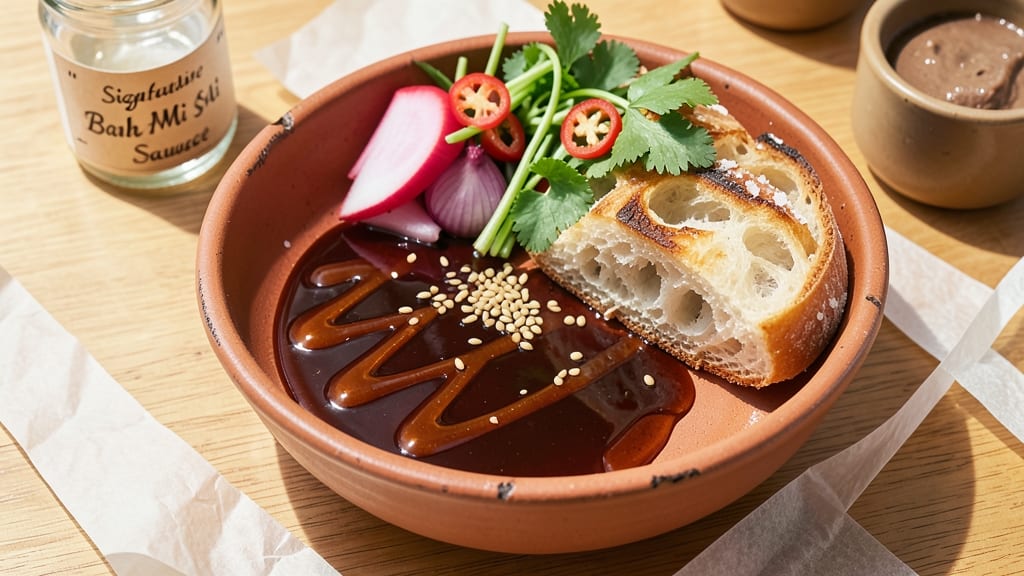
This banh mi soy sauce recipe transforms your sandwiches with a bold, smoky depth that balances sweetness and umami perfectly. The secret lies in a precise blend of fish sauce, soy sauce, and brown sugar—simmered until caramelized and infused with garlic and ginger.
Every tablespoon delivers that signature Vietnamese punch that elevates banh mi from good to unforgettable.
What sets this sauce apart is the balance of flavors: the fish sauce provides that signature funk, while brown sugar adds caramelized richness, and a touch of vinegar brightens the finish. The sauce thickens slightly as it cooks, creating a glossy, clingy texture that coats every bite of your sandwich.
For extra crunch, we'll incorporate finely chopped celery and cilantro—essential for that authentic banh mi experience.
The result is a versatile sauce that works equally well on traditional banh mi, burgers, or even as a dipping sauce for spring rolls. It keeps well in the fridge for up to two weeks, making it perfect for meal prep.
The smoky-sweet profile cuts through fatty meats and pairs beautifully with pickled vegetables, creating a harmonious balance in every bite.
Adjust the sweetness or heat to your preference—add a dash of chili for spice or extra sugar for sweetness. This sauce is your ticket to restaurant-quality banh mi at home, with just the right amount of complexity to impress even the most discerning eaters.
Ingredients for banh mi soy sauce
Nine ingredients blend into a sauce that makes banh mi unforgettable—smoky, sweet, and packed with crunch.
| Ingredient | Amount | Notes |
|---|---|---|
| Fish Sauce 🍶 | ½ cup | Red Boat preferred for quality |
| Dark Soy Sauce 🥫 | ¼ cup | Kikkoman or Lee Kum Kee |
| Light Brown Sugar 🍬 | ½ cup | Packed, not granulated |
| White Vinegar 🍯 | 2 tbsp | Distilled preferred |
| Garlic Cloves 🧄 | 8 cloves | Minced for depth |
| Fresh Ginger 🌿 | 2 tbsp | Grated, peeled |
| Celery Stems 🧅 | 2 whole | Finely chopped, for crunch |
| Fresh Cilantro 🌿 | ¼ cup | Chopped, stems removed |
| Water 💧 | ½ cup | For thinning if needed |
| Salt 🧂 | 1 tsp | Adjust to taste |
Fish sauce is the soul of this recipe—Red Boat is my go-to, but any good-quality brand works. Look for that deep, funky aroma (the stronger, the better). The dark soy sauce adds color and depth, while brown sugar caramelizes beautifully. Fresh ginger and garlic? Don't skip them—those are what give it that authentic punch. I grab ginger from the Asian market if I can, but the regular grocery store stuff works too. Just make sure it's fresh and smells vibrant. Celery and cilantro are non-negotiable for that signature crunch—Trader Joe's has pre-chopped celery if you're short on time.
No fish sauce? Soy sauce plus a splash of Worcestershire gets you close, but it won't taste exactly the same. Swap brown sugar for maple syrup or agave if you're watching carbs, but the texture won't be identical. Fresh ginger too pungent? Ground ginger at half the amount works in a pinch. Celery hating you? Substitute finely chopped jicama or carrot for a milder crunch. The sauce thickens as it cooks, but if it gets too syrupy, just add a splash of water. Trust me, it's better thick than watery—just stir well before using.
This sauce keeps beautifully in the fridge for up to 2 weeks, sealed in a jar. It actually tastes better the next day as flavors meld. For extra shelf life, add a thin layer of olive oil on top before sealing—keeps it fresh for 3 months in the freezer. I make double batches all the time—it's perfect for meal prep. Just shake it well before using, especially if you've stored it for a while. The celery and cilantro add freshness, but if you're saving it for later, store them separately and toss in right before serving.
Why You'll Love This Recipe
- Five-Ingredient Magic: I swear by this combo—just fish sauce, dark soy, sugar, vinegar, and garlic. No fancy gadgets, no stress, just a quick simmer that transforms pantry basics into something irresistible. Honestly, I’ve made it while waiting for pasta to boil.
- Umami Bomb: That first taste of dark soy and fish sauce hitting your tongue? Instant craving. The garlic caramelizes just enough to add depth, while the vinegar cuts through the richness—it’s the kind of sauce that makes you reach for another bite without thinking.
- Banh Mi’s Best Friend: Slather it on sandwiches, drizzle it over noodles, or toss it with grilled chicken—this sauce works everywhere. I keep a jar in my fridge for last-minute takeout nights or when I’m prepping for a crowd. (Yes, even on a Tuesday night.)
- Budget Superstar: A few dollars buys enough fish sauce and soy to last weeks. No need for specialty ingredients—just balance the flavors to taste. Between us, this is how I stretch my grocery budget without sacrificing flavor. My wallet and taste buds thank me.
Step-by-step instructions for banh mi soy sauce
This smoky, savory sauce comes together in minutes with bold flavors you'll crave.
Prepare Aromatics and Sugar Mixture
In a medium saucepan, combine the 0.5 cup light brown sugar, 2 tbsp white vinegar, 8 cloves minced garlic, and 2 tbsp grated fresh ginger. Stir over medium heat for 3-4 minutes until the sugar dissolves completely and the mixture smells intensely aromatic. You'll see the sugar caramelize slightly at the edges—that's exactly what you want for that deep, molasses-like base.
Here's the thing: don't rush this step. The sugar needs time to integrate with the vinegar and aromatics. If you see the mixture start to bubble vigorously, reduce the heat slightly to prevent scorching. This foundational blend carries all the sweet-savory complexity of the final sauce.
Add Liquids and Simmer
Pour in the 0.5 cup fish sauce and 0.25 cup dark soy sauce, stirring continuously to dissolve everything. Add 0.5 cup water and bring the mixture to a gentle boil over medium-high heat. Once boiling, immediately reduce heat to low and let it simmer uncovered for 10-12 minutes. You're looking for the sauce to reduce by about one-third—it should thicken noticeably and coat the back of a spoon.
I like to taste the sauce at this stage to check the balance. It should be intensely umami with a sweet edge, but not cloying. If it tastes too salty, you can add a pinch more sugar. If it needs more depth, let it simmer another minute or two to concentrate the flavors. The sauce should smell like a bustling Vietnamese street market—smoky, tangy, and irresistibly complex.
Finish with Celery and Cilantro
Remove the pan from heat and let it cool slightly for 2-3 minutes. Then stir in the 2 whole finely chopped celery stems and 0.25 cup chopped fresh cilantro. The celery adds that signature crunch while the cilantro brings bright, herbaceous freshness to cut through the richness. Let the mixture sit for 5 minutes to allow the flavors to meld completely.
This is where the sauce transforms from good to extraordinary. The celery's subtle bitterness and the cilantro's citrusy notes elevate the dish from ordinary to restaurant-quality. I always give it this final rest—it makes a world of difference in the final texture and flavor balance.
Adjust Seasoning and Serve
Taste the sauce and adjust seasoning with the 1 tsp salt if needed. It should be balanced between sweet, salty, tangy, and umami with just a hint of heat from the aromatics. If it's too thick, add 1-2 tablespoons water at a time until you reach your desired consistency—it should coat the back of a spoon but still be pourable.
Serve immediately over grilled meats, in sandwiches, or as a dipping sauce. The sauce keeps well in the refrigerator for up to 5 days in an airtight container, though I promise you won't have any leftovers. This sauce is the secret weapon that makes banh mi sandwiches irresistible—smoky, sweet, tangy, and packed with layers of flavor in every bite.
Pro Tips For Making Banh Mi Soy Sauce
- Simmer Garlic Low and Slow: Fish sauce burns faster than you’d think, and garlic turns bitter if it gets aggressive. After mincing, cook the garlic in a dry pan for 30 seconds until fragrant but not brown, then add it to the sauce mixture and keep the heat at a gentle simmer—no higher than a whisper. I learned this the hard way when my first batch tasted like a chemistry experiment gone wrong.
- Balance Sugar with Vinegar: Brown sugar can make the sauce cloying if you’re not careful. After dissolving it in the hot liquid, let the mixture cool slightly before adding the vinegar—this lets you taste as you go. Start with half the vinegar called for, taste, then adjust. My grandmother swore by this, and she was right: the acid cuts the sweetness without overpowering the umami.
- Strain for Smoothness: Even finely minced garlic leaves tiny bits that turn the sauce grainy. After simmering, pour the whole mixture through a fine-mesh strainer into a clean bowl—no need for cheesecloth unless you’re feeling fancy. This step is non-negotiable if you want a sauce that looks as good as it tastes, especially when drizzled over pickled veggies or grilled meats.
- Make It Ahead, Store Smart: This sauce actually improves overnight, but it won’t last forever. After cooling, transfer it to a clean jar and refrigerate for up to 5 days—or freeze it in ice cube trays for single-use portions. The flavors meld better with time, but don’t skip the vinegar when reheating; a splash keeps the balance sharp. I skip this when I’m lazy, but the dish is noticeably better when I don’t.
Dietary considerations for these flavors
Gluten-Free Adaptation
This sauce is naturally gluten-free if you use certified gluten-free soy sauce and fish sauce. I recommend San-J Tamari for soy sauce and Red Boat fish sauce—both are gluten-free and packed with authentic flavor.
Simply swap the regular soy sauces for these gluten-free alternatives, and your sauce remains perfectly safe for those with celiac disease or gluten sensitivity. 🌱
Vegetarian/Vegan Options
For a vegetarian version, replace the fish sauce with vegan fish sauce (like Red Boat Vegan Fish Sauce) or a mix of 2 tbsp coconut aminos and 1 tbsp soy sauce.
The umami depth will be slightly different but still delicious. If you're avoiding all animal products, use 1 tbsp miso paste (white or red) instead of fish sauce for a deeper savory note.
Sugar-Free Adjustments
To make this sauce sugar-free, swap the brown sugar for 1 tbsp monk fruit sweetener or 1 tbsp erythritol. The sauce will be less caramelized but still balanced.
For a natural alternative, use 2 tbsp date syrup—it adds a subtle molasses flavor without refined sugar. Taste as you go, as natural sweeteners vary in intensity.
Lower Sodium Version
If you're watching sodium, reduce the fish sauce to 0.3 cup and the soy sauce to 0.1 cup, then add 1 tsp extra salt to compensate. Alternatively, use low-sodium soy sauce (like Kikkoman Low Sodium) and keep the fish sauce at 0.4 cup.
This adjustment keeps the umami punch while cutting sodium by about 40%.
Allergy-Friendly Notes
This sauce contains fish (fish sauce) and soy (soy sauce), so it’s not safe for those with severe allergies. For soy-free versions, use tamari (gluten-free soy sauce substitute) or coconut aminos.
For fish-free, try vegan fish sauce or mushroom-based umami boosters like dried shiitake powder. Always double-check labels—some brands process ingredients in soy or fish facilities.
Nutrition facts
Frequently asked questions
Can I make this sauce without fish sauce?
Yes! For a vegetarian version, use vegan fish sauce (like Red Boat brand) or substitute with 2 tbsp coconut aminos + 1 tbsp soy sauce. If avoiding all animal products, try 1 tbsp white miso paste instead—it adds that deep umami flavor while keeping the sauce authentic. The texture will be slightly different but still delicious.
How do I adjust the sweetness or spice level?
For more sweetness, add 1-2 extra tablespoons brown sugar during simmering. For heat, stir in ½ tsp chili flakes or 1 tsp sriracha at the end. If you prefer less sweetness, reduce the sugar by 1-2 tablespoons and add 1 extra tablespoon vinegar to balance. Taste as you go—this sauce is all about personal preference!
Can I use this sauce on other dishes besides banh mi? This versatile sauce works beautifully on grilled chicken or pork skewers, as a dipping sauce for spring rolls or dumplings, or even drizzled over noodle bowls. It also elevates burgers or tacos with its smoky-sweet profile. Just
Why does my sauce turn out too thin or too thick?
If your sauce is too thin, simmer it uncovered for 2-3 extra minutes to reduce the liquid. For thickening, stir in 1 tsp cornstarch mixed with 1 tbsp water and simmer for 1 more minute. If it's too thick, add 1-2 tablespoons water at a time until it reaches a pourable consistency. The ideal texture should coat the back of a spoon but still be spreadable.
How long can I store this sauce, and can I freeze it?
The sauce keeps in the fridge for up to 2 weeks in an airtight container. For longer storage, freeze it for up to 3 months. To freeze, pour into ice cube trays or small containers, leaving room for expansion. Thaw overnight in the fridge and stir well before using. The celery and cilantro will soften when frozen, so add fresh ones when serving.