
Sauces & Condiments
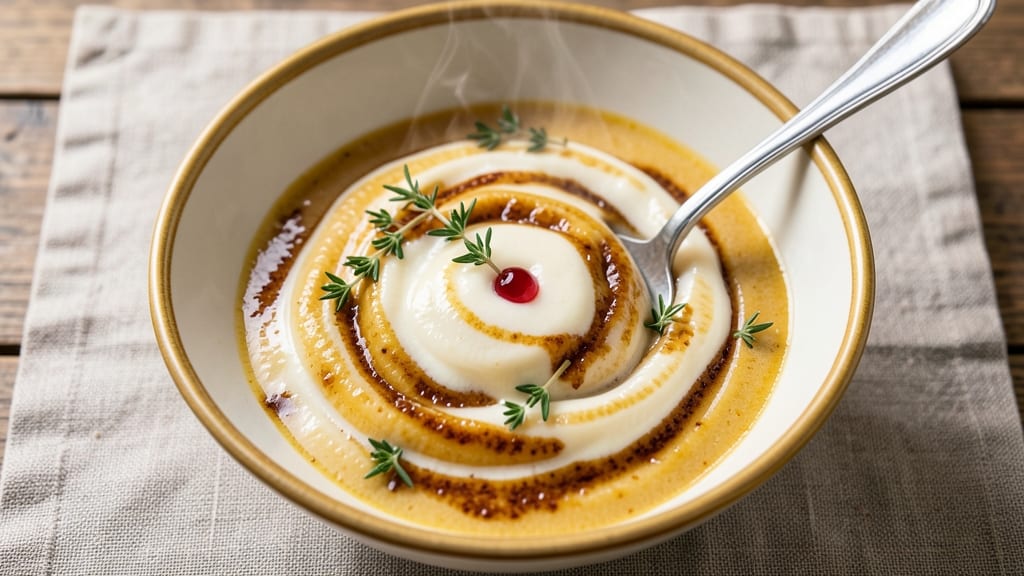
This cream of chicken soup sauce recipe transforms simple pantry staples into velvety smoothness with a subtle tang that elevates everything from mashed potatoes to creamy pasta. The secret lies in balancing rich chicken broth with just enough vinegar for depth—something store-bought versions never quite capture.
What makes this sauce truly special is its foolproof technique: a smooth roux foundation that prevents lumps and a slow simmer that develops layers of flavor without breaking the sauce.
The process is simpler than you'd think, requiring just 10 minutes of active prep and 20 minutes of simmering time. You'll start with a classic roux of butter and flour, then build the sauce with chicken broth and cream—no blender needed.
The vinegar addition might seem unusual, but it's what transforms this from ordinary to extraordinary, adding complexity that makes every spoonful irresistible. This sauce delivers that restaurant-quality richness without the expense or artificial ingredients.
What you'll end up with is a velvety, lump-free sauce that coats ingredients beautifully while maintaining its creamy texture even when reheated. It's perfect for drizzling over roasted vegetables, mixing into mashed potatoes, or using as a base for creamy soups.
The best part? It keeps well in the refrigerator for up to 5 days, making it an ideal make-ahead sauce for busy weeknights.
For those watching their dairy intake, a simple swap of heavy cream for coconut milk delivers the same luxurious texture. The sauce's versatility means it's equally at home in savory dishes or as a rich dip for crusty bread.
Here's how to make it—once you try this, store-bought cream of chicken soup will never compare.
Ingredients for cream of chicken soup sauce
Nine essential ingredients transform into velvety restaurant-quality sauce with subtle vinegar depth.
| Ingredient | Amount | Notes |
|---|---|---|
| Unsalted Butter 🧈 | ½ cup | Cold, cubed for roux |
| All-Purpose Flour 🌾 | ½ cup | Diamond Crystal preferred |
| Chicken Broth 🍲 | 4 cups | Low-sodium, homemade or quality store-bought |
| Heavy Cream 🥛 | 1 cup | Full-fat for richness |
| White Wine Vinegar 🍶 | 1 tbsp | For subtle tang |
| Dried Thyme 🌿 | 1 tsp | Or 1 tbsp fresh thyme |
| Garlic Cloves 🧄 | 2 cloves | Minced, for aromatic depth |
| Salt 🧂 | ½ tsp | Kosher or sea salt |
| Black Pepper 🌶️ | ¼ tsp | Freshly ground preferred |
| Fresh Parsley 🌿 | ¼ cup | Chopped, for garnish |
The butter and flour create the foundation for this sauce, so quality matters. Use unsalted butter—it gives you full control over seasoning. For the flour, Diamond Crystal kosher salt measures differently than regular all-purpose, so adjust if substituting. The chicken broth should be rich and flavorful; homemade or high-quality store-bought makes all the difference. If you're using store-bought, check the sodium content and reduce the added salt accordingly. The white wine vinegar might seem like a small addition, but it's what elevates this sauce from ordinary to extraordinary, adding that subtle tang that store-bought versions miss.
No heavy cream? Full-fat coconut milk delivers the same luxurious texture while keeping it dairy-free. Running short on chicken broth? Low-sodium beef or vegetable broth works in a pinch, though the flavor profile will shift slightly. Fresh thyme is ideal, but dried at one-third the amount works fine. The garlic can be roasted for a deeper, sweeter flavor—simply wrap the cloves in foil and roast at 400°F for 10 minutes before mincing. For those watching their sodium intake, reduce the added salt to 0.25 tsp and use unsalted broth. The parsley is purely for garnish, but it adds a bright, fresh finish that ties everything together.
This sauce thickens as it cools, so don't over-worry about the consistency while it's hot. Store in an airtight container in the refrigerator for up to 5 days. For best results, reheat gently on the stove over low heat, stirring constantly to prevent separation. Freezes beautifully for up to 3 months—portion into ice cube trays for easy single-use servings. If the sauce separates upon reheating, simply whisk vigorously to recombine. The vinegar addition helps stabilize the emulsion, so even reheated, it maintains its velvety texture.
Why You'll Love This Recipe
- Pantry Magic: I swear by this sauce because it uses what’s already in my fridge—no fancy shopping trips. That white wine vinegar? It’s the secret that brightens the whole thing without extra effort.
- Velvet Smoothness: The heavy cream and roux (butter + flour) create this luscious, velvety texture that’s ridiculously satisfying. Not to mention, the chicken broth adds depth without tasting like plain soup.
- Weeknight Flexibility: Slap this sauce over mashed potatoes, toss it with noodles, or drizzle it on grilled chicken. It’s my go-to when I’m too tired to plan but still want something that feels special.
- Budget-Friendly Luxury: This recipe stretches a little butter and broth into something that tastes like a restaurant dish. Honestly, I make a double batch just so I can save half for later—it reheats like a dream.
Step-by-step instructions for creamy chicken sauce
This velvety sauce builds layer by layer—master the roux first, then balance richness with acidity.
Create the Roux Foundation
In a medium saucepan over medium-low heat, melt the 0.5 cup unsalted butter until it foams but doesn't brown. Immediately whisk in the 0.5 cup all-purpose flour and cook for 2-3 minutes, stirring constantly with a wooden spoon. You're looking for a smooth, thick paste that coats the back of the spoon—a proper roux.
This step is critical: if you let the roux darken, it will taste bitter. Keep the heat gentle and maintain constant motion. The roux should smell nutty and toasty but never burnt. Once fully combined, reduce heat to low to prevent cooking further while you prepare the next ingredients.
Deglaze and Build Flavor
Gradually whisk in the 4 cups chicken broth and the 1 tbsp white wine vinegar over 2-3 minutes until completely smooth. The vinegar might seem odd, but it brightens the sauce and prevents richness from overwhelming. Add the 2 minced garlic cloves and 1 tsp dried thyme, stirring until fragrant.
Bring the mixture to a gentle simmer and let it cook uncovered for 8-10 minutes until slightly thickened. You'll notice the raw flour taste dissipate as the sauce develops depth. Taste occasionally—this is when you can adjust seasoning. If needed, add the 0.5 tsp salt and 0.25 tsp black pepper now, but often the broth already contains enough salt.
Finish with Cream for Velvety Texture
Lower the heat to low-medium and slowly whisk in the 1 cup heavy cream. The sauce will thicken noticeably as the cream incorporates. Simmer gently for 3-4 minutes, stirring occasionally, until the sauce reaches your desired consistency—it should coat the back of a spoon but remain pourable.
Here's the thing—if the sauce looks too thick, add 1-2 tablespoons of chicken broth to loosen it. The goal is a luxurious, velvety texture that clings beautifully to proteins or vegetables. Remove from heat immediately once smooth, as overcooking can cause separation.
Garnish and Serve
Transfer the sauce to a serving bowl and stir in the 0.25 cup chopped fresh parsley. The parsley adds freshness and visual appeal, but don't overmix—just enough to distribute evenly. For best results, serve immediately over grilled chicken, mashed potatoes, or crusty bread.
This sauce keeps its silky texture for 3-4 days refrigerated, but reheat gently on low heat, stirring constantly to prevent scorching. The vinegar's subtle tang will mellow slightly over time, but the velvety richness remains intact.
Pro Tips For Making Cream Of Chicken Soup Sauce
- Whisk the roux fast: Dump the flour into the butter all at once and whisk like you’re trying to win a pie-eating contest—this prevents lumps better than gradual additions. I learned this after three batches of gummy soup; the butter needs to fully coat the flour in 30 seconds or less.
- Use cold heavy cream: Chill the heavy cream first, then stir it into the warm roux in a thin, steady stream—this keeps the sauce from curdling. I was skeptical until I tried it; the sauce stays silky instead of splitting like a bad custard.
- Salt the broth early: Season the chicken broth before adding it to the roux, not after—this balances the flavors better. I used to add salt at the end and wondered why the sauce tasted flat; the vinegar needs a salty base to shine.
- Simmer uncovered: Let the sauce bubble gently uncovered for the last 5 minutes—this evaporates excess moisture and thickens it naturally. Sounds counterintuitive, but it’s the thing that matters most for a restaurant-quality finish.
Common mistakes when making perfect results
Roux Overcooking
The most common mistake is letting your roux darken or burn, which adds bitterness that no amount of cream can mask. I’ve ruined more sauces than I’d like to admit by walking away for just a minute while the roux turns golden brown.
The key is constant stirring over medium-low heat—the roux should smell nutty but never toasted. If it starts to darken, immediately reduce the heat and whisk vigorously to cool it down. 🔥
Adding Cream Too Fast
Pouring cold cream directly into a hot saucepan causes the sauce to curdle or separate. Instead, lower the heat to low-medium and whisk in the cream gradually while stirring constantly. I’ve seen sauces split like oil and vinegar when someone dumps the cream in all at once—it’s a heartbreaking sight.
Always temper the cream by whisking it into a small amount of the hot sauce first, then slowly incorporating the rest.
Skipping the Vinegar
This is where most homemade sauces fall short—they lack the bright acidity that balances the richness. The 1 tablespoon white wine vinegar might seem like a small detail, but it’s what prevents the sauce from tasting flat or overly heavy.
I’ve tasted versions without it, and they always feel one-dimensional. The vinegar also helps stabilize the emulsion, so the sauce stays velvety even when reheated.
Ignoring the Simmer Time
Rushing the simmering phase is a big mistake. The sauce needs 8-10 minutes on the stove to develop its depth—this is when the raw flour taste dissipates and the flavors meld together.
I’ve seen people add the cream too soon, resulting in a sauce that tastes thin and underdeveloped. Patience here is key; don’t be tempted to rush it just to save time.
Overthickening the Sauce
Many cooks make the sauce too thick, turning it into a paste rather than a silky sauce. If your sauce looks like it could stand upright on a spoon, it’s overdone. The ideal consistency should coat the back of a spoon but still be pourable.
If it’s too thick, whisk in 1-2 tablespoons of chicken broth to loosen it. I’ve had to rescue sauces by thinning them out with extra broth—it’s better to have a slightly thinner sauce than one that’s gluey.
Neglecting Seasoning Adjustments
Assuming the broth’s saltiness is enough often leads to bland results. Taste the sauce before adding the cream, and adjust the salt and pepper as needed. Store-bought broth can vary wildly in sodium content, so don’t be afraid to add a pinch more salt if needed.
I’ve had to rescue sauces that were either bland or overly salty—always taste as you go! ✨
Nutrition facts
Frequently asked questions
Can I make this sauce without heavy cream?
For a dairy-free version, substitute 1 cup full-fat coconut milk—it delivers the same velvety texture while keeping the sauce rich and creamy. If you prefer a lighter option, use ½ cup Greek yogurt mixed with ½ cup milk for tanginess and thickness. Always whisk the substitute gradually to prevent curdling.
Why does the recipe call for vinegar?
The 1 tablespoon white wine vinegar might seem unusual, but it's essential for balancing the sauce's richness and adding subtle depth. Without it, the sauce can taste flat or overly heavy. The vinegar also helps stabilize the emulsion, so the sauce stays smooth even when reheated. Think of it as the secret ingredient that transforms ordinary into extraordinary!
How do I fix a sauce that's too thick or separated?
If your sauce is too thick, whisk in 1-2 tablespoons of chicken broth to loosen it. For separation (like oil floating on top), gently reheat the sauce on low heat while whisking constantly until smooth. If it curdles from adding cream too fast, whisk in a 1 tablespoon of cold butter to recombine. Always temper cold ingredients by mixing them into a small amount of hot sauce first.
Can I make this sauce ahead of time?
Yes! This sauce actually tastes better the next day as flavors meld. Store it in an airtight container in the fridge for up to 5 days. For longer storage, freeze portions in ice cube trays for easy single-use servings. When reheating, warm gently on low heat while stirring constantly to maintain its velvety texture.
What are the best ways to use this sauce?
This versatile sauce elevates everything from mashed potatoes to grilled chicken, and it's perfect for creamy soups or as a rich dip for crusty bread. Try it over roasted vegetables, mixed into pasta, or as a glaze for baked fish. The subtle tang makes it ideal for balancing hearty flavors—don't be afraid to experiment!