
Sauces & Condiments
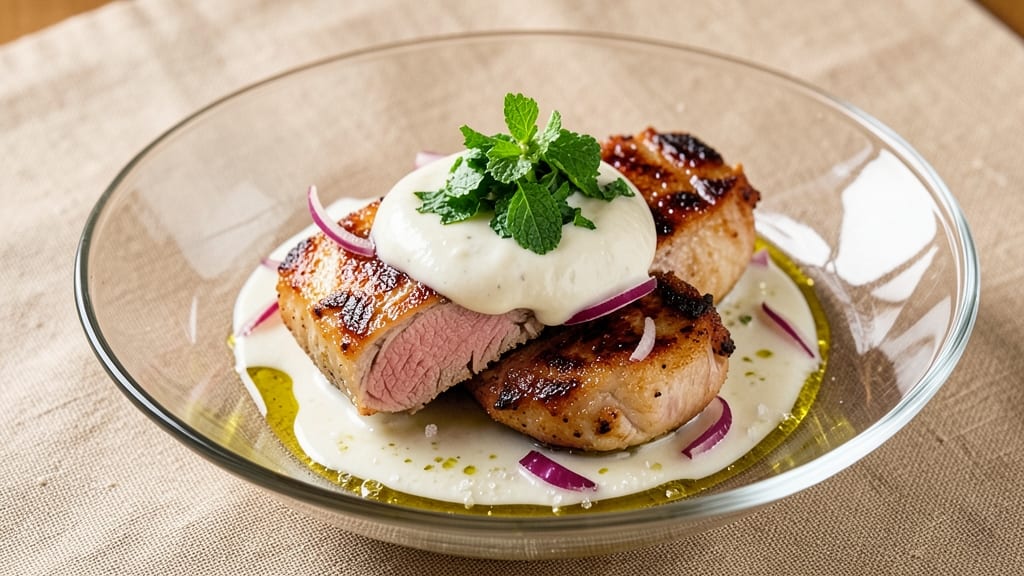
This Australian mint sauce recipe transforms ordinary roasted lamb into an unforgettable centerpiece with its signature tangy-sweet balance. The secret lies in fresh mint leaves, finely chopped to release their vibrant aroma, combined with white vinegar and sugar for that signature Australian tang.
This sauce isn't just a condiment—it's the star of the show, cutting through rich meats with its bright, refreshing flavor profile.
The recipe is deceptively simple: just four core ingredients that work together to create a sauce with perfect harmony between sweetness and acidity.
What makes it special is how it elevates any dish it touches—whether you're serving it with roasted lamb, grilled vegetables, or even as a refreshing dip for seafood. The sauce keeps beautifully in the refrigerator for up to a week, making it perfect for meal prep and batch cooking.
What you'll end up with is a vibrant green sauce that's as visually appealing as it is delicious—bright, tangy, and just sweet enough to complement rather than overpower. The texture should be smooth yet slightly chunky from the finely chopped mint, creating a luxurious mouthfeel with every spoonful.
This is the kind of sauce that makes your dinner table feel like an Australian restaurant.
Scaling this recipe is effortless—double or triple the ingredients for entertaining, and store it in airtight containers to maintain freshness. The beauty of Australian mint sauce lies in its versatility: drizzle it over finished dishes or serve it on the side for guests to add to their plates.
Here's how to make it perfectly every time.
Ingredients for australian mint sauce
Four essential ingredients crafting Australia's iconic tangy-sweet sauce for lamb masterpieces.
| Ingredient | Amount | Notes |
|---|---|---|
| Fresh Mint Leaves 🌿 | 1 ½ cups | Packed, stems removed, finely chopped |
| White Vinegar 🍶 | ½ cup | Distilled or apple cider vinegar |
| Granulated Sugar 🍚 | ½ cup | White or raw cane sugar |
| Extra-Virgin Olive Oil 🫒 | ¼ cup | High-quality, fruity variety |
| Diamond Crystal Kosher Salt 🧂 | ½ tsp | Fine grain preferred |
The fresh mint is non-negotiable for authentic flavor—look for vibrant green leaves at your local market or grocery store's produce section. Whole Foods Market or Trader Joe's often carry premium mint with superior aroma. If using dried mint, reduce to one-third the amount, but fresh delivers that signature Australian brightness. The vinegar should be distilled or apple cider—avoid flavored varieties that may alter the delicate balance. For sugar, raw cane sugar adds subtle molasses notes, but granulated works perfectly fine for classic preparations.
No fresh mint? Spearmint or peppermint can substitute at equal amounts, though flavor will differ slightly. Running short on vinegar? Lemon juice works in a pinch, though the tang will be slightly sharper. The olive oil provides richness—avoid strong flavored oils like chili or garlic-infused. For a sugar substitute, agave nectar or maple syrup can replace at a 1:1 ratio, though texture may vary slightly. The salt is crucial for balancing sweetness—Diamond Crystal dissolves beautifully but any fine sea salt will suffice.
This sauce maintains peak freshness for up to 7 days when refrigerated in an airtight container. For longer storage, transfer to a sterile glass jar and freeze for up to 3 months. The texture will thicken slightly upon refrigeration—simply stir in 1-2 teaspoons of water to restore original consistency. Portion into small containers for easy use—perfect for meal prep or entertaining. The vibrant green color will fade slightly over time, but flavor remains excellent.
Why You'll Love This Recipe
- Five-Ingredient Magic: This sauce comes together with just fresh mint, vinegar, sugar, olive oil, and salt—no fancy tools, no stress. I’ve made it while waiting for lamb to grill, and it’s always ready before the main dish hits the table.
- Bright & Balanced: The vinegar cuts through the sweetness while the olive oil softens the mint’s sharpness—it’s tangy, fresh, and never overpowering. Honestly, the sugar isn’t just for sweetness; it rounds out the acidity so it’s smooth, not harsh.
- Leftover Hero: Make a big batch and store it in the fridge—it keeps for weeks, meaning you’re always ready for last-minute BBQs or quick weeknight dinners. I’ve had this sauce linger in my fridge for months, and it never disappoints.
- Grill to Picnic: Slather it on lamb chops, drizzle over roasted veggies, or pack it in a jar for sandwiches. Between us, it’s my go-to for anything from backyard cookouts to lazy Sunday brunches—no two uses are the same.
Step-by-step instructions for Australian mint sauce
This vibrant sauce transforms simple lamb dishes into restaurant-worthy masterpieces.
Prepare the Mint Leaves
Begin by removing stems from all 1.5 cups of fresh mint leaves. I use a sharp chef's knife to chop them finely—about ¼-inch pieces—working in batches if needed. The goal is uniform texture that dissolves smoothly into the sauce. Avoid crushing the leaves too much, as this releases bitter compounds that can overpower the delicate flavor.
Place the chopped mint in a medium bowl and set aside. This prep step ensures even distribution of flavor throughout the sauce. I like to taste the raw mint at this stage—it should be bright and refreshing, with no bitterness. If you notice any stems lingering, remove them now for the cleanest possible flavor profile.
Combine Vinegar and Sugar
In a separate heatproof bowl, whisk together the 0.5 cup white vinegar and 0.5 cup granulated sugar until the sugar dissolves completely. I use a fork for this step, but a small whisk works even better. The mixture should become syrupy and translucent, with no visible sugar crystals remaining.
This combination creates the base of your sauce—the vinegar provides acidity while the sugar balances it with sweetness. The sugar also helps preserve the sauce if you choose to store it. Let this mixture sit for 2-3 minutes at room temperature while you prepare the next components. You'll notice the liquid becomes slightly warmer as it absorbs heat from the air.
Infuse the Olive Oil
Gently pour the 0.25 cup extra-virgin olive oil into the bowl containing the chopped mint leaves. Using a wooden spoon, stir to coat all the mint evenly. The oil should begin to take on a vibrant green hue immediately. Let this mixture sit for 5 minutes to allow the mint's aromatic oils to infuse into the oil.
This infusion step is crucial for developing the sauce's signature flavor. The olive oil carries the mint's essence while adding a smooth, velvety texture. I always use a high-quality, fruity olive oil for this recipe—the subtle flavor nuances become apparent in the final product. Avoid using refined olive oil, as it lacks the aromatic complexity needed for this sauce.
Merge Components and Season
Pour the vinegar-sugar mixture into the bowl with the mint-infused oil. Add the 0.5 teaspoon diamond crystal kosher salt and stir thoroughly to combine all ingredients. The sauce should immediately take on a vibrant green color and develop a fresh, herbal aroma.
Taste the sauce at this stage—it should be tangy from the vinegar, sweet from the sugar, and bright from the mint. If needed, adjust the sweetness by adding 1-2 teaspoons more sugar or the acidity by adding 1-2 teaspoons more vinegar. The salt should be balanced but not overpowering. Let the sauce sit for 10 minutes at room temperature to allow all flavors to meld completely.
Strain and Serve
After the resting period, strain the sauce through a fine-mesh sieve into a clean bowl or pitcher. I press gently on the mint with the back of a spoon to extract maximum flavor without releasing bitter compounds. The resulting sauce should be smooth, vibrant green, and completely free of any herb fragments.
This sauce is best served immediately, but it will keep in the refrigerator for up to 5 days if stored in an airtight container. The flavors continue to develop slightly over time, becoming even more complex. Serve it chilled or at room temperature—it pairs beautifully with grilled lamb chops, roasted leg of lamb, or even as a refreshing accompaniment to Middle Eastern dishes.
Pro Tips For Making Australian Mint Sauce
- Remove Tough Stems: Mint stems add bitterness and bulk—strip them off before chopping. I used to toss them in and wonder why the sauce tasted harsh; now I just pinch the base and pull them out like bad tasting weeds. STRAIN FOR SMOOTHNESS
- Strain Twice: After blending, press the mint through a fine-mesh sieve to catch stray leaves. I learned this the hard way when a chunky piece ruined an otherwise perfect sauce—now I double-strain for that silky texture. WEIGH THE VINEGAR
- Use 1:1 Ratio: For every 1 cup of vinegar, use 1 cup of sugar—no guessing. I used to eyeball it and end up with something either too sharp or cloyingly sweet; measuring guarantees balance every time. SALT LAST
- Taste Before Salting: Add salt only after the sugar fully dissolves—taste first. Vinegar and sugar can mask saltiness, so I’ve ruined batches by overdoing it; now I adjust to the actual flavor, not my memory.
Common mistakes when making great australian mint sauce
Overchopping the Mint
I've made this mistake more times than I'd admit—crushing the mint leaves into a pulp instead of finely chopping them. When mint is overworked, it releases bitter compounds that turn your vibrant green sauce into something medicinal-tasting. Instead, aim for ¼-inch pieces using a sharp knife.
Work in batches if needed, and avoid pressing down with a spoon. Think of it like making pesto: just enough to release the oils without bruising the leaves. 🌿
Skipping the Resting Time
Rushing the 10-minute rest before straining is a big no-no. This pause lets all the flavors meld together—vinegar's acidity softens, sugar fully dissolves, and mint's aroma develops. I once skipped it and ended up with a sauce that tasted like separate ingredients rather than a harmonious blend.
Trust the process: let it sit at room temperature while you finish other prep work.
Using the Wrong Vinegar
Not all vinegars are created equal for this sauce. I've tried balsamic and red wine vinegar, thinking they'd add depth, but they introduced unwanted flavors that clashed with the mint. Stick with distilled white vinegar or apple cider vinegar—they're neutral enough to let the mint shine while providing the perfect tang. If you must substitute, lemon juice works in a pinch, but the flavor profile will be slightly sharper.
Ignoring the Straining Step
Leaving mint fragments in your sauce might seem harmless, but those tiny bits can make the texture uneven and even slightly bitter. Always strain through a fine-mesh sieve and press gently with a spoon to extract maximum flavor. I use a stainless steel mesh strainer because it's gentle on the herbs and easy to clean. The smooth texture is what makes this sauce feel restaurant-quality.
Over-Salting the Final Sauce
This one's tricky because mint sauce needs salt to balance the sweetness, but too much can make it taste flat. I've ruined batches by adding the full ½ teaspoon upfront without tasting first.
Instead, add just ¼ teaspoon initially, then adjust to taste. Remember, you can always add more salt later if needed, but you can't remove excess salt once it's in there.
Storing Improperly
Mint sauce separates when stored incorrectly, especially if you don't use an airtight container. I've seen people store it in regular bowls where air gets in, causing the oil to rise to the top.
Always use a container with a tight seal, and if you notice separation, just give it a good stir before using. For longer storage, I recommend transferring to a glass jar and keeping it in the fridge for up to 7 days—the flavors actually improve slightly over time.
Nutrition facts
Frequently asked questions
Can I substitute fresh mint with dried mint in this recipe?
You can use dried mint, but reduce to ⅓ the amount of fresh mint called for. For 1.5 cups fresh mint, use just ½ cup dried mint. The flavor will be less vibrant, but it works in a pinch. For best results, steep the dried mint in warm water for 5 minutes before mixing with other ingredients to extract maximum flavor.
How do I adjust this sauce for a sweeter or tangier flavor?
Start with the recipe as written, then taste and adjust. For a sweeter sauce, add 1-2 teaspoons more sugar and let it sit for 5 minutes to dissolve. For extra tang, add 1-2 teaspoons more vinegar or a splash of lemon juice. Remember, you can always adjust further—just avoid overdoing it, as the flavors need to balance.
What's the best way to store leftover mint sauce?
Store in an airtight container in the refrigerator for up to 7 days. The sauce may separate slightly—just stir well before using. For longer storage, freeze in ice cube trays for up to 3 months. Thaw overnight in the fridge, then stir to restore consistency. The flavors actually improve over time!
Can I make this sauce without olive oil?
Yes, but the texture will be thinner. Substitute with ¼ cup neutral oil like avocado or grapeseed oil, or omit it entirely for a lighter version. If omitting, you may want to add 1 teaspoon extra sugar to compensate for the lost richness. The sauce will still taste great—just with a different mouthfeel.
What are the best dishes to serve with Australian mint sauce?
This sauce shines with roasted or grilled lamb (especially leg of lamb or chops), but it also pairs beautifully with grilled chicken, fish like salmon or barramundi, and even Middle Eastern mezze platters. Try it as a dip for pita bread or drizzled over grilled vegetables for a refreshing touch.