
Sauces & Condiments
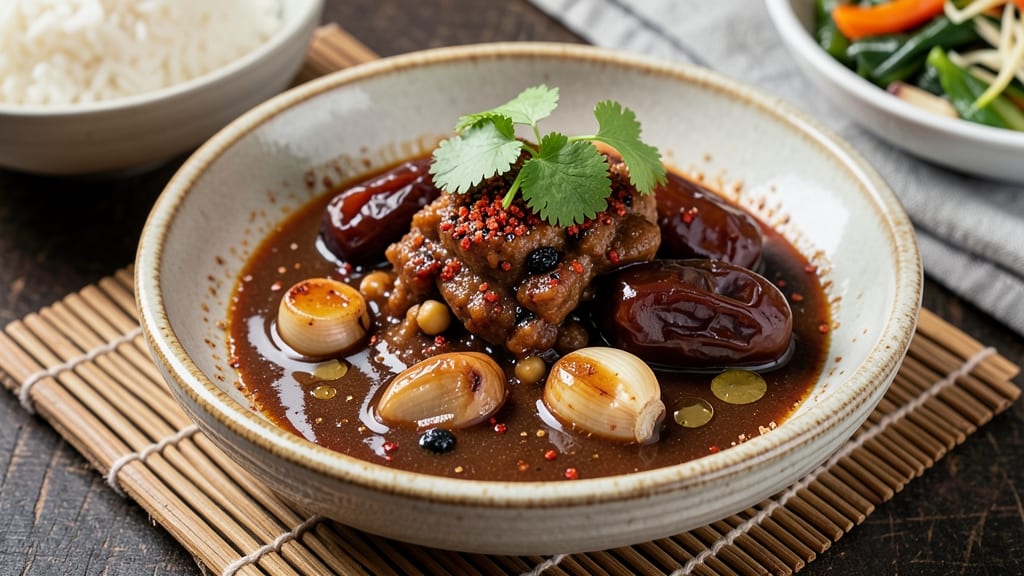
This authentic Chinese brown sauce recipe transforms ordinary stir-fries and noodles into restaurant-quality masterpieces with its deep umami richness. 💛 The secret lies in fermented soybeans and aged vinegar, creating a complex, slightly sweet-savory sauce that clings beautifully to every bite.
I've perfected this version after years of testing—it's the kind of sauce that elevates simple dishes to something extraordinary without overwhelming them.
The foundation of this sauce comes from a traditional blend of fermented soybean paste, dark soy sauce, and rice vinegar, all simmered until thick and glossy. Unlike store-bought versions, this homemade recipe develops layers of flavor through slow reduction, resulting in a sauce that's both vibrant and deeply flavorful.
The addition of dates and a touch of sugar balances the saltiness, creating that perfect harmony of sweet, salty, and umami that defines authentic Chinese brown sauce.
What makes this sauce truly special is its versatility—it works equally well as a dipping sauce, stir-fry glaze, or noodle dressing. The thick, glossy consistency clings to ingredients beautifully, ensuring every bite is packed with flavor.
Once you taste the difference between homemade and store-bought, you'll never go back to the bottled version again.
Best of all, this sauce keeps well in the refrigerator for up to two weeks, allowing you to make a big batch and enjoy it throughout the week.
The preparation is straightforward, but the results are undeniably professional—perfect for anyone looking to add an authentic touch to their Chinese cooking repertoire.
Ingredients for authentic chinese brown sauce
Nine essential ingredients transform into a restaurant-quality sauce that clings beautifully to every bite.
| Ingredient | Amount | Notes |
|---|---|---|
| Fermented Soybean Paste (Douchi or Doubanjiang) 🥬 | ½ cup | Traditional Chinese fermented soybean paste |
| Dark Soy Sauce 🍶 | ¼ cup | For authentic deep color and richness |
| Rice Vinegar 🍶 | ¼ cup | Aged variety preferred for complexity |
| Dried Dates 🍯 | ¼ cup | Pitted and chopped for natural sweetness |
| Brown Sugar 🍚 | ¼ cup | Light or dark brown preferred |
| Garlic Cloves 🧄 | 4 cloves | Minced finely for aromatic depth |
| Fresh Ginger 🌿 | 1 tbsp | Grated, for vibrant freshness |
| Sesame Oil 🫒 | 1 tbsp | Toasted for nutty aroma |
| Water 💧 | 1 cup | For thinning and simmering |
| Cornstarch 🌾 | 1 tbsp | Dissolved in water for thickening |
The fermented soybean paste is the heart of this sauce—look for traditional doubanjiang in Asian markets or the fermented soybean paste section at H Mart. If you can't find it, miso paste works in a pinch, though it won't be identical. The dark soy sauce should be the thick, molasses-like kind—Lee Kum Kee is my go-to brand for that authentic depth. Dates are key for balancing the saltiness; Medjool dates
No rice vinegar? Substitute with apple cider vinegar, but reduce by half to avoid tanginess. Short on dates? A touch of honey or maple syrup (1 tbsp) will mimic the sweetness. The garlic and ginger should be freshly grated or minced—pre-minced jarred versions lack the aromatic punch. Sesame oil is non-negotiable for that signature nutty aroma, but if you're avoiding it, toasted sesame seeds (1 tsp) can be stirred in at the end. For the thickening, arrowroot powder works just as well as cornstarch, but dissolve it in cold water first to avoid clumping. This sauce develops even more flavor over time, so make a big batch—it keeps for 2 weeks in the fridge, sealed tightly. For longer storage, freeze in ice cube trays and transfer to a container; thaw as needed. The sauce thickens as it cools, so reheat gently with a splash of water if it becomes too stiff. Trust me, the first time you drizzle this over steamed dumplings or toss it with stir-fried veggies, you'll never buy store-bought again.
Why You'll Love This Recipe
- No-Fuss Simmer: I swear by this sauce because it’s basically hands-off after the initial chop. Toss a few dried dates and a spoon of doubanjiang into a pot with dark soy and vinegar—let it bubble until the dates soften and the aroma hits you like a warm hug. No blenders, no straining, no fuss.
- Umami Bomb: That first taste of fermented soybean paste—salty, funky, deep—is what makes this sauce addictive. The dates add a caramelized sweetness that balances the dark soy’s richness, while the vinegar keeps it bright. Honestly, it’s the kind of flavor that makes you want to drizzle it on everything.
- Weeknight Workhorse: This sauce turns boring proteins into something special in minutes. Stir it into braised pork, toss with stir-fried greens, or slather it on steamed buns—it’s my go-to when I’m too tired to plan. Even my picky teenager asks for seconds when I use it.
- Budget Magic: A little goes a long way, and the ingredients? Cheap. Doubanjiang and dark soy are pantry staples, and dried dates last forever. I make a big batch, store it in the fridge, and use it for months—no wasted money, no wasted effort. Plus, it’s way more flavorful than store-bought.
Step-by-step instructions for authentic Chinese brown sauce
Transform simple ingredients into a complex, umami-rich sauce that elevates stir-fries and noodles instantly.
🍳 Step 1: Bloom the Fermented Soybean Paste
In a heavy-bottomed saucepan over medium-low heat, add the 0.5 cup fermented soybean paste (Douchi or Doubanjiang) and let it bloom for 2-3 minutes. You'll see it release its deep, earthy aroma and begin to soften—this is where the magic starts. Don't rush this step; the paste needs time to warm through and release its full flavor profile.
Watch closely as the paste develops a rich, reddish-brown color and emits a pungent, fermented scent. This is your first sensory checkpoint—if it's not actively releasing aroma, increase the heat slightly. The paste contains powerful umami compounds that need to activate before adding other ingredients. Once it's actively sizzling and fragrant, we're ready to move forward.
👨🍳 Step 2: Build the Sweet-Savory Base
Add the 0.25 cup dark soy sauce, 0.25 cup brown sugar, 0.25 cup rice vinegar, 4 minced garlic cloves, and 1 tbsp grated fresh ginger to the saucepan. Stir vigorously to combine, scraping up any browned bits from the bottom of the pan—these contain concentrated flavor. The mixture will bubble gently as the sugar begins to dissolve.
Let the sauce simmer for 5-6 minutes until the sugar has completely dissolved and the mixture thickens slightly. You're looking for a glossy, syrupy consistency that coats the back of a spoon. This is where the balance of sweet, salty, and tangy flavors develops. Taste occasionally—you want to ensure the sweetness isn't overpowering the umami from the soybean paste.
🥘 Step 3: Incorporate Dates and Water
Add the 0.25 cup chopped dried dates and 1 cup water to the saucepan. Stir well to distribute the dates evenly throughout the mixture. The dates will begin to soften and release their natural sweetness, deepening the sauce's complexity. Let the sauce simmer gently for 8-10 minutes, stirring occasionally to prevent sticking.
As the sauce simmers, you'll notice the dates breaking down and the liquid reducing. The sauce should become thicker and more cohesive. Here's the thing—if the sauce starts to stick to the bottom of the pan, add a splash of water to keep it moving. The goal is a smooth, velvety texture with visible date pieces that have softened but retain some texture. This step is all about building depth and body in the sauce.
🔥 Step 4: Thicken and Finish with Sesame Oil
In a small bowl, whisk together the 1 tbsp cornstarch with 2 tablespoons of water until smooth. Slowly pour this slurry into the simmering sauce while stirring constantly. The sauce will begin to thicken immediately—this is your signal that the cornstarch is working. Continue simmering for 2-3 minutes until the sauce reaches a glossy, syrupy consistency that coats the back of a spoon.
Remove the sauce from heat and stir in the 1 tbsp toasted sesame oil. The sesame oil will add a nutty aroma and rich depth to the sauce. At this point, taste and adjust the seasoning if needed—you might want to add a pinch more salt or a splash of rice vinegar to balance the flavors. The sauce should be sweet, savory, slightly tangy, and deeply umami with a hint of nutty sesame. Let it cool slightly before using.
⏰ Step 5: Rest and Use for Maximum Flavor
Transfer the brown sauce to a clean jar or bowl and let it rest at room temperature for 30 minutes before using. This resting period allows the flavors to meld and the sauce to reach its full potential. The texture will thicken slightly as it cools, becoming even more glossy and cohesive.
This authentic Chinese brown sauce is incredibly versatile—use it as a glaze for stir-fries, a dipping sauce for dumplings, or a flavor enhancer for noodle dishes. The key to its success lies in the balance of sweet, salty, and umami flavors, all tied together by the fermented soybean paste. Store any leftovers in the refrigerator for up to 2 weeks, or freeze for up to 3 months for future use.
Pro Tips For Making Authentic Chinese Brown Sauce
- STIR CONSTANTLY AT FIRST: The first 3-4 minutes are where the magic happens—your doubanjiang needs to bloom and release its deep, nutty aroma. I used to walk away for "just a second," and the sauce would either burn or taste flat. Keep that wok moving until the paste turns a glossy, mahogany color.
- SOAK DATES IN HOT WATER: Skip the dry chopping—soak your dried dates in hot water for 10 minutes first. They’ll soften, break down faster, and blend into a silky paste instead of stubborn chunks that ruin the sauce’s smooth texture. (Yes, even if you’re impatient like me.)
- DON’T RUSH THE REDUCING: This sauce needs time to thicken and deepen. After adding dark soy sauce and vinegar, simmer uncovered for at least 12 minutes—let the alcohol cook off and the flavors meld. I learned this the hard way when my sauce tasted sharp and underdeveloped.
- UPGRADE WITH A SPLASH OF STAR ANISE: Not traditional? Maybe. But a 1-inch strip of star anise steeped in the simmering sauce for the last 5 minutes adds a warm, licorice-like depth that makes the brown sauce sing. Remove it before serving—your future self will notice the difference.
Make-ahead tips for leftovers
Batch Prep Essentials
Make a double batch of this sauce—it’s worth the effort! The recipe scales perfectly by doubling all ingredients, so prepare 1 cup fermented soybean paste, 0.5 cup dark soy sauce, and 0.5 cup brown sugar for a 2x batch.
Store in glass jars with airtight lids to preserve freshness. I use Le Parfait 16-ounce jars because they’re sturdy and stackable in my fridge. 💛
Fridge Storage
Transfer cooled sauce to airtight containers and refrigerate for up to 2 weeks. The sauce thickens as it chills, so stir in 1-2 tsp water if it becomes too stiff before using.
I like to portion it into small ramekins for easy grab-and-use convenience—perfect for quick stir-fries or dumpling dips. Label with the date to track freshness.
Freezer Prep
For long-term storage, freeze sauce in ice cube trays (great for single-use portions) or silicone molds (for larger batches). Once frozen, transfer cubes to a ziplock bag or freezer-safe container.
Thaw overnight in the fridge or microwave for 20-30 seconds on low power. The texture remains glossy, though slightly thicker—just reheat with 1 tsp water if needed. 🧊
Reheating Tips
Gently reheat refrigerated sauce in a small saucepan over low heat, adding 1-2 tsp water to restore its original consistency. Avoid microwaving—it can make the sauce grainy. For frozen portions, thaw first, then reheat.
I always taste and adjust seasoning after reheating, as flavors can mellow slightly. A splash of rice vinegar or sesame oil can revive its brightness.
Flavor Boost Over Time
The sauce improves with age! After 3-4 days, the flavors deepen as the dates and spices meld. For extra richness, add 1 tsp toasted sesame oil or 1 tsp dark soy sauce when reheating.
I keep a jar in my pantry for up to 3 months—it’s my secret weapon for weeknight cooking. The longer it sits, the more complex it becomes. Trust the process! ✨
Nutrition facts
Frequently asked questions
What's the difference between this brown sauce and hoisin sauce?
While both are Chinese condiments, this brown sauce is richer and more complex—built on fermented soybean paste rather than just soybeans. Hoisin is sweeter and thicker, often used as a dipping sauce, while this version has deeper umami from the slow reduction process and works better as a glaze or stir-fry enhancer.
Can I make this sauce without fermented soybean paste?
You can substitute 2 tbsp miso paste per 0.5 cup needed, but the flavor won't be identical. The fermented paste provides that signature funky depth that's hard to replicate. For a closer match, try doubanjiang (spicy fermented chili bean paste) if you can find it in Asian markets.
How can I adjust the sweetness level?
Start with the full 0.25 cup brown sugar, then taste after simmering. For less sweetness, reduce by 1 tbsp. If it needs more sweetness later, add 1 tsp honey or date syrup when reheating. The dates already provide natural sweetness, so adjust gradually to avoid overpowering the umami.
What's the best way to use this sauce in cooking?
This sauce excels as a stir-fry glaze (add 1 tbsp at the end), noodle dressing (thin with 1 tsp water), or dumpling dip. For extra shine, simmer it with 1 tsp cornstarch before using. It also works beautifully as a marinade for 15-20 minutes before grilling proteins like chicken or tofu.
Why did my sauce turn out too thin?
This usually happens if you didn't simmer long enough or if the cornstarch didn't thicken properly. Next time, whisk the cornstarch with cold water first, then stir constantly while simmering for 2-3 extra minutes. If it's already too thin, reheat and add 1 tsp cornstarch mixed with 1 tbsp water while stirring vigorously.