
Sauces & Condiments
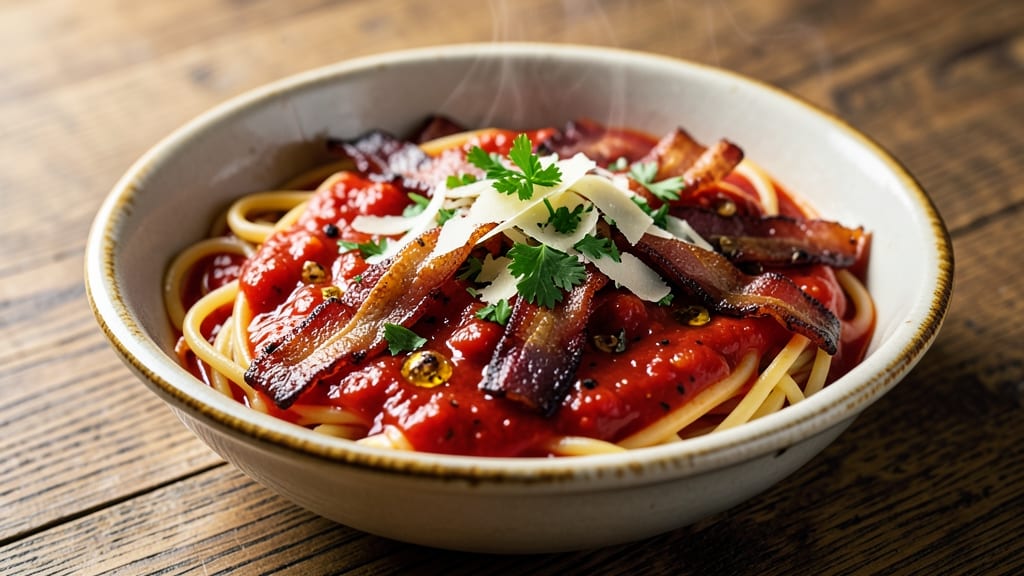
Bacon spaghetti sauce transforms a simple weeknight dinner into a restaurant-worthy meal with its perfect balance of smoky, crispy bacon bits and rich, slow-simmered tomato depth. The secret lies in rendering the bacon until it's golden and crisp, then using those flavorful bits to build a sauce that's both hearty and elegant—no bland, mushy textures here. This isn't your childhood spaghetti sauce; it's a grown-up version where every bite delivers layers of flavor.
Start with high-quality bacon for that unmistakable smokiness, then brown it until crispy before removing all but the rendered fat. This fat becomes the foundation for sautéing garlic and onions until they're fragrant and just beginning to caramelize.
The sauce simmers for 45 minutes, allowing the tomatoes to break down into a velvety consistency while the flavors meld together. The result is a sauce that clings beautifully to spaghetti, with each strand coated in that perfect balance of smoky, salty, and tangy notes.
What sets this sauce apart is the texture contrast—crispy bacon bits that add a satisfying crunch against the smooth tomato base. The slow simmer also develops deep, complex flavors that you won't find in store-bought versions.
Serve it over perfectly cooked spaghetti, topped with freshly grated Parmesan and a sprinkle of fresh basil for a touch of brightness. This isn't just sauce; it's the centerpiece of a meal that feels special without requiring hours in the kitchen.
The best part? This sauce tastes even better the next day, making it perfect for meal prep. Double the batch and freeze half for those lazy weeknights when you still want to feel like you're serving something impressive.
The key is patience—letting the sauce develop its full flavor profile is what turns good spaghetti into unforgettable spaghetti.
Ingredients for bacon spaghetti sauce
High-quality bacon and tomatoes create a smoky, rich sauce that elevates simple spaghetti to restaurant-worthy perfection.
| Ingredient | Amount | Notes |
|---|---|---|
| Thick-Cut Bacon 🥓 | 8 oz | High-quality, thick-cut preferred |
| Yellow Onion 🧅 | 1 whole | Diced into small pieces |
| Garlic Cloves 🧄 | 4 cloves | Minced for aromatic depth |
| Canned Tomato Sauce 🍅 | 2 cups | San Marzano preferred |
| Tomato Paste 🍅 | ½ cup | Squeeze tube or canned |
| Dry Red Wine 🍷 | ½ cup | Bold Cabernet or Merlot |
| Chicken Broth 💧 | 1 cup | Low-sodium preferred |
| Granulated Sugar 🍚 | 1 tbsp | Balances acidity |
| Dried Oregano 🌿 | 1 tsp | Mexican oregano preferred |
| Dried Basil 🌿 | 1 tsp | For deep aromatic notes |
| Red Pepper Flakes 🌶️ | ½ tsp | Adjust for heat preference |
| Salt 🧂 | 1 ½ tsp | Diamond Crystal preferred |
| Black Pepper 🌶️ | ½ tsp | Freshly cracked |
| Spaghetti 🍝 | 12 oz | High-quality, al dente preferred |
| Parmesan Cheese 🧀 | ½ cup | Freshly grated from block |
The bacon is non-negotiable—thick-cut from a specialty butcher delivers that unmistakable smokiness and crispy texture. Costco or Whole Foods always have excellent options, but even the grocery store's good-quality bacon works if you cook it right. Render it until it's deep golden and crispy, then remove all but 2 tablespoons of fat. That fat is liquid gold for sautéing the onions and garlic—don't skip it! For the tomatoes, San Marzano cans are worth the splurge, but any high-quality canned tomato sauce will do. The key is to let the onions caramelize slowly before adding the garlic—rush this step, and you'll get bitter flavors.
No red wine? Substitute with extra chicken broth—just add another ½ cup. Fresh herbs are ideal, but dried oregano and basil work perfectly at half the amount. Want more depth? Add a pinch of balsamic vinegar with the wine. The tomato paste can be the squeeze-tube kind from Trader Joe's—it's convenient and keeps well. For a quicker version, use 1 cup of crushed tomatoes instead of the sauce/paste combo, but you'll lose some of that velvety texture. And if you're short on time, pre-minced garlic from a jar works in a pinch, though fresh is always better.
This sauce tastes even better the next day—double the batch and freeze half for lazy weeknights. Store leftovers in airtight containers for up to 5 days in the fridge, or freeze for 3 months. The bacon bits will keep their crunch if you store them separately and add them back when reheating. For serving, freshly grated Parmesan makes all the difference—pre-grated gets clumpy. Keep the Parm in the freezer to preserve its sharp, nutty flavor, and grate it just before serving. The spaghetti? Cook it al dente—it'll finish cooking in the residual heat of the sauce.
Why You'll Love This Recipe
- I swear by this rule: if it’s not bacon or tomato, it’s optional. That’s the magic—just crispy bacon, onions caramelized low and slow, and a splash of tomato paste to deepen the flavor. No fancy herbs, no weird spices, just real taste.
- Here’s what sold me: the contrast. You fry thick-cut bacon until it’s crunchy, then toss it into the sauce where it softens just enough to melt into the strands of spaghetti. That salty, smoky bite cutting through the silky tomato? Chef’s kiss.
Step-by-step instructions for bacon spaghetti sauce
Here's how to build a sauce that delivers smoky, crispy bacon bits and deep, rich tomato flavor in one perfect package.
Cook the Bacon Until Crispy
Cut the 8 oz thick-cut bacon into ½-inch pieces—this ensures even cooking and maximum crispiness. Place them in a large, deep skillet over medium heat and cook undisturbed for 8-10 minutes, stirring only once or twice. The bacon should render ½ cup of fat and develop deep golden-brown spots—this is where all the flavor lives.
Here's the thing—don't rush this step. You want those edges to become crispy and slightly caramelized. If the bacon starts to smoke too aggressively, reduce the heat slightly. Once the bacon is perfectly crisp, use a slotted spoon to transfer it to a paper towel-lined plate, leaving all that rendered fat behind in the pan. This fat is the foundation of your sauce.
Sauté Onion and Garlic in Bacon Fat
Leave the skillet on medium heat—you don't need to add any extra oil. Add the diced yellow onion and cook for 5-6 minutes, stirring occasionally, until the onions soften and turn golden brown around the edges. This caramelization adds sweet depth to your sauce.
Next, add the 4 minced garlic cloves and cook for 30 seconds until fragrant. You'll smell that irresistible garlic aroma—this is your signal it's ready. Be careful not to let the garlic burn, as it turns bitter quickly. If it starts to darken too fast, remove the pan from heat for 10 seconds to cool slightly. The goal is aromatic, not charred.
Build the Sauce Base with Wine and Tomato
Pour in the ½ cup dry red wine and scrape up all those delicious browned bits from the bottom of the pan—this is called deglazing, and it captures all the bacon and onion flavor. Let the wine simmer for 3-4 minutes until it reduces by half and the alcohol cooks off. You'll notice the aroma changes from sharp and wine-like to rich and savory.
Now stir in the 2 cups canned tomato sauce, ½ cup tomato paste, 1 cup chicken broth, 1 tbsp granulated sugar, 1 tsp dried oregano, 1 tsp dried basil, ½ tsp red pepper flakes, 1½ tsp salt, and ½ tsp black pepper. Bring everything to a gentle simmer, then reduce the heat to low and let it cook uncovered for 20-25 minutes, stirring occasionally. This slow cooking allows the flavors to meld and the sauce to thicken beautifully.
Incorporate Bacon and Finish the Sauce
After the sauce has simmered, add the crispy bacon back to the pan along with any accumulated juices from the paper towel. Stir everything together and let it cook for another 5 minutes to heat through. The bacon should be warm and slightly softened but still maintain some crispness.
Taste the sauce and adjust the seasoning if needed. You might want to add a pinch more salt or a splash of chicken broth if it's too thick. The sauce should coat the back of a spoon but still be saucy enough to cling beautifully to spaghetti. If you prefer it smoother, use an immersion blender to blend it lightly—just a few pulses will give it a velvety texture without losing the bacon bits.
Serve with Freshly Grated Parmesan
While the sauce is still warm, toss it with the ½ cup freshly grated Parmesan cheese. The cheese will melt slightly into the sauce, adding a creamy richness that balances the acidity of the tomatoes. Serve the sauce immediately over 12 oz cooked spaghetti, making sure each strand is well-coated. Garnish with extra crispy bacon bits and a sprinkle of fresh basil if you like.
This sauce is best served fresh, straight from the pan. The combination of smoky, crispy bacon and the rich, tangy tomato base creates a flavor profile that's both comforting and exciting. The key to success lies in that initial crispy bacon step—don't skip it, and you'll be rewarded with a sauce that tastes like it's been simmering all day.
Pro Tips For Making Bacon Spaghetti Sauce
- CRISP THE BACON LOW: Thick-cut bacon takes longer to render fat—don’t rush it. Cook on medium-low heat until the edges are golden and the fat pools like oil, or you’ll end up with chewy, uneven pieces that won’t crisp properly. (Yes, even if you’re impatient like me.)
- SWEEP THE PAN AFTER BACON: Remove the bacon, then wipe the pan clean with a paper towel before sautéing onions. Leftover bacon fat burns easily and ruins the sweetness of the onions—this one move keeps your sauce from tasting smoky or bitter.
- SAUTE ONIONS UNTIL SOFT: Don’t just chop onions—cook them until they’re translucent and just starting to caramelize (about 8-10 minutes). Raw onion bits make the sauce taste sharp and unfinished, no matter how much tomato sauce you add.
- STIR IN TOMATO PASTE FIRST: Mix the tomato paste directly into the bacon fat before adding liquids. It’ll bloom into a rich, deep flavor instead of clumping or floating on top like a sad, flavorless raft. (Trust me, it makes a real difference.)
Wine and beer pairings for this dish
Red Wine Pairings
A bold Cabernet Sauvignon from Napa Valley is my go-to choice for this sauce—its rich, dark fruit notes and subtle oak complement the smoky bacon beautifully. Look for a 2018 or newer vintage with 14-15% ABV to stand up to the sauce's depth.
The tannins also help cut through the richness, cleansing your palate between bites. 🍷
For something lighter but equally delicious, try a Chianti Classico from Tuscany. Its bright acidity and cherry undertones balance the bacon's saltiness while enhancing the tomato's brightness. Serve slightly chilled (55-60°F) to highlight its freshness against the warm sauce.
Beer Matchmakers
A stout beer like Guinness or a smoked porter from Deschutes Brewery creates an unexpected but brilliant pairing. The roasted malt notes mirror the bacon's smokiness, while the creamy texture contrasts perfectly with the sauce's tang. Pour it at 45°F to preserve its rich flavor profile.
For a crisp, refreshing option, go with a Belgian witbier such as Hoegaarden. The citrusy coriander and spicy pepper notes brighten the dish without overpowering it. Serve it well-chilled (40-45°F) to enhance its effervescence against the sauce's richness.
Unexpected Liquor Pairings
Add a splash of bourbon to the sauce during the final 5 minutes of cooking—just 1 tbsp enhances the bacon's smokiness with warm vanilla undertones. The caramel notes in the bourbon also deepen the tomato's sweetness. 🥃
For a spicy kick, try a mezcal-infused margarita on the side. The agave's earthiness and peppery notes create a perfect contrast to the sauce's richness. Rim your glass with chili powder and serve with a salted lime wedge for an authentic touch.
Nutrition facts
Frequently asked questions
Can I use turkey bacon instead of regular bacon?
Yes, but expect a milder flavor. Turkey bacon has less fat and smokiness, so you might want to add ½ teaspoon smoked paprika to the sauce to enhance depth. Cook it until fully crispy (about 6-8 minutes) since it browns faster than pork bacon.
What if I don't have red wine? Can I substitute something else?
Use ½ cup chicken broth + 1 teaspoon balsamic vinegar for similar depth, or ½ cup apple cider for subtle sweetness. The key is balancing acidity—just reduce the sugar slightly if using sweeter substitutes.
How do I prevent the sauce from getting too thick?
Add 1-2 tablespoons of water or broth while simmering if it thickens too much. For a smoother texture, blend lightly with an immersion blender after removing 2 tablespoons of sauce first (to avoid splattering). The sauce should coat a spoon but still flow easily.
Can I make this sauce in a slow cooker?
Yes! Brown the bacon and sauté onions/garlic in a skillet first, then transfer everything to the slow cooker. Cook on low for 4-5 hours or high for 2-3 hours, stirring occasionally. The slow cooking enhances flavors, but check for doneness earlier—it may thicken more than stovetop.
Why does my bacon get soggy in the sauce?
Bacon absorbs moisture when submerged. To keep it crispy, add the bacon back to the sauce only at the very end (last 5 minutes of cooking). For extra crunch, store bacon bits separately and sprinkle on top when serving.